Get in Touch with BOSHIYA

Steam Cracking: Process, Feedstocks, Products & Industry Guide [2025]

Steam cracking is the foundation of the worlds petrochemical industry; the single process that produces the ethylene, propylene, and aromatics that end up in practically everything we make. Built on petroleum and natural gas feedstocks, no chemical process transforms hydrocarbons into the building blocks of present-day materials quite like it. But while so much can be achieved from a carefully designed air-cooled, steam-heated cracker, the decisions made by engineers on the optimal design and operation of a cracker covering efficiency, feedstock selection and maintenance intervals are seldom found all in one place.
Contents
show
This covers the whole story-from the basics of steam cracking and how your choice of feedstock affects your economics to what a furnace actually does at 800 C, and for the plant operators-worth the explanation of why the states of the heat exchangers in the quench section decide if your cracker will run to the design throughput- or,ignoring the money lost-continue to.
⚡ Steam Cracking — Quick Specs
| Process type | Thermal pyrolysis — non-catalytic |
| Cracking temperature | 750–900°C (radiant section) |
| Residence time | 50–300 milliseconds |
| Primary feedstocks | Ethane, naphtha, LPG, propane, butane |
| Primary products | Ethylene, propylene, butadiene, aromatics (BTX) |
| CO₂ intensity | 1.0–1.6 t CO₂ per tonne of ethylene (process emissions) |
| Decoking cycle | Every 30–90 days per furnace coil |
What Is Steam Cracking? Definition and Industrial Role

Steam cracking is a petrochemical process in which saturated hydrocarbons are thermally broken down into smaller, unsaturated molecules — principally ethylene and propylene — using high-temperature steam in the absence of a catalyst. Operating at temperatures between 750 and 900°C with residence times measured in milliseconds, it is the principal industrial method for producing the light olefins that underpin the entire petrochemical value chain, from polyethylene packaging to synthetic rubber.
It is an endothermic process requiring an energy input of heat continuously to break down both the C=C and the C-H bonds in the hydrocarbon feed. Steam acts as the heat transfer medium, flowing through the furnace system and simultaneously diluting the hydrocarbon partial pressures (which in turn enhances olefin selectivity and possesses an additional coking advantage). The cracking process occurs by way of a free-radical chain mechanism at residence times of between 50 and 300ms.
The output stream from the furnace-systems, comprising a myriad of molecules such as ethylene, propylene, hydrogen, methane, butadiene and aromatics, must then be rapidly cooled and then separated in a twelve stage distillation process.
Around 300 million tonnes of ethylene per annum are manufactured worldwide by the gas-phase steam cracking process on an industrial scale – one of the largest volume processes in the entire chemical manufacturing industry. Typical world scale steam crackers produce between 1 and 1.5 million tonnes of ethylene per annum and require an investment of between 1 and 3 billion US dollars. The process then serves petrochemical and chemical process usage in a wide variety of products, including plastics, synthetic fibers, glues, solvents and pharmaceuticals.
Steam cracking remains the fundamental process of the petrochemical industry. It is the predominant producer of ethylene, propylene and other fundamental chemicals necessary for the manufacturing of all plastics, rubbers and fibres in modern society.
Is Steam Cracking the Same as Thermal Cracking?
Steam cracking is a variation of thermal cracking – both types use heat rather than a catalyst to bring about a cracking reaction in hydrocarbons. The defining characteristic of this is the addition of dilution steam and the very tight residence time control (milliseconds in modern processes, seconds in “older” thermal techniques). The steam acts to limit the partial pressure to prevent unwanted secondary reactions and resins, while the very short residence times (milliseconds, compared to seconds or minutes) control the cracking of the key product (ethylene) to methane and carbon deposits.
Previous thermal routes of cracking used (visbreaking, thermal reforming) had lower severity an longer contact times, and were produced for use as fuel fractions, not simple light olefins. The term “steam cracking” however, when used in an industrial context, now commonly refers to the high severity/short contact time process to produce olefins.
Feedstocks for Steam Cracking: Ethane, Naphtha, LPG, and Gas Oil

The choice of feedstock is far and away the single most important economic variable in a steam cracker design and operation. It influences yield, co-product slate, capital cost, energy consumption and coking rate- and is dictated almost entirely by regional feedstock economics, not chemistry.
| Feedstock | Ethylene Yield | Co-product Slate | Coking Tendency | Primary Region |
|---|---|---|---|---|
| Ethane | 80–84% | Minimal (H₂, CH₄) | Low | North America, Middle East |
| Naphtha | 29–34% | Propylene ~15%, BTX ~10%, butadiene ~8% | Moderate–High | Europe, Asia-Pacific |
| Propane/LPG | ~45% | Propylene ~15–18%, ethane, methane | Low–Moderate | Middle East, flexible |
| Gas Oil | ~20–25% | Wide: aromatics, pyrolysis gasoline, fuel oil | High | Asia (legacy plants) |
🔑 Feedstock Selection Decision Framework
- IF abundant shale gas / ethane supply AND primary target = maximum ethylene ethane cracking
- IF wide product slate required (propylene + BTX + butadiene for integrated downstream) heavy naphtha
- IF feedstock flexibility needed at medium scale LPG / propane
- IF large heavy residue available and lower olefin selectivity is acceptable gas oil (higher coking penalty)
⚠ Common Misconception
Ethane is not universally the superior feedstock -it is the economically optimal choice only where shale gas is cheaply available. European and Asian naphtha crackers deliberately accept lower yields of ethylene to capture the propylene, butadiene and BTX co-products their downstream capacities require. By 2024 US ethane cracker cash costs are running between $300-500/tonne ethylene, vs. $600-900/tonne in Europe – it’s entirely a matter of feed price, not economics or efficiency.
Why Does North America Crack Ethane While Europe Cracks Naphtha?
The reason is straightforward: the US shale revolution resulted in ethane becoming a staggering cheap feedstock. By 2024, US ethane output totaled a record 2.8 million barrels/day. Houstonnatural gas processing plants would exclusively feed 2.3 million b/d of it into their steam crackers – spurring Gulf Coast cracker investments since 2014 in excess of $50 billion. In Japan and North East Asia, on the other hand, no such oil source exists; they’re all using crude-derived refineries to produce naphtha, and require propylene and BTX co-products to generate the new downstream capacity. Some Asian producers, especially in South Korea, are now just starting to retool their crackers to accept US ethane imports via long-term contracts- a structural feedstock transition not driven by process economics, but rather by the economics of the supplies themselves.
Products of Steam Cracking: From Ethylene to Pyrolysis Gasoline

Steam cracking does not produce only one product- it creates an entire petrochemical slate at once. The precise dope hinges critically on the feedstock, the severity of the cracking (dictated by centersection temperature), and the ratio of steam-to-hydrocarbon fed into the furnace. Light sources like ethane yield a mostly-ethylene slate, while heavy sources such as naphtha tend to produce a broad spectrum of olefins, aromatics and liquids which are then separated downstream.
| Product | Ethane Cracking (wt%) | Naphtha Cracking (wt%) | Primary downstream use |
|---|---|---|---|
| Ethylene | ~80–84% | ~30–35% | Polyethylene, ethylene oxide, PVC |
| Propylene | ~2–3% | ~14–16% | Polypropylene, acrylonitrile, propylene oxide |
| Butadiene | ~2% | ~7–9% | Synthetic rubber (SBR, polybutadiene) |
| BTX aromatics | Minimal | ~8–12% | Benzene → nylon, styrene; xylene → PET packaging |
| Hydrogen | ~4–5% | ~1–2% | Internal fuel, hydrotreating, ammonia synthesis |
| Methane / fuel gas | ~10–12% | ~15–18% | Furnace fuel (internal energy recovery) |
| Pyrolysis gasoline | Trace | ~10–15% | Gasoline blending, BTX extraction |
The product yield data above are taken from Zimmermann & Walzl (2009), Ullmann’s Encyclopedia of Industrial Chemistry, the definitive reference on steam cracking product stream composition and yield distribution. So what does this mean on a process level? Plant operators who must supply propylene, butadiene and aromatics cannot get that petrochemical slate from ethane alone. They must use naphtha and other mixed feeds. Operators who are primarily trying to produce ethylene and are sourcing propylene from a dedicated dehydrogenation unit should look no further than ethane, as it will give them a higher yield per pass, at a lower coking rate.
Inside a Steam Cracking Furnace: From Feed Preheating to Cracked Gas

A steam cracking furnace divides into two thermally distinct zones — the convection section and the radiant (pyrolysis) section — directly connected in series. The convection zone preheats the feed while recovering heat from flue gas; the radiant zone drives the cracking reactions. The entire feed-to-cracked-gas transformation completes in under 300 milliseconds, making furnace control one of the most precision-demanding operations in industrial chemistry.
-
- Feed preheating (Convection section): Hydrocarbon feedstock and dilution steam enter the upper convection section, where flue gas from the burners preheats the mixture from ambient to approximately 500–680°C. Heat recovery here reduces furnace fuel consumption and improves overall energy efficiency.
-
- Pyrolysis (Radiant section): The preheated feed passes into the radiant coils, where temperatures reach the Coil Outlet Temperature (COT) of 750–900°C. Free-radical reactions break C–C and C–H bonds to generate ethylene, propylene, and other olefins. Dilution steam at 0.3–0.5 kg steam/kg feed lowers hydrocarbon partial pressure, suppressing secondary condensation reactions and slowing — but not stopping — coke formation.
-
- Quench (Transfer Line Exchanger – TLE): The products leaving the furnace at 750-900 C cannot be allowed to be sustained at this temperature else the ethylene pyrolyzis to methane and coke. Must be cooled within a few milliseconds to a temperature around 400-600 C where the coke formation rate balance to be established. The TLE cools the cracked gas and simultaneously generates high-pressure steam — acting as both a heat recovery device and a product protection mechanism in a single unit.
- Compression: Cooled cracked gas is compressed in 4–5 stages to approximately 3.5 MPa, with interstage cooling to keep gas below 100°C and prevent olefin polymerisation. A world-scale plant requires compressors up to 45,000 horsepower.
-
- Separation train: Compressed gas passes through a 12-stage cryogenic separation sequence: acid gas removal → drying → cryogenic demethanizer (recovers H₂ and CH₄) → deethanizer → C₂ splitter (produces spec ethylene) → depropanizer → C₃ splitter (produces spec propylene) → debutanizer → pyrolysis gasoline. This heat exchanger turnaround planning context represents one of the most complex separation systems in industrial chemistry.
📐 Engineering Note — COT Severity Trade-Off
A 10°C increase in Coil Outlet Temperature raises ethylene yield by approximately 1.5–2.5% — but reduces run-length before decoking by 15–30 days. Cracking severity — the combination of COT and residence time — is the central process variable in steam cracker management, and this trade-off between yield and run-length is how operators optimise it. Running at maximum COT maximises ethylene production per tonne of feed but forces more frequent shutdowns, consuming decoking downtime and increasing tube metal temperature, which accelerates coil degradation over time.
Steam Cracking vs. Catalytic Cracking: Key Differences
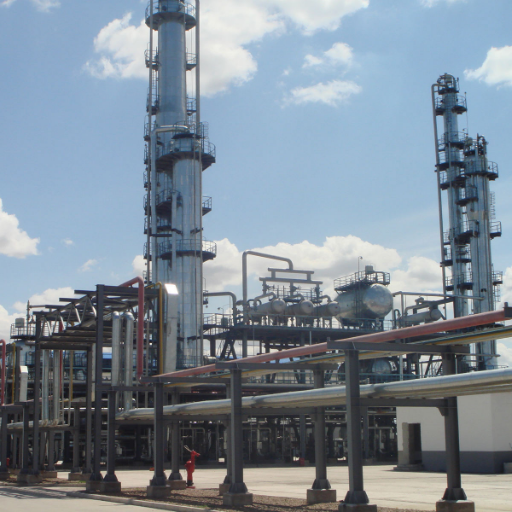
Steam cracking and FCC both involve “cracking” but the two processes have entirely different industrial applications, operate at different set of parameters and produce different streams of primary products. This knowledge difference is important to note when evaluating the technology selection options for new olefin plant or for refinery integration feasibility.
| Parameter | Steam Cracking | Fluid Catalytic Cracking (FCC) | Catalytic Reforming |
|---|---|---|---|
| Temperature | 750–900°C | 500–550°C | 450–525°C |
| Catalyst | None | Zeolite (acid catalyst) | Platinum / Rhenium |
| Primary feedstock | Ethane, naphtha, LPG | Heavy gas oil, VGO | Naphtha (paraffinic) |
| Primary products | Ethylene, propylene | Gasoline, diesel, propylene | Aromatics (BTX), H₂ |
| Industry context | Petrochemical plant | Oil refinery | Oil refinery / aromatic complex |
| Coke handling | Steam/air decoking (30–90 days) | Continuous catalyst regeneration | Semi-regenerative or CCR |
✅ Steam Cracking — Advantages
- No catalyst cost or regeneration cycle
- Highest ethylene selectivity of any cracking route
- Handles wide feedstock range (ethane to gas oil)
- Proven in gigantic size barrels (up to 1.5 Mtpa of Ethylene)
⚠ Steam Cracking — Limitations
-
- Energy intensive: ~5,000+ kWh/tonne ethylene (mega cracker)
- Requires decoking shutdown every 30–90 days
- High CAPEX: $1–3 billion per world-scale plant
- CO₂-intensive: 1.0–1.6 t CO₂ per tonne ethylene produced
Does Steam Cracking Use a Catalyst?
No – steam cracking is a completely non-catalytic thermal process. It relies on intense heat alone to crack hydrocarbons. Free-radical chains are initiated (high energy species are generated by side-reactions of the process itself), propagated (by beta-scission reactions), and terminated (reaction of two radicals to form an inert molecule). No catalyst on the surface is present, so cannot deactivate, regenerate or control the process according to catalyst surface properties; but neither can it selectively produce the desired product. Cracking outcomes are products of temperature, pressure and residence time as per thermodynamics, not a preferred catalytic surface.
Coke Formation, Quenching, and Heat Exchanger Maintenance in Steam Crackers

Coke formation is neither a flaw of steam cracking, nor a specific designer error, it is simply a product of free-radical chemistry at the above temperatures and must be taken into account when designing a plant process and equipment layout. The type and amount is dictated by feedstock, temperature, quench practices and pressure conditions.
⚠ Corrected Assumption
Steam cracking does not avoid coke formation, it mitigates it. The addition of dilution steam will reduce the partial pressure of hydrocarbons and reduce the chances for condensation reactions occurring that lead to coking. Neutral to slightly reactive coke results are a characteristic of steam cracking. Coke will continue to be formed during a cracking run, albeit at a slower rate. Norms for an optimised steam cracker operate Decoke cycles of 30-90 days with cracker being brought off-stream, and blown with steam/air at ~900 C.
Decokesthrough the radiant section will involve starting by shutting down the cracker, to halt the heat and radical species supply, decoke the radiant section by circulating a hot mixture of steam and air at approximately 900 C; this converts the carbon on the wall to CO/CO2 gases, which are exhausted in the process. This is a time consuming operation that takes around 20-40 hours, and so when operating multiple furnaces a number of them will be out of operation at one time.
The TLE fouling cascade. Coke and fouling is not limited to the radiant coils. When the cracked gas leaves the furnace and enters the TLE, it is polluted with entrained coke particles, polymerised material, and high molecular weight compounds which are deposited on tube walls.
This lowers the TLE heat transfer duty – the furnace must fire harder in order to keep up with the cracking intensity. An increased firing rate means quicker radiant section coke formation, which causes further TLE fouling: a vicious circle. A field case study of a quench oil/dilution steam heat exchanger with 5925 tubes and 3005m of surface, intended for a 3-year campaign, demonstrated fouling in a time frame of only nine months:
Economic implications of planned vs. unplanned maintenance. A convection section in which the temperature has increased 50C will contribute to a 1.83% decrease in furnace efficiency. With a cost of $23 per MW.h in fuel, in excess $375,000 -per furnace -per year will be spent to heat the process.
With a 5-furnace train this represents a loss of $1.87 Million per year which could be saved by a single, planned cleaning. The loss of efficiency due to completion of unintentional shutdown for fouling related failures of a 1 MTPA plant has been shown to be about $21 Million in lost ethylene revenue (at $750/Tonne.) Such sums exceed any maintenance budgeting margin for error. Chemical treatments made against fouling do not work on TLEs as the chemicals are broken down in the operating temperature range of 538-927C.
📐 Engineering Note — The Fouling Feedback Loop
Transfer line exchangers for naphtha steam cracker service are normally scheduled for a complete tube bundle removal and water-jet cleaning every 12-18 months between normal shutdowns. Waiting until a fouling impact of more than 25% duty loss increases furnace firing to meet the additional heat duty resulting from fouling, which in turn accelerates the coke deposits formation in the radiant section thus increasing overall maintenance effort.
✅ Steam Cracker Heat Exchanger Maintenance Checklist
- Monitor TLE outlet temperature on a weekly basis. A rise in T (T approaches <10C) indicates the onset of serious fouling.
- Monitor track furnace fuel consumption continuously continuous monitoring lines with >5% above baseline indicating fouling of convection section
- Schedule tube bundle extraction and flex lance or water-jet cleaning at each planned turnaround (12-24 month cycle)
- Document decoking intervals per coil – trend analysis of shortening run-lengths indicates feed quality or severity problem
- Use API 660 shell-and-tube heat exchanger codes to determine inspection factors to be applied after bundle removal
- S’assurer que le matériel de prélèvementest mis en marche et vérifié avant démarrage du turnaround prévu
- Review steam cracker turnaround cleaning scope 6 weeks in advance of scheduled shutdown to avoid scope creep delays
Downstream Applications: Where Ethylene and Propylene Go

The products of steam cracking are not chemicals—they are the raw material inputs to almost every polymer, synthetic material and chemical intermediate produced in the modern economy. Knowing the downstream value chain makes it clear why treating ethylene capacity as a direct policy measure is appropriate.
223 Mt
Global ethylene capacity (2022)
>6%
Annual average capacity growth 2022–2027
300 Mt
Annual CO₂ emitted by global steam crackers
Ethylene’s dead end product is polyethylene—by far the most widely-produced plastic (HDPE, LDPE, LLDPE)—used in packaging, piping and films. Ethylene oxide can be converted into ethylene glycol (antifreeze, PET polyester) and surfactants. Ethylene-derived vinyl chloride monomer is used as the precursor to PVC. Propylene goes mostly into polypropylene (associated with automobiles, packaging, and fibers), acrylonitrile (for carbon fibre, acrylics), and propylene oxide (for polyurethane foams).
Butadiene—almost entirely recovered as a steam cracker by-product—forms the major monomer for synthetic rubber (styrene-butadiene, polybutadiene) and makes tyre manufacture the world’s largest butadiene consumer. BTX aromatics are converted into benzene (nylon, styrene, phenol), toluene (solvents, diisocyanates) and para-xylene (pet resin for nearly all polyester clothing and consumer containers). Operating automated bundle cleaner systems to the full heat exchanger network inside ethylene plants is necessary to preserve this capacity at its intended design levels.
The Future of Steam Cracking: Electric Furnaces and Low-Carbon Olefins [2025–2030]
Steam cracking is in a squeeze—on the one hand increased demand for ethylene (driven by emerging-market plastics consumption and new chemical applications) and on the other intensifying investor and regulatory pressure to decarbonise. The industry’s response is bifurcated—capacity addition through conventional crackers in the short term, and R&D on electrified furnace technology in the long.
Short-term capacity growth is real and already committed. As of mid-2025, 14 new ethane cracker projects are either under construction or in advanced planning globally. U.S. ethane production reached a record 2.8 million b/d in 2024 — 63% of it from the Permian Basin alone — providing the feedstock base for continued North American capacity additions.
Electric cracking is—and has always been—the decarbonisation solution—it is also—and has always been—not yet commercially available. BASF, SABIC and Linde commissioned a demonstration electrically heated steam cracker furnace at BASF’s Ludwigshafen location in 2024—supported by 14.8m of EU and German federal funding. The company’s 2024 Annual Report confirm the technology is currently in the testing phase and commercially scalable “from 2030 onward”. Dow and Shell are investigating an electric furnace development project in the Netherlands in parallel. The Cracker of the Future Consortium (a group of large European ethylene producers including Borealis, SABIC and BASF) is coordinating R&D efforts on multiple European sites. If proven successful, using renewable electricity electricity to power an electric cracker could reduce process-related CO by 90% compared to traditional fuel-fired crackers.
⚠ Important Clarification
Despite being widely reported on in the industry press, there are yet to be any commercial electric steam crackers in operation at full production scale as of the midpoint of 2025 and the technology is still at demonstration and R&D stage. Existing operators of ethylene crackers planning investment for 2025–28 should assume these will run on traditional furnace technology as electric crackers will only become available in the late 2020s–early 2030s.
This global electric steam cracker market, valued at an estimated $26 million in 2025- the scale of pre-commercial R&D- and forecast to reach $28.4 billion in 2040 at a CAGR of 59.4% (BusinessWire/ResearchAndMarkets December 2024 market analysis report) is targeted towards operators of commercial steam cracking units in the 2026-2030 window as follows: “with commercial validation of the electric offering yet in the future, the current focus would be on heat integration upgrades with electrification being the long-term aspiration.”
Frequently Asked Questions: Steam Cracking
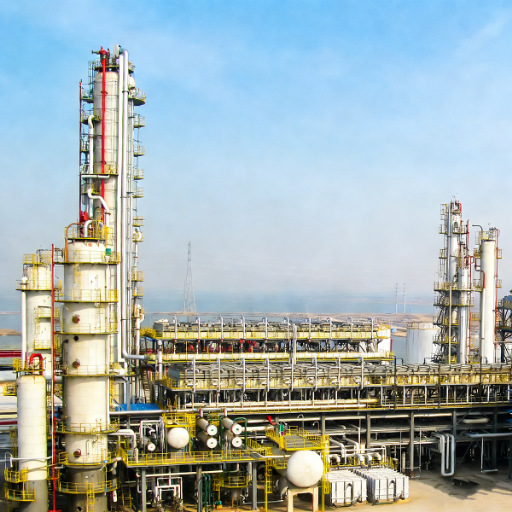
Is heat exchanger fouling limiting your steam cracker’s run-length?
Boshiya supplies tube bundle extraction and cleaning solutions for high fouling heat exchangers found in ethylene production plants — Transfer Line Exchangers, quench oil condensation systems and convection section coil banks.
About This Guide
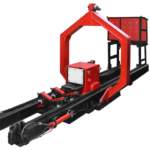
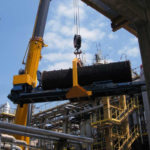
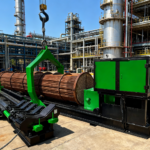
This guide was produced by Boshiya, a manufacturer of tube bundle extraction and cleaning equipment for industrial heat exchangers, including Transfer Line Exchangers, quench oil coolers, and convection section heat exchangers in steam cracking and petrochemical plants. A self-propelled bundle extractor is among the equipment we supply for TLE and heat exchanger turnarounds. Our choice of cleaning technologies, turnarounds, and maintenance schedules is derived from our operational data during petrochemical heat exchanger maintenance. Process chemistry, product yield data and tech service parameters have been obtained from published academic articles (Zimmermann & Walzl 2009, Amghizar et al. 2017, Gholami et al. 2021), U.S. government sources (EIA, DOE) and primary sources (BASF Annual Report 2024). Wherever we have a commercial interest, we have explicitly acknowledged it.
Key References
- Zimmermann, H. & Walzl, R. (2009). Ethylene. Ullmann’s Encyclopedia of Industrial Chemistry. Wiley-VCH. doi:10.1002/14356007.a10_045.pub3
- Amghizar, I. et al. (2017). New Trends in Olefin Production. Engineering, 3(2), 171-178. doi:10.1016/J.ENG.2017.02.006
- Gholami, Z. et al. (2021). A Review on the Production of Light Olefins Using Steam Cracking of Hydrocarbons. Energies, 14(23), 8190. doi:10.3390/en14238190
- U.S. Energy Information Administration (2025). U.S. Ethane Production Reached a Record High in 2024. eia.gov/todayinenergy
- U.S. Department of Energy (2022). U.S. Ethane: Market Issues and Opportunities. Report to Congress.
- BASF SE (2025). BASF Annual Report 2024 – Sustainability Statement. basf.com
- Integrated Global Services (2024). A Techno-Economic Overview of Fouling in Steam Crackers and Available Solutions. integrated global.com [Whitepaper]
![ASME Pressure Vessel Fabrication Guide: Section VIII Requirements [2025]](https://boshiya.com/wp-content/uploads/2026/05/2-46-150x150.webp)