Get in Touch with BOSHIYA

Technical Service
Technical Service and Technical Support for Industrial Operations
We keep factories running. IIoT deployment, automation integration, cloud architecture, predictive maintenance — and a support team that actually picks up the phone. BOSHIYA Group brings 100+ years of industrial know-how to every engagement.
Request a Consultation
100+
Years of Expertise
24 / 7
Support Available
IIoT
Ready Solutions
What We Do
Technical Service Capabilities
01
Industrial IoT Deployment
Sensor selection, edge gateway configuration, data pipeline architecture, and dashboard delivery. We’ve wired up brownfield plants from the 1970s and greenfield sites still pouring concrete. Typical project: 8-16 weeks depending on sensor count and legacy integration depth.
02
Automation & Controls Integration
PLC programming, HMI design, DCS migration, and robotic cell integration. We work with Siemens, Rockwell, ABB, and Schneider platforms — not locked into one vendor. Migration projects include full I/O mapping, FAT, and 72-hour burn-in before handoff.
03
Cloud Architecture for Manufacturing
Hybrid cloud design on AWS, Azure, or private infrastructure. We build for uptime — geo-redundant, edge-cached, and compliant with NIST and IEC 62443. Data sovereignty matters in this space, and we don’t cut corners on it.
04
AI & Data Analytics
Predictive maintenance models, quality inspection algorithms, energy consumption forecasting, and anomaly detection for process variables. Our data scientists work alongside control engineers — not in isolation. That’s the only way the models actually stick in production.
05
Managed Tech Support (L1–L3)
Round-the-clock support operations — help desk, remote diagnostics, on-site dispatch. L1 handles triage and known-fix execution. L2 digs into cross-system faults. L3 is engineering-level: code patches, firmware updates, architecture changes. Pick your tier or take all three.
06
OT/IT Convergence Consulting
Bridging the gap between your plant-floor OT network and enterprise IT. Network segmentation, protocol translation (Modbus to MQTT, OPC UA gateways), and security hardening. The goal: unified visibility without exposing your control systems to the internet.
Service Specifications
Technical Support Tiers
Response Capacity and SLA Commitments
| Parameter | L1 — Front Line | L2 — Advanced | L3 — Engineering |
| Response Time (P1) | 15 min acknowledge | 30 min engage | 2 hr on-site/remote |
| Coverage | 24/7/365 | 24/7/365 | Business hrs + on-call |
| Team Size per Client | 4-8 agents | 2-4 specialists | 1-2 engineers |
| Typical Resolution | Known-fix runbooks | Cross-system diagnostics | Code/architecture changes |
| Escalation Trigger | > 30 min unresolved | > 2 hr or safety-critical | Root-cause / design flaw |
| Tools | Ticketing, KB articles | Log analysis, network traces | Code repos, firmware labs |
| Monthly Ticket Volume | ~2,400 avg | ~750 avg | ~250 avg |
L1 — Front Line
Response Time (P1)15 min acknowledge
Coverage24/7/365
Team Size4-8 agents
ResolutionKnown-fix runbooks
Escalation> 30 min unresolved
ToolsTicketing, KB articles
Monthly Volume~2,400 avg
L2 — Advanced
Response Time (P1)30 min engage
Coverage24/7/365
Team Size2-4 specialists
ResolutionCross-system diagnostics
Escalation> 2 hr or safety-critical
ToolsLog analysis, network traces
Monthly Volume~750 avg
L3 — Engineering
Response Time (P1)2 hr on-site/remote
CoverageBusiness hrs + on-call
Team Size1-2 engineers
ResolutionCode/architecture changes
EscalationRoot-cause / design flaw
ToolsCode repos, firmware labs
Monthly Volume~250 avg
Uptime guarantee: 99.5% for managed infrastructure. Incident data feeds back into quarterly service reviews — we share the raw numbers, not just the highlights.
Need a custom SLA?
Every plant is different. We’ll scope a support model that matches your shift patterns, criticality tiers, and budget.
Partnership Models
Wholesale Technical Support & Outsourcing Models for Enterprise
You probably already know this if you’re on this page — finding and keeping qualified support specialists is brutal right now.
The skills gap in industrial automation is real.
You Keep
- L1 front-line — your people, your brand voice, your plant knowledge.
- Quality standards and escalation policies.
- Vendor relationship ownership.
- Final sign-off on any architecture changes.
We Handle
- L2/L3 surge capacity.
- After-hours and weekend coverage.
- Niche expertise (ICS security, IIoT analytics, legacy system migration).
- Quarterly audits and continuous improvement reporting.
Problems We Solve
Real Technical Problems
And How We Actually Fix Them
The Problem
Unplanned Downtime Eating Your Budget
Siemens found that the world’s 500 biggest companies lose roughly $1.4 trillion a year to unplanned downtime. Your plant probably isn’t that big — but even at $125,000 per hour (ABB’s survey average), a couple of bad weeks can wreck a quarter.
Our Approach
We deploy IIoT sensors on your critical assets, build predictive maintenance models tuned to your specific failure modes, and set up automated alerts that catch problems 48-72 hours before they become shutdowns. Not magic. Just data plus experience.
Project Story
Gulf Coast Refinery
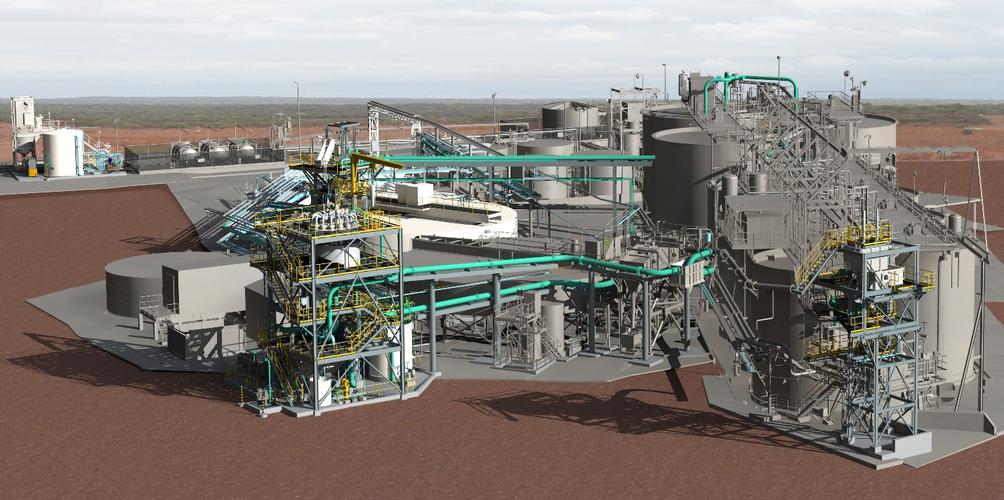
A midsized refinery in Texas was losing about 38 hours of unplanned downtime per month across three process units. We installed vibration and temperature sensors on 140 rotating assets — pumps, compressors, blowers — and connected them to an edge analytics stack running on-premises (they didn’t want data leaving their network, which we respected).
Took us 11 weeks to deploy and tune the models. Honestly, the first month was rough — we got a flood of false positives because the baseline data was noisy. Had to recalibrate thresholds on about 30% of the sensors. But by month three, the system caught a bearing degradation on a critical feed pump 62 hours before failure. That single save? Worth about $340,000 in avoided production loss and emergency repair costs.
After 8 months, unplanned downtime dropped to 11 hours/month. Not zero — that’s unrealistic in a facility built in 1988 — but a 71% reduction that the operations VP could actually put in front of the board.
“
I was skeptical about another IoT vendor. But BOSHIYA’s team had grease on their boots, not just slide decks.
The Problem
Legacy Systems That Won’t Talk to Anything
You’ve got a Honeywell DCS from 2004, Siemens PLCs from 2012, and a SCADA system that still runs on Windows Server 2008. Everything works — sort of. But nothing talks to anything else, and you can’t get a unified view of your plant without three different screens and a spreadsheet.
Our Approach
We don’t rip and replace. We bridge. OPC UA gateways, protocol converters, edge middleware that translates between Modbus RTU, PROFINET, EtherNet/IP, and MQTT. The goal is a single data layer that feeds into your analytics platform — without touching your control logic or safety systems.

Project Story
Midwest Steel Mill
A structural steel plant outside Cleveland had seven different control systems across their melt shop, rolling mill, and finishing lines. Some of the equipment had serial interfaces — no Ethernet at all. Their IT team tried twice to build a unified dashboard and gave up both times.
We came in, mapped every communication pathway (took about two weeks, and yeah, some of the documentation was… let’s say “creative”), and installed 23 OPC UA gateways with edge computing nodes. The tricky part was the melt shop — the electromagnetic interference from the arc furnaces kept corrupting data packets. We ended up running fiber-optic backbone through that section instead of copper. Problem solved.
Whole project: 14 weeks. Result: real-time visibility across all seven systems on a single web-based dashboard. The plant manager told us he could finally see his entire operation from his desk instead of walking the floor with a radio — which, to be fair, he still does. Old habits.
“
Fourteen weeks. After two years of false starts with other vendors. I wish we’d called you first.
The Problem
Can’t Find (or Keep) Qualified Support Staff
The skills shortage is real. Experienced control engineers are retiring. New grads know Python but not ladder logic. And every recruiter in Houston is fighting over the same 200 people who understand both IT and OT.
Our Approach
Managed technical support — staffed, trained, and retained by us. We handle the hiring headaches, the certification renewals, the midnight call-outs. Your team focuses on operations; ours handles the support backlog.
Project Story
Multi-Site Food Processor
A food and beverage company with four plants across the Southeast was burning through contract technicians. High turnover, inconsistent quality, and — this was the real kicker — every time a contractor left, the tribal knowledge walked out with them. No documentation, no runbooks, just gone.
We took over L2 and L3 support for all four sites. Built a knowledge base from scratch (painful but necessary — about 400 articles covering everything from “how to reset the palletizer after a jam” to “what to do when the batching system throws error code 7042”). Assigned dedicated specialists who learned each plant’s quirks over the first 90 days.
Twelve months in: average ticket resolution time dropped from 6.4 hours to 2.1 hours. Contractor spend fell by about 40%. And the knowledge base — that’s theirs now. Even if we parted ways tomorrow, the documentation stays.
“
We finally stopped losing institutional knowledge every time someone quit.
The Problem
Cybersecurity Gaps in Your OT Network
In 2024, about 31% of manufacturers reported financial losses from cyberattacks hitting their OT/IT systems. The convergence that makes your plant smarter also makes it a bigger target. And most IT security teams don’t understand industrial protocols well enough to protect them properly.
Our Approach
ICS security assessments aligned to IEC 62443 and NIST CSF. Network segmentation, asset inventory, vulnerability scanning for OT devices, and incident response playbooks specific to industrial environments. We troubleshoot security gaps the way we troubleshoot process problems — methodically, with plant-floor context.
Project Story
Chemical Manufacturer, New Jersey
A specialty chemical company needed IEC 62443 compliance for a new contract with a major pharma client. Their OT network was… flat. Everything on one subnet. PLCs, HMIs, the building HVAC, even the break room coffee machine (It was IoT-enabled and sitting on the same VLAN as the reactor controls).
We did a full network assessment, segmented into security zones and conduits per IEC 62443-3-3, deployed industrial firewalls at zone boundaries, and built monitoring dashboards for anomalous traffic patterns. Four months of work. The coffee machine got its own guest network — we insisted.
They passed the compliance audit on the first attempt and landed the pharma contract. Worth about $4.2 million annually to their business.
“
The coffee machine thing was embarrassing, but at least it’s fixed now.
Interactive Tools
Technical Service Planning Tools
Three free tools to help you assess, calculate, and plan your technical support strategy. Pick a tab to get started.
Interactive Calculator
Unplanned Downtime Cost Calculator
Estimate your annual losses from unplanned downtime and see potential savings with predictive maintenance. Based on Siemens and ABB industry benchmarks.
Your Plant Parameters
Industry avg: 27 hrs/month (Siemens 2024 report)
Cost Analysis
Enter your plant parameters
and click Calculate
and click Calculate
Data sources: Siemens “True Cost of Downtime 2024”, ABB “Value of Reliability 2024”, industry benchmarks. Results are estimates for planning purposes.
Support Model Selector
Find Your Ideal Support Tier
Answer 4 quick questions and we’ll recommend the right support model for your operation. Takes about 60 seconds.
Diagnostic Tool
IIoT Readiness Assessment
Score your plant’s readiness for Industrial IoT deployment across 5 key dimensions. Takes 2 minutes. Results include a prioritized action plan.
1. Network Infrastructure
Does your plant have industrial-grade Ethernet (or Wi-Fi 6) on the production floor?
Yes, plant-wide
Partial coverage
Office only
No network
Is your OT network segmented from your IT/corporate network?
Yes, with firewalls
Basic separation
Same network
Not sure
2. Equipment & Sensors
What percentage of your critical assets have digital interfaces (Ethernet, Modbus, PROFINET)?
75%+
40-74%
10-39%
Under 10%
Do you already have any condition-monitoring sensors (vibration, temperature, pressure)?
Yes, connected to analytics
Yes, standalone
A few, not connected
None
3. Data & Analytics Maturity
How do you currently store and access production data?
Cloud or historian with dashboards
Local historian/database
Spreadsheets
Paper or not tracked
Does anyone on your team use data analytics or reporting tools?
Yes, dedicated analysts
Some, part of other roles
Basic Excel reporting
No analytics capability
4. Team & Skills
Do you have in-house automation or controls engineers?
Dedicated team (3+)
1-2 people
Outsourced only
No automation staff
Does leadership support digital investment in the plant?
Strong, budget allocated
Interested, no budget yet
Skeptical
Not a priority
5. Maintenance Strategy
What is your current maintenance approach?
Predictive (sensor-based)
Preventive (time-based)
Mostly reactive
Fix when it breaks
Do you track Mean Time Between Failures (MTBF) or similar metrics?
Yes, per asset
Yes, plant-level
Informally
No tracking
FAQ
Frequently Asked Questions
IIoT deployment, industrial automation integration, cloud architecture for manufacturing, AI-driven data analytics, predictive maintenance systems, and full L1 through L3 tech support. We also do OT/IT convergence consulting and ICS security assessments. Each engagement starts with a site assessment — usually a 2-day walkthrough with your ops and maintenance teams — so we scope only what your plant actually needs.
Customer service handles billing, scheduling, account management, and relationship stuff. Technical support is about diagnosing and fixing actual system problems — equipment faults, network failures, software bugs, integration conflicts, that kind of thing. Our team does both under one roof, but the skill sets are completely different. Your customer service rep doesn't need to read a PLC register dump. Your L3 engineer doesn't need to process invoices. Different tracks, shared CRM, unified escalation path.
That's what most of our clients do. The typical setup: they keep L1 front-line support in-house (because those folks know the plant, the people, and the quirks) and outsource L2 and L3 to us for deeper diagnostics and engineering-level fixes. We design hybrid models that match your staffing situation, budget, and how much control you want to retain.
Oil and gas, petrochemicals, steel and metals, power generation, water treatment, food processing, and general discrete manufacturing. Our parent group — BOSHIYA — has operated in heavy industry since 1915, so we're not learning your environment on the job. We understand the safety regs, the operating conditions, and why you can't just "reboot the server" when something goes wrong on a live process line.
Across the team: Siemens TIA Portal certified, Rockwell Automation certified, AWS IoT Core and Azure IoT Hub credentials, Cisco ICS security specialist, IEC 62443 practitioner, ISA/IEC 62443 IACS Cybersecurity certificates. Project managers carry PMP and Six Sigma Black Belt. We also maintain partnerships with major OEMs — Siemens, ABB, Schneider, Rockwell — which gives us access to engineering-level support channels and early firmware releases. On the data side, our analysts hold credentials in Python, TensorFlow, and Azure ML Studio.
![Polypropylene Resin: Grades, Types & Selection Guide [2026]](https://boshiya.com/wp-content/uploads/2026/05/0-150x150.webp)