Get in Touch with BOSHIYA

Since 1915 · ISO 9001 · CE Certified
Electric Bundle Puller &
Aerial Bundle Extractor for Heat Exchanger Maintenance
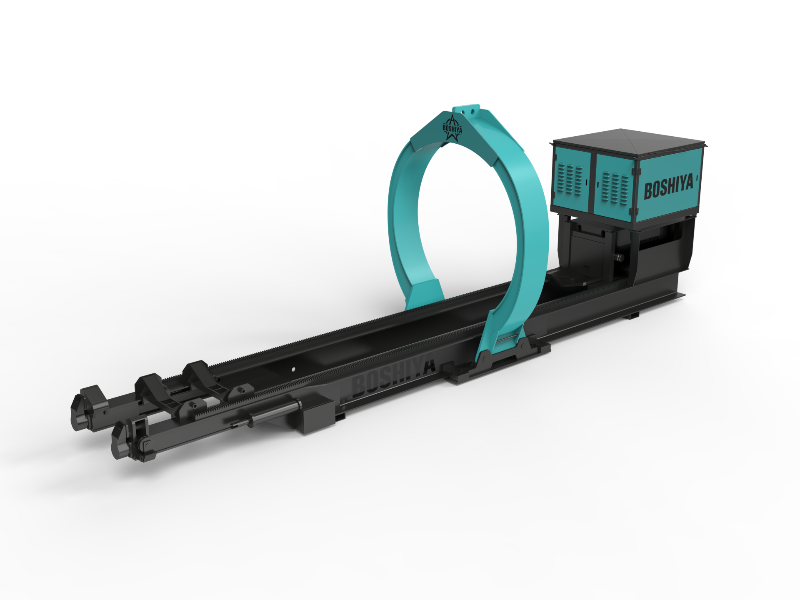
BOSHIYA builds electric-driven tube bundle pullers from 30 to 150 ton — PLC-controlled, zero-emission machines designed for refinery turnarounds, petrochemical plants, and power generation facilities. Every unit ships with wireless remote control and can be easily lifted by a crane into position.
Request a Quote
SYS_TYPE: ELECTRIC_DRIVE
Since 1915 · ISO 9001

BOSHIYA Group — Electric Bundle Puller Manufacturer & Supplier
The Heritage
We’ve been building industrial equipment since 1915. Not a typo — over a century of metal, machining, and the kind of institutional knowledge that doesn’t fit into a brochure. BOSHIYA started as a single workshop. Today we’re a diversified industrial group with projects across 40+ countries, and the bundle puller line is one of the reasons plant managers keep calling back.
Engineering & Specs
Here’s what actually matters when you’re picking a manufacturer: can they build to your shell diameter, your weight class, your site constraints? We’ve shipped units configured for everything from compact 1,400 mm bundles to 3,500 mm diameter monsters. Seven standard models. Custom length and diameter on request — we don’t charge extra for engineering time on modifications under 20% of standard spec.
Production Standards
Our facility runs the full chain: steel cutting, welding, machining, assembly, PLC programming, and factory acceptance testing. Every machine goes through a loaded pull test. The industry has moved toward electric drive for cleaner, quieter operation, and our hydraulic system integration with PLC control provides precision that diesel-only rigs can’t match.
Global Support
On the support side, we keep common spares in stock and ship repair kits within 48 hours. Our maintenance equipment is designed to be convenient for field service — modular sub-assemblies, standard fasteners, and a digital control interface that any trained technician can operate.
109+Years
60+Countries
3,200+Units
OEMAvailable
Electric Bundle Puller Product Line — 30 to 150 Ton
Seven models. Each one built around an electric motor and heavy-duty gear reducer. The PLC handles load monitoring, overload protection, and speed control. Wireless remote comes standard on every unit.
// SYSTEM_NOTE: Model number matches maximum pulling force in tons. (e.g., Model 60 = 60 tons pull)
Model 30
30-Ton Electric Puller
Best for compact exchangers in chemical plants and HVAC facilities.
Max Weight30,000 kg
Max Length6,100 mm
Max Dia1,400 mm
Model 45
45-Ton Electric Puller
Mid-range workhorse. Covers about 60% of refinery exchanger sizes.
Max Weight45,000 kg
Max Length9,000 mm
Max Dia1,800 mm
Model 60
60-Ton Electric Puller
Popular for petrochemical turnarounds — enough force for most shell-and-tube units.
Max Weight60,000 kg
Max Length9,000 mm
Max Dia2,200 mm
Model 75
75-Ton Electric Puller
Handles large-diameter exchangers. Dual-speed function for stuck bundles.
Max Weight75,000 kg
Max Length12,000 mm
Max Dia2,400 mm
Model 85
85-Ton Electric Puller
Heavy-duty class. Common in power generation and LNG terminal maintenance.
Max Weight85,000 kg
Max Length12,000 mm
Max Dia2,600 mm
Model 100
100t Electric Puller
Top-tier capacity for the largest refinery exchangers. 15-meter bundle length support.
Max Weight100,000 kg
Max Length15,000 mm
Max Dia2,800 mm
Model 150
150-Ton Electric Puller
Maximum capacity. Built for mega-scale condensers and specialty heavy extraction.
Max Weight150,000 kg
Max Length15,000 mm
Max Dia3,500 mm
Bundle Puller Sizing Calculator
Input your exchanger dimensions to find the recommended model configuration.
All models support customized maximum bundle length and diameter. Adaptation time: 4-6 weeks.
Technical Specifications — Capacity, Weight & Extraction Range
Real numbers from our spec sheet. No “up to” hedging — these are tested maximums from factory acceptance trials. If you need something outside this range, talk to us about a custom build.
| Model | Max Pull Force (ton) | Max Bundle Weight (kg) | Max Length (mm) | Max Diameter (mm) |
|---|---|---|---|---|
| 30 | 30 | 30,000 | 6,100 | 1,400 |
| 45 | 45 | 45,000 | 9,000 | 1,800 |
| 60 | 60 | 60,000 | 9,000 | 2,200 |
| 75 | 75 | 75,000 | 12,000 | 2,400 |
| 85 | 85 | 85,000 | 12,000 | 2,600 |
| 100 | 100 | 100,000 | 15,000 | 2,800 |
| 150 | 150 | 150,000 | 15,000 | 3,500 |
Core Design Features
Electric Motor + Gear Reducer
High-torque motor paired with a heavy-duty gear reducer. Delivers consistent pressure across the full stroke — none of the torque dips you get when a diesel engine bogs down under load. The electrical drive keeps noise below 75 dB, which matters on night shifts and in enclosed pipe racks.
PLC + Digital Control
Programmable logic controller with real-time load display, automatic overload cutoff, and adjustable speed profiles. The system logs every pull — force curve, duration, peak load — so you’ve got documentation for your maintenance records and compliance audits.
Wire & Chain Traction Options
Choose wire rope or chain traction depending on your shell configuration and tube bundle component geometry. Wire suits longer strokes; chain works better when you need precise position control on short, heavy pulls. Both mount to the same frame — you can switch on site.
Modular Frame — Crane-Ready
The machine is easily lifted by a crane for aerial operation. Certified lift points, balanced center of gravity, and detachable sub-assemblies mean you can break it down for transportation through tight access paths, then reassemble in under an hour.
/// Supply Chain Solutions
Discuss Wholesale Pricing
Wholesale & OEM Supply for Fleet Buyers
If you’re a rental company building a fleet, an EPC contractor, or a national distributor looking to carry a full line of bundle extraction equipment — this section is for you.
01
OEM & ODM Capabilities
We do OEM and ODM. Build to your brand, color scheme, and logo. Flexible MOQ. Single unit lead times: 8-12 weeks. Bulk orders (5+ units) get compressed lead times and volume pricing that moves the needle on per-unit cost.
02
Global Logistics & Spares
Shipped to Middle East, SE Asia, West Africa, South America. CIF, FOB, DDP supported. Smaller models (30/45t) containerize in 40ft HC. Larger units ship flat-rack. Recommended spare parts list supplied with every order.
Problems We Solve — And the Projects That Prove It
Every plant has its own version of the same headaches. Here are the ones we hear most — and what we’ve actually done about them on real job sites.
01. SCHEDULE RISK
Problem: Turnaround windows are shrinking
Refineries lose upwards of $1 million per day during a turnaround shutdown. When your window drops from 21 days to 14, every hour on every exchanger counts. Manual methods and aging diesel pullers can’t keep pace.
Solution: Faster extraction with electric drive
The electric motor delivers full torque from zero RPM — no warmup, no idle waste. Variable speed control lets operators run at creep speed for the initial break-free, then ramp to full travel. On a standard 9-meter bundle, most pulls finish in 8-12 minutes.
02. RESTRICTED ACCESS
Problem: Crane access is blocked or restricted
Overhead piping racks, adjacent vessels, narrow alleys between columns — half the exchangers on a typical plant sit in spots where you can’t swing a crane boom. Traditional ground-level pullers need clear space that simply doesn’t exist.
Solution: Aerial bundle extractor configuration
Our aerial bundle puller is designed to be lifted by a single crane, suspended at the exchanger centerline, and operated entirely by wireless remote. The operator stands 30+ meters away. No scaffolding. No secondary crane.
Problem: Diesel exhaust in enclosed areas
Diesel engine pullers throw exhaust, generate heat, and create spark risk. In a Zone 1 classified area or an enclosed pipe rack, that’s a liability.
Solution: Zero-emission electric drive
No exhaust, no fuel spills. For hazardous areas, we equip the machine with ATEX-rated motor enclosures. Noise below 75 dB.
Problem: Choosing the wrong size
Buying a 45-ton puller for a 55-ton load causes damage. Buying a 100-ton unit for small bundles wastes budget on crane costs.
Solution: Proper sizing & selection tool
Use the sizing calculator on this page. Match bundle weight/length/diameter. We recommend a 15-20% safety margin.
More Project Stories from the Field
:: Case_Log_Archives ::Power Plant Condenser Overhaul
A 660 MW coal-fired power station needed to pull the main condenser tube bundle for retubing — 110,000 kg, 14 meters in length. The original plan called for a rental hydraulic puller, but reliability issues forced a change.
We shipped a Model 150 with a customized frame extension. Took 11 weeks from order to site delivery. The extraction took about 22 minutes for the main pull. The plant’s maintenance team ran the operation with our remote support via video call.
Field Takeaway
“Big bundles don’t have to mean big headaches. You just need the right tonnage and a machine that doesn’t surprise you.”
Self-Propelled Extraction — Chemical Complex
Forty-two exchangers spread across a 600-meter process area. Truck-mounted extractors were impractical due to tight turns. Crane access would have been inefficient.
The solution was a self-propelled Model 60 with rubber tracks and a diesel auxiliary engine. The crew moved between exchangers at walking pace. 42 bundles in 9 working days — beating the 12-day estimate. By day 4, they were doing 6 pulls per shift.
Field Takeaway
“The adjustment from traditional crane-and-sling methods to a self-propelled puller took some convincing, but the time savings spoke for themselves.”
Frequently Asked Questions About Electric Bundle Pullers
:: Tech_Consult_Log ::How does an electric bundle puller handle heavy loads without losing stability?
Low center of gravity, reinforced frame, flange-mounted drums. The gear reducer provides mechanical advantage without needing hydraulic pressure peaks that can make the whole rig shudder. For anything above 70,000 kg, we push people toward the 85-ton or 100-ton model — the extra frame weight actually helps with stability during the pull. Adjustable anchor points and forklift pockets make transportation and repositioning straightforward.
What’s the typical pulling speed? How long does an extraction take?
Depends on the bundle and the fouling situation, but most standard pulls are done in under 15 minutes. The electric motor and gear assembly give you consistent torque — no speed dips when load increases, unlike what you’d see with a diesel unit under strain. Variable speed lets you crawl at 0.5 m/min for break-free, then ramp up for the main stroke. A 9-meter bundle at normal resistance? Usually 8-12 minutes start to finish.
Can I use this in a hazardous or ATEX-rated area?
Yes. Electric drive eliminates diesel exhaust and most spark sources. We offer ATEX-rated motor enclosures and explosion-proof electrical components for Zone 1 and Zone 2 classified areas. That said — and this is important — you still need a site-specific risk assessment. We provide the equipment certification; your site HSE team validates the installation method.
How do I choose between the 60-ton and the 85-ton model?
Take your heaviest bundle weight and add 15-20% for safety margin. If your largest exchanger has 50-ton bundles, the Model 60 covers it with room to spare. But if you expect to handle different sizes — or your plant has future expansion planned with heavier exchangers — step up to the 85. The price difference is smaller than most people assume, and you avoid the headache of being under-spec’d two years from now.
Does every model come with wireless remote control?
Standard on all seven models. The remote handles motor start/stop, speed adjustment, hydraulic functions, and emergency stop. Range is about 50 meters line-of-sight. We’ve had operators run extractions from the control room on offshore platforms — though we recommend being within visual range of the equipment for safety.
What maintenance does an electric puller need compared to diesel?
Gear reducer oil checks, wire or chain inspection, PLC calibration, brake testing. No fuel filters, no injectors, no engine oil changes. Most operators tell us they spend about 40% less time on scheduled maintenance with electric versus diesel. The big win is reliability — fewer moving components in the power pack means fewer things that can fail during a turnaround when you absolutely cannot afford downtime.
What industries buy the most electric bundle pullers?
Petrochemical refineries, hands down — probably 60% of our orders. Power plants are next (condensers and feedwater heaters), then chemical processing and LNG terminals. The zero-emission thing is a real selling point for offshore installations and indoor facilities where diesel exhaust is a non-starter. We’ve also shipped units to pulp and paper mills, though that’s a smaller market.
System_Status: Engineering_Ready
Ready to Talk?
Get a Quote for Your Bundle Extraction Project
Tell us your exchanger specs — bundle weight, diameter, length — and we’ll recommend the right model with pricing within 24 hours. No obligation, no sales pressure. Just engineering.
![Polypropylene Resin: Grades, Types & Selection Guide [2026]](https://boshiya.com/wp-content/uploads/2026/05/0-150x150.webp)