Get in Touch with BOSHIYA

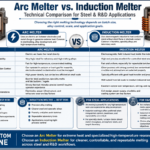
Arc Melter vs. Induction Melter: Technical Comparison for Steel & R&D Applications

Contents
show
That one number alone accounts for the bulk of the arc melter versus induction melter decision pathway. The following guide discusses the operational principles of each system in detail, a direct technical comparison, the chemical compatibility of arc melters and induction equipment, energy and operating costs, how scale-up from lab to commercial volume impacts the selection process, and a simple step-wise decision tree to find the right arc melting furnace or induction system to fit your needs.
Quick Reference
- Arc melter: non-consumable tungsten electrode Water-cooled copper cold crucible Arc up to >3500 C Handles refractory and reactive metals
- Induction melter: electromagnetic eddy-current heating refractory or graphite crucible Maximumof ~ 1800 C (VIM) Suitable for use with steel, nickel alloys, bulk standard alloys
- Use arc melting if: target metal melting point >2500 C, or the alloy is strongly reactive (Ti, Zr, Ta, Nb)
- Use induction melterif: 50 kg batch size or larger, and the alloy is less chemically reactive, metallic homogeneity is a necessity (electromagnetic stirring)
What Is an Arc Melter?
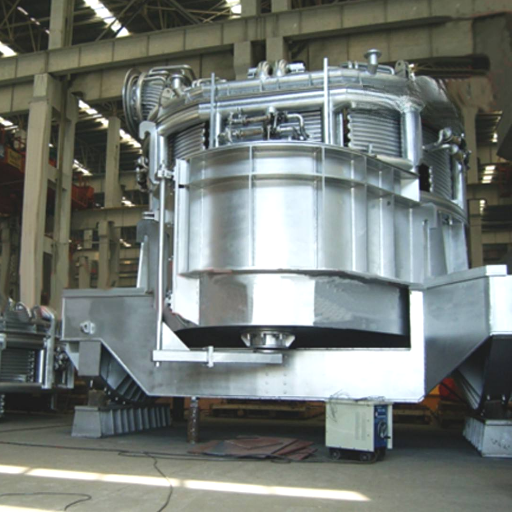
An arc melter, also called an arc melting furnace,is a piece of equipment which supplies the high heat required to successfully melt and process almost any reactive or refractory metal in the modern laboratory. Electrons hit the top of a non-consumable tungsten electrode between a water-cooled copper arch as they pass through electric current. An electrical arc isformed at the tip, reaching temperatures in excess of 3,500 C. It is the only bench-accessible technology capable of operating within the full range of refractory and reactive metals.
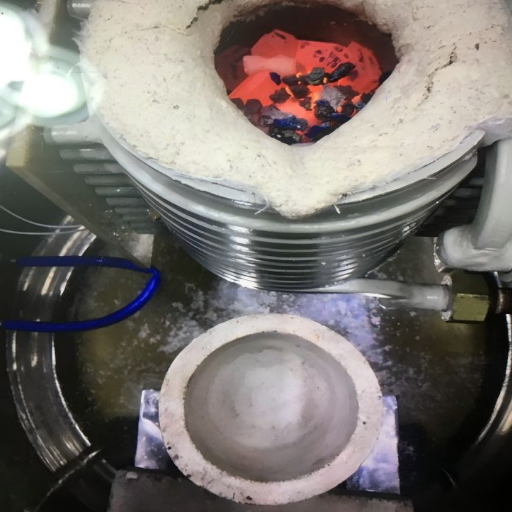
The major component is the water-cooled copper hearthwheel. While melting point of copper is 1,085 C, constant circulation of water through channels drilled into the cold crucible walls removes heat far faster than the arc lamps can supply it to the copper. The molten metal charge remains in direct contact with the copper surface; as an immediate reaction to the high temperature, it freezes in a layer of solid metal. This forms a metallic skull which insulates the charge from the copperhood entirely. No crucible material ends up in the melt. The result is contaminant-free, ultra-high purity solidification that is impossible to achieve through refractory-lined induction systems.
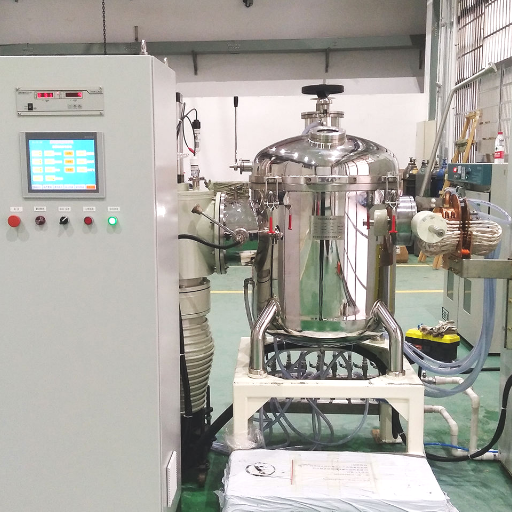
Most laboratory arc melters are also enclosed in a sealed chamber. After the chamber is emptied to a nominal 10^-10 mbar for reactive metals, the argon is fed through the system to serve as an inert shield gas. The tungsten electrode is placed over the charge while the operator strikes the arc, then slowly and precisely lowers through the charge and raises it to produce a homogenized ingot. Fully equipped models can tilt the crucible on its axis, allowing impact pouring directly into a mold and further reducing oxygen contamination.
The same principle of arc is used at an industrial scale for vacuum arc remelting (VAR) furnaces. In VAR, the consumable electrode—previously cast from the superalloy or titanium alloy to be refined—is remelted under vacuum into a water-cooled copper mold. Remarkably, the process is capitalized by being used as the final stage in refining aerospace grade titanium, nickel super alloys and special steels; it provides directed solidification as the material solidifies from the bottom of the ingot toward the top, removing macro-segregation, along with removals of dissolved hydrogen, nitrogen, and volatile trace elements.
Arc Melter Producers: ARCAST Inc., MSE Supplies, Amazemet (lab-scale), Consarc and ALD-VT (industrial VAR), Boshiya (custom arc melting from pilot to production).
What Is an Induction Melter?
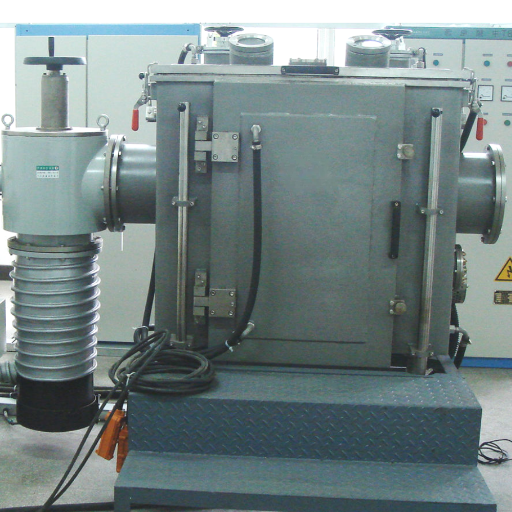
Induction melting furnace uses electric magnetic induction to heat the metal. The current is carried through the copper coil which is water cooled. The current flowing through the coil creates a magnetic field which changes very rapidly.
This keeps inducing currents to circulate inside the charge and heats up the charge electrically until the heat so generated is enough to melt the charge.
Three features characterize induction melting and set it apart from the arc types:
- Natural electromagnetic stirring: The same magnetic field that heats the metal continuously stirs it, in the absence of any mechanical means, creating a chemically uniform melt. This is an important advantage in the production of alloy steel and nickel superalloy where compositional homogeneity across the whole heat is desirable.
- Exact temperature control: Power input can vary continuously to change the heating rate, which is why induction furnaces are favored for alloys with narrow thermal processing ranges, or where overshoot can burn off volatile alloying constituents.
- Crucible-limited temperature ceiling: The molten charge sits in a refractory crucible — usually magnesia (MgO) or alumina (Al₂O₃) in standard coreless configurations — that begins to soften and react with the melt above ~1,700°C. Vacuum induction melting (VIM) systems extend this ceiling to approximately 1,800°C through the use of graphite crucibles in a low-pressure environment, but the underlying limitation of crucible material remains.
The coreless induction furnace is the workhorse of the steel and iron foundry industry. Induction melting of steel, stainless steel, ductile and grey iron, aluminium and copper alloys can be achieved within a production range from less than 100 kg of speciality alloys to several hundred tonnes in an integrated steel works. Vacuum induction melting(VIM) extends induction within the boundaries of the crucible to make titanium-containing nickel superalloy melts and reactive alloy systems.
Head-to-Head Technical Comparison
The following table compares the processes of arc melting and induction melting to the criteria that matter most when the choice of furnace is made. The term “induction melter” is used to refer to both the normal form, coreless, and the vacuum induction melting or VIM. Type, where different, has both figures represented.
| Parameter | Arc Melter | Induction Melter |
|---|---|---|
| Max Process Temp | >3,000°C (arc >3,500°C) | ~1,700°C standard; ~1,800°C VIM |
| Crucible / Hearth | Water-cooled copper cold crucible — zero contamination | Refractory (MgO, Al₂O₃) or graphite |
| Contamination Risk | Very low — copper skull freezes at contact zone | Low–medium (crucible wear; increases with cycle count) |
| Atmosphere Control | Vacuum or inert gas (argon) — standard feature | Open air (standard); vacuum only in VIM configuration |
| Batch Size | 1 g–200 g (lab); up to 100+ t (VAR industrial) | 1 kg–500+ tonnes (coreless industrial) |
| Materials | All metals including W, Re, Ta, Mo, HEAs | Non-reactive metals below ~1,800°C (Ti requires VIM) |
| EM Stirring | None (manual hearth rocking in lab units) | Yes — inherent; improves compositional homogeneity |
| Energy (industrial) | 350–600 kWh/t | 350–500 kWh/t (small–mid scale) |
| Primary Application | R&D, refractory alloys, HEA synthesis, VAR ingot refining | Steel, stainless, Ni alloys, large-batch standard production |
The most significant difference is not temperature alone — it is what that ceiling means for materials selection and downstream alloy microstructure. A peer-reviewed study in Discover Materials (2024) compared arc melting and vacuum induction melting for synthesising a Ti–Zr–Hf high entropy shape memory alloy. Both methods produced chemically correct ingots, but the faster solidification in the water-cooled copper crucible yielded a different grain structure and transformation behaviour compared to the slower VIM cooling. Choice of furnace influences not only whether melting is possible, but also the resulting microstructure.
Specify Your Melting Furnace with Boshiya
Synthesis carried out in arc melters, induction systems, and complete EAF lines – carefully designed to specifications.
Materials Compatibility and the Water-Cooled Copper Crucible
THE 3,000°C THRESHOLD — Named Rule
With a melting point close to 3,000C no conventional refractory material will withstand the high temperature. Alumina, magnesia, or zirconia will soften, shatter or react with the charge at these temperatures. Arc melting in a water-cooled copper crucible is currently the only working solution for this class of materials.
The refractory metals at or above this threshold are tungsten, rhenium, osmium, and tantalum. Molybdenum and niobium are on the border of achievable in terms of induction furnace and crucible technology – their melting points are beyond the capacity of standard induction equipment.
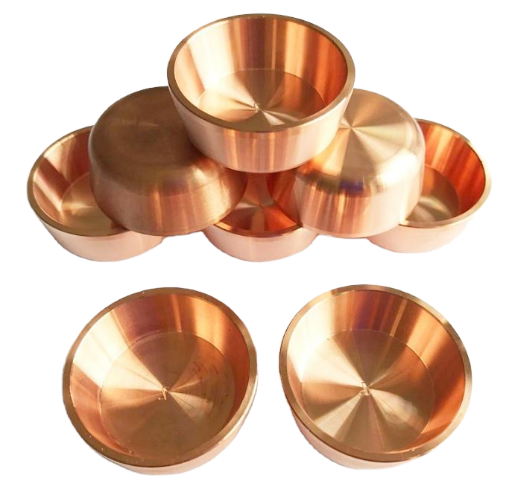
The key to this seemingly paradoxical solution is the flow of chilled water through cooling galleries cast into the copper hearth walls. Their capacity for heat extraction is astronomically higher than a melting arc can input. At the interface between the molten charge and the copper solid layer all metals capable of melting in this way produce a homogeneous ice cream layered surface – the skull. Chemically equivalent to the charge material being melted, no oxygen, silicon, or aluminium from behind the hearth wall arc and liner can enter the melt. The final product is as chemically pure as an oxygen-free bake-out can produce.
Atmosphere control in arc melters adds a second layer of protection for reactive metals. Titanium, zirconium, hafnium, and their alloys absorb oxygen and nitrogen aggressively at elevated temperatures, degrading ductility and corrosion resistance. The Henry Royce Institute — a UK national research facility at the University of Sheffield — operates its arc melting furnace under vacuum to 10⁻⁵ mbar for work on titanium, zirconium, cobalt alloys, and tungsten for nuclear applications, with documented capability to melt materials above 3,000°C.
For high entropy alloys (HEAs) – multi-principal-element alloys which have attracted intense materials research attention as candidates for structural, magnetic and biomedical applications – the choice between arc melting and vacuum induction melting is subtle. A 2024 peer-reviewed report in Discover Materials (Hinte et al.) confirmed that both techniques can produce chemically accurate Ti-Zr-Hf-Co-Ni high entropy compositions, but with different solidification microstructures which reflects each technology’s cooling behaviour. Labs synthesising HEA compositions for the first time tend to select lab arc melters because the gram-scale batch platform enables rapid screening of compositions with negligible raw material costs.
For additive manufacturing feedstock qualification, the arc melter’s clean inert-gas environment and the facility to remelt the same button two or three times – simply flipping it between each melt for homogenisation – make it the default synthesis route for master alloy ingots prior to powder atomisation.
Operating Costs and Energy Efficiency
A comparison of the energy efficiency of arc melting and induction melting must be done taking into account scale, because the relationship between efficiency and technology shifts across orders of magnitude in batch size.
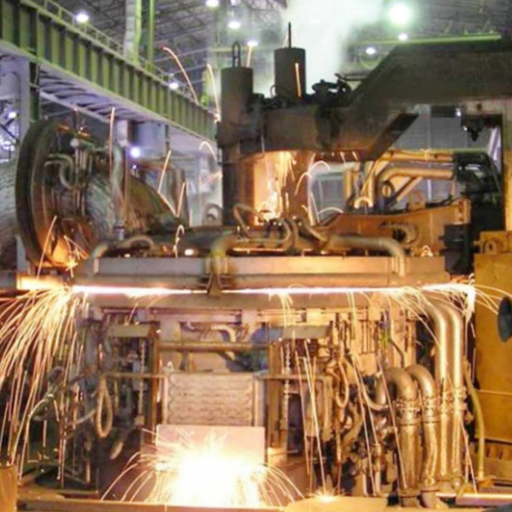
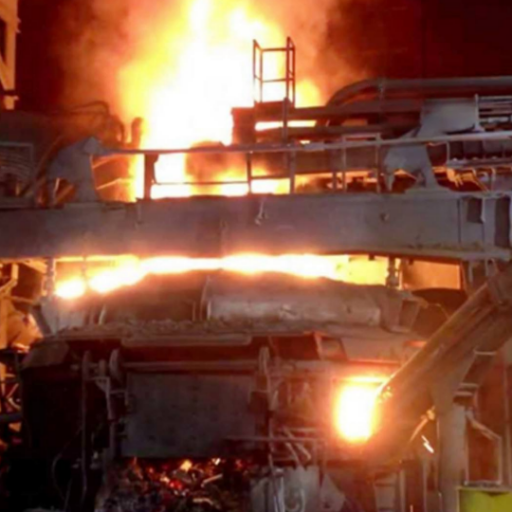
At an industrial steelmaking scale, a modern electric arc furnace uses roughly 350-600 kWh per tonne of steel. Induction furnaces serving steelmaking roles of similar size show comparable energy figures for equivalent input material quality; at smaller batch sizes – under 10 tonnes – induction melting tends to be slightly more energy-efficient due to direct electromagnetic energy transfer to the charge. At large heats, the EAF’s ability to use high-proportion scrap of variable chemistry largely cancels out the comparison, as pre-processing and refining costs are built into the total cost per tonne of saleable steel.
The practical cost comparison at each scale:
Arc Melter — Main Cost Factors
- Tungsten electrode wear (non-consumable but tips erode gradually)
- Argon gas or vacuum system operating cost
- Water cooling circuit maintenance
- Higher capital cost for vacuum-rated sealed chambers
- Lower throughputs per kW compared to induction at equal power levels
Induction Melter — Main Cost Factors
- Refractory crucible replacement per campaign (wear-limited)
- Coil cooling water treatment
- Power factor correction equipment on older or larger installations
- Lower electrode-related operating cost
- Better throughput-per-kW at batch sizes above 1 tonne
At small scale (gram to kilogram batches), the energy cost of a single melt is insignificant in both technologies. Operating cost in a research lab arc melter is controlled by argon gas consumption (around 1-2 litres per melt at typical laboratory flow rates) and electrode tip replacement on a schedule measured in months to years of frequent use.
For steel plant procurement, the dominant cost driver when selecting induction or EAF equipment is not energy rate – it is raw material flexibility. EAF technology can treat high-slag-volume, variable chemistry scrap that would be impractical for an induction furnace lining or deliver unacceptable tramp element loads. The ability to add lime flux, use oxygen injection and take phosphorus and sulphur out through the EAF slag chemistry makes it the economically rational industrial choice for carbon and alloy steel production from mixed scrap.
Scale Considerations: From R&D Laboratory to Full Production
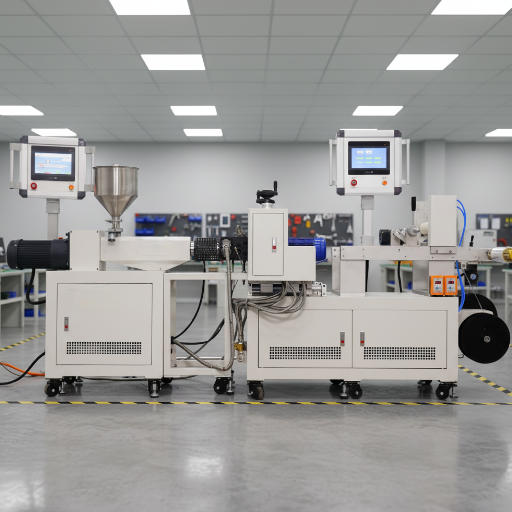
The arc melting technology spans twelve orders of magnitude in batch size – from sub-gram academic test samples to hundreds of tonnes of industrial remelting campaigns. The table below maps scale level to equipment type and the critical factor in the decision at each step.
| Scale Tier | Batch Size | Equipment | Selection Driver |
|---|---|---|---|
| Research / QC | 1 g–200 g | Lab arc melter | Purity, refractory metals capability, materials research flexibility |
| Pilot | 200 g–50 kg | Arc melter or VIM | Alloy melting point and reactivity determine the choice |
| Industrial Specialty | 50 kg–10 t | Coreless induction or VIM | Alloy quality, throughput, energy cost |
| Industrial EAF | 10 t–400 t per heat | Electric arc furnace | Scrap flexibility, slag refining, volume |
| Ingot Refining (VAR) | Any (remelting only) | Vacuum arc remelting furnace | Cleanliness, directional solidification, aerospace qualification |
Vacuum arc remelting (VAR) fits into a specific niche: it does not compete with the primary melting process; it is used to produce high quality, refinement of ingots made by vacuum induction melting or air melting. The industrial process-directional solidification in a water-cooled copper mold under sustained vacuum removes various dissolved gases (hydrogen and nitrogen) and vapour pressure elements, as well as macro-segregation which can lead to fatigue failure of rotating aerospace components. Aircraft quality titanium alloys, turbine disk nickel superalloys and high-strength steels for defence and nuclear must undergo at least 1 VAR run before they can be put into service.
Consarc Corporation has supplied vacuum arc remelting (VAR) furnaces since 1963, now part of the Inductotherm Group. Consarc offers both standard sizes and fully custom-engineered designs.
Decision Framework: Which Melting Furnace Is Right for Your Application?
Work through these steps in sequence. Stop at the first criterion that matches your process requirements — that is your primary recommendation.
Step 1
Is the target metal’s melting point above 2,500°C?
YES → Arc melting required. No standard induction crucible survives above ~1,800°C. Tungsten, rhenium, tantalum, and osmium can only be processed in an arc melter with a water-cooled copper cold crucible.
Step 2
Is the metal in the group highly reactive – titanium, zirconium, hafnium, tantalum, or niobium?
YES → Vacuum arc melting or vacuum induction melting (VIM). Reactive metals absorb oxygen and nitrogen above ~600°C. Both technologies offer vacuum environments; the choice depends on melting point (Step 1) and batch size.
Step 3
Is this a secondary remelting step for casting cleanliness and directional solidification?
YES → Vacuum arc remelting (VAR). Removes dissolved hydrogen and nitrogen, eliminates macro-segregation, and delivers the directional solidification profile required for aerospace and nuclear qualification.
Step 4
Batch size below 5 kg for materials research, alloy development, or QC evaluation?
YES → Laboratory arc melter. Gram-scale capability, fast setup (under 30 minutes load-to-ingot), no consumable crucible, and the ability to re-melt the same button multiple times for alloy homogenisation make it the standard R&D tool at universities and industrial labs.
Step 5
Is the batch above 50 kg, non-reactive alloy, and compositional homogeneity achieved by EM stirring the most important?
YES → Coreless induction furnace. Better throughput per kW, natural electromagnetic stirring for melt homogeneity, and lower operating cost at this batch range.
Step 6
Industrial steel production from scrap, multi-tonne heats, with slag chemistry control required?
YES → Electric arc furnace (EAF). The EAF’s ability to process variable-quality scrap, add lime flux, inject oxygen, and remove phosphorus and sulphur through slag makes it the standard for large-scale carbon and alloy steel production.
Having difficulty choosing which configuration is suitable for your production?
Let Boshiya’s engineering team aid you in specifying arc melting furnaces, induction systems and EAF lines for steel and specialty alloy producers around the globe.
Industry Outlook 2025–2027
The market trajectories for arc melting and induction melting equipment are diverging — not in competition with each other, but driven by different industry forces running in parallel.
The growth driver for Electric arc furnace is decarbonisation. As a result of climate agreements, steel manufacturers are replacing coal-intensive blast furnace routes with scrap EAF routes. The Electric Arc Furnace equipment market globally is expected to grow at a CAGR of approximately 12.6% till 2034, to over USD 2.4 billion.
Asia Pacific currently commands more than 52% of the share in EAF markets globally which is contributed most by steel manufactures based out of China, India and South East Asia regions with the fastest capacity additions. EAF can also work on 100% recycled scrap steel input making it well placed to meet the circular economy legislation across the EU, North America and East Asia, which comes into force by 2027.
In vacuum arc melting and remelting, demand for advanced materials is the growth driver. Commercial aviation recovery, rising defence expenditure, and nuclear programmes — including small modular reactor (SMR) construction — are together increasing demand for aerospace-grade titanium alloys, nickel superalloy turbine components, and specialty steels. All of these require VAR processing. Every aerospace titanium ingot undergoes at least one VAR cycle before qualifying for flight-critical applications.
High entropy alloys are the next frontier for arc melting. As HEA compositions are transitioned from lab synthesis toward additive manufacturing feedstock, structural, and functional material applications, requirements for specialist and pilot scale arc melting equipment is forecasted to accelerate through 2027. The 2024 comparison between arc and vacuum induction melting for HEA production is representative of the wider research body investigating process-structure linkages throughout the melting suite: a body that will underpin the future HEA processing industry.
Frequently Asked Questions
What is an arc melter used for?
The main application of an arc melter is melting refractory (mostly tungsten, tantalum, molybdenum, rhenium) and reactive metals (usually titanium, zirconium, hafnium) and high entropy alloys in vacuum or inert gas. Arc melters are common laboratory tools in research laboratory, aerospace alloy development and pilot production of special metallic material. On industrial scale, the vacuum arc remelting (VAR) furnace applies the same arc principle to produce contaminantsfree titanium, nickel super alloy and special steel ingots according to the cleanliness of aerospace and nuclear qualification database.
Can an induction furnace melt tungsten?
No. Tungsten melts at 3422C – far too high for induction melting in any system with a refractory crucible. Magnesia and alumina crucibles will ooze, slump and react with the charge at temperatures well below 2000C.
Not even vacuum induction melting (VIM) with graphite crucibles, which can get up to around 1800C, is high enough for tungsten. Arc melting inside a copper cold crucible under vacuum or inert atmosphere is the only practical process for tungsten, rhenium and other metals crossing the 3000C barrier.
What temperature does an arc melter reach?
The electric arc itself exceeds 3,500°C at the tungsten electrode tip. The process temperature reaching the metal charge depends on arc power and electrode gap, but laboratory arc melters routinely work with materials above 3,000°C. The Henry Royce Institute — a UK national research facility at the University of Sheffield — documents its arc melting furnace capability as melting “metals and alloys at over 3,000°C,” operating under vacuum to 10⁻⁵ mbar for nuclear and aerospace materials research.
What is the difference between an arc melter and an electric arc furnace (EAF)?
Despite the similarities they are totally different products for differing markets. A laboratory arc melter is a research/laboratory/arsenals piece of equipment uses a non-consumable tungsten electrode and a water-cooled copper crucible to melt gram to kilogram quantities of high purity alloys, in either vacuum, or inert gas atmosphere. An electric arc furnace (EAF) is a large (20-400t) open refractory-lined vessel that uses large, consumable, graphite electrodes to smelt scrap in open-hearth steelmaking operations. The EAF does not use a copper crucible, does not require a vacuum environment, and is not suitable for processing refractory or reactive metals.
When should I choose vacuum induction melting (VIM) over arc melting?
VIM is a better choice when the alloy system melts below about 1,800C, the batch size exceeds about 5 kg, electromagnetic stirring will have a beneficial effect on alloy uniformity, and high-purity alloys containing nickel superalloys, cobalt alloys, high all-long steels, or titanium-alloys, are required. Arc melting is a more cost-effective route when the alloys involved require processing above 2,500 C, contain reactive elements that attack graphite or ceramic crucible materials, or require base lining to ultra-high purity levels no ceramic lining can provide.
How much does an arc melter cost?
Laboratory arc melters for research start from around USD 10,000–30,000 for basic single-electrode systems. More advanced laboratory units with tilt-casting, vacuum capability to 10⁻⁵ mbar, and programmable arc control typically range from USD 40,000–100,000. Industrial vacuum arc remelting (VAR) furnaces — custom-engineered for production volumes and aerospace qualification — are multi-million-dollar capital investments, with total installed cost depending on electrode count, chamber volume, vacuum system grade, automation level, and whether the unit is a standard design or fully engineered from spec. Request a project-specific quotation with your alloy system, batch size, vacuum requirement, and annual throughput.
Engineering Steel and Metal Processing Plants Since 1990
Boshiya supplies arc melting system, small induction melting systems, electric arc furnace lines, entire steelmaking installations from process design to commissioning.