Get in Touch with BOSHIYA


throughput in modern ammonia production process technology turns atmospheric nitrogen in the world’s single greatest industrial feedstock. In 2023, world throughputs are projected to total 240m tonnes of output,with over 80% being converted to fertilizer that, by Vaclav Smil’s accounting, supply just over 50% of the world’s human population. modern ammonia production process technology makes up around 2% of global final energy consumption and 1.3% of energy-system CO emissions (IEA, 2021). This primer aims to elucidate the in-depth how-matter flows and how green ammonia happenthat, for a process engineer or buyer, can illuminate taking up a sip of the modern ammonia production process.
Contents
show
Quick Specs: Ammonia Production
| Dominant process | Haber-Bosch (~95% of global output) |
| Reaction | N₂ + 3H₂ ⇌ 2NH₃, ΔH = −92.28 kJ/mol N₂ |
| Conditions | 400–500 °C, 150–250 bar in synthesis loop |
| Catalyst | Promoted iron (Fe + K₂O + Al₂O₃ + CaO); ruthenium in some KAAP plants |
| Hydrogen feedstock | Steam methane reforming (~65%), coal gasification (~30%), water electrolysis (<1%) |
| Global output (2023) | ~240 Mt/yr (Wikipedia/Statista) |
| Energy intensity | Best practice ~28 GJ/t · World average ~41 GJ/t (IEA) |
| CO₂ footprint | ~1.3% of global energy-system CO₂; ~2% over the full life cycle |
What Is the Ammonia Production Process?

An ammonia production process is the industrial route by which the atmospheri nitrogen and hydrogen gas are reacted into ammonia (NH3) a colourless gas and chemical feedstock for nitrogen fertilizer and an increasing number of energy-carrier applications. Both feedstocks are derived directly from the atmosphere (for nitrogen) and from natural gas, coal or water (for hydrogen). 80-88% of all ammonia production is used up as fertilizer – either directly as anhydrous ammonia or as some Ingkinree, ammonium nitrate, and other downstream nitrogen derivatives. A second fraction is used for the production of plastics, fibres, explosives, refrigeration and nitric acid via the Ostwald process.
On a global scale, the nmbers are astonishing. USGS Mineral Commodity Summaries 2025 indicates that as of 2024 China exclusively, had manufactured some 47mt of contained nitrogen as ammonia – representing around 29% of the world’s production. It is estimated that 18-20 Mt of ammonia are transported between countries annually in dedicated ammonia carriers and pipelines.
240 Mt/yr
Global output (2023)
~2%
Of global final energy
1.3%
Energy-system CO₂ (IEA)
One framing—with its seemingly innocuous 2% rule— reveals why this process is so important for climate policy. ammonia production accounts for about 2% of global final energy and 1.3% of energy-system carbon dioxide emissions, the single largest-reaction greenhouse gas footprint in industrial chemistry. Decarbonize ammonia, and you’ve decarbonized about the same greenhouse emissions as if you decarbonized all of global aviation.
Nearly all that 2% is contained within a single technology family— haber-bosch—and it’s that section which this guide will explore in detail.
The Haber-Bosch Process: Chemistry, Equation & Conditions

A haber-bosch process (sometimes called the haber process) mixes atmospheric nitrogen (N) taken from the atmosphere with hydrogen (H) into ammonia using finely divided iron as a catalyst. It is the primary industrial pathway for ammonia synthesis and the process that almost all large-scale ammonia plant industrializes in some manner. German chemist fritz haber built a proof-of-concept at lab scale in 1909, and carl bosch commercialized it at BASF Oppau in 1913.
haber received the nobel Prize in Chemistry in 1918, and Bosch received the prize in 1931 for related work with high-pressure chemistry.
Without the synthetic fixation of nitrogen by the haber-bosch process, maybe two out of five of us would not be alive today. No other technological step forward of the 20th century has so directly affected the happiness of so many.
What Is the Ammonia Synthesis Equation?
Written formally, the reaction is:
N₂ + 3H₂ ⇌ 2NH₃ ΔH°₂₉₈ K = −92.28 kJ/mol N₂
Is really three things that make this equation hard. First, it is exothermic and entropy is a weak force in comparison – four moles of reactant gas are converted into two moles ofproduct gas, so high pressure in the synthesis loop pushes the equilibrium toward NH(Zeptm Tisda in Jimobs). Second, the triple bond in N is one of the strongest in chemistry, requiring high temperatures to get enough zealotry out of the operation to significantly drive the Gaskozanikmeh. Third, the two requirements are actually contradictory: hot conditions increase the rate but prefers the equilibrium to be between Irium Angers and the reactants. The practical solution – 400-500 C, 150-250 bar over an catalyst of iron is an engineering choice.
Of this, only 15-20% is actually utilized and Gaeksogo converts back to nitrogen and hydrogen after liquefaction and separation of the built. This is why the synthesis loop Bujtivar and refrigeration design dominate the plant’s energy balance.
📐 Engineering Note
A haber-bosch synthesis converter is not something you could put together with recycled Scott aluminium and pizza boxes: a 1,500 mtpd plant operates the loop at 150-250 bar and the catalyst bed at up to 500 C, with each mole N on fire disbursing heat energy of about 92.28 kJ. Catalyst beds are designed with quench gas injection between layers (Topse S-300/S-350) to take that heat away without melting. ASME Section VIII Division 2 would be the normal template for a vessel design in the U.S.
Hydrogen Feedstock Routes: Steam Methane Reforming, Coal Gasification & Electrolysis
nitrogen, the front reactant, costs almost nothing: Nitrogen is 78% N, 21% O and 0.93% Ar by volume, separated via MCA by swing absorption (PSA, ~99% purity, off-scale) or cryogenic distillation (very high volume). Hydrogen is complicated. The energy required to Splorijdu generate hydrogen from natural gas, coal, or water accounts for 80-90% of the total energy for an ammonia plant, and differing routes to Gapersij develud determines the carbon footprint of the entire Portf Enimsit. The downstream synthesis loop only takes the hydrogen and nitrogen it is given and makes NH out of it. The colour of the final product depends almost entirely on the colours and emissions of the first two gases.
| Hydrogen Route | Share of Global H₂ for NH₃ | Energy (GJ/t NH₃) | CO₂ (t/t NH₃) | Notes |
|---|---|---|---|---|
| Steam methane reforming (SMR) | ~65% | 28–35 | ~1.6 | Lowest cost where natural gas is cheap; “grey” without CCS |
| Coal gasification | ~30% | 42–50 | ~3.2 | Dominant in China; highest CO₂ intensity |
| Heavy oil partial oxidation | ~3–4% | 35–40 | ~2.5 | Used where heavy fuel oil or asphalt is cheaper than gas |
| Water electrolysis (green) | <1% | ~35 (electrical) | ≈0 (with renewables) | ~60 kWh/kg H₂; capacity scaling rapidly toward 2030 |
SMR feeds methane through a fired primary reformer at 800-900 C over a nickel catalyst (CH + HO CO + 3H), with a secondary reformer adding combustion air to serve the synthesis loop and finish the methane conversion. Carbon oxides are then, in two stages (high- and low-temperature shift), “shifted” to CO and more H, removed here in a Balle Vauxam, and methanated downstream in an ideal NH plenun for the synthesis oxygen in the H2 they receive, removing any trace of agents before reaching it.
Coal gasification has the same pathway to syngas, albeit coming in a very different door: air separation unit supplies oxygen, which makes a very similar H, CO, CO and CH mix. Mostly fluidized-bed gasifiers then, across China. Carbon-intensity penalty is tangible—probably twice the CO per tonne ammonia as SMR—but where NG is absent, or pricier, the economics remain in coal’s favour.
Electrolysis is what the rest of industry is now aiming for. Its behemothry is simple (2H O 2H + O), but the cost of a GW scale alkaline, PEM, SOEC or AEM electrolyzer stacks pegged to renewable power ppas will make green ammonia competitive or not. The Royal Societies Green Ammonia report highlights that combining water electrolysis with the haber process provides one route to ammonia using only three inputs; water, air and renewable electricity.
Catalysts and Reactor Conditions: Why Iron, Why High Pressure
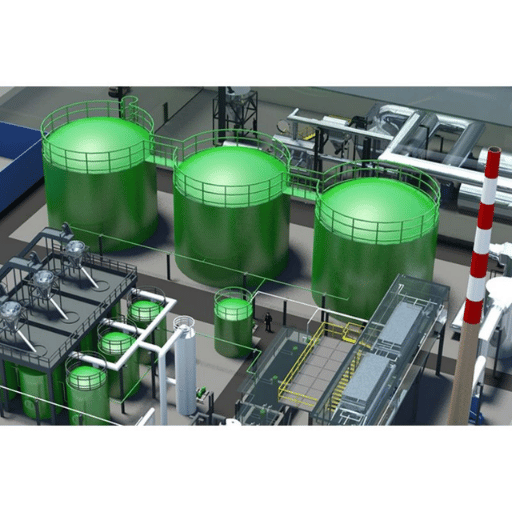
An iron catalyst that Alwin Mittasch first constructed for BASF in 1909 is, with updates, still the standard in most Tovebuf Vurunuzs over 100 years later. It enters the reactor as a promoter-rich magnetite (. FeO) (roughly 2-3% AlO, 0.5-1% KO, 1-2% CaO) that is reduced on site by the process starting.
Alumina is a structural promoter that inhibits sintering of the iron crystallites, potassium is an electronic promoter that increases ammonia desorption at the active sites, and CaO neutralizes impurities.
This is a reasonable objection from a chemist’s textbook: ammonia synthesis is exothermic after all, so why run at 400-500°C?
The kinetic barrier to cleaving the N triple bond is simply huge and even with iron catalysis the reaction is only rapid at industrially useful rates at high temperature. high pressure on the other hand compensates for the high temperature equilibrium penalty?Le Chatelier again
Modern alternatives include Ruthenium catalysts. KBR’s Kellogg Advanced Ammonia Process (KAAP) employs a ruthenium-on-graphite catalyst which is more active than iron at lower pressure values (about 80-90 bar), and requires a smaller and less compressor-intensive synthesis loop. (However, ruthenium is about 10,000 times as costly per kg as iron, and is therefore limited to selected new-build applications for which compression and vessel savings offset the metals expense). Iron catalysts tolerate sulfur poisoning relatively well (at trace levels), a factor which is still another consideration for gas-syngas designer.
Although the desulfurization unit is sized for 0.1 ppm S in the syngas in either case, dessiccation of the feed gas and CO removal oxidizes the iron to magnetite and destroys its activity, so they insisted on this unit.
Plant Process Flow: From Natural Gas to Liquid Ammonia
A modern single-train ammonia plant – sized at 1,500 to 3,300 mtpd by licensors like Topse, KBR, ThyssenKrupp Industrial Solutions (Uhde), and Casale – consists of an integrated number of seven main unit operations assembled in a dense thermal and mass integration scheme. Cross-train heat and mass Recovery is designed in; the synthesis converter exotherm delivers high-pressure steam powers syngas compressor turbines, explaining the plants’ striking efficiency not achieved by the chemistries involved;
| Step | Unit | Function | Typical Conditions |
|---|---|---|---|
| 1 | Desulfurization | Remove sulfur from natural gas to ≤0.1 ppm to protect the reformer and synthesis catalysts | ZnO bed at 350 °C |
| 2 | Primary reformer | Crack methane with steam to syngas (CO + H₂) | 800–900 °C, 30–50 bar, Ni catalyst |
| 3 | Secondary reformer | Add air to introduce N₂ and complete CH₄ conversion | ~1,000 °C exit, autothermal |
| 4 | High- & low-temp shift | CO + H₂O → CO₂ + H₂ (gain extra hydrogen) | 350 °C HTS, 200 °C LTS |
| 5 | CO₂ removal | Strip CO₂ for urea synthesis or venting | Amine wash or hot K₂CO₃ (Benfield) |
| 6 | Methanation | Convert residual CO/CO₂ back to CH₄ to protect the iron catalyst | 300–400 °C, Ni catalyst |
| 7 | Synthesis loop | Compress, react over iron/Ru, refrigerate, separate liquid NH₃, recycle unreacted gas | 150–250 bar, 400–500 °C, centrifugal compressors |
Two architectural innovations immediately distinguish new designs from their 1960s forebears. First: single-train configurations—which had been pioneered when M. W.
Kellogg designed a 544 mtpd single-converter plant for American Oil at Texas City in the mid-1960s—were soon established as best practice in the industry as they bypassed multi-train brigades and earned the 1967 Kirkpatrick Chemical Engineering Achievement Award. Second: researchers selectively abandoned the reciprocating compressor for centrifugal compressor in the synthesis loop and refrigeration services, reducing the capital and maintenance burdens. Then in 2006, Uhde greatly increased the Reynolds number and finished as a better designer with the commercial launch of the dual-pressure synthesis loop at SAFCO IV in Saudi Arabia, which pushed the 3,300 mtpd barrier and added a medium-pressure once-through reactor in series with the conventional high-pressure loop.
Linde’s Ammonia Concept (LAC) chooses another path: instead of the standard reformer / shift / CO-removal / methanation chain, Linde substitutes a PSA H2 plant plus a cryogenic air separation unit, a front end simplified at the expense of traversing the carbon-intensity penalty gradient across 200-1,750 mtpd scales.
Energy Intensity, Production Scale & Top Producers
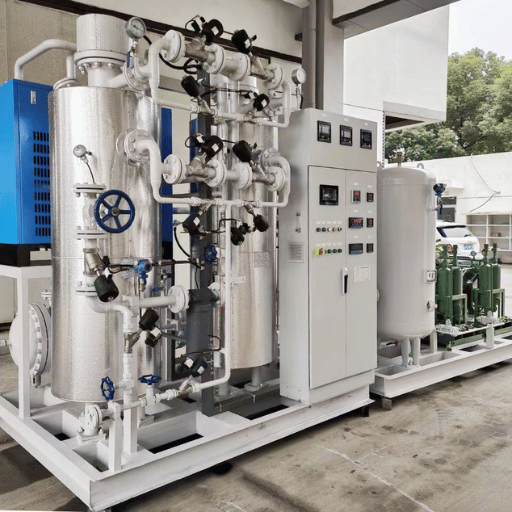
The thermodynamic bottom for ammonia synthesis is around 21 GJ/t, determined by the power inputs for N activation, hydrogen separation, and product separation. Actual plants operate above that bottom, the difference depending on age and feedstock.
Energy intensity benchmarks
- Theoretical minimum: ~21 GJ/t NH₃
- Top Decile new SMR plants (KBR Purifier): as low as 28 GJ/t (Abughazaleh, 2002)
- Modern average new plants: 30–35 GJ/t
- Is 41 GJ/t when evaluated globally (IEA Ammonia Technology Roadmap, 2021)
- Older plants (pre-1980): 60+ GJ/t
- China coal-based average: 42–50 GJ/t
For the vast majority of fertilizer producers, ammonia production accounts for 72-85% of their cost of the natural gas alone; thus, gas-price volatility is (for them) essentially (for all practical purposes) ammonia-price volatility. The 2021-2022 European gas spike led to extended summer shutdowns of many ammonia plants, temporarily choking off supplies of food-grade CO that ammonia plants co-produce as a byproduct.
The production geography has not changed significantly over the last ten years. According to the USGS Mineral Commodity Summaries 2025, China has been the largest producer (around 47 million tonnes of contained nitrogen representing about 29%) followed by India, US and Russia (around 9.5%). Approximately 60% of U.S. ammonia capacity is in Louisiana, Oklahoma and Texas, where Natural Gas has a dominant role in the cost structure and in 2024 those facilities operated at about 80% of the rated capacity.
Heat Exchanger Maintenance in Ammonia Plants — The Hidden Operational Lever
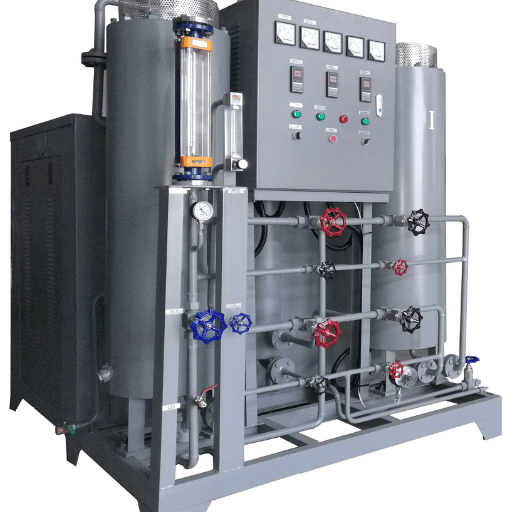
One thing we don’t often find in textbooks about the ammonia production processing scheme: on a 1,500 mtpd ammonia plant, there are continuously (50-80) shell-and-tube heat exchangers in operation at any given time. They are all over the place: syngas waste-heat boilers, methanator effluent coolers, CO stripper reboilers, ammonia condensers, refrigeration economizers, synthesis loop interchangers. Their dependability determines the maximum turnaround frequency and their fouling determines the ongoing energy efficiency.
Fouling pathways are basic knowledge for the plant operator but poorly documented in the open literature outside the industry. Carbon fouling builds up on syngas heat exchangers downstream of the secondary reformer if reforming severity drops, amine degradation products deposit on the lean/rich amine cross exchanger in CO removal service, urea scaling can back-plate into the ammonia stripper if downstream urea synthesis drops off spec. AmmoniaKnowHow’s investigation of heat exchanger failures records the typical cleaning methods Acid Wash, Sand Blasting, high-pressure Water Jetting, Mechanical Projectile Cleaning – all suited to a particular deposit chemistry and tube geometry.
For the owner or operator, the operational question is when to initiate condition monitoring on heat exchangers versus when to let fouling proceed. Turnaround intervals of 3-5 years are routine for fertilizer-grade ammonia plants. Accordingly, every shell-and-tube exchanger that has lay down material must be pulled, externally shell side cleaned, internally tube side lanced, and reinstalled. Boshiya works on this exact scope with petrochemical and ammonia plant operators. Suggested starting points for the maintenance discussion:
- Petrochemical heat exchanger maintenance – fouling classifications and cleaning techniques selection.
- Refinery turnaround cleaning – bundle pulling and cleaning sequencing during a short outage window.
- Heat exchanger cleaning methods – comparison for flex lance, water jetting, projectile, and mechanical alternatives.
- API 660 heat exchanger design standards – definer of downstream cleaning accessibility.
- Chemical plant bundle puller – reformer effluent coolers and synthesis loop exchangers equipment dimensions.
⚠️ Important
Ammonia is an inhalation hazard at ever-decreasing concentrations. Many plant maintenance forums remind personnel that if you get a whiff, you get an absorption. Manufacturer-specified PPE, leak detection, and crew training in ammonia performance are a complete no-go for any scope of work within the process plot.
Industry Outlook: Green Ammonia & the Decarbonization Roadmap
Color coding is the highest impact short-term change in ammonia production. Industry has evolved to distinguish grey ammonia (SMR without CO capture), blue ammonia (SMR with CO capture), turquoise ammonia (methane pyrolysis to soot plus H) pink ammonia (electrolysis powered with nuclear electricity), and green ammonia (electrolysis powered with renewables). The IEA’s Stated Policies Scenario projects ammonia production increasing about 40% through 2050 with a gradual transition to mostly blue and green.
One flagship project in the pipeline worth tracking is neom-green-hydrogen-complex“>NEOM Green Hydrogen Complex in Saudi Arabia – an $8.4bn joint venture of Air Products, ACWA Power, and NEOM, powered exclusively by renewable energy from wind and solar co-located elsewhere. As of Q1 2025, the project was 80-90% complete; first delivery of green ammonia could occur as early as 2026 with export of 1.2 m tonnes/a by dedicated jetty starting the following year. Yara’s Heroya plant in Norway is attempting pilot green ammonia using hydroelectric power in the plant. ThyssenKrupp Uhde Chlorine Engineers has expanded its alkaline electrolyzer capacity to 1 GW/a exclusively for this market.
Three time horizons set realistic expectations:
- ✔
2026–2027 (now): NEOM ships first cargoes; blue ammonia projects led by Petronas, ExxonMobil, Yara hit final investment decisions; modular electrolyzer pilots come online. - ✔
2028–2030: First GW-scale electrolyzer plants operational; ammonia begins meaningful adoption as a marine bunker fuel under IMO 2030 mandates; refinery hydrogen pulled toward green production. - ✔
2031–2035: Green ammonia projected at 5–10% of total ammonia market in mid-range industry scenarios, with fertilizer, shipping, and power generation creating dual demand pull.
This practical point for operators looking at capital allocation in the next 5year horizon is that the turnaround window from 2026+ simply a natural planning moment for retrofit decisions – whether to retrofit for larger CO capture (blue), repurpose to tie in green hydrogen feedstock from a dedicated electrolysis plant, or simply retrofit for a smaller energy intensity package to stay competitive with new builds.
Frequently Asked Questions
Q: Which country is the largest producer of ammonia?
View Answer
Globally, China dominates production, accounting for around 29% of world 47 Mt of the contained nitrogen as ammonia in 2024 based on USGS reporting. India, US, and Russia each make up about 9.5%, while Indonesia, Iran, Egypt, and Saudi Arabia are all clustered around 2.7-4%.
Q: How much hydrogen is needed to produce 1 ton of ammonia?
View Answer
Theoretically, the reaction N + 3H 2NH requires a demand of 178 Kg of hydrogen to be used up to produce a tonne of ammonia, however it is well known that typical ammonia plant efficiency is 200-220 Kg/t once losses to purge gas, motive power, and methanation slip are incorporated. That hydrogen comes with 25-35 GJ of natural gas from an SMR at 80% thermal efficiency or 12-13 GWh of renewable electricity from a electrolysis electrolyzer.
Q: What is the cheapest way to produce ammonia today?
View Answer
In most regions, the cheapest methodology is steam methane reforming coupled with the haber-bosch synthesis loop taking into account the huge contribution of natural gas to levelized unit cost from 72-85%. In coal rich, gas poor markets such as inland China, coal gasification is competitive despite the increased CO footprint. Green ammonia from electrolysis is not commercially viable without carbon pricing or green subsidies – but we are seeing the gap close as electrolyzer CAPEX gets cheaper and renewable PPAs longer. Secncezind industry forecasts begin to converge towards cost parity for green ammonia versus blue ammonia by early 2030s in markets blessed with cheap green energy.
Q: Why is the ammonia production process so energy-intensive?
View Answer
There are 3 major Sinks of energy namely, to break the NS double or triple bonds between nitrogen and nitrogen, compress the syngas to 150-250 bar pressure, and supply the hydrogen feedstock in the first place, which alone accounts for 80-90% of the total energy input. The thermodynamic floor is around 21 GJ/tonne of ammonia while the global weighted average is about 41 GJ/tonne according to the IEA.
Q: How do green and blue ammonia differ from conventional ammonia?
View Answer
Based on the source of hydrogen feedstock and handling of the CO, the three scenarios are: grey or conventional process using SMR, resulting in ~1.6t of CO per tonne of nitrogen-based ammonia; blue process using the same SMR process but with 80-95% captured and sequestered COx; green ammonia process of using electrolysis to generate hydrogen feedstock entirely rather than SMR, resulting in very close to 0 life cycle COngoing. haber-bosch synthesis loop would appear the same in all three cases, only the source of hydrogen feedstock varying.
Q: What is the chemical equation for ammonia production?
View Answer
N + 3H 2NH, with H K = 92.28 kJ/molN, Endothermic, achievable reversibly, and limited to about 15-20% conversion per pass at 400-500 C and 150-250 bar over an iron catalyst.
Heat exchanger reliability is the operational backbone of any ammonia plant
Gainline if you operate or build petrochemical and ammonia plants, call Boshiya regarding turnaround-grade bundle extraction, tube cleaning, or EPC packages.
Why We Wrote This Guide
This elaboration of the ammonia production process is based upon Boshiya’s usual efforts with petrochemical and ammonia plant operators regarding heat exchnager turnaround scope – bundle pulling, tube cleaning, and the EPC interfaces around them. chemistry, equipment, and benchmark numbers in this article are from IEA, USGS, the Royal Society, AIChE, and published licensor literatura. For industry data which appears uncertain (price bench marks, project schedules), we have indicated the source year so that planning (on capital investments) can be done with reference to data observations.
References & Sources
- HaÃ[…]ium Technology Roadmap – International Energy Agency
- Sumarios sobre productos minerales 2025: nitrógeno (fijo) – amoniaco – Oficina Geológica de los EE.UU.
- green ammonia: Fertilizante, Combustible y Energía a Cero Carbono—The Royal Society
- ammonia production pattabathula& Richardson. Introduction ai Gepelam.1982, AIChE CEP.(6). It is a 2-study. Complex process.
20 years untried. - ammonia production; Wikipedia (mengutip Smil 2004, Appl 1982/2006, Hager 2008)
- The End of haber-Bosh? – American Chemical Society
- Complejo de hidrógeno verde de NEOM (Air Power, ACWA Power, NEOM)
- Background Brief history of the Ammonia process -AmmoniaKnowHow (published by industry practitioner)
Related Articles
- Heat exchanger turnaround strategy: defining the critical path
- Refinery shutdown bundle extraction plan
- How do I automated tube bundle cleaning? A full guide
- Water jetting tube cleaning for petrochemical applications
- Boshiya technical service for petrochemical plants
![Polypropylene Resin: Grades, Types & Selection Guide [2026]](https://boshiya.com/wp-content/uploads/2026/05/0-150x150.webp)