Get in Touch with BOSHIYA

Top 15 Tube Bundle Cleaner Manufacturers to Watch in 2026: Updated List

Top 15 Tube Bundle Cleaner Manufacturers to Watch in 2026: Updated List
Contents
show
Choosing the correct tube-cleaning system holds a direct impact concerning the efficiency, safety, and downtime. The qualifications may help mark a dependable cleaning system, making operations safer and compounding decisions based on the cost and support levels, which ultimately determine its lifespan. Understanding the technology and cleaning system will lead to cleaner tubes and less maintenance in a variety of applications.
Criteria for Selecting Tube Bundle Cleaning Equipment

In the selection of tube cleaning equipment for heat exchanger tubes, one has to weigh performance, safety, cost, and support. The system must match the length of tubes, diameter, and fouling type. Performance parameters that count are the ability to generate optimum working pressure while working and different accessories. Some important considerations include:
- Compatibility with accessories like lance sets and many tubes.
- Incorporation of advanced technology for semi-automated tube operations.
- Flexibility for external tube bundle cleaning as necessary.
- Suitability for the specific condenser or heating exchanger layout.
- Operator ergonomics, ease of setup and portability.
- Compatibility of the system with components of an existing bundle cleaning system.
- Availability of spares, service networks, and maintenance routines to ensure long-term system efficiency and maximum cleaning performance.
Performance Factors in Tube Cleaning Systems
The performance of tube bundle cleaning may depend upon delivery of enough pressure, flow, and tooling contact to remove scale with minimal resistance to heat exchanger tubes. Systems that can deal with different heat exchangers, both internal and external tasks, need to ensure continuous flow by the semi-automatic or automatic changeover to a multichannel tooling system. Quality and productivity are verified while using measurable results scientifically evaluate the process.
Metric 01
Tube Cleanliness Verification
Metric 02
Reduced Heat Differential
Metric 03
Stable Temperatures
Metric 04
Fast Cycle Down-Time
Take a technology appraisable of tweaking lance speed, rotation, and water-jetting parameters at will to produce uniform results in diverse environments.
Importance of Safety Standards in Cleaning Equipment
To allow for high-pressure tubing cleaning, safety must be the primary feature. Choose a system that encapsulates safety. Splash shields, locks at handles, control retraction on lance, and operator-zone markers on the body. Existing standards and ergonomics reduce risks and pains that might be expected. The importance of training, attention to visible pressure gauges, and emergency shutoffs cannot be overstated. When all four corners of tube bundle cleaning are considered, emphasis is on the fixing of the bundle and accordingly securing the reaction forces. Safer applications — definitely to prevent someone else from getting hurt and benefit.
Cost Considerations for Industrial Tube Cleaning Solutions
Beyond just a set price, total costs are far more. Take into account the expenses for lifecycle, such as maintenance, spares, wearing parts, energy, etc. The systems that can speed up cleaning and reduce the number of passes in return offer the benefit that the heat exchanges will reach service again sooner. Look for modular equipment scalable from single-lance to multi-tube-size to lessen contractor costs. Well-rounded products may lead to fewer service interruptions and replacements. Aim to stay where the present systems are matched to avoid unnecessary redundancies.
Support and Maintenance Services Offered、
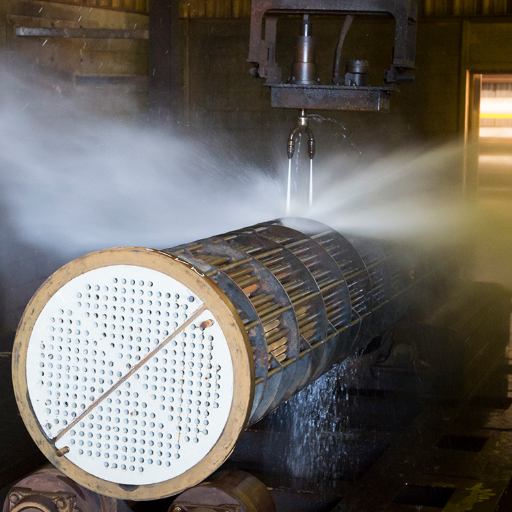
Strong OEM and distributor support is an imperative. Prioritize quick supply of parts, loaner equipment, and trained technicians. Be on the lookout for training programs, annual preventive maintenance plans, and application engineering to fine-tune systems to each exchanger and bundle. Verify documentation for troubleshooting and accessory compatibility. Field support is proven for keeping the uptime and giving consistently clean tube performance.
Section Overview
Technological Innovations in Tube Bundle Cleaning
High-pressure technology is combined with semi-automated handling, advanced control, and data-driven optimization. Incorporating sensors and real-time adaptation result in fostering efficiency while limiting operator contact. Today’s manufacturers offer modular platforms capable of switching from single-lance to multistack for the purpose of interior and exterior cleaning, thus accelerating cycles across industrial applications.
Advancements in Automation for Tube Cleaning Systems
Through the employment of automated machinery, which features semi-automated tube feeding, programmable lance speed/rotation, and fixtures that index over tubes with minimum intervention, technicians are appropriate for such an assembly line task. The disciplined control of insertion depth, dwell, and synchronized pressure will bring repeatable accuracy to the unit construction process. Automated carriages move external cleaning tools to maintain the bundle and stabilize reaction forces for incision safety. These automation techniques reduce fatigue, drive the throughput on the component, unify processes, and make everything work.
Water-Jetting Pressures and Their Impact on Cleaning Efficiency
Tailoring pressure balancing for the removal of deposits with protection of rotary tools. High-pressure feeds under precise flows employing rotary tooling will address deposits without damage. Contemporary systems allow for pressure control based on tube segments making them an active feedback mechanism between the transducers. Matching the pressurization variable by nozzle design and the rotary requirement will produce repeated superior results, lower cyclization times, and lower water requirement.
Environmentally Friendly Solutions in Tube Cleaning
Sustainable solutions help to reduce water, chemical, and energy consumption. Solid particle and water treatments recycle water and recapture dirt. Lesser nozzle design innovations call for diminished pressure, yet provide equivalent cleaning strength. Mechanical and water-only alternatives replace heavy chemical use when practical. Containment and automation minimize overspray and excess passes, which enables the extension of maintenance intervals and lessens the life cost.
Industry Applications of Tube Bundle Cleaners

Optimized tubular equipment was chosen based on fouling mechanisms and the design pressure. With the right tube metallurgy, matching the tube length and the fouling allows cleaner efficiency to be accomplished. In addition, appropriate platforms provide semi-automation with tools and high-pressure command-and-control for the internal and external cleaning tasks. The right platform aligns time of washing with schedules and maintenance constitutions.
Industry Application
Tube Bundle Cleaners in the Oil and Gas Sector
Refineries and Petrochemical Plants need a sturdy system for dealing with heavy hydrocarbons, coke and scale. High-Pressure Water Jetting with rotary tooling restores performance without damage to the tube. The semi-automated rotary indexing improves safety and efficiency, whereas fixtures stabilize big bundles. Multi-tube configurations would enhance turnaround and enable standardization across equipment complexes.
Industry Application
Power Generation: Best Tube Cleaning Equipment
Power plants must strive for a seamless and balanced operation with minimum downtimes. The programmable lances have the speed, rotation, and precise pressure to successfully clean even the thickest deposits from long tubes. The semi-operated feed can reduce fatigue and improve the safety of tight spaces. Many lancing rigs have efficient cleaning bands besides the use of multi-tube platforms for rapid cleaning, while an external lancing rig clears the finned external surface. Thanks to data logging, the time it takes to perform maintenance and earn other efficiency gains goes a long way.
Industry Application
Chemical Processing and the Need for Specialized Cleaning Systems
Numerous fouling types are presented to chemical facilities, which require systems adaptable enough to deal with any situation. Which composition of pressure and nozzle geometry is compliant with sensitive metals is preferable; encouraging in situ half-automation; conversely, support for consistent penetration depths and closed-loop effluent handling promotes safer operation. Module-controlled systems automatically switch between single-lance and multi-tube systems performing various routine and turnaround jobs, which thereby improved for heat transfer and extended the duty intervals.
Definitive Rankings
Overview of the Top 15 Tube Bundle Cleaner Manufacturers

| # | Manufacturer | Founded | Main Products | Advantages | Disadvantages |
|---|---|---|---|---|---|
| 01 | BOSHIYA | 2005 | Tube bundle cleaners, heat exchanger cleaning systems | High efficiency, innovative technology, and robust design | Limited information on global distribution |
| 02 | NLB Corporation | 1971 | Automated and semi-automated tube cleaning systems, high-pressure water jetting equipment | High-pressure systems up to 40,000 psi, customizable solutions | High initial investment cost |
| 03 | Conco Systems | 1923 | TruFit® tube cleaners, leak detection systems, and cleaning services | Custom-engineered solutions, high-quality materials | Limited product range for non-standard applications |
| 04 | Goodway Technologies | 1966 | RAM series tube cleaners, AWT-100X air-powered tube cleaners | Intuitive design, single-operator use, and high portability | Limited to specific tube sizes |
| 05 | Seacole Specialty Chemical | 1935 | Heat exchanger and condenser tube cleaners, water treatment chemicals | Broad chemical expertise, custom solutions | Focused more on chemicals than mechanical systems |
| 06 | Penn Tool Co. | 1968 | Condenser and heat exchanger tube cleaners | Wide product range, reliable distribution | Limited manufacturing capabilities |
| 07 | Superior Manufacturing | 1972 | Tube condenser cleaners, heat exchanger cleaning tools | Custom manufacturing capabilities | Smaller product portfolio |
| 08 | Gi Industries Inc. | 1996 | Pneumatic and electric tube cleaners | Compact and efficient designs | Limited global presence |
| 09 | Annovi Reverberi (AR) North America | 1990 | Heat exchanger and condenser tube cleaners | High-pressure systems, versatile applications | Focused on North American markets |
| 10 | USA Industries LLC | 1982 | Portable electric and pneumatic tube cleaners | High-quality standards, ISO-certified | Limited product customization |
| 11 | John R. Robinson, Inc. | 1907 | Tube cleaning guns, brushes, and flexible shafts | Long history, reliable products | Smaller product range |
| 12 | Schaefer Brush Manufacturing Co. | 1905 | Stainless steel wire scrapers, condenser cleaning brushes | High-quality brushes, custom designs | Limited to brush-based solutions |
| 13 | Clyde Bergemann, Inc. | 1988 | Intelligent sootblowers, water cannons | Advanced technology, intelligent systems | High cost of advanced systems |
| 14 | Jet Edge Waterjet Systems | 1984 | Heat exchanger and tube cleaning systems | High-pressure capabilities, durable systems | Requires skilled operators |
Manufacturer Profiles
Future Trends in Tube Cleaning Equipment
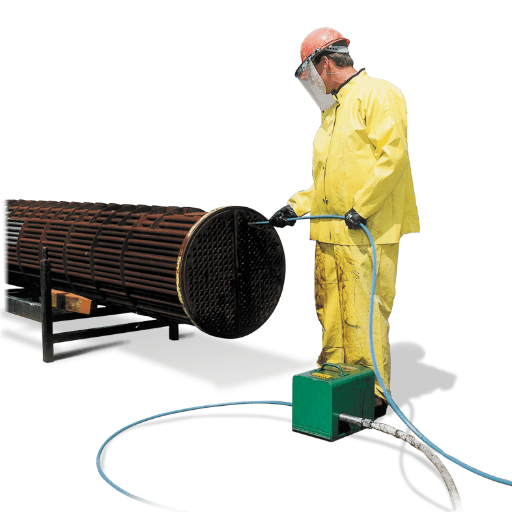
The future will be about amalgamating automation, data insights, and sustainability. Expect to discover the standard semi-automated arrangement in the future, one with advanced guidance, adaptive tensions, and overall safety. The IoT will be a significant enabler for remote diagnostics and condition maintenance. These platforms will merge internal and external hygiene, in synergy with advanced multiduct flow balancing. Devices like updated nozzles and lower-energy pumps will save resources without any different shift in the quality of results.
The Rise of Semi-Automated Tube Bundle Cleaning Systems
Semi-automation standardizes rate, rotation speed or life pressure applied producing consistent outputs by decreasing labor and improving safety, ultimately increasing throughput. Advanced modules include pressure applied with the movement, obstruction detection system, and record logging, modular carriages accounting for the varying geometries allowing for accelerated turn-around times across industry applications.
Integrating IoT in Tube Cleaning Solutions
With real-time optimizations made possible through Internet of Things, systems are endowed with sensors and analytics. Cloud visions control home presets, ensure program completion, streamline maintenance by means of forecasting wear and replacements and let contractors monitor fleet use to document themselves for safe operation. IoT also may facilitate closed-loop water-management processes designed lower resource usage while keeping up with water performance.
Predictions for Tube Cleaning Technologies in the Next Decade
AI reinforces advancing control, automatic indexing, and self-calibrating lances. The multi-tube platforms will bring about active flow balancing and inserts in the external frames of containment and filtration. The innovation in materials will make the accessories last longer, and standardized data will facilitate benchmarking of single machines, making applications safer, faster, and demonstrably cleaner.
![Polypropylene Resin: Grades, Types & Selection Guide [2026]](https://boshiya.com/wp-content/uploads/2026/05/0-150x150.webp)