Get in Touch with BOSHIYA

Sanitary Bundle Extractor: A Comprehensive Guide to Tube Bundle Extraction

Elimination of the bundle is crucial as far as the appropriate functioning and long life of heat exchangers are concerned. In sanitary atmospheres, like food processing, pharmaceuticals, and beverage-making industries, it is heightened further. Improper removal has the dangers of contamination, machines damage, and enormous losses in production time. If at all contaminated, this extractor completely removes everything for the speedy removal of the heat-exchanger bundles.
Contents
show
As a sanitary stressline pack-up presents significance in hygiene-critical industries, this guide discloses to you the tools and techniques together that can help make your extraction activities safer and more productive. In short, this article will provide essential deep insights for any plant manager or operator and also an opportunity to gain information and make decisions and optimize tube bundle management practices with updated knowledge.
01
Introduction to Sanitary Bundle Extractors
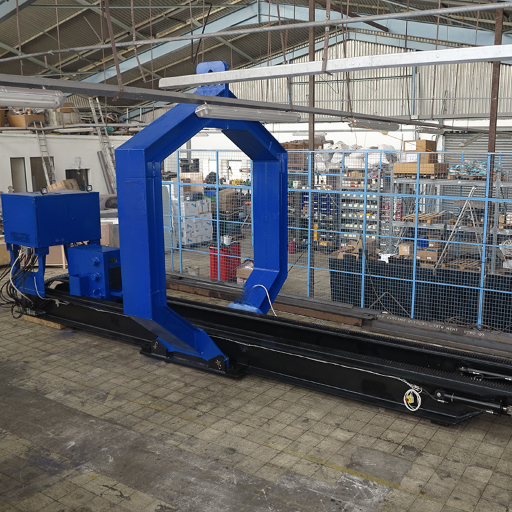
Despite the extractors being specialized for the sanitary industries due to the need to remove tube bundles from heat exchangers in food processing, pharmaceuticals, and the biotechnology industry, it offers hygienic extraction tools. It is predominantly designed to perform the extraction without any mess or damage to equipment which is a significant aspect to consider in the normal operation and compliance with legislative standards. Sanitary bundle extractor has its advantages of inconvenience quits such downtime, surpasses other hazards for workers in the facility, and enhances service efficiency owing to the ergonomic and precision properties of the designs.
Definition and Purpose of Bundle Extractors
The convenience of quick-connector fitting is an essential attribute of these removable devices. Heat exchangers in the process industry typically used in aqueous systems consist of various bundle arrangements. Cooling of tower operations is another area which employs a very specific version of the sanitary bundle extractor. Such eliminations could be performed via ball valves but the applicator of these substances comes in the form of a bottle with a tupper. Thus sanitary bundle extractor allows the circumduction of the entire machine intact without any contact.
Lately, bundle extractors have become prominent owing to their usefulness in simplifying maintenance processes and increasing plant efficiency. The most frequently advertised features of these equipment include comfortable designs reducing physical exertion of the workers, hydraulic or mechanical systems that make them easier to use and the fact that they can be used on many types of heat exchangers. The presence of such qualities indicates that bundle extractors are not merely important for the short term removal of bundles but for sustained use of the machinery and improved operation as well.
Importance of Sanitary Design in Equipment
In industries such as food processing, pharmaceuticals and biotechnology, the sanitary bundle extractor aid efficient and safe processes that are compliant with industry regulation. Greater emphasis has been placed on hygienic engineering with growing fears of contamination and consumer product safety. Sanitary considerations are oriented towards designs with no nook for dirt, appropriate material that can resist corrosion and facilitates easy cleaning and meet the regulatory expectations such as those from FDA or EHEDG.
In sanitation control, equipment is essential to include manufacturer and consumer safety surfaces and components which are suitable and easy in cleaning as passive sanitation principles eliminate cross contamination and construction that delays harvesting cleaning materials. This is because each design can save public health from endangerment and which cannot cause wastage of resources and shuttering of operation which bears maintenance and cleaning to that extent. New developments also indicate that more and more sophisticated surface coating and robotic cleaning equipment are being used, which signals a change of most industry hygienic equipment designs.
Overview of Tube Bundle Extraction Process
Tube bundle extraction is a procedure involving the removal of the tubes assembly from the heat exchanger for repair and cleaning or replacement, to ensure that the heat exchanger works efficiently and its lifespan increases. The procedure mainly involves the separation and depowering of the unit, gauges or any tubes or flanges that are applicable to the unit removed first. Proper tools such as hydraulic or mechanical extractors, are usually used to avoid damaging the equipment during the extraction of the bundle as well. It is important to plan the trajectory of the heat exchangers with good stepwise approaches since this will assist in lessening the negative impact. After the bundle is out of the heat exchanger, the care team may proceed to unclog, examine, fix or change every tube, if damages are noted. This will improve what is expected when they are put together.
02
Types of Bundle Extractors

Type 01
Standard Bundle Extractors
Conventional bundle extractors facilitate easy removal of bundles in heat exchangers of varying sizes with optimal performance. Such equipment is greatly appreciated in numerous industries due to the ease of use and flexibility. Most search queries in the heat exchanger maintenance tools category, in particular, identify standard bundle extractors as the best equipment for conducting routine bundle removal activities. Usually, they are equipped with hydraulic or mechanical systems that ensure that the bundle is intact as it is being pulled out. Such applicability without hassle makes sanitary bundle extractor a crucial tool in maintenance for safer and more effective facilities.
Type 02
Aerial Bundle Extractors
The sanitary bundle extractor has been developed to allow for the efficient removability of the heat exchanger bundles, the components of a machine system that are somewhere, and cannot be accessed at ground level. This type of system usually has a crane or an overhead mechanism for structures’ retention to avoid the deformation of the heavy machineries that visit them. These extractors work excellently in high-rise or highly compact industrial settings usually impracticable for the other types. Technologies such as remote control, mechanical adjustments of weight grasping capabilities, and quality parameters enhance the equipment ability further. The main applications of such extractors consist of accurate and multi-dimensional operational maintenance that is performed on certain great heights, prohibiting the use of usual tools.
Comparison of Equipment Features
In making a comparison between an aerial bundle extractor and a traditional one, some basic points, among several, that raise from argument are those, which lead us, for them, to highlights their special roles. Aerial bundle extractors operate in high or confined areas and are meant to be more precise and effective, thanks to remote-controlled and adjustable handling systems tailored to handle heavy weights. It is true that traditional extractors can perform simple duties at ground level efficiently, but still, extra limbs and functions of such sanitary bundle extractor recreational activities are out of their framework.
Uniters of aerial bearing systems as well possess high capacity for lifting different weight basics with a great attention to safety, which makes them usable to industrial application which needs strength and accuracy simultaneously. Most of the sanitary bundle extractor are cheaper and easy to use and hence contribute to meeting the softer needs. The available literature in the selection of equipment in industrial applications focuses on specificity and use friendly and adaptable features, an aspect that implies the convenience in use of modern instruments such as aerial equipment in dynamic sectors.
| Feature | Standard Extractors | Aerial Extractors |
|---|---|---|
| Operating Environment | Ground level | High-rise or confined spaces |
| Control System | Hydraulic / Mechanical | Remote-controlled & adjustable |
| Lifting Capacity | Standard weight range | High capacity with safety focus |
| Cost | More economical | Higher investment |
| Best Use Case | Routine maintenance tasks | Dynamic industrial sectors |
03
Applications of Sanitary Bundle Extractors
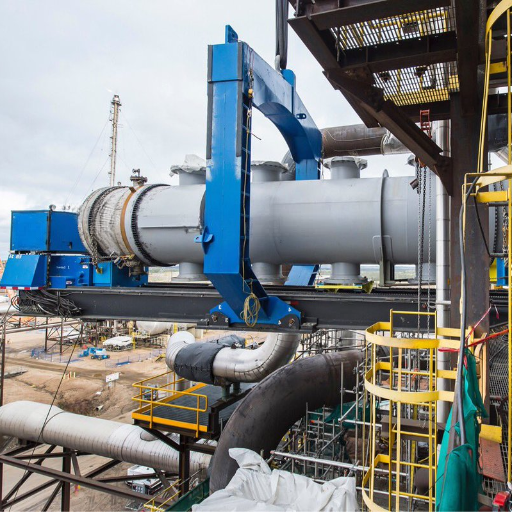
Industries Utilizing Tube Bundle Extractors
- 01
Oil and Gas Sector — Utilized in the maintenance and cleaning of heat exchangers that is of utmost importance to refining and extraction plants. - 02
Chemical Production — An indispensable accessory for effective instillation of heat in chemical plants. - 03
Electricity Generation — Used to conserve both boiler and condenser efficiency in power generation facilities. - 04
Culinary and Beverage Industry — Intended to ensure prime handling of heat exchangers, their sanitary bundle extractor and the coolant used during the production process. - 05
Drugs Manufacturing Industry — Essential to be able to assist in keeping the heat exchange tools used in drug manufacturing clean and in good working condition.
Specific Use Cases
Use Case 01
Pharmaceutical Manufacturing Sterilization
This is achieved by using sanitary bundle extractor during the transfer of heated liquids and solutions in order to maintain their sterility for patient safety as well as satisfying user requirements.
Use Case 02
Food Processing Temperature Management
This involves effective as well as sanitary heat transfer during the cooking of temperature sensitive food matrixes such as dairy, or fluids and sauces.
Use Case 03
Biotechnology Equipment Cooling
Used in situations whereby the biological samples or the processes are to be cooled by heat and cleanliness is a key requirement.
Use Case 04
Industrial Water Systems
If need be, a certain level of cooling or heating of water is required in safe water and steam systems.
Benefits of Using Sanitary Extractors
| Benefit | Description |
|---|---|
| Hygienic Upkeep | Cleanliness is an important factor in particular scenarios and hence sanitary extractors are designed accordingly to prevent contamination. |
| Effective Temperature Regulation | The design is constructed in such a way that heating or cooling is constant in the plates to prepare them for the desired product or activity. |
| Resistance and Dependability | Sanitary extraction equipment is manufactured and crafted with high-quality components so they are sturdy and strong enough to withstand tough working conditions in industries. |
| Economical Power Consumption | The systems make it possible to maintain a low power usage level which enhances its energy effectiveness and most important cost and green house effects. |
| Multiple Uses | The sanitary bundle extractor is used in the food and also in drug and even in biotechnology industries without any problem. |
04
Key Features of Sanitary Bundle Extractors

Material Considerations: Stainless Steel and SS304
Sanitary bundle extractors are generally produced from SS304 which is a stainless steel because it has special properties that comply with the hygiene requirements at the enterprises of food mechanical engineering and pharmaceutical plant, or biotechnology. The stainless steel is an all-important solution for resisting rust, an aid of long-lasting and of course, defiling, when used cheaply and in environments laden with water, chemicals, and such. A specific type of steel is called SS304 and it is used in most cases because of its mechanical, however also chemical and biological, properties which allow low to carbide levels possible in various materials. Additionally, SS304 has the advantage of these chemical properties not impacting the goods which have to retain their properties or don’t need to be contaminated. These include the sanitary bundle extractor, other materials are strong enough but easy to clean and carry out maintenance on, ensuring the system always works properly and should last very long.
Motor Specifications and Performance
The sanitary bundle extractor is provided with specially designed motors for safe and smooth operation. The motors are designed to provide continuous power-operating values for the extractors in perfunctory manner. Then, they are processed by the motor operating at variable velocities so that the user can determine on which one to set depending on specific purposes. Thus, the harvestor would become highly operational process with more adjunct versatile capabilities and enhancement in user modifiability of control settings.
There is always a good synergy of energy conservation and durability in motor performance capacities. In sanitary bundle extractors, most motors are tuned to save energy while still operating. The surviving motto for continuous running would always exhibit cost efficiency. Moreover, the motors will be built from top-grade components that will give them longevity in extreme environments, so, it cuts back on possible maintenance work.
Sealing of the motors against contamination, dust, and dampness, is absolutely necessary to maintain strict hygienic requirements. In sanitary applications, motor components must be protected from moisture, dust, and other external factors that may lessen performance. When it comes to reliability, motors designed for sanitation are also very easy to clean and perform maintenance on.
Design Elements: Tri Clamp and Aerial Configurations
Aerial configurations also cater to cleanability and free flow in the system, making them ideally qualified for demanding sanitary applications. Thus Tri Clamp and aerial configurations are responsible for meeting all applicable requirements.
Configuration A
Tri-Clamp Configurations
Tri-Clamp connections are widely used in sanitary applications because of their secure and leak-proof design, easy disassembly, and subsequent easy review. Such a configuration is needed for easy cleaning and maintenance in order to keep microbial contamination at bay. The surface-finished stainless steel adds to the longevity, being compliant with FDA and EHEDG standards of hygiene.
Configuration B
Aerial Configurations
Aerial arrangements include alternative solutions for the installation of a system allowing flexibility in constrained areas. In production and processing industries where there are spatial restraints, this system contributes toward ease of bundling and flow of materials. Tri Clamp connections for aerial systems are one such solution for increased adaptability and easy cleaning across different sanitary workflows.
In such a manner, modular outlets equipped with quick-release apparatuses such as Tri Clamps are becoming increasingly common, as more and more manufacturers are trying to reduce downtime and strengthen compliance. The combination of Tri Clamp and aerial system provides further evidence of these trends, emphasizing cleanliness that does not compromise on functionality.
05
Best Practices for Tube Bundle Extraction
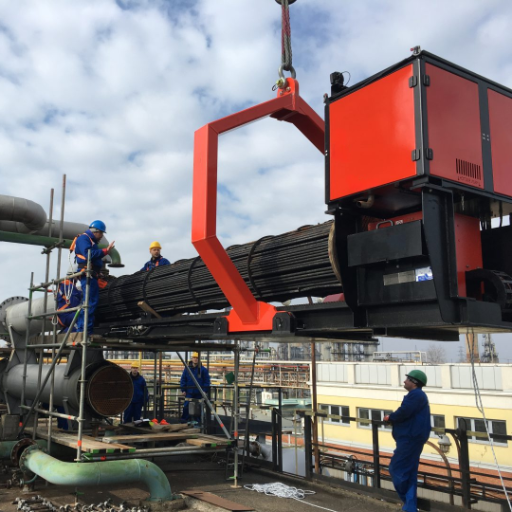
Operational Protocols for Safety and Efficiency
Personnel safety and efficient performance are considered key to protecting them in their jobs and keeping the machinery on board in the case of tube bundle extraction. You must always start your efforts by allotting time for the relative risk analysis intervening the site from potential dangers, obtaining personal preventive equipment (PPE) for each worker, which typically includes gloves, hard hats, and safety glasses. Equipment won’t operate smoothly under any circumstances amidst cluttered competition.
Before any work begins, clear the equipment involved, shut it down properly, and disconnect it to avoid any steam, slush, or gas release, as likely to accidentally telegraph injury potential. Inspect everything in good working order, making sure that all requisite equipment and tools are perfectly functional. Mechanism for good communication should have been in place among your team, for each other during the removal process and in response to possible issues that may come up.
Make use of all the equipment required for lifting during the extraction to allow smooth operation, prevent operators’ strains, and avoid accidents. Load with great care according to the manufacturers’ instruction, ensuring that the tube bundle and associated equipment are affected in no way. Once the extraction has been completed, clean the tube bundle and check for wear or patches or any buildup. Repair in case of need-so that we can use the equipment later during reinstallation or replacement. With these modalities used to execute tasks, one can expect a quicker, better, and safer extraction.
Maintenance and Care of Extractors
Extractors that survive longer work better and are safe to handle if they are suitably maintained. Regular cleaning is the only way to undo any obstruction that results from debris and buildup. Moving parts, seals, and fasteners must be examined for any error and damage and replaced & repaired promptly, while any requesting of the manufacturer’s service keeps friction at a minimum, thereby having an everlasting machine. Operational availability is enhanced even more by servicing schedules, which include calibrations and diagnostics and offer warning against an unplanned water shut-down. Finally, keeping the equipment secure from rust or corrosion also speaks for creating a substantial environment.
Common Issues and Troubleshooting Tips
With these general check-up and supervision methods, tube bundle extractor users can avoid unnecessary dissatisfaction and guarantee they get the most out of their performance.
06
Reference Sources
-
Different Tube Bundles Effect on the Shell-and-Tube Heat Exchanger Performance – Analyzes the performance of different tube bundles in heat exchangers, directly relevant to the application of bundle extractors.
-
Improved Tube Structure and Segmental Baffle to Enhance Heat Transfer Performance of Elastic Tube Bundle Heat Exchanger – Proposes novel designs for elastic tube bundle heat exchangers to improve heat transfer performance.
-
Double-Pass Shell-and-Tube Heat Exchanger Performance Enhancement with New Combined Baffle and Elliptical Tube Bundle Arrangement – Investigates a new arrangement of baffles and tube bundles to enhance the performance of shell-and-tube heat exchangers.
-
A Parameter Study of Tube Bundle Heat Exchangers for Fouling Rate Reduction – Examines the effects of tube bundle arrangements on fouling rates and heat transfer performance.
- Bundle Puller
07
![Polypropylene Resin: Grades, Types & Selection Guide [2026]](https://boshiya.com/wp-content/uploads/2026/05/0-150x150.webp)