Get in Touch with BOSHIYA


How Bundle Extractors Transform Heat Exchanger Maintenance — Types, Procedures, and Selection
Contents
show
Quick Specs
| Pull/Push Capacity Range | 5–150 tons (varies by type) |
| Power Source | Diesel engine or electric motor |
| Control Method | Wired or wireless remote control |
| Typical Extraction Time | <10 minutes per bundle (hydraulic winch) |
| Applicable Standards | API 660, ASME B30.5, OSHA 29 CFR 1910.147 |
| Operator Certification | NCCER Bundle Extractor Technician (4 courses) |
Every refinery turnaround relies on one bottleneck: extracting tube bundles from the shell side of heat exchangers without rupturing shells, warping tubes, or hurting people. The bundle extractor – a custom-built hydraulic machine replacing manual crane rigging – applies controlled pulling and pushing forces to efficiently extract and install tube bundles with minimal risk of damage.
This guide explains the hydraulic workings of bundle extraction, compares the three main equipment design types, describes the extraction process step by step, and provides a decision-making framework based on plant constraints. Whether you are specifying equipment for a greenfield expansion or choosing a rental fleet for an upcoming turnaround, the data and decision criteria here will give you a reliable basis on which to choose.
How a Bundle Extractor Works — Hydraulic Mechanics Explained
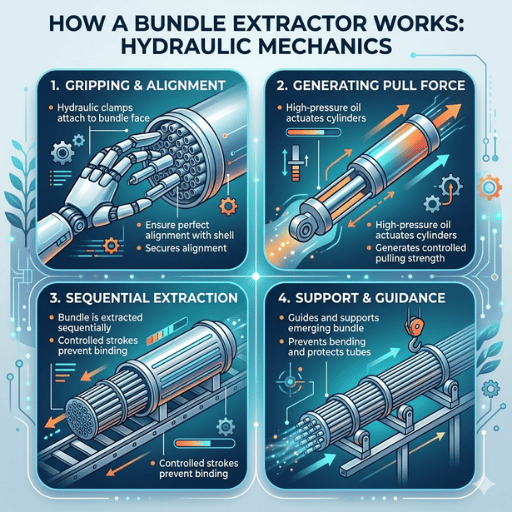
A bundle extractor is a specialized piece of equipment – a hydraulic machine designed to pull and push tube bundles from the shell side of heat exchangers. At its simplest, the equipment directs a hydraulic pump that pressurizes oil and channels it to hydraulic cylinders or motors, which develop the necessary linear pulling force to free a bundle from its shell.
In the extraction sequence, a pulling car – a sled that follows guide rails placed coincident with the heat exchanger centerline – is mated to the tube sheet using a bracket assembly that attaches with mechanical clamps or a Yoke. When locked onto the tube sheet, the hydraulic winch or screw drive applies incremental force to separate the bundle from the shells and tubes.
📐 Engineering Note
Pulling force requirements increase with bundle weight, tube count, and fouling severity. On site testing demonstrates hydraulic winch units generate in excess of 15 tons of pulling force on “compact” models; “large-diameter” aerial units deliver 125 tons. As per US Patent 6,685,423 (Starcon International), the apparatus uses a winch and cable assembly with a self-aligning carriage that aligns the cable with bundle centerline – a design feature that wards off tube damage due to lateral loading.
All hydraulic functions on modern extractors are controlled via remote control, enabling the crew to keep clear of the bundle during extraction. Spark arrestors on diesel units meet requirements for operation in petrochemical and refinery environments with potentially flammable atmospheres.
💡 Key Takeaway
The bundle extractor transforms a hydraulic pressure into a controlled axial force, pulling tube bundles along guide rails with a large advantage in precision over manual crane rigging. This singular fact is responsible for the dramatic reduction in extraction duration and tube damage.
Types of Bundle Extractors — Aerial, Self-Propelled, and Truck-Mounted
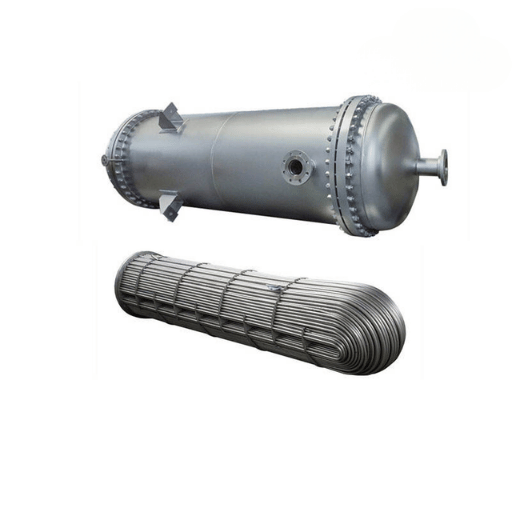
bundle extractors are categorized by three standard formats, designed to fit diverse site access and accessibility conditions. Among these, the aerial bundle extractor is the most frequently used model in refinery turnaround applications, while self-propelled and truck-based varieties serve niche access points.
| Specification | Aerial | Self-Propelled | Truck-Mounted |
|---|---|---|---|
| Max Pull Capacity | 25–125 tons | 25 tonnes (50,000 kg tensile) | 20 tonnes |
| Unit Length | 6–14.5 m | 8 m (26.3 ft) | Varies (truck chassis) |
| Unit Weight | 2,500–9,800 kg | 13 tonnes | Truck GVW + extractor |
| Mast/Operating Height | Crane-positioned (any height) | 3.4 m (fits under pipe racks) | Truck cab height |
| Positioning Method | Single crane lift | Drives on 2 steering axles | Drives on public roads |
| Power Source | Diesel or electric | Diesel (Hatz engine) | Truck engine PTO |
| Best Application | Elevated exchangers, heavy bundles | Congested ground-level sites | Multi-site turnarounds |
An aerial bundle extractor (often called ABE) is a self-contained unit that is rigged into position by a single crane. Once in position, it operates using a self-contained diesel engine or electric motor and can handle even the most challenging bundles — up to 125 tons in the largest configurations. Its slim and self-contained design keeps the equipment footprint small, which matters when working within congested refinery structures where operational space is at a premium.
A self-propelled bundle extractor drives itself on two heavy-duty steering axles, enabling tight turns and diagonal travel. With a mast height of only 3.4 meters, this type navigates beneath pipe racks where cranes cannot reach. Its trade-off is a lower pull capacity — typically 25 tonnes maximum – which limits it to small and mid-size exchangers.
The truck-mounted bundle extractor means there are no transportation costs involved. Mounted on a standard truck chassis and equipped with its own hydraulic system, this extractor can travel on public roads from site to site and can immediately begin work once it arrives. The maximum bundle capacity is around 20 tonnes with a maximum bundle length of 7.5 meters. This configuration makes economic sense for industrial contractors who service multiple plants across a region and need a reliable, road-mobile machine. To understand the full range of all current diesel, electric and self-propelled models produced by a single manufacturer, see the BOSHIYA bundle extractor lineup.
✔ Advantages Over Crane Rigging
- Controlled axial force prevents lateral tube damage
- Remote control keeps operators clear of the bundle path
- extraction in <10 minutes vs. 30-60 minutes with crane rigging
- Repeatable force — no dependence on crane operator skill
- Reduced personnel count on site
⚠ Limitations to Consider
- Capital cost: $150,000–$500,000+ for purchase (rental offsets this)
- Aerial type still requires a crane for initial positioning
- Self-propelled limited to ~25 tonnes – large bundles need aerial
- Requires trained operators (NCCER certification recommended)
- Hydraulic maintenance adds to operating cost
Bundle Pulling Procedure — From Preparation to Reinsertion
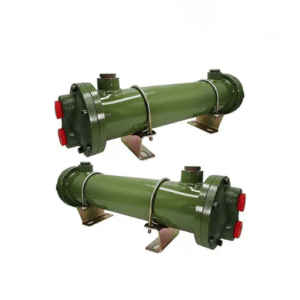
Tube bundle extraction is a high risk operation requiring a Lifting Plan and a PTW before any equipment is mobilized. Below is the standard workflow from isolation through to reinsertion, adopting methods consistent with API Standard 660 (Shell-and-Tube Heat Exchangers) and site-specific safety management systems.
- Isolate and drain the heat exchanger. Close block valves, apply lockout/tagout per OSHA 29 CFR 1910.147, and drain all process fluids. Collect and dispose of fluids as required per local regulations.
- Assess the site and prepare the ground. Check ground bearing capacity to support the combined weight of the extractor and bundle. Confirm crane access if an aerial bundle extractor is to be used.
- Remove the channel head and floating head cover. Unbolt and remove flange nuts and bolts using calibrated torque wrenches. Measure and record tube bundle compression length, this length must be replicated on reinstallation.
- Position and align the bundle extractor. The guide rail or support structure must be set so the extractor’s longitudinal axis coincides precisely with the heat exchanger centerline. Misalignment is the leading cause of tube damage during extraction. Secure the guide rail or structure in position.
- Lock the pulling sled onto the tube sheet. Clamp or yoke to secure the sled onto the face of the tube sheet. Verify the connection can handle the expected pull force plus a safety margin.
- Extract the bundle. Engage the hydraulic winch from the remote control station. Apply gradual, progressive force to break the bundle free — corrosion and fouling deposits create significant static resistance. Once freed, continue pulling at controlled speed until the bundle clears the shell.
- Inspect, clean, re insert. With the bundle extracted, perform tube inspection, hydro-blasting, and any tube plugging or replacement. Reverse the process to insert the cleaned or replacement bundle, restoring the original compression length measurement.
⚠️ Common Mistake
Omitting the centerline check in Step 4 is the most common cause of extraction failure. If the extractor is oriented incorrectly, it will lay lateral loads on the tubes, causing them to bend against the baffles. Improper orientation of a fouled bundle in which pull forces are 10+ tons can cause out-row tubes to bend under 2-3 deg of misalignment. Always use a laser alignment system or taut wire to confirm centerline before pressurizing the hydraulic system.
How to Select the Right Bundle Extractor for Your Plant
Determining whether to mobilize an aerial, self-propelled, or truck-mounted bundle extractor depends on five plant-specific factors. No type meets all plant requirements, and the optimal choice hinges on your heaviest bundle, tightest access point, and MTTR goals.
- ✔
Bundle weight: Weigh your heaviest tube bundle (including fouling deposits). If it exceeds 25 tonnes, you need an aerial unit. Below 20 tonnes, all three types are viable. - ✔
Overhead clearance: If pipe racks limit vertical clearance to under 3.5 meters, a self-propelled extractor with its 3.4 m mast is the only ground-based option. Aerial units bypass this constraint entirely since a crane places them at elevation. - ✔
Crane availability: Aerial extractors require a crane for positioning. If your turnaround schedule cannot guarantee crane time, a self-propelled unit that drives into position independently eliminates this dependency. - ✔
Power source: Diesel units are standard for outdoor operation. Electric motors are required in enclosed areas or where emission controls apply. Confirm your plant’s hot-work permit requirements before specifying a diesel-powered extractor. - ✔
Multi-site mobility: If you service multiple facilities within driving distance, a truck-mounted extractor eliminates crane mobilization and transport logistics for each site. The trade-off is lower pull capacity (20 tonnes max).
For facilities with a range of exchanger sizes spanning — from small coolers to large column reboilers — the practical solution is often a mid-range aerial extractor (50–80 ton capacity) supplemented by a self-propelled unit for ground-level work under pipe racks. Should you require assistance specifying your extractor fleet, talk to the BOSHIYA engineering team for a site-specific recommendation.
💡 Pro Tip
The ground support stratum must be assessed. A 125-ton aerial extractor supporting a fouled bundle exerts enormous point loads through its support points, and must be supported over the entire substructure. Before mobilizing equipment, verify the platform or native ground can support the combined load safely. This extra half-hour can prevent massive structural collapses during extraction.
Safety Standards and Operator Training for Bundle Extraction
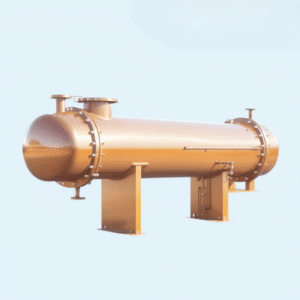
Bundle extraction combines heavy lifting, hydraulic pressure, and operation in areas with potentially flammable atmospheres. Three levels of safety overseer apply: equipment design standards, site-based permit systems, and operator competency certification.
Equipment Safety Features
Each modern bundle extractor is equipped with standard safety features including emergency shutdown controls, hydraulic overload relief, ATEX zone spark arrestors, and remote control interface boards that keep the operator clear of the bundle travel path. These features are mandated on equipment from recognized vendors and are a prerequisite for operation in most hydrocarbon processing plants.
Regulatory Framework
In the United States, bundle extraction is covered by multiple OSHA regulations: 29 CFR 1910.147 (lockout/tagout when isolating an exchanger), 29 CFR 1926 Subpart CC (crane operations when positioning aerial units), and the general duty clause requirements for hydraulic equipment inspection. Site operators must maintain a Permit to Work (PTW) system that covers bundle extraction as a defined high-risk activity.
Equipment design and fabrication comply with ASME B30.5 consensus safety standards for crane-related operations and manufacturer-specific engineering standards for hydraulic system design.
NCCER Bundle Extractor Technician Certification
The National Center for Construction Education and Research (NCCER) offers a dedicated Bundle Extractor Technician program — a four-course, fully online training program developed in partnership with industry equipment manufacturers. The courses cover:
- Course 38501: Fundamentals of Heat Exchanger Bundle Extraction
- Course 38502: Rotating Mast Bundle Extractor operation
- Course 38504: Conventional Bundle Extraction methods
This accreditation is unique in that the NCCER credentials are valid independently of accredited status, enabling your organization to become a trusted internal provider of the training modules. Program graduates receive a verifiable, industry-recognized credential that ensures operator safety competency on site.
- ✔
Confirm lockout/tagout procedures per OSHA 1910.147 before every extraction - ✔
Verify Permit to Work (PTW) is complete and posted at work site - ✔
Inspect hydraulic hoses and fittings for leaks and function, and relief valves for proper operation before each use - ✔
Test emergency stop function and remote control before engaging the bundle - ✔
All personnel are to remain clear of the bundle path while extracting operation is in progress - ✔
Before starting diesel extractors, employ gas detection equipment in ATEX zones
Maintenance and Lifecycle Cost of Bundle Extractors
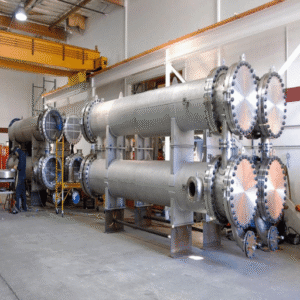
A bundle extractor is a capital investment that earns its return through turnaround after turnaround — but only if the hydraulic system and mechanical components receive consistent preventive care. Neglected equipment fails at the worst possible moment: mid-turnaround, with a bundle half-extracted and downtime costs mounting.
80%
of power plants use shell-and-tube heat exchangers
5–15%
efficiency loss from poorly maintained exchangers
60%
of chemical plant shutdowns tied to exchanger fouling
These numbers explain why dependable bundle extraction equipment matters. When an extractor fails during a turnaround, the entire schedule shifts — and unplanned downtime in a refinery costs $500,000–$1 million per day depending on unit capacity.
Preventive Maintenance Schedule
Hydraulic fluid should be sampled for analysis every 500 hours operating or annually, whichever comes first. Swap hydraulic filters at every fluid change. On a weekly basis, examine wire rope or chain on the system and on a monthly basis, examine hydraulic hose assemblies for abrasion, swelling and fitting integrity.
Guide rails and the pulling sled should be cleaned and lubricated after each job. Durable components like the main frame and hydraulic cylinders last decades with proper upkeep, but seals and hoses are consumables that require scheduled replacement.
💡 Pro Tip
Track operating hours on each extractor unit, not calendar time. A machine used for three turnarounds per year accumulates hours differently than one used monthly. Hour-based maintenance intervals catch wear patterns that calendar-based schedules miss. Many modern extractors include hour meters as a standard feature — use them.
For organizations that owned their equipment, expending 3-5% of purchase price yearly for parts and upkeep is a feasible baseline. Rental consumers need to confirm the rental supplier’s upkeep records and pre-shipment examination check list. BOSHIYA offers factory-direct pricing with documented maintenance history on all units.
Frequently Asked Questions
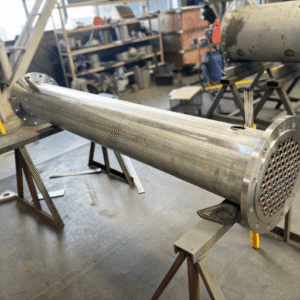
Q: What is a bundle extractor?
View Answer
A hydraulic machine that pulls and pushes tube bundles from shell-and-tube heat exchangers using a winch-driven sled on guide rails. Replaces crane rigging.
Q: What is the bundle pulling procedure?
View Answer
Seven steps: isolate and drain the exchanger, assess the site, remove the channel head, position and align the extractor, attach the pulling sled to the tube sheet, extract the bundle using hydraulic force, then inspect, clean, and reinsert. Each step requires specific safety checks — lockout/tagout, alignment verification, and ground bearing capacity confirmation before any hydraulic force is applied.
Q: How does a tube bundle heat exchanger work?
View Answer
One fluid passes through a bundle of tubes while a second fluid flows around the outside of those tubes inside a cylindrical shell. Heat transfers through the tube walls from the hotter fluid to the cooler one. Over time, fouling deposits — scale, corrosion products, and process residues — accumulate on tube surfaces and baffle plates. This buildup reduces thermal efficiency by 5–15% according to industry maintenance data, eventually requiring bundle extraction so the tubes can be cleaned, inspected, or replaced before the exchanger’s performance degrades further.
Q: Who needs a bundle extractor?
View Answer
Oil refineries, petrochemical plants, power stations, LNG terminals and offshore oil and gas facilities – any industrial process plant with shell-and-tube heat exchangers that periodically require bundle withdrawal for maintenance. Turnaround contractors and equipment rental companies also purchase bundle extractors in order to service these industries.
Q: Can a bundle extractor handle both extraction and insertion?
View Answer
Yes. Modern bundle extractors work in both directions — the same hydraulic winch system handles extraction and insertion. The pulling sled simply reverses on its guide rails, pushing a cleaned or replacement bundle back into the shell with the same controlled force used for pulling it out.
Q: What certifications should a bundle extractor operator hold?
View Answer
NCCER offers a dedicated Bundle Extractor Technician program — four online courses covering fundamentals, rotating mast operation, and conventional extraction methods. Operators should also hold site-specific safety inductions and be familiar with OSHA lockout/tagout requirements (29 CFR 1910.147). For aerial extractors that require crane positioning, the crane operator needs separate NCCER or NCCCO crane certification per OSHA 1926.1427.
Need a Bundle Extractor for Your Next Turnaround?
BOSHIYA Group produces hydraulic bundle extractors in the capacities between 25 to 150 tons- diesel, electric and self-propelled CE certification type and supplies worldwide spareparts support.
About This Analysis
This guide draws on published API and OSHA standards, NCCER training program documentation, patent filings for bundle extraction apparatus, and field data from turnaround contractors operating across petroleum refineries and petrochemical facilities. BOSHIYA Group brings over a century of industrial equipment experience — our Maintenance and Equipment division works directly with plant operators specifying hydraulic bundle extractors for scheduled turnarounds across oil, gas, and power generation sites.
Related Articles
References & Sources
- 29 CFR 1910.147 — The Control of Hazardous Energy (Lockout/Tagout) — U.S. Department of Labor, OSHA
- 29 CFR 1926.1427 — Operator Training, Certification, and Evaluation — U.S. Department of Labor, OSHA
- API Standard 660 — Shell-and-Tube Heat Exchangers, 9th Edition — American Petroleum Institute
- Bundle Extractor Technician Training Program — National Center for Construction Education and Research (NCCER)
- US Patent 6,685,423 — Method and Apparatus for Extracting and Installing Heat Exchanger Bundles — Google Patents
- US Patent 3,836,015 — Tube Bundle Extractor — Google Patents
![Polypropylene Resin: Grades, Types & Selection Guide [2026]](https://boshiya.com/wp-content/uploads/2026/05/0-150x150.webp)