Get in Touch with BOSHIYA


Fouled tube bundles cost refineries and chemical plants real money. When scale, coke, or biological deposits build up inside heat exchanger tubes, thermal efficiency drops, energy costs climb, and unplanned shutdowns become a matter of when — not if. Manual cleaning with a single hand-held lance has been the default for decades, but it is slow, physically demanding, and puts operators within arm’s reach of high-pressure water jets.
Contents
show
Automated tube bundle cleaning changes that equation. Machines now handle the lance feed, tube indexing, and pressure delivery while the operator stays behind a control console meters away from the blast zone. This guide walks through how these cleaning systems work, what equipment categories exist, and how to match the right system to your heat exchanger configuration. Our data draws from equipment specifications, industry standards, and field practice in refinery and petrochemical service.
What Is Automated Tube Bundle Cleaning?
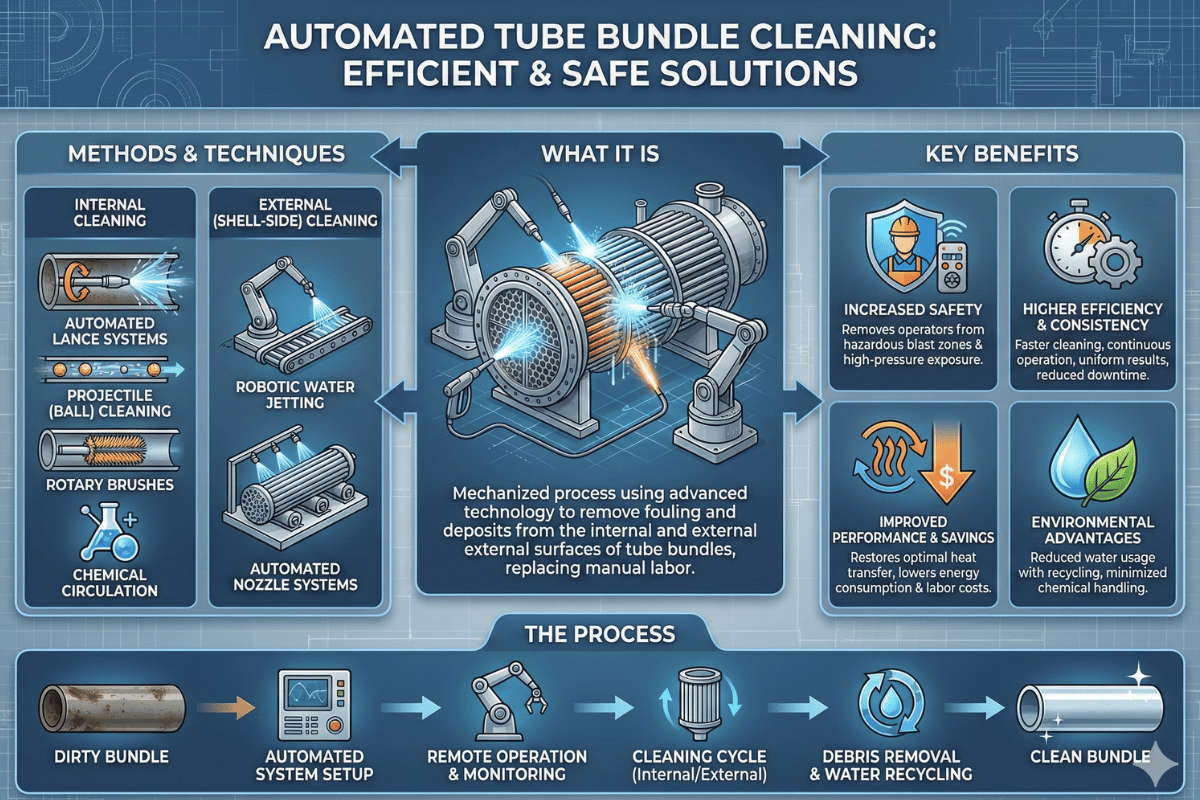
Automated tube bundle cleaning is a machine-driven process that uses remotely controlled high-pressure water jets to remove fouling deposits from heat exchanger tubes. Unlike manual lancing — where an operator physically guides a single lance into each tube — automated cleaning systems use hydraulic or pneumatic mechanisms to feed lances, index between tubes, and control cleaning speed without direct human contact at the nozzle end.
At its core, the concept is simple: replace human hands at the high-pressure point with a mechanical system that an operator controls from a safe distance. Once running, the cleaning system positions one or more lances at the tube sheet face, drives them through the tubes at a controlled feed rate, and retracts them — then the indexer shifts to the next row and repeats.
$1.75B
Global tube cleaning system market, 2025
6.4%
CAGR through 2034
3x
Faster than manual methods
According to the IntelMarketResearch 2025 Heat Exchanger Tube Cleaning System Market Report, the global market reached $1.75 billion in 2025 and is projected to hit $3.12 billion by 2034. That growth reflects a broader industrial shift: plants are moving away from manual cleaning not just for safety, but because automated systems deliver more consistent results with less downtime.
💡 Pro Tip
Automated tube bundle cleaning is not only for large refineries. Mid-sized plants running 50 to 200 heat exchangers find that even a semi-automated tube lancer pays for itself within two turnaround cycles by cutting cleaning time and reducing crew exposure to high-pressure hazards.
Internal vs External Bundle Cleaning — What Each Covers

Tube bundles foul on both sides. Understanding where your deposits sit determines which type of automated cleaning equipment you need — and getting this wrong means buying a machine that cannot reach the problem.
Internal (Tube-Side / I.D.) Cleaning
Internal tube cleaning targets the inside diameter of each tube. Deposits here range from hard scale, calcium carbonate buildup, coke, polymers, or biological fouling. Each cleaning lance enters through the tube sheet and travels the full tube length. Pressures range from 10,000 to 40,000 psi depending on deposit hardness. This is the more common cleaning application — most heat exchanger tube fouling starts on the tube side where process fluid flows.
External (Shell-Side / O.D.) Cleaning
External tube bundle cleaning addresses the outside of the tubes and the spaces between them — the shellside. Fouling here comes from the shell-side fluid: mud, biological growth, corrosion products, or process residue trapped between baffles. Shellside cleaning requires a different approach because the nozzle must travel through the gaps between tube rows rather than traveling inside a single tube bore.
| Factor | Internal (I.D.) Cleaning | External (Shellside) Cleaning |
|---|---|---|
| Target surface | Inside tube wall | Outside tube surface + baffle gaps |
| Typical fouling | Scale, coke, polymers, biofilm | Mud, corrosion, biological growth |
| Pressure range | 10,000–40,000 psi | 5,000–20,000 psi |
| Equipment | Flex lance, rigid lance machines | Robotic nozzle bar, bundle blaster |
| Tube access | Via tube sheet face | Along bundle length, between rows |
| Common applications | Condenser, evaporator, straight-tube exchangers | Shell-and-tube exchangers after bundle pull |
Many turnaround scopes require both internal and external tube bundle cleaning. A refinery condenser might need I.D. lancing to remove calcium deposits from cooling water service, plus shellside blast cleaning to clear corrosion debris trapped between baffle plates. Planning for both from the start avoids equipment mobilization delays midway through the job.
TEMA Standards — published by the Tubular Exchanger Manufacturers Association — classify exchangers into Class R (refinery), Class B (chemical), and Class C (commercial), each with different fouling characteristics that influence cleaning frequency and method selection. Exchanger tube configurations such as U-tube bundles present additional challenges because lances must follow the bend radius, typically requiring flexible rather than rigid tooling.
Types of Automated Tube Bundle Cleaning Equipment

Automated tube cleaning equipment falls into four main categories. Each serves a different combination of cleaning application, tube size, and throughput requirement. Choosing the wrong category wastes money and slows the job — so understanding what each type does well matters more than brand loyalty.
1. Flex Lance Systems
A flex lance is a semi-rigid hose fitted with a rotating nozzle that feeds into the tube under high-pressure water power. Flex lance systems are the workhorse of internal tube cleaning. They handle small diameter tubes — most often 0.5″ to 2″ I.D. — and operate at pressures from 10,000 to 40,000 psi. A single flex lance machine can clean one or two tubes at a time, while multi-tube setups handle two to five tubes simultaneously, dramatically increasing throughput.
Flex lance cleaning is popular for condenser and evaporator service because it handles long tube runs and follows slight bends without binding. Setup time is minimal compared to rigid lance alternatives.
2. Rigid Lance Machines
Rigid lance machines use straight, stiff lance tubes pushed through the heat exchanger tubes by a hydraulic or pneumatic actuator. Its rigid design delivers more consistent cleaning force than flex lances, particularly on hard deposits like coke or calcium scale. These tube cleaning machines run at 10,000 to 20,000 psi and work best on straight-through tube layouts where the lance path has no bends.
A tube lancer with rigid tooling is the better choice when deposit hardness demands maximum nozzle standoff consistency — the fixed distance between nozzle and tube wall stays constant throughout the stroke, producing uniform cleaning results.
3. Bundle Blasters (External / Shellside Cleaners)
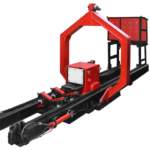
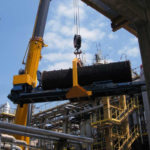
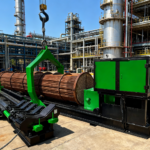
A bundle blaster is a robotic cleaning system designed for external tube bundle cleaning. Instead of entering individual tubes, it moves a high-pressure nozzle bar across the outside surface of the pulled bundle, blasting away shellside deposits from between tube rows. It rides on a track that spans the full bundle length — standard units come in 24 ft (7.3 m) and 36 ft (11 m) lengths.
From a remote console, the operator controls lance traverse speed and nozzle angle. Rollers can rotate the tube bundle to expose all sides. Compared to manual shellside cleaning with handheld wands, a bundle blaster system provides more consistent coverage and keeps operators well clear of the water jet. These systems cost roughly one-third of truck-mounted external cleaning rigs while delivering comparable results.
4. Tube Positioners and Indexers
Positioners and indexers are not standalone cleaning machines — they are positioning components that automate the tube-to-tube movement between cleaning strokes. An indexer shifts the lance assembly to the next tube position after each cleaning pass, eliminating the manual step of an operator re-aiming the lance at each tube opening. When paired with a flex lance or rigid lance machine, an indexer converts a semi-automated system into a nearly hands-free cleaning system.
Vertical and horizontal alignment falls to the positioner. Together, the positioner and indexer allow a single operator to run the entire tube cleaning cycle from the control panel — from first tube to last — without approaching the tube sheet face during active cleaning.
⚠️ Important
Do not assume that “automated” means fully autonomous. Most automated tube bundle cleaning systems are semi-automated — the machine handles lance feed, retraction, and indexing, but a trained operator must still monitor pressure, observe cleaning progress, and make adjustments. An operator’s role shifts from physical labor to system supervision, but the skill requirement does not disappear.
How the Automated Cleaning Process Works
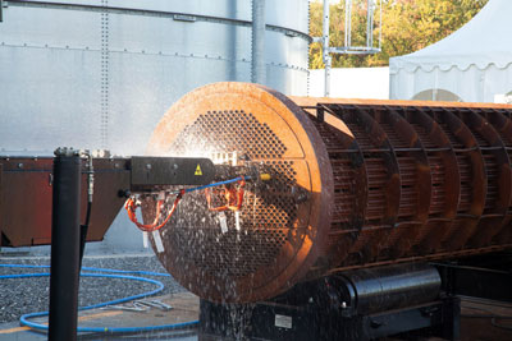
Automated tube bundle cleaning follows a repeatable sequence. Each step builds on the previous one — and rushing through setup or skipping alignment checks leads to damaged tubes, wasted time, or both. Here is how a typical automated internal tube cleaning cycle runs:
- Equipment Setup and Positioning — Move the tube cleaning system into place at the tube sheet face. Secure the frame to the exchanger flange or a stable anchor point. Connect high-pressure water supply lines from the pump unit. Verify that water supply pressure and flow rate match the nozzle specifications.
- Lance Alignment to First Tube — Use the positioner to align the lance tip with the first tube opening. On machines with a manual indexer, the operator dials in the tube pitch (center-to-center distance between tubes). On programmable systems, the operator enters the tube layout pattern and the indexer calculates positions automatically.
- High-Pressure Water Jetting Cycle — The operator activates the lance feed. A hydraulic or pneumatic drive pushes the lance through the tube at a controlled speed — typically measured in inches per minute. Water jetting pressure ranges from 10,000 to 40,000 psi depending on deposit type. The rotating nozzle delivers 360-degree coverage inside the tube bore. Feed speed matters: too fast and deposits survive, too slow and the nozzle dwells in one spot causing tube erosion.
- Lance Retraction — After the lance reaches full depth, it retracts at a controlled rate. Some operators run a second pass at higher speed to flush loosened material. Each retraction stroke also serves as a quality check — if the lance binds on retraction, it signals incomplete deposit removal or a tube obstruction.
- Indexing to Next Tube — The indexer shifts the lance assembly to the next tube position. Multi-tube systems actuate two to five lances simultaneously across adjacent tubes, cleaning multiple tubes at a time before indexing to the next row. This step is where automated systems gain the biggest time advantage over manual cleaning — no operator repositioning, no re-measuring tube pitch.
- Repeat and Inspect — Cycles repeat repeats until all tubes are cleaned. After completing the tube sheet, operators run a visual or borescope inspection on a sample of cleaned tubes to verify results. If tubes still show residual fouling, the operator adjusts pressure, nozzle type, or feed speed and runs a targeted second pass.
From first lance entry to last tube inspected, the entire process runs under the operator’s remote control. Feed speed, water pressure, and indexing are all managed from a console positioned meters away from the high-pressure blast zone. This separation is the core safety advantage of automated tube cleaning systems: the machine does the physical work at the tube face while the operator manages the process from a protected position.
💡 Pro Tip
Field operators report that automated feed speed control is the single biggest quality improvement over manual lancing. A human operator pushing a lance by hand naturally varies speed — faster on easy sections, slower when fatigue sets in. It maintains constant feed regardless of tube count or shift length, and that consistency shows up in more uniform cleaning results across the entire tube sheet.
Safety and Performance Benefits

Operator safety is the most cited reason plants switch from manual to automated tube bundle cleaning — and the data supports that decision. Manual tube lancing places workers within the direct path of high-pressure water, debris kickback, and chemical splash. Automated systems move the operator to a remote station, fundamentally changing the risk profile.
Safety Gains
A hands-free tube cleaning system removes the operator from the immediate blast zone. Instead of gripping a lance inches from a 15,000 psi nozzle, the operator sits at a control panel and manages the process through valve controls and visual monitoring. OSHA’s general industry standards under 29 CFR 1910.242 require employers to ensure safe use of hand and portable powered tools — and removing the operator from the point of energy release is the most direct way to meet that intent.
Remotely operated cleaning systems also reduce ergonomic injuries. Manual lancing requires sustained physical effort — pushing and pulling lances through hundreds of tubes per shift generates repetitive strain on shoulders, wrists, and lower back. Automated lance feed eliminates that physical load entirely.
Performance Gains
Beyond safety, automated tube cleaning delivers measurable performance advantages. Machines maintain constant lance feed speed across every tube, producing uniform cleaning results that manual methods cannot match. Consistent deposit removal helps restore heat transfer efficiency to near-design values — a result that directly lowers energy consumption and extends run length between turnarounds.
Semi-automated and fully robotic tube cleaning systems also clean faster. Multi-lance setups that process two to five tubes simultaneously cut total cleaning time significantly compared to single-lance manual work. For a plant running on a tight turnaround schedule, that speed difference translates directly into fewer days of lost production.
⚠️ Common Mistake
Some plant managers assume that “automated” means “no training required.” This is wrong. Automated tube bundle cleaning equipment still requires trained operators who understand nozzle selection, pressure settings, tube metallurgy limits, and emergency shutdown procedures. The machine handles the physical labor — but the operator handles the judgment calls. Skipping operator training is the fastest path to damaged tubes and a failed cleaning campaign.
Choosing the Right System for Your Application
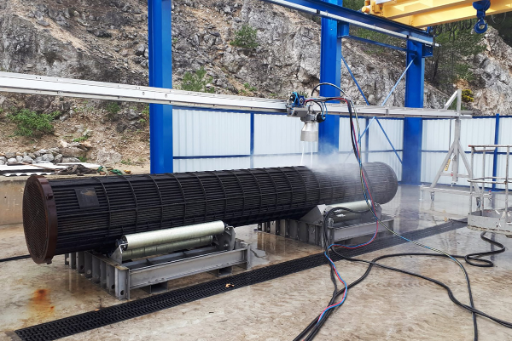
Not every automated tube bundle cleaning system fits every job. The right choice depends on your specific heat exchanger configuration, fouling type, and operational constraints. Here is a practical decision framework based on the variables that matter most.
- ✔
Tube diameter: Small diameter tubes (under 1″ I.D.) favor flex lance systems. Larger bores work with rigid or flex. - ✔
Tube configuration: Straight-through tubes accept rigid or flex lances. U-tube bundles require flex lance tooling that follows the bend radius. - ✔
Fouling type: Soft biological deposits clean at lower pressures (10,000 psi). Hard scale or coke may demand 20,000–40,000 psi with rigid lances. - ✔
Internal vs external: I.D. fouling needs lance-based systems. Shellside deposits need a bundle blaster or robotic O.D. cleaner. - ✔
Tube count: Exchangers with 500+ tubes justify multi-tube lance machines. Smaller units may only need a single lance system. - ✔
On-site vs shop: Field cleaning requires portable, quick-setup equipment. Shop-based cleaning bays can use larger, fixed-mount systems.
| Application | Recommended Equipment | Why |
|---|---|---|
| Condenser (straight tubes, soft fouling) | Multi-tube flex lance | High tube count, moderate pressure, fast throughput |
| Shell-and-tube exchanger (hard scale) | Rigid lance machine + bundle blaster | High pressure for I.D. scale + external cleaning |
| U-tube heat exchanger | Flex lance (specialized bend nozzle) | Must follow tube bend radius |
| Evaporator (small diameter tubes) | Small-bore flex lance | Narrow I.D. requires thin, flexible tooling |
| Shellside-only cleaning (after bundle pull) | Bundle blaster with rollers | Full O.D. access, robotic nozzle coverage |
When the scope involves both internal and external tube bundle cleaning, plan for two separate equipment setups — or partner with a cleaning services provider that brings both lance-based I.D. tools and shellside blaster systems to the same job site. Trying to force one machine to do both jobs leads to compromises in cleaning quality.
For plants evaluating whether to invest in owned equipment versus contracting cleaning services, the break-even sits around 3–4 turnarounds per year. Below that frequency, contract tube bundle cleaning services from an experienced provider usually makes more economic sense than capital purchase plus maintenance and storage costs.
Frequently Asked Questions
Q: How does automated tube bundle cleaning work?
View Answer
Automated tube bundle cleaning uses a machine-driven lance feed system to push high-pressure water nozzles through heat exchanger tubes. The operator controls the process remotely — setting water pressure (typically 10,000 to 40,000 psi), lance feed speed, and tube-to-tube indexing from a control console. The system cleans one or more tubes per stroke, retracts the lance, shifts to the next tube position via an automated indexer, and repeats until all tubes are cleaned.
Q: Is automated tube bundle cleaning safe?
View Answer
Yes. The operator runs the machine from a remote station instead of standing at the tube sheet face. That physical separation is the biggest safety gain — no direct exposure to high-pressure water, debris kickback, or chemical splash.
Q: Which automated tube bundle cleaning machine is best?
View Answer
The best machine depends on your specific application. For internal cleaning of straight-tube condensers and evaporators, multi-tube flex lance systems offer the highest throughput. For hard deposits like coke or calcium scale, rigid lance machines deliver more consistent cleaning force. For external shellside cleaning after a bundle pull, a bundle blaster with robotic nozzle control provides full coverage. Match the equipment to your tube diameter, fouling type, and tube configuration before comparing brands.
Q: What is multi-tube lancing?
View Answer
Multi-tube lancing is a cleaning method where the machine feeds two to five lances into adjacent tubes simultaneously, cleaning multiple tubes at a time in a single stroke. This multiplies throughput compared to single-lance systems. Multi-tube machines use a common drive mechanism to actuate all lances at the same feed rate, ensuring consistent cleaning across the group. After each stroke, the indexer shifts the entire lance assembly to the next row of tubes. The technique is standard practice on large condensers and evaporators where tube counts run into the hundreds or thousands — cleaning one tube at a time on a 2,000-tube condenser would take days, while a five-lance system cuts that timeline to a fraction.
Q: Do automated tube bundle cleaning systems work well?
View Answer
Automated systems deliver more consistent cleaning results than manual methods because the machine maintains constant lance feed speed and water pressure across every tube. Manual operators naturally vary speed — faster when fresh, slower as fatigue builds — leading to uneven cleaning. Automated tube cleaning systems eliminate that variability. The result is more uniform deposit removal, better heat transfer restoration, and fewer re-cleans. Proper nozzle selection and pressure settings are still critical — the machine executes well, but the operator must set it up correctly.
Q: What pressure range is needed for tube bundle cleaning?
View Answer
It depends on the deposit. Biological growth cleans at 10,000–15,000 psi. Mineral scale needs 15,000–25,000 psi. Hard coke or polymer buildup may require 25,000–40,000 psi. Check tube material limits first — too much pressure erodes the tube wall.
Need Tube Bundle Cleaning Equipment or Services?
Whether you need automated cleaning systems for your own maintenance program or professional cleaning services for an upcoming turnaround, we can help match the right solution to your heat exchangers.
About This Guide
This automated tube bundle cleaning guide was developed by our industrial equipment team, drawing on direct experience supporting heat exchanger maintenance across refinery, petrochemical, and power generation facilities. Equipment specifications reference manufacturer data and industry standards including TEMA and OSHA general industry regulations. We supply tube bundle cleaning equipment and welcome questions about matching systems to your specific exchanger configurations.
References & Sources
- Heat Exchanger Tube Cleaning System Market Outlook 2026–2034 — IntelMarketResearch
- TEMA Standards of the Tubular Exchanger Manufacturers Association — TEMA
- 29 CFR 1910.242 — Hand and Portable Powered Tools — U.S. Department of Labor, OSHA
- 29 CFR 1910.95 — Occupational Noise Exposure — U.S. Department of Labor, OSHA
- Tube Side Bundle Cleaner
![Polypropylene Resin: Grades, Types & Selection Guide [2026]](https://boshiya.com/wp-content/uploads/2026/05/0-150x150.webp)