Get in Touch with BOSHIYA


Dd
I write about industrial materials and decisions that depend on sound measurement. My articles discuss polymer melt flow index and the steps in evaluating steel decarbonization, with attention to how readers interpret figures before using them in a material comparison or procurement plan.
Steel Cost Estimation Tool Guide: From Per-Kilogram Material Cost Formulas to EAF and DRI-EAF Plant Budgets
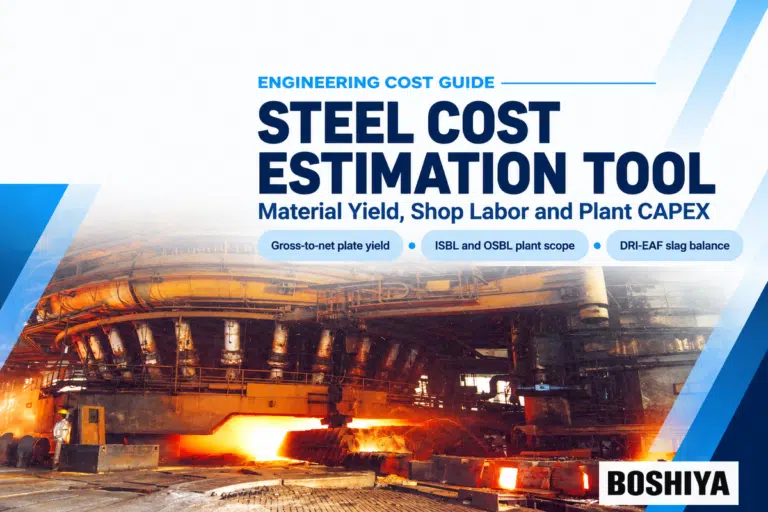
Updated November 2026 · Reviewed by the BOSHIYA Group Technical Team A steel cost estimation tool can convert part geometries, shop hours, or melt-shop mass balances to a cost estimate. Buyers can lose margin when applying a bar weight sheet…
Types of Catalytic Cracking: From Fixed Beds to FCC, RFCC and DCC
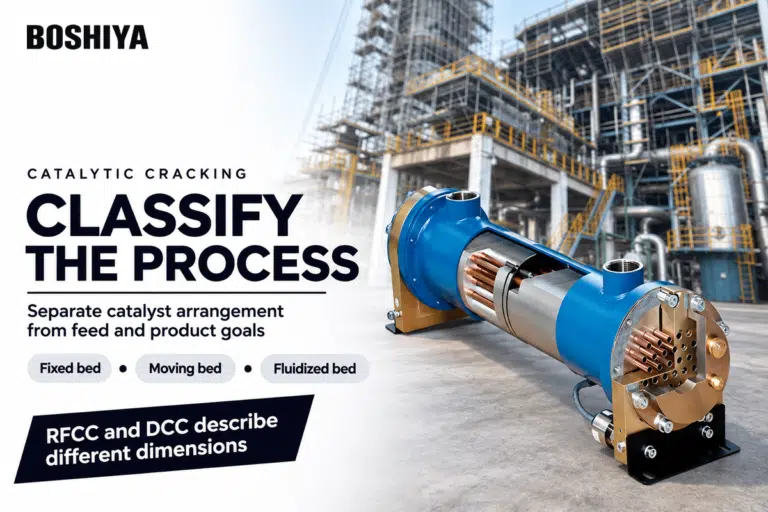
The three main types of catalytic cracking are fixed-bed, moving-bed and fluidized-bed processes. Modern refinery discussions also differentiate between conventional fluid catalytic cracking (FCC), residue FCC (RFCC) and product-oriented technologies such as deep catalytic cracking (DCC). These labels describe different…
Direct Reduced Iron (DRI) Procurement Guide: Feed Specs, EAF Charge Balance, and Gas-Loop Engineering
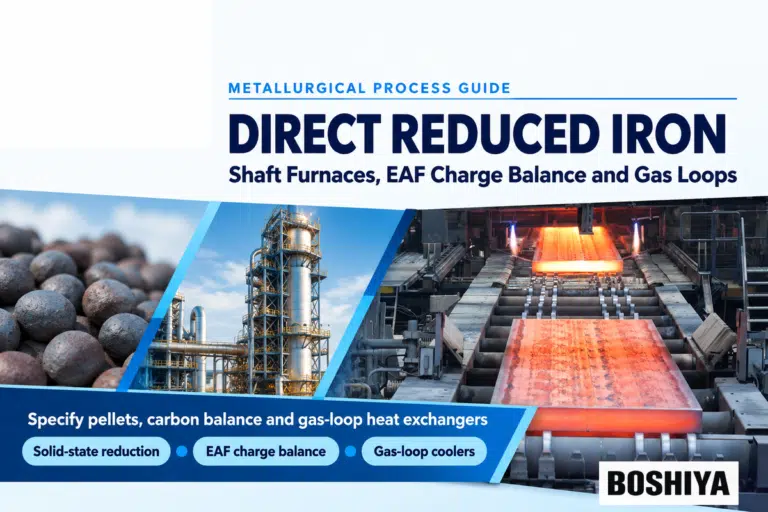
Direct reduced iron (DRI) is produced by converting iron ore to metallic iron through solid-state reduction below iron’s 1,538 °C melting point. Mills assessing demand for direct reduced iron need to qualify lower-residual feedstock for the electric furnaces used to…
Heat Exchanger Approach Temperature: Definition, Calculation and Performance
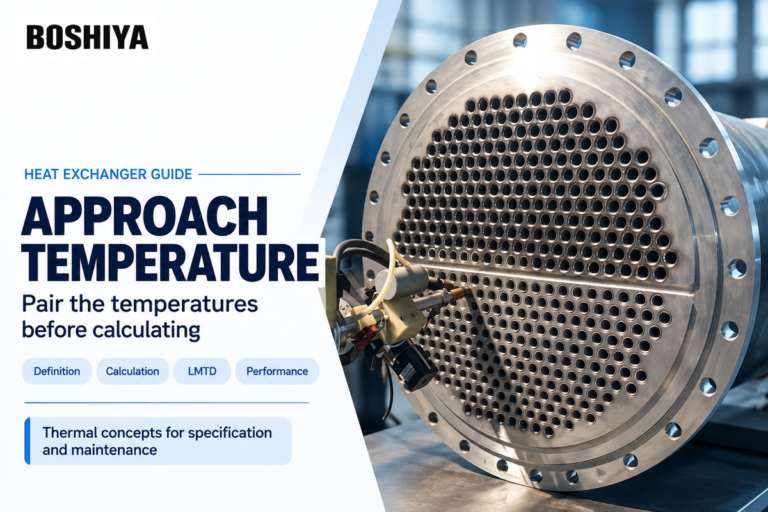
Heat exchanger approach temperature is the temperature difference between two specified fluid temperatures. For a steady, single-phase counterflow exchanger with approximately constant fluid properties and negligible heat loss, the minimum approach is the smaller of its two terminal gaps: hot…
How to Select a Stainless Steel Shell and Tube Heat Exchanger
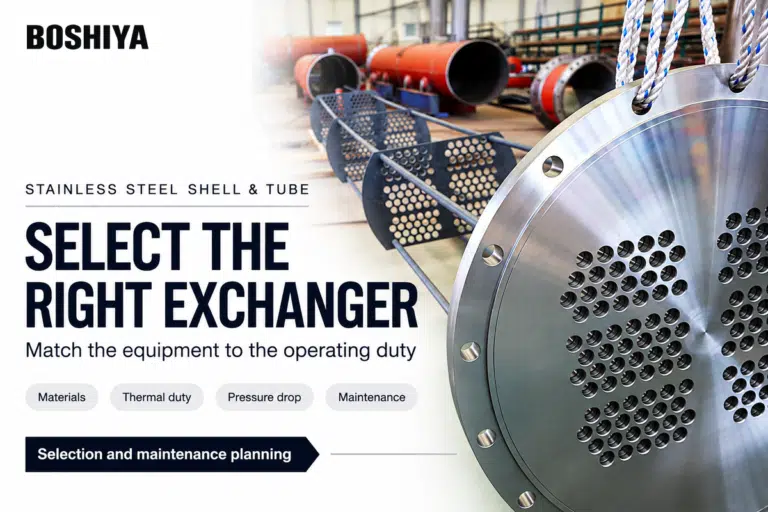
A stainless steel shell and tube heat exchanger transfers heat between different fluid circuits across tube walls. Pick one that best fits your operating conditions, based on rated duty, wetted materials, pressure limits, and access for cleaning. A suitable unit…
Urea Production: How Ammonia and Carbon Dioxide Become Fertilizer
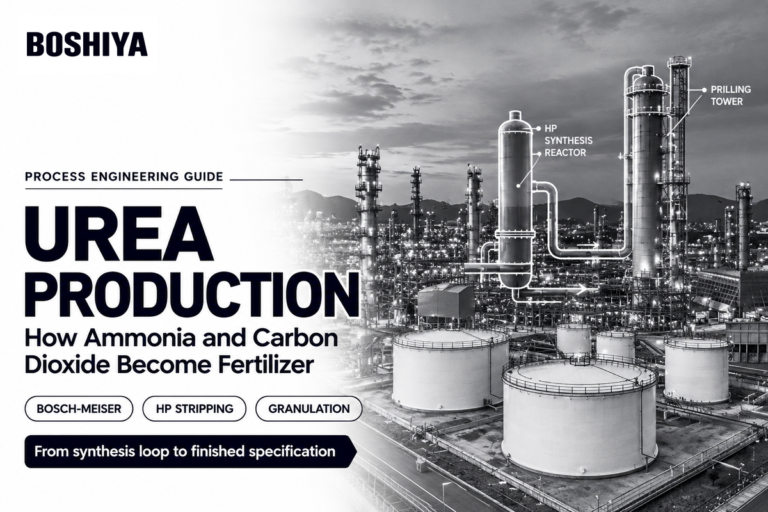
Industrial urea production converts liquid ammonia (NH 3 ) and compressed carbon dioxide (CO 2 ) into solid nitrogen fertilizer. This manufacturing process operates at 180-200 °C and 140-250 atm, using the two-step Bosch-Meiser synthesis route. Note that this engineering…
Naphtha Cracking Guide: From Feed Composition to Product Value
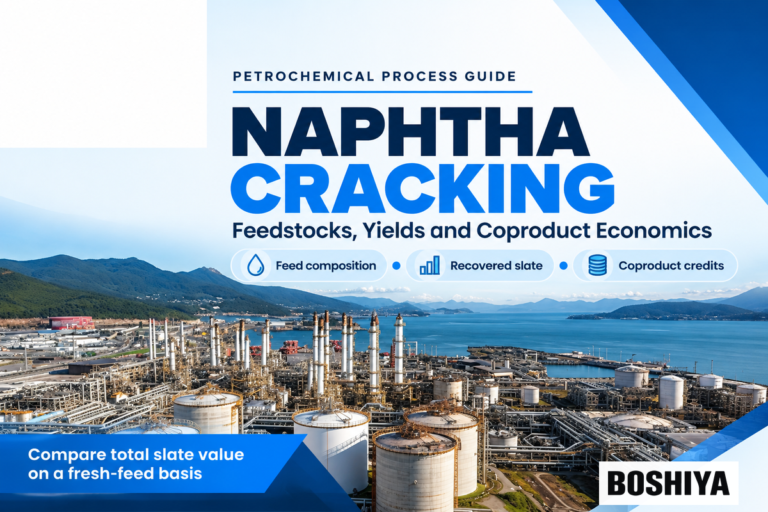
Naphtha cracking transforms a liquid hydrocarbon mixture into ethylene, propylene, and other chemical building blocks. For a useful comparison, trace the feed all the way to the recovered products: its composition changes the product slate, and the value of that…
FCC Catalyst Guide: Composition, Testing and Selection

Updated October 2026 FCC catalyst is a fine, porous solid that assists in the conversion of heavy petroleum hydrocarbons to gasoline and other lighter products. Determining a suitable formulation begins with understanding the feed and the desired product slate, followed…
Tube Sheet Heat Exchanger Guide: Design, Materials and Repair
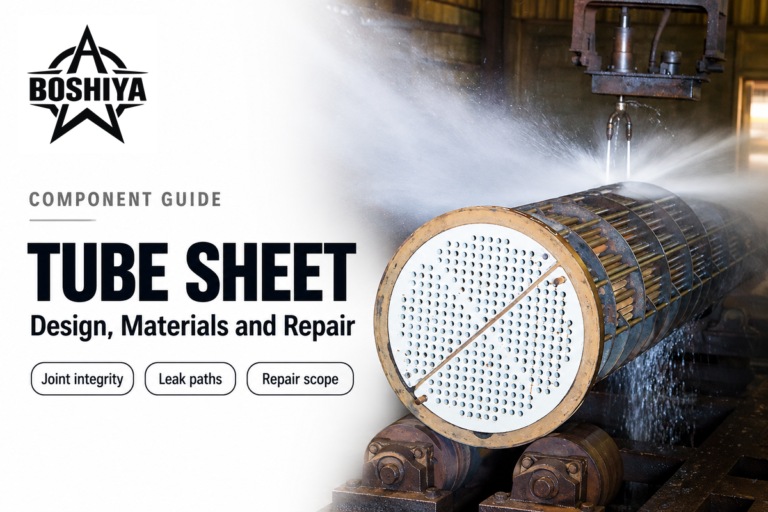
A tube sheet heat exchanger holds tube ends with a perforated plate and helps separate the two fluid circuits. For maintenance personnel, the first question is, what’s the location of the fault: tube wall, tube joint, the plate or a…
Claus Sulfur Recovery: An Engineering Guide to Process, Performance, and RFQ Decisions
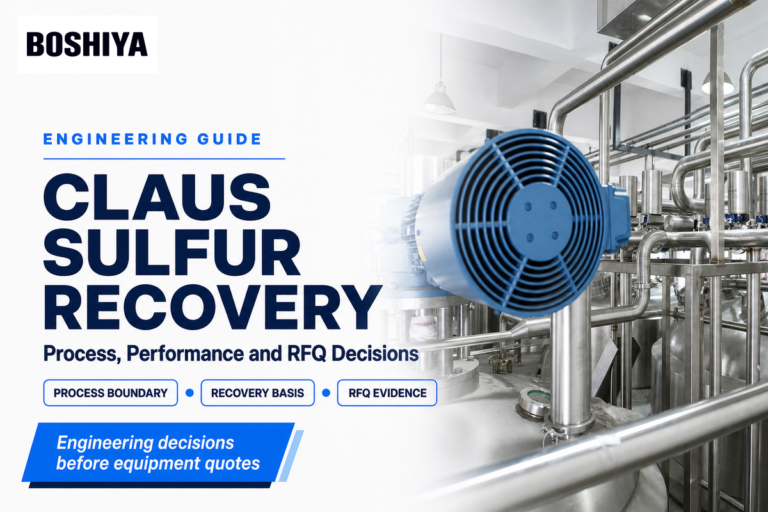
Claus Sulfur Recovery: Process & RFQ Guide | Boshiya Refinery Engineering Guide Selecting a Claus sulfur recovery unit isn’t as simple as evaluating sulfur capacity. A defensible project starts at the acid-gas feed envelope, defines the scope of recovery, and…