Get in Touch with BOSHIYA


Note: If you searched for reduced iron as a food-label ingredient (e.g., in fortified cereals), see our brief clarification below. This article covers industrial Direct Reduced Iron (DRI) used in steel production.
Reduced iron, also referenced as Direct Reduced Iron or sponge iron, is metallic iron produced by chemically e×tracting the o×ygen from iron ore in the solid state, without going through the liquid stage of pig iron. Solid state iron making occurs at temperatures below the melting point of iron, 1,5³8C, by using a reducing gas—either reformed natural gas or hydrogen. Total global reduced iron production is approximately 140.8-million tonnes in ²024. Its 10-year CAGR stands at 6.6 per cent — three times the growth rate of the global steelmaking industry overall
| Parameter | Value |
|---|---|
| Fe (Metallic) Content | 86–94% Fetot (DRI) / ≥90% (HBI) |
| Operating Temperature | 700–900°C (gas shaft); up to 1,200°C (coal kiln) |
| Primary Feed | Iron ore pellets, lumps, or fines |
| Reducing Agents | Reformed natural gas (H₂+CO), H₂, coal syngas |
| Product Forms | DRI (sponge iron), HBI (hot briquetted), HDRI (hot discharge) |
| Carbon Content | 0.02–4.5% C (process-dependent) |
| Global Production | 140.8 million tonnes (2024, Midrex) |
| Dominant Process | MIDREX (~54% global share, 2024) |
What Is Reduced Iron? Definition and Industrial Context
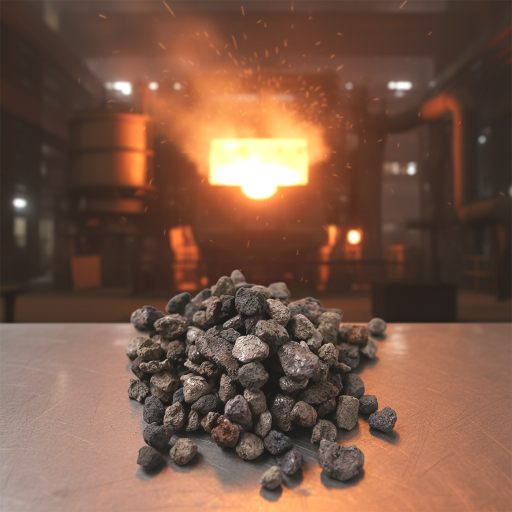
Within the field of metallurgy, the precise definition of reduced iron is tailored to the specific parameters of the process in question. Reduced iron refers specifically to oxide compounds whereby chemical reduction has been achieved; this entails the removal of oxygen chemically bonded to the Fe metal in the alloy, yet the iron itself remains in a silty, porous, solid state which has not melted. Resembling a sponge in structure, each piece of DRI carries ~47% void porosity and contains 86–94% metallic iron by weight.
Within the steelmaking industry, ‘direct reduced iron’ (DRI) is the accepted designation to distinguish this feedstock from pig iron and scrap steel. Minimal tramp elements — copper, tin, nickel, and chromium — make this material ideal as a virgin iron source for producing special bar quality (SBQ) steel in electric-arc furnaces. As a feedstock category, DRI manufacture has grown faster than any other iron input to steelworks over the past decade, rising from 75 to 140.8 million tonnes in 2024
What does “reduced iron” mean in food and cereal products?
Food grade reduced iron is a finely powdered elemental iron ingredient produced by hydrogen reduction of iron oxides — not a melt process. Food manufacturers use it to fortify breakfast cereals, flour, and infant formula as a dietary iron source, regulated under 21 CFR Part 184 (GRAS). Common forms of iron fortification include elemental iron (reduced iron), ferrous sulfate, and ferrous fumarate. Elemental iron powder has lower bioavailability than soluble iron salts because the body must absorb it after acid dissolution in the stomach; ferritin and serum iron tests will still respond to dietary iron absorption from this source. The nutrition label lists it simply as “iron.” Quantities are measured in milligrams per serving — no physical or steelmaking connection to industrial DRI exists.
How Direct Reduced Iron Is Made — The Direct Reduction Process
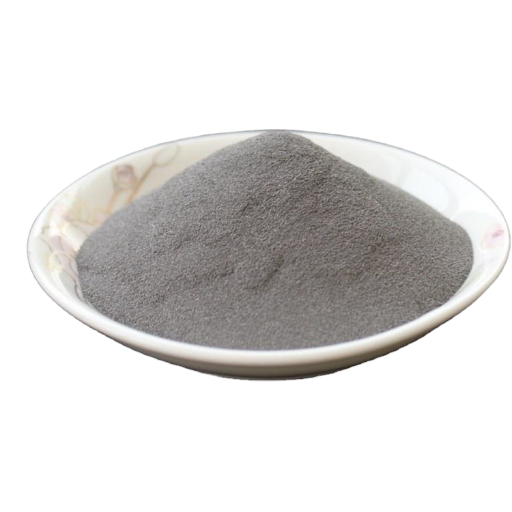
Industrial DRI manufacture begins and ends as a solid — iron oxide feed is progressively stripped of its bonded oxygen through a sequence of solid-state chemical reactions, bypassing the melt stage entirely. Raw materials — iron ore pellets or lumps (67% Fetot, size 9–16 mm, <0.008% sulphur, predominantly hematite or magnetite) — enter the hot upper region of a shaft furnace or rotary kiln, where gravity counter-preva iling downward against a stream of reducing gases. Reduction occurs through sequential oxygen debonding reactions across the vertical stabilization zones of the furnace.
Engineering Note — Reduction Chemistry
With gas: Fe O FeO FeO Fe + HO (three-stage reaction mechanism)
With another reducing gas, Carbon monoxide: Fe O FeO FeO Fe + CO
In gas based shaft furnaces the reducing gas is a mixture of H and CO at a ratio of approximately 1.5-1.6:1 ( H:CO), entering the furnace at ~900 C.
MIDREX – the world leader in DRI direct reduction technology; responsible (by volume) for ~54% of all DRI produced worldwide in 2024 (76.2 million tonnes). Use a countercurrent shaft furnace where the reformed natural gas rises through the descending ore burden. A catalyst reformer converts methane and recycled top gas to H and CO at ~900 C. Material leaving the bottom of the shaft cools to ~50°C in the cooling zone, or is diverted at 650–700°C directly into the briquetting press for HBI production.
Energiron (HYL), developed jointly by Tenova and Danieli, used a pressure based shaft furnace and has gained market share especially on newer H-ready plants. MIDREX and Energiron together account for a (by volume) ~75% share of worldwide gas based DRI production: coal based processes are very much in the minority.
What is the difference between gas-based and coal-based DRI production?
Gas based shaft furnace processes (MIDREX, Energiron) dominate in Middle East, Americas, and Northern Africa, where readily available cheap natural gas supports the generation of effective H+CO reducing gas. Coal based rotary kiln processes (SL / RN and variations thereof) dominate in India, which has now established itself as the world largest producer of DRI at 54.7million tonnes in 2024 – ³8.8% of the worlds DRI, mainly kiln based, is produced there. Gas based DRI, whether from MIDREX or Energiron, provides higher metallisation (92-96%), has a lower ash content, and a lower sulphur content that coal based DRI: on average each tonne of coal based DRI will carry about 2% more gangue / sulphur burden through to the steel resulting in a lower quality product. Consequently, DRI produced from gas in flat-rolled and SBQ steelmaking applications will generally command a higher quality premium.
An Iranian EAF operator choosing the new direct reduction plant design and supply route would default to MIDREX given Iran’s onshore and Kaspian base’s large availability of natural gas; a new greenfield plant in Odisha India would face a very different set of considerations where the availability of coal, and local grid costs, would favor the relatively less capital intensive rotary kiln process despite the poorer metallics of the resulting hot briquetted iron DRI.
DRI Product Forms: Sponge Iron, HBI, and Hot DRI Explained
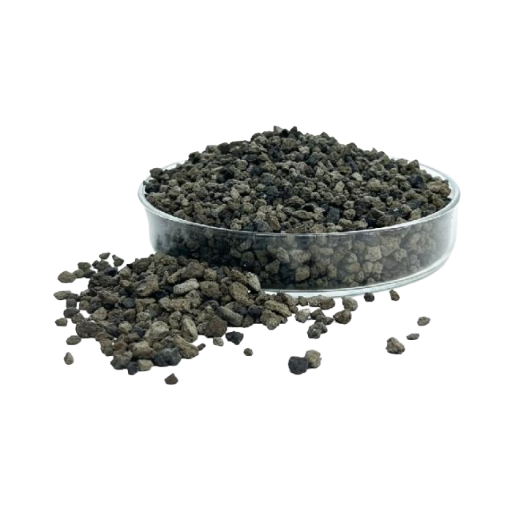
Leaving the shaft furnace in one of three commercial forms, DRI varies significantly depending on the degree of cooling between the high-temperature reduction zone and final discharge. Each type of DRI has specific physical properties, reactivities, and logistical implications: selecting the correct one (while balancing economic and metallurgical considerations) is critical.
| Property | Cold DRI (Sponge Iron) | HBI (Hot Briquetted Iron) | HDRI (Hot Discharge) |
|---|---|---|---|
| Fetot | 86–94 wt.% | ≥90 wt.% | 86–94 wt.% |
| Metallization | 92–96% | 90–94% | 92–96% |
| Bulk Density | 1.5–1.9 t/m³ | 2.4–3.3 t/m³ | 1.5–1.9 t/m³ |
| Apparent Density | 3.2–3.6 g/cm³ | 5.0–5.5 g/cm³ | 3.2–3.6 g/cm³ |
| Porosity | ~47 vol.% | ~21 vol.% | ~47 vol.% |
| Water Absorption (sat.) | 12–15% | ~3% | N/A (hot, no storage) |
| Reoxidation Risk | ⚠ High | ✅ Low (1–2 orders lower) | ⚠ High if cooled |
| IMSBC Class | Group B – DRI(B) | Group B – DRI(A) | Not shipped |
| Typical Application | Local EAF delivery | Long-distance ocean trade | Adjacent on-site EAF |
Hot briquetted iron (HBI) is produced by compacting roughly 650700 O C hot DRI at high pressures into cylindrical briquettes (90-140mm 48-58mm 20-50 mm, mass 500 700 g). Compaction reduces volumetric porosity from ca 47% to ca 21% and reduces maximum saturated water absorption from 12 15% to ca 3%. HBI thus becomes significantly less reactive than sponge iron DRI by two orders of magnitude, decreasing the safety for ocean bulk cargo and long duration storage. Legal IMSBC/HBI specification requires briquetting above 650°C to an apparent density exceeding 5.0 g/cm³. Cold-moulded briquettes (CBI) formed below this temperature retain the full DRI(B) hazard classification.
DRI Product Form Selection — Decision Framework
- Ocean transit >500 km / long duration storage – choose HBI : Group B cargo: moisture stable, lower insurance premium.
- DRI plant co-located with EAF, 300 m conveyor Choose HDRI: maximum energy savings, no storage risk, direct furnace charging at 600-700C
- Regional delivery, covered dry storage, cost-sensitive Choose cold DRI: lowest processing cost, adequate for quality steelmaking with proper inert storage
DRI in Electric Arc Furnace Steelmaking — Why Steel Plants Choose It
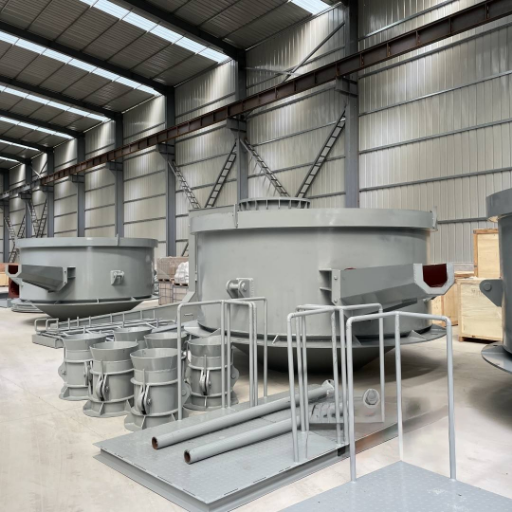
Electric arc furnaces are the natural home for DRI. Unlike basic oxygen furnaces, which require liquid hot metal to operate, EAFs accept any combination of solid metallic iron sources. Three structural advantages distinguish DRI from scrap: virgin iron purity (no tramp elements), controllable carbon content for foamy slag chemistry, and — when charged hot — a substantial energy offset reshaping the operating cost of hybrid DRI-EAF plant solutions.
Tramp element dilution is perhaps the least-discussed benefit. Scrap-charged EAFs accumulate copper, tin, nickel, and chromium from automotive shredded scrap; these elements cannot be removed by oxidation in normal steelmaking and accumulate with each recycling cycle. Its contribution to combined tramp dilution follows a documented relationship: every percentage point increase in the DRI charge fraction reduces the combined %(Cr+Ni+Cu+Sn) residuals proportionally, enabling steelmakers to meet tight SBQ residual specifications while using lower-grade, lower-cost scrap for the balance of the heat.
Energy economics shift substantially when DRI is charged at elevated temperature. BOSHIYA’s project data from a Gulf region DRI-EAF complex shows EAF electricity consumption of 350-400 kWh/t liquid steel when feeding hot DRI at 650-700C, versus 430-460 kWh/t for the same furnace with cold scrap – a reduction of 15-25%. Carbon content in the DRI matters equally: at 2.0–2.5%, combustion with injected oxygen generates CO that builds the foamy slag blanket, shielding the furnace shell from arc radiation and eliminating the need for supplemental anthracite injection.
“When we commission a DRI-EAF complex, the energy savings from hot-charging versus cold DRI are immediate and measurable – we consistently see EAF electricity consumption fall by 15 to 25 percent in the first production campaign. The carbon content of the DRI matters just as much as the metallization rate: at 2.0 to 2.5 percent carbon, you get foamy slag at no extra cost, and that alone can make the difference between a marginal project and a genuinely profitable one.”
What percentage of DRI should an EAF charge typically include?
Optimal charge ratios are not universal, since they depend on the fineness of the scrap used, the level of DRI grading, the dimensions of the furnace, and the requirements of the final steel grade. In practical terms, a feeder-to-oven load ratio is usually close to 20–40% DRI in a mixed charge; once the level is greater than 25–30%, continuous roof charging through the fifth hole will generate higher productivity than bucket charging, because it avoids the formation of what is termed a “ferroberg” (a frozen DRI skull). In higher quality SBQ grades – such as very fine wire rod, bearing steel, or cold heading quality – EAFs operate routinely at 80–100% DRI charges levels, since the dominant residual specifications must be too stringent to justify the additional energy costs of melting-down scrap in a BOF.
BOSHIYA’s Gulf Region project runs 100% DRI charging into a 150 tonne DC EAF, achieving 48% lower CO₂ emissions versus the previous BF-BOF route. With most mini-mill applications it is economic to blend 30–50% DRI with scrap.
DRI vs Pig Iron — Comparing Direct Reduction and Blast Furnace Routes
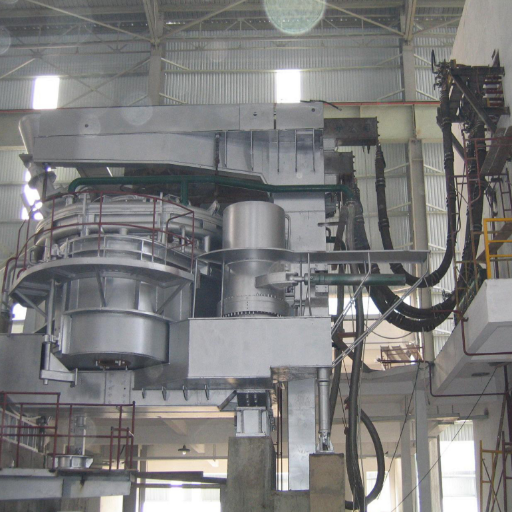
Choosing between DRI-EAF and BF-BOF is a 20-year capital commitment — these two routes are not interchangeable at any scale. Blast furnace economics only work at sustained throughputs above 2 million tonnes per year whose output must be whole hot metal to justify the associated asset base, whereas a DRI plant can operate efficiently from 0.5 Mt/y and scale simply by adding modular units over time. Iron production via DRI-EAF is also the only route that can convert from fossil to green hydrogen reductant without rebuilding the shaft — a uniquely future-proof attribute.
For a full configuration analysis, BOSHIYA’s steel plant configuration selector guides project developers through the decision on a site-by-site basis.
| Parameter | DRI-EAF (Gas) | BF-BOF Integrated | Scrap EAF Only |
|---|---|---|---|
| CO₂ Emissions | 1.37 t CO₂/t steel | 2.33 t CO₂/t steel | 0.4–0.8 t CO₂/t steel |
| CO₂ with Green H₂ | <0.5 t (H₂ DRI target) | Not applicable | 0.02–0.1 t (green grid) |
| Greenfield CAPEX | $800M–$1.5B | $2–5B | $300–600M |
| Minimum Viable Scale | ~0.5 Mt/y | ~2 Mt/y | ~0.3 Mt/y |
| Iron Feed Purity | 86–94% Fe, no tramps | ~94% Fe, ~4% C, slag | Scrap-dependent |
| Coke / Coal Dependency | None (gas / H₂) | High (metallurgical coke) | None (electricity) |
| Best For | Decarbonization + quality | High-volume, mature markets | Scrap-abundant regions |
Steelmaking Route Selection — Decision Framework (a + c)
- If: target output >3Mt/y AND mature domestic market AND ore surplus BF-BOF integrated (economies of scale justifies CAPEX).
- If: 0.5–2 Mt/y output AND decarbonization mandate AND access to natural gas → DRI-EAF (modularity, H₂-readiness, premium quality steel)
- If: scrap rich region AND low grade commodity steel Scrap only EAF (lowest CAPEX, fastest build, no ironmaking feed cost)
- If: operating BF-BOF AND carbon regulation taken system conversion to DRI-EAF:LOPSHIYA project in Gulf of Mexico shows 48% reduction (CO), 18-month change, switching from 2 million t/a bf-BOF to dri+dc: EAF
For a site-specific CAPEX and emissions model, BOSHIYA’s EPC turnkey steel plant delivery team can run an end-to-end route analysis for you. Contact us for a DRI-EAF configuration review.
Storage, Handling, and Reoxidation Risk — Managing DRI and HBI Safely
Pyrophoric by classification, DRI presents fire and self-heating hazards that no other bulk iron feedstock matches. Its porosity — approximately 47% void volume — and high specific surface area (0.5–4.0 m²/g) cause each form of DRI to oxidize orders of magnitude faster than finished steel or pig iron when exposed to moisture or oxygen. Iron hydroxide or “rust” type compounds (Fe(OH), -FeO(OH)), are created whenever DRI is exposed to moisture, and react exothermically; further oxidation in the presence of oxygen creates enough heat to sustain the process above 150 C and can cause cargo temperatures to rise above 900C in extreme circumstances.
DRI reoxidation at Oxidation State 4 penetrates simultaneously throughout the full depth of each hyperspherical grain — which explains how trace moisture exposure can escalate into a serious hazard far faster than macroscopic surface rust on finished steel.
⚠ Cargo Hazard — Real Incident Record
2004 saw the loss of the bulk carrier MV Ythan off Colombia when there were hydrogen explosions in the four cargo holds containing damp DRI fines. Six sailors including the Master lost their lives. A year earlier, the MV Adamandas (2003) was deliberately sunk by the French government after 21,000 MT of DRI pellets overheated uncontrollably in her holds.
Both incidents were attributed to moisture ingress that passivation treatment failed to arrest. Crucially, passivation offers no protection against seawater: as little as 60 litres entering a cargo hold can trigger dangerous heating.
Under the IMO IMSBC Code, DRI cargo is assigned to four schedules determined by physical form and moisture content:
- DRI(A) — HBI and hot-pressed briquettes: Group B, moisture <1%, lowest reactivity — cleared for ocean transport in bulk carriers
- DRI(B) — pellets, lumps, cold-moulded: Group B, moisture ≤0.3%, N₂ inerting required (O₂ <5% in enclosed holds)
- DRI(C) — secondary fines: Group B, moisture ≤0.3%, minimum 30 days aged at time of loading to reduce reactivity
- DRI(D) — fines containing ≥2% H₂O (IMSBC Amendment 07-23, 2023): Group A + Group B simultaneously — at risk of liquefaction and reoxidation during transport
DRI Storage & Handling — 8-Point Safety Checklist
- Maximum pre-loading temperature: 65C- do not load or store above this level
- Maximum stack height in bins/silos: 1 metre
- Inerting gas: only nitrogen, since CO reacts with hot iron forming CO (toxic+flammable at >12.5% in air). Never other CO for DRI inerting.
- Oxygen monitoring in enclosed storage: keep O₂ below 3%
- I2 leaching FTIR analysis & hydrogen monitoring: before loading I2, hold-space H of H ( by volume) in the condenser.
- Moisture limits: DRI(B/C) ≤0.3%; HBI/DRI(A) <1% — verify by sampling before loading, not on the bill of lading alone
- Seawater contamination is non-recoverable: even 60 litres entering a hold containing warm DRI can trigger a runaway exothermic reaction. Any trace of seawater contact requires immediate discharge of the cargo before the vessel proceeds.
- Fines segregation: restrict DRI(C) fines in the stow; keep out of pellet/lump prohibited this will allow reach a predominant free flowing state and will give less possibility of compaction and trapping of gas.
Something about HBI reoxidation when using cyclic conditions: even though HBI is vastly safer than cold DRI when stored under normal conditions, a 2024 study in Metals (MDPI) reported that 4143 briquettes submitted to wet-dry cycles suffered a degradation of 6.96% of metallization over 4 months—the highest of any tested condition. What to take away for storage and technical service to steel plant commissioning: HBI can be stored outdoors safely under cover and with drains so no pooling, even though outdoor stacking is deemed safe to last many months.
The Future of Reduced Iron in Green Steel — Trends Through 2030

In 2025, 42% of all new global ironmaking capacity under construction is DRI-EAF — a structural shift that no single manufacturer or technology licensor anticipated a decade ago. CRU Group’s 2025 forecast positions DRI among the highest decade-on-decade growth commodities in the steel value chain. According to the Midrex World DRI Statistics 2024, the 10-year CAGR stands at 6.6% — three times the growth rate of overall crude steel output.
Driving this shift is the 3-Route DRI Transition Framework — a regional trajectory that maps where each steelmaking geography sits today and where it is heading:
| Route | Reductant | Regions | CO₂ / t steel | Status |
|---|---|---|---|---|
| Route 1 — Legacy Coal | Coal (SL/RN rotary kiln) | India, China | ~2.0–2.5 t | Expanding (India +13.9% in 2024) |
| Route 2 — Gas DRI | Natural gas (MIDREX / Energiron) | Middle East, Americas, N. Africa | 1.37 t | Mainstream; transitioning to H₂ blend |
| Route 3 — H₂ DRI | Green H₂ (Energiron ZR / MIDREX H₂) | Europe, Japan, Australia | <0.5 t (target) | Early commercial: SALCOS 2026, tkH2STEEL 2027 |
H₂-DRI is no longer a laboratory concept. HYBRIT (SSAB + LKAB + Vattenfall) was first to produce validated 100% fossil-free steel at its pilot plant in Luleå, Sweden in 2021 and has delivered commercial quantities to Volvo since 2021. Salzgitter AG’s SALCOS project is commissioning its 2.1 Mt/y Energiron H₂-DRI shaft in 2026, followed by thyssenkrupp Steel’s tkH2Steel plant in Duisburg (2.5 Mt/y MIDREX shaft) in 2027. All these projects operate under a similar premise of Energiron ZR / MIDREX H processing equipment designed to operate from any H:natural gas ratio from 0-100%, whereby operator H fractions will be scalable in time as the capital costs of renewable hydrogen decrease – without the need for any shaft furnace rebuild.
If one is designing a greenfield DRI-EAF steel plant now, the message is clear: H-readiness should be engineered from day one, use gas in the near-term, then scale H throughput with the advent of regional renewable electricity costs that are lower than the gas H breakeven point (est. 2030-35 in Europe). At BOSHIYA, our metallurgical engineering design team has included H₂-readiness in every DRI-EAF project specification since 2023.
FAQ: Direct Reduced Iron — Process, Properties, and Applications
What is the difference between DRI and pig iron?
View Answer
Solid-state and never melted, DRI runs 86–94% Fe with negligible tramp elements and feeds directly into an EAF charge. Pig iron, by contrast, exits the blast furnace as liquid hot metal (~94% Fe, 4% C) and must pass through a BOF before it becomes steel. On CAPEX, the DRI-EAF route requires far less capital and accepts green H₂ as reductant; pig iron production demands metallurgical coke and large-scale BF infrastructure.
What is hot briquetted iron (HBI) and how is it different from DRI?
View Answer
HBI is a type of DRI which is compacted into pillow- or tablet-shaped briquettes at 650–700°C through high pressure (~5 MN/m²). When pressed under pressure of >50 MN/m2 (hardening), briquettes show an apparent density of 5.0 g/cm (well defined as legal IMSBC definition) and significantly less porosity at ~21% (reduces moisture absorption to 3%). These modifications make HBI 1-2 orders of magnitude less prone to oxidation and moisture absorption than cold DRI, such that ocean carrier transport and open-air storage do not constitute a practical or safety hazard.
What does “reduced iron” mean in food?
View Answer
In food labelling, “reduced iron” is an ingredient designation for elemental iron powder used to fortify cereals, flour, and infant formula with dietary iron. Regulated under 21 CFR § 184.1375, this form of iron is produced by reducing iron oxides with hydrogen gas, yielding a powdered, elemental form — not the industrial DRI product. Each particle is microscopic. Bioavailability is lower than soluble iron salts (such as ferrous sulfate), because absorption requires acid dissolution in the stomach. Nutrition labels report it simply as “iron.” Consuming fortified food bearing this ingredient has no connection to industrial iron and steel production or DRI plants.
Which steelmaking furnace uses the most DRI?
View Answer
By volume, EAFs consume virtually all commercially traded DRI. High-purity DRI dilutes tramp elements in scrap charges, enables foamy slag control through its carbon content, and — when charged hot — saves 15–25% in electricity per tonne. Integrated steel plant operators also use HBI as a coolant substitute or skull-prevention agent in the blast furnace burden, while scrap metal recycling via EAF remains the complementary, not competing, route — DRI simply corrects the tramp element accumulation that recycling cycles introduce over time.
What is the iron content of commercial DRI?
View Answer
Gas-based DRI carries 86–94% Fetot with a metallization degree (Femetallic/Fetotal) of 92–96%. Unreduced oxide fractions (Fe₂O₃ and Fe₃O₄) make up the remainder, along with gangue minerals — SiO₂, Al₂O₃, MgO, CaO — at 0.02–4.5% depending on process. Carbon content of 1.5–3.0% (mainly iron carbide, Fe₃C) supplies chemical energy in the EAF via CO formation.
Is hydrogen-based direct reduction commercially available in 2025?
View Answer
Yes — at early commercial scale in Europe, with industrial-scale plants confirmed or under construction. HYBRIT (SSAB/LKAB/Vattenfall) became the first steelmaker to deliver certified fossil-free steel commercially, to Volvo in 2021 using a Swedish pilot shaft. Salzgitter AG’s SALCOS project is commissioning a 2.1 Mt/y Energiron ZR H₂-DRI shaft in 2026 — the first full-scale H₂-DRI facility in Europe. Thyssenkrupp’s tkH2Steel plant in Duisburg, using a 2.5 Mt/y MIDREX H₂ shaft, follows in 2027. All three shaft-furnace designs run on any H₂:natural gas blend from 0–100% without rebuild, so each plant manufacturer can increase the H₂ fraction as green electricity costs fall. Full global deployment still requires green hydrogen to reach gas-cost parity — estimated 2030–2035 in Europe — but every DRI-EAF plant ordered today should be specified as H₂-ready from the outset.
Planning a DRI-EAF steel plant project?
BOSHIYA has engineered more than 340 steel plant projects since 1915 – from route selection and DRI shaft design to EAF commissioning and ongoing technical support.
About This Article
This guide has been authored by the BOSHIYA Group engineering and content team. Energy consumption, CAPEX estimates, and CO emissions cited as first-hand derived from BOSHIYA’s own project record, including the Gulf Region DRI-EAF conversion project 2023-2024. Third-party (Deman et al., Midrex World DRI Statistics 2024, MDPI 2024 (doi.org/10.3390/met14080873), IIMA production data, IMSBC Code schedules) sourced data is linked directly to original source references in the References section below. BOSHIYA is not a direct MIDREX or Energiron licensee; any reference to these processes in the text is for informational purposes only. Established in 1915, BOSHIYA has completed more than 340 steel, metals, and metal plant engineering projects in India, Ohio, Indiana, and throughout the Gulf region. To seek clarification of the scope limitations on any data point, speak to a BOSHIYA technical team member.
References & Sources
- World Direct Reduction Statistics 2024-Midrex Technologies, Inc.
- Kieush L. et al. “Reoxidation Behavior of DRI and HBI.” Metals 14(8):873 (2024) – MDPI, doi.org/10.3390/met14080873
- DRI Production — Direct Reduction Processes — International Iron Metallics Association (IIMA)
- Direct-Reduced Iron — Treatise on Process Metallurgy — ScienceDirect / Elsevier
- The Value of DRI: Using the Product for Optimum Steelmaking — Midrex Technologies / ArcelorMittal Montreal
- Loss Prevention Advice on the Carriage of DRI – Skuld P&I Club
- Green Steel — H₂-DRI Commercial Project Tracker — SteelOnTheNet
- IMSBC Code Amendment: DRI Schedules (CCC 10/5/12) – International Chamber of Shipping / IMO
Related Articles from BOSHIYA
![Polypropylene Resin: Grades, Types & Selection Guide [2026]](https://boshiya.com/wp-content/uploads/2026/05/0-150x150.webp)