Get in Touch with BOSHIYA


Contents
show
Quick Specs
| Cleaning Methods | Mechanical brush, chemical circulation, high-pressure water jetting (10,000–40,000 PSI) |
| Tube Diameter Range | 3/8″ (9.5 mm) to 2″ (50.8 mm); brush heads available from 10–24 mm |
| Operating Pressure | Standard 6 bar (87 psi); high-pressure units up to 40,000 PSI |
| Lance OD | 0.31″–0.59″ (8–15 mm) |
| Feed Speed | 18–30 in/sec (semi-automatic lance feeders) |
| Automation Levels | Manual, semi-automatic (pneumatic/electric feeder), fully automated PLC-controlled |
Fouling inside shell and tube heat exchangers silently steals cash from every industrial operation. Scale forms a tiny layer over time but the financial impact grows rapidly-higher fuel costs, unscheduled shutdowns, and equipment that ages years before the optimal schedule. If you’re thinking of purchasing a tube bundle cleaning system, the sheer number of choices available may seem intimidating.
This primer discusses the several cleaning techniques available today, the key specs, and the errors that cost plant operators the most. Below we detail each factor so you can match the best tube bundle cleaning systems to the application inside your plant.
Why Your Heat Exchanger Needs a Dedicated Tube Cleaning System
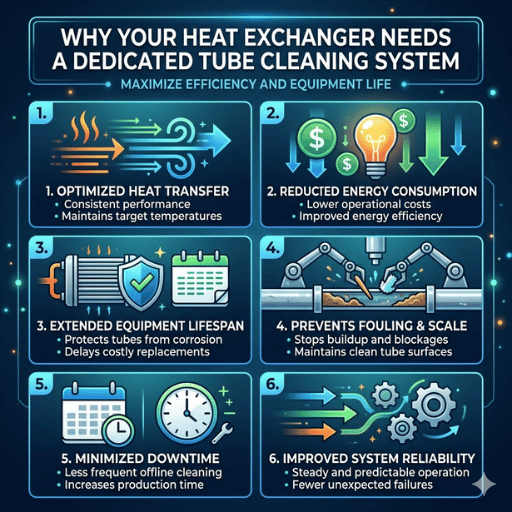
Heat exchanger fouling is one of the most expensive maintenance issues in industrial operations — yet it often goes uncorrected until performance plummets. A dedicated tube cleaning system pays for itself many times over by removing loss-inducing deposits before they trigger emergency shutdowns or shorten equipment lifespan by years.
The impact of scale is sobering. As reported by Müller-Steinhagen and Malayeri (2010), the total cost of fouling accounts for roughly 0.25 percent of GDP in industrialized economies. That total includes additional fuel usage, additional equipment for cleaning, and additional labor to remove scale, biological matter, and corrosion products inside tube bundles.
0.25% GDP
Fouling cost in industrialized economies
40%
Fuel increase from 0.6 mm scale layer
>$1M/day
Potential production loss during unplanned HX shutdown
A published study by Pritchard (1984) revealed that a 0.6 mm layer of scale on a tube can boost fuel consumption by 40 percent. In oil refineries and chemical facilities, where heat exchangers make up about 15 percent of total maintenance, roughly half of this spending is attributed to fouling. Industry insiders note that unanticipated shutdowns due to fouled heat exchangers often hit $1 million per day in production cost, a figure used in early production cost studies by Garret-Price and colleagues.
The best value cleaning method attacks the deposit type, inside your tubes. General-purpose pressure washers risk glazing the tube walls or miss some deposits. Purpose-made tube cleaning systems are engineered to operate safely within the narrow clearances of heat exchanger tubes while exerting a precise force.
💡 Pro Tip
Track heat exchanger outlet temperatures monthly. A 5–10°F drift from baseline usually indicates early-stage fouling—the point where cleaning is fastest and cheapest.
Mechanical vs. Chemical vs. High-Pressure Water — Which Method Wins?
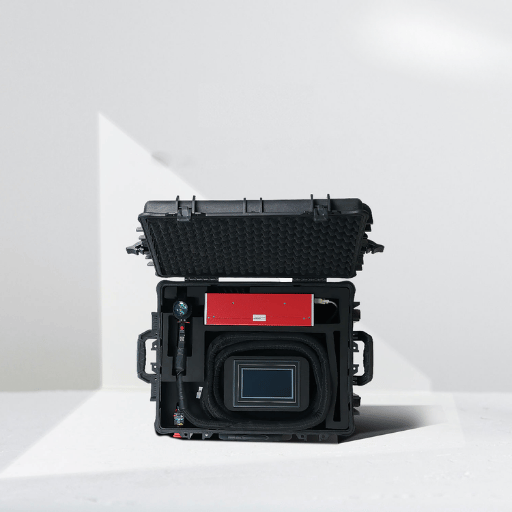
There is no one-size-fits-all cleaning method for tubes in every condition. The optimum choice relies upon the deposit type, tube material, wall thickness, and desired time frame to restore the performance. All approaches exhibit trade-offs in cost, speed, effectiveness, and risk of damages to the tube walls.
| Factor | Mechanical Brush | Chemical Circulation | High-Pressure Water Jetting |
|---|---|---|---|
| Pressure Range | N/A (contact abrasion) | Circulation at 15–60 psi | 10,000–40,000 PSI |
| Best Deposit Type | Light calcium scale, silt, biological film | Organic fouling, calcium carbonate, iron oxide | Hard calcium sulfate, silica, heavy mixed deposits |
| Tube Material Risk | Low (nylon/brass brush selection matters) | Moderate (acid concentration must match alloy) | Moderate (lance alignment critical for thin-wall tubes) |
| Typical Cleaning Time | 2–5 min per tube (manual); 30–60 sec (semi-auto) | 4–12 hours per batch (soak + rinse) | 15–45 sec per tube (automated lance) |
| Equipment Cost | $2,000–$15,000 (drill motor + brush kit) | $5,000–$30,000 (pump skid + tanks) | $25,000–$120,000+ (pump unit + lance feeder) |
| Waste Handling | Dry debris, minimal water | Spent acid/alkali requires neutralization | Water + solids, standard filtration |
| Automation Potential | Semi-auto drill rigs available | Fully automated dosing and monitoring | Fully automated PLC-controlled lance feeders |
Mechanical cleaning of heat exchanger tubes continues to be the preferred method for mild contamination. Rotating nylon or brass fibers scrub scale deposits clean, but they cannot remove hard mineral scale.
Chemical cleaning breaks down deposits that mechanical tools cannot. Obtaining specific deposit chemistry is difficult; online professional communities like Eng-Tips suggest applying a test coupon before proceeding with a chemical cleaning. An inappropriate acid concentration can erode the tube walls or produce hydrogen embrittlement in carbon steel.
Semi-automated tube cleaning machines remove the widest span of deposits and tube materials. water is the cleaning agent, so there is no additional chemical waste stream.
✔ Advantages of High-Pressure Water
- Can be used on all general types of tube alloys ( carbon steel, stainless, copper, titanium)
- No chemical disposal costs or environmental permits
- Automated feeders reduce operator fatigue and improve consistency
- Real-time pressure feedback confirms cleaning effectiveness
⚠ Limitations to Consider
- Higher initial equipment investment ($25K+)
- Requires trained operators for pressures above 20,000 PSI
- Thin-wall tubes (<0.035″) need careful lance centering
- Water supply logistics on remote sites
💡 Pro Tip
Many plants combine methods. A chemical pre-soak loosens hard scale, followed by a high-pressure water pass to flush debris. This two-stage approach often reduces total cleaning time by 30–40% compared to either method alone.
What to Look For When You Buy Tube Bundle Cleaning Equipment

Purchasing the wrong tube bundle cleaning equipment is a capital expense that significantly impacts productivity maintenance for many years. A well-matched system fits your exchanger profile, deposit level, and labor skill set. An incorrect one is underutilized because it can’t get to the tubes or just doesn’t have the pressure for the fouling sites.
Field practitioners have identified eight factors that separate good equipment from expensive regrets:
- 1. Lance diameter and reach Lance OD should be a minimum of 2 mm smaller than the smallest tube ID. Typical lances vary from 0.31 to 0.59 (8-15 mm) and should be able to reach the full length of tube without flex deflection.
- 2. Pressure rating — light biological fouling needs around 10,000 PSI, while calcium sulfate or silica deposits require 25,000 to 40,000 PSI. Match pressure to deposit hardness.
- 3. Feed speed and control – semi-automatic feeders at 18-30 in/sec produce reliable, reproducible results. Manual feeding yields more variable results, and necessitates strong arm muscles when feeding large (over 500 tubes) bundles.
- 4. Type of drive: pneumatic versus electric – Pneumatic motors are more lightweight, safe themselves in premise danger zones and can be used in wet atmosphere. Electric motors have greater torque and precisely controlled speed, but need explosion proof ratings in classified areas.
- 5. Portability – for a plant with exchangers in several buildings or on upper pipe racks a compact wheeled frame may save hours of set up time.
- 6. Brush and nozzle compatibility — standard brush sizes (10-24 mm) should fit the system, and replacement nozzles should be available from multiple sources.
- 7. safety interlock—that’s a dead-man trigger, a pressure-relief valve, and the lance retracts if back-pressure goes to high.
- 8. Data logging – The more advanced systems are recording pressure for per tube, cleaning feed distance and cleaning length. This information can be used to confirm cleaning quality and plan future cleaning intervals.
📐 Engineering Note
For shell and tube heat exchangers built to TEMA standards, verify that the cleaning lance can pass through the tube-sheet hole pattern. TEMA R (refinery) exchangers use tighter tube pitch than TEMA C (commercial), which affects lance insertion angle. Minimum tube ID for most mechanical cleaning tools is 3/8″ (9.5 mm).
When evaluating vendors, request a demonstration with your actual tube samples and deposit type. Industry data shows that equipment validated on-site before purchase has significantly lower return and complaint rates than units selected from catalog specifications alone. BOSHIYA Group offers on-site testing as part of its tube bundle cleaning services before a purchase commitment.
💡 Pro Tip
Ask for the total cost of ownership, not just the purchase price. A cheaper unit with proprietary nozzles and brushes can cost 2–3× more over five years in consumables than a system that accepts industry-standard parts.
When Does Renting a Tube Bundle Cleaner Make More Sense Than Buying?
Not every plant needs to own its cleaning equipment outright. The decision between buying and renting a tube bundle cleaner depends on how often you clean, how many exchangers you maintain, and whether your team has the trained operators to run the equipment safely. A clear-eyed comparison of both options prevents overspending in either direction.
| Factor | Buying | Renting |
|---|---|---|
| Upfront Cost | $25,000–$120,000+ (high-pressure system) | $2,000–$8,000 per mobilization |
| Break-Even Point | Typically 6–10 cleaning events (est. ~4 years) | Favorable below 4–5 events per year |
| Operator Training | In-house team required; ongoing certification costs | Contractor supplies trained crew |
| Maintenance & Calibration | Owner responsibility; annual pump overhaul ~$3,000–$6,000 | Included in rental fee |
| Scheduling Flexibility | Clean any time; no contractor lead time | Subject to contractor availability (1–4 weeks lead time) |
| Technology Upgrades | Locked into purchased model until replacement | Access to newest equipment each rental cycle |
Automated systems cut cleaning time 60-75% compared to manual methods, which changes the buy-vs-rent math. Purchase cost is repaid in three to four years for plants cleaning more than five exchangers per year. Contractors remain the better option for any plant cleaning fewer than four times a year, in tight quarters, or at locations where a trained operator cannot be kept on staff.
“The plants that benefit most from owning equipment are the ones that can keep it busy. If it cleans fewer than 500 tubes per year, renting usually costs less.” — Maintenance engineering perspective, industrial plant operations
Another compromise is also possible. Some industrial contractors — starting with BOSHIYA’s Maintenance & Equipment division — allow “lease to own” schemes, in which rents are amortized against the cost of the asset. This enables a plant to “try out” the equipment on its particular exchangers before investing total ownership in it.
Investigate industrial tube cleaners with flexible procurement options.
Big takeaway: If you clean less than four exchangers/year renting is basically a no brainer. For more than that run a five year total cost comparison for consumables, operators wages, and the value of downtime before making any decisions.
Tube Bundle Cleaning Systems for Shell and Tube Heat Exchangers — Sizing Guide
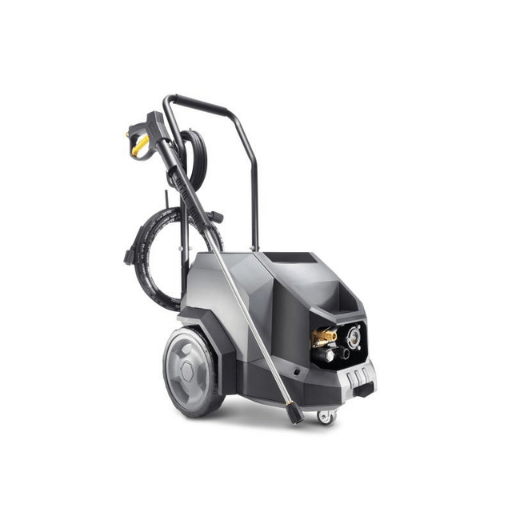
Sizing a tube bundle cleaning system. The equipment should fit the actual size of your shell and your tube heat exchangers (clamp). A system too small will not clean properly, while one too large wastes money and creates unnecessary safety risk.
Outlined below are the parameters of standard (ASME BPVC Section VIII) and TEMA designed common exchanger types. For custom fabrication the OEM should verify the dimensions used in selecting cleaning tools.
| Parameter | Typical Range | Sizing Consideration |
|---|---|---|
| Tube OD | 3/4″ (19.05 mm), 1″ (25.4 mm) most common | Brush head must be 1–2 mm smaller than tube ID after accounting for wall thickness |
| Tube Length | 8 ft (2.4 m) to 24 ft (7.3 m) | Lance + hose assembly must reach full length without excessive flex |
| Tube Count | 50–5,000+ per bundle | Bundles over 500 tubes favor semi-auto or auto feeders for speed |
| Valve Sizes | 80–600 mm (3″–24″) | Shell-side access port must clear the lance insertion tool |
| Flow Rate (on-line systems) | 50–3,000 m³/h | On-line brush systems must match process flow velocity |
| Standard Operating Pressure | 6 bar (87 psi) for on-line systems | Confirm exchanger MAWP before connecting any cleaning system |
| Max Water Temperature | 50°C (122°F) for standard hoses | High-temp applications require EPDM or PTFE hose assemblies |
📐 Engineering Note
When cleaning shell and tube heat exchangers with U-tube configurations, the bend radius limits lance insertion depth. Standard rigid lances cannot pass the U-bend; use flexible lances or clean from both ends. For fixed tube-sheet designs, access is straightforward from either tube sheet. As noted in Heat Exchanger World field reports, verifying the tube-sheet layout before mobilizing equipment prevents wasted setup time.
BOSHIYA Group offers portable cleaning systems tailored to exchanger ranges of 50 to 5,000+ tubes. Their technical team can match cleaning configurations to your exchanger data sheets.
Key point: never move beyond the number of your Exchanger’s tube ID, tube length, and tube count. Those three numbers tell you everything you need to know for 90% of your equipment selection.
Five Costly Mistakes Buyers Make (and How to Avoid Them)
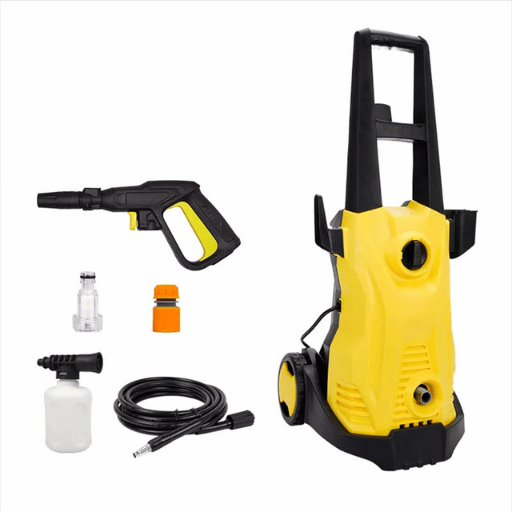
Purchasing a tube bundle cleaning system has enough factors that even savvy maintenance managers occasionally make a bad choice. These errors are common in industrial discussions and field service records. Each can be prevented with some simple tending-to in advance:
Mistake 1: Under-sizing lance length
Buyers choose a lance by the most common exchanger but forget they have 20 foot bundles. A short lance causes fouling to accumulate at the end – restricting flow – and to create a corrosion pocket.
Fix: Inventory all exchangers on the site. Purchase one lance that fits the longest tube; add spacers for shorter bundles.
Mistake 2: Ignoring tube wall thickness and material
Carbon steel, stainless, copper alloy and titanium tubes each have different working pressures and are intended to be used with different brushes. Cathodic corrosion with a brass brush when used inside a titanium tube is a common hazard for plant engineers with exchangers from different OEMs.
Fix: For each exchanger use the data sheet to determine the tube material and wall thickness. Based on this, determine the brush material and pressure.
Mistake 3: Skipping the demo or test run
Catalogs cannot replicate real-world conditions. Deposits vary by process fluid, temperature history, and water chemistry. A system that works in a refinery may underperform at a chemical plant with polymer fouling.
Fix: Require a field demonstration on your actual tubes with your actual deposits before signing a purchase order.
Mistake 4: Overlooking spare parts availability
Of the imported systems, some use proprietary nozzles and brush adapters that take up to 6-12 weeks to arrive. Industry data suggests that spare parts availability and lead times are the single largest cause of unexpected cleaning delays at facilities that own their own equipment.
Fix: Confirm spare parts inventory and lead time on purchase. Purchase a critical spare parts kit with first system.
Mistake 5: Not measuring cleaning success
Without a baseline pressure drop, heat transfer coefficient, or visual record there is no way to verify the system even restored the process or that management should justify the capital expense.
Fix: Record heat transfer coefficient before and after cleaning. Use the delta to determine ROI and schedule the following cleaning event.
⚠️ Warning
Never assume that the cleaning method used at a sister plant will work at yours. Process fluids, water chemistry, and operating temperatures all affect deposit composition. A February 2025 article in AIChE CEP Magazine reinforced that site-specific fouling analysis is the single most important step before selecting any cleaning approach.
Most expensive mistake: It is not the equipment. It is the downtime and rework away from the non-optimized equipment. Take the time to evaluate, size, demonstrate, and plan your spare parts inventory before you pay for the down time.
Frequently Asked Questions
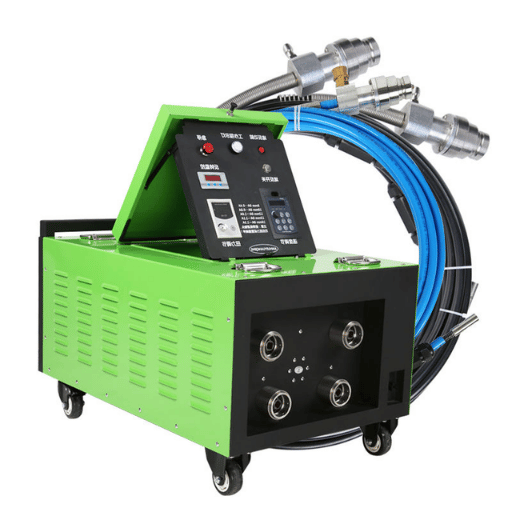
Q: Are you choosing the right tube bundle cleaning product for your application?
View Answer
The correct product depends on 3 factors: deposit type, tube size, and cleaning frequency. Mechanical brush systems work well on small ID, light build deposits. High pressure water jetting works well on hard scale or large bundles. Match the tool, do not make it, every application or risk liner damage and scheduling delays. Have the analysis done at your lab before selecting your system.
Q: Does your heat exchanger have thick wall scale, and what cleaning method removes it?
View Answer
Thick, hard wall scale deposits (>1 mm) are calcium sulfate, silica, or combination mineral. Mechanical cleaning with brushes does not penetrate hard wall scale, use high pressure water jetting at 20-40K PSI or chemical soak followed by mechanical. Confirm the depth of deposit through visual or ultrasonic thickness testing before selection.
Q: What is the difference between a pneumatic tube cleaner and an electric one?
View Answer
The pneumatic tube cleaners are lighter, safer in explosive atmospheres, and water resistant because of their compressed air operation. Electric cleaners add more torque and faster, more accurate RPM control but must be housed in explosion proof conditions within classified areas. Most refineries and chemical processes prefer pneumatic style. Power generation plants and HVAC installations select for electric power.
Q: How often should tube bundles be cleaned in an industrial plant?
View Answer
Interval scheduling is variable between industries and process conditions. Refineries typically clean every 12-18 months during scheduled turnarounds. Power and air conditioning cooling water exchangers often clean every 6-12 months. Follow a condition based model by monitoring heat transfer efficiency and scheduling the cleaning event for when there is a 10-15% efficiency loss over initial baseline.
Q: Can a portable tube cleaning system handle large-diameter exchanger tubes?
View Answer
Yes. Available in portable versions, modern portable systems accept tubes up to 2 (50.8 mm) ID and allow for interchangeable nozzle heads and brush adapters. Larger tubes require specialized rotary nozzles and sectioned brushes. Compact high pressure units deliver 20,000+ PSI and only weigh 200 Kg or less on wheeled carts.
Q: What safety features should a tube bundle cleaning system include?
View Answer
Dead man trigger (pressure lance stops when operator releases), pressure feedback valve below the tubes maximum working pressure, an automatic lance retraction system if back-pressure spikes, and guarding at the sheet face and lance end are basic safety features features. For high pressure (>10K PSI) systems, one should include burst disc features and explicitly stated operator protective gear requirements.
Q: How does regular tube cleaning extend shell and tube heat exchanger maintenance intervals?
View Answer
Fouling leads to under-deposit corrosion, which is the dominant failure mode for heat exchangers. Removing the deposit layer before corrosion takes hold extends tube life by an estimated 30-50% based on field maintenance data. Cleaner heat exchangers also maintain proper design flow rates, reducing thermal stress on tube joints and lowering the risk of tube-sheet cracking.
Ready to Buy a Tube Bundle Cleaning System?
BOSHIYA Group engineers will be glad to recommend the most suitable cleaning system for your applications, taking into account the specifics of your and your installed exchanger, deposit composition and costs. Internationally recognized all on-site service on your Exchanger.
Transparency Statement
This tube bundle cleaning system information source has been developed to assist plant engineers and maintenance personnel evaluate heat exchangers using widely available industry journals and formal study. BOSHIYA Group manufactures and services tube bundle cleaning equipment. This publication cites independent sources and our own off-site reliability experiences. Cost estimates are approximate industry estimates.
Related Articles
- tube Bundle cleaning systems –Full Range of producto
- Heat Exchanger Maintenance Services
- Industrial Cleaning Equipment Catalog
- Tube Cleaning Equipment Rental Programs
- Request a Free Cleaning Assessment
References & Sources
- Müller-Steinhagen, H. & Malayeri, M.R. (2010). “heat exchanger Fouling – Environmental Impacts.” IntechOpen. Available: link.
- Garret-Price, B.A. et al. (1985). “Fouling of heat exchangers – Characteristics, Costs, Prevention, Control, and Removal.” Noyes Publications. Review: HeatX Global. Available: link.
- Pritchard, A.M. (1984). “The Economics of Fouling.” Fouling Science and Technology, NATO ASI Series. Available: link.
- TEMA Standards – Tubular Exchanger Manufacturers Association. heat exchanger Summary.
- ASME Boiler and Pressure Vessel Code, Section VIII, Division 1 – Part UHX. ASME Standards on heat exchangers.
- AIChE CEP Magazine, February 2025 – heat exchanger Fouling Evaluation. AIChE CEP. Available: link.
- heat exchanger World – Field Report: Maintenance of shell & tube Heat Exchangers. Access report.
![Polypropylene Resin: Grades, Types & Selection Guide [2026]](https://boshiya.com/wp-content/uploads/2026/05/0-150x150.webp)