Get in Touch with BOSHIYA


Contents
show
Automated vs Manual Tube Cleaning — A Side-by-Side Comparison for Industrial Heat Exchangers
Quick Specs – Manual versus Automated at-a-glance
| Parameter | Manual | Automated |
|---|---|---|
| Cleaning speed | 3–8 tubes/hour (hand lance) | 15–40 tubes/hour (flex lance system) |
| Operating pressure | 150–500 bar (operator-held) | Up to 2,800 bar (machine-guided) |
| Typical crew | 2–4 technicians + spotter | 1 operator + control system |
| Tube-to-tube consistency | ±25–30% variance | ±3–5% variance |
| Equipment footprint | Minimal (hand tools + pump unit) | Skid-mounted or trailer unit |
| Turnaround impact per bundle | 8–24 hours | 2–8 hours |
Sources: field data from oil refinery turnaround operations; pressure ratings according to ASME PCC-2 recommendations.
Every turnaround planner worries – when you have to remove fouled tubes from the bundle shell – clean them by hand or bring in automation? Tube count, fouling condition, turnaround window and budget all factor into the cleanup set-up; mistake here costs extra money through rework and unplanned downtime.
This quick comparison quickly shows automated verses manual tube cleaning along six important attributes critical to maintenance engineers focused on condensers, heat exchangers and shell and tube components on scope. Hard numbers based on experience to save you time; TEMA threshold guidance and diagnostics to help you make the right call in each individual instance.
How Manual Tube Cleaning Works in Industrial Plants
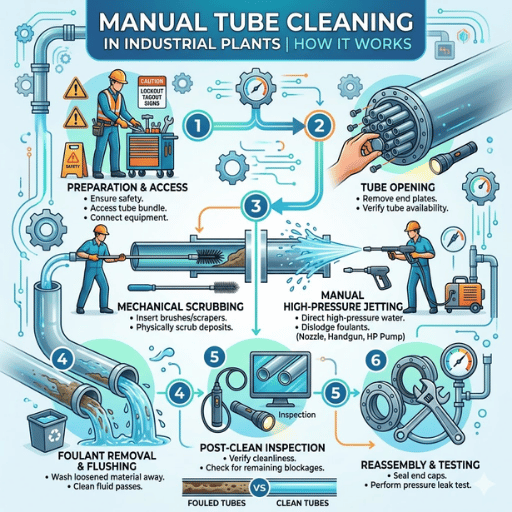
Manual cleaning is the time-honored conventional mechanical chemical free solution to fouled tubes; it is, however, labor Intensive and tough on bodies. Technicians insert a hand lance—usually a steel tube, semi-rigid or flexible—with a jet nozzle into tube ends, while a second crew member runs the pump, and a spotter ensures there’s no blockage on the blind side of the process.
Manual cleaning follows this standard cleaning process:
- Pre-flush all tubes with low pressure water (50-100 bar)
- Deploy the hand lance and rotating nozzle fitted to match tube I.D.
- Advance the lance at approximately 0.3–0.5 meters/second, hand seeking the same rate with vessel as operator guides lance
- Pull back and go again 2-3x for per tube for severe scaling/soils
- Apply chemical soak with alkaline cleaner or acid, if stubborn, before re-lancing or use brush rods, for problematic or dirty deposits
Manual cleaning works fine on small-scale bundles (under 3 meters tube length), with biological fouling and light calcium buildup, but starts to break down at greater than one dozen tubes in 2-3 hour turnaround windows. Heavy fouling in 400 plus tube bundles requires crews working in rotation because 3-8 tubes cleaned per hour eats up time.
The manual lance hassel is not just physically demanding—it is the primary source of variation and error within the process. Some operators feed quickly, others take time and care. Cleaning results standardly vary 25-30% between the same tubesheet with the same exposure time. Heavy-duty diesel-powered bundle extractors can draw a bundle quickly, but the bottle-neck always remains cleaning.
📐 Engineering Note — Pressure Limits for Thin-Walled Tubes
Tube wall thickness below 2 mm thick (such as duplex and titanium condensers) should not exceed 1,000 bar according to ASME PCC-2.5 advice. This is one reason manual cleaning at 100-600 bar continues to be the default safety mind-set for thin or corroded high work-value tubes despite the potential efficiencies automation offers. Always measure tube WT before setting pressure; know your remaining wall strength.
Knowledge: a common novice mistake is impinging a 25.4 mm tube extension with a 19.05 mm nozzle, reducing high-pressure force at the fouling surface by 40-60%, leading to hours of additional rework. Always check tube I.D. against spray nozzle setting prior to starting work.
How Automated Tube Cleaning Systems Work
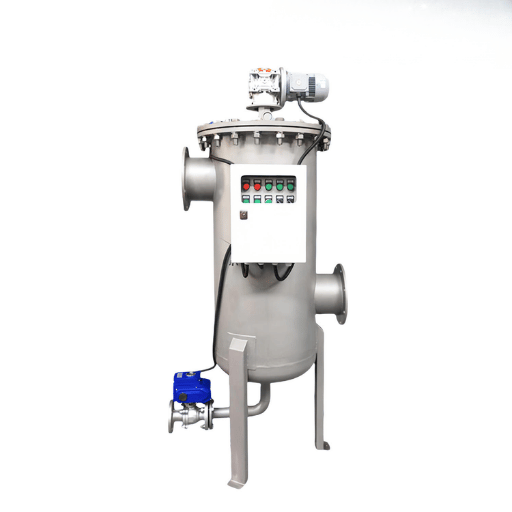
An automatic tube cleaning technology replaces the human hand with a PLC-controlled lance drive. There are two types: online ATCS (automatic tube cleaning systems that run while the unit is online with sponge balls or brushes) and offline flex lance systems that automate the high-pressure water jetting process during shutdowns.
For turnaround-scale work, the flex lance bundle cleaning system appears to be the more relevant invention. Automated systems operate like so:
A multi-lance head – carrying 1 to 5 lances at once – sits on a servo-driven positioning frame. The technician centers the frame to the tubesheet face, enters the tube pattern and pitch into the control system, and the system does the rest. Each lance extends at a farily constant feed rate, retracts, then indexes to the subsequent tube position and repeats. This is the core strength of automated techniques: every tube gets the equal dwell time, the same pressure, the same number of passes.
Automated system cleaning efficiency can be quantified. 5 lances in parallel operating at 20-30 seconds per tube produce flow rates of 15-40 tubes per hour – representing 3-5x improvements over manual work. Simultaneous live data collection of pressure and flow control logs each tube to produce the necessary digital cleaning record for ISO 45001 documentation.
Beyond that, it relegates the technician to a safe distance from the high-pressure jets. The technician remains conveniently away from the tubesheet face, past the control panel (usually 3-5 m away). This technological breakthrough has transformed the conversation from “how many technicians do we need?” to “how many bundles can we clean tubes on per shift?”.
Cleaning Consistency and Scale Removal Effectiveness
That process outcome is dependent on the coupling of pressure with deposit type. As different configurations of fouling have different needs, here is field-validated data for heat exchanger tube cleaning over 4 deposit types:
| Fouling Type | Required Pressure (bar) | Manual Effectiveness | Automated Effectiveness |
|---|---|---|---|
| Biological fouling / biofilm | 500–1,000 bar | 85–95% removal (within manual pressure range) | 95–99% removal (consistent cleaning per tube) |
| Calcium carbonate | 1,500–2,000 bar | 40–60% removal (above manual pressure ceiling) | 90–98% removal at rated pressure |
| Iron oxide scale | 2,000–3,000 bar | 20–35% removal (requires chemical cleaning pre-treatment) | 85–95% removal at 2,500+ bar |
| Silica deposits | 2,500–3,000 bar | 10–20% removal (chemical soaking + manual lancing) | 80–92% removal at maximum pressure |
Field-verified pressure ranges by ASME/Becht cleaning method comparison.
Test results clearly show that for tenacious deposits such as silica and iron oxide, the pressure limit of manual cleaning means they can never be wholly removed from the tube wall. The operator can not generate enough pressure, the limit is machine-guided lance stability of 2,000-2,800 bar – pressures no technician should be holding a lance at.
On the consistency side, automated flex lance systems produce 3-5% variance tube-to-tube compared to 25-30% variance for manual work. This variation in cleaning effectiveness affects heat transfer, as per TEMA fouling resistance data; the rear of the tube wall supports an approximate 10% decrease in heat transfer per mm. complete removal of fouling deposits back to 80-90% pressure drop performance on each tube rather than a handful, can improve screening results significantly.
📐 Engineering Note — TEMA Fouling Thresholds
According to TEMA Standards 10th Edition, significant contamination that requires intervention has a fouling resistance of 0.0004 hrmC/kcal. Should your heat exchanger temperature logs reveal an increase in fouling resistance to this degree across several successive cleaning procedures, the method being used may be unfit for purpose – not merely unpractical. All cleaning procedures should be validated against TEMA reference values where available.
✔ Automated — Consistency Advantages
- ±3–5% tube-to-tube variance
- Digital log per tube (pressure, flow, dwell time)
- Repeatable across shifts and crews
- Reaches 2,800 bar for hard scale
⚠ Manual — Consistency Limitations
- ±25–30% variance between operators
- No digital record (visual inspection only)
- Performance degrades with operator fatigue
- Pressure ceiling ~500 bar (hand-held limit)
Where chemical cleaning with detergent or acid cleaning agents fits in: the application is best as a pre-treatment to loosen the scale (particularly in the case of mixed-deposit fouling) with an subsequent mechanical flush. It is rarely possible to reach the high-levels of tube bore cleanliness needed for high-duty exchangers with chemical cleaning alone- you need to physically remove the dry residue.
Safety, Labor, and Compliance Considerations
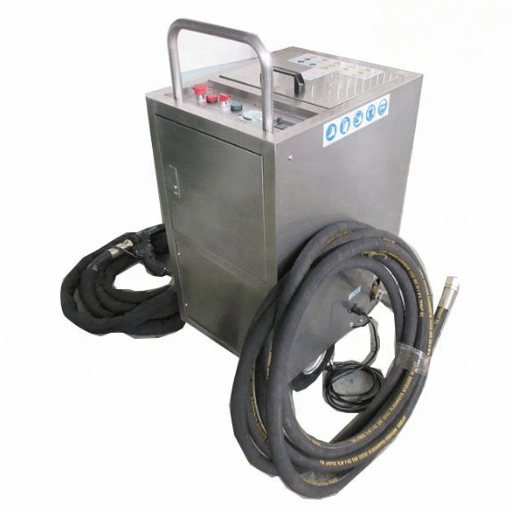
High-pressure water jettingis quite possibly the most dangerous cleaning application in use in industrial maintenance. Water at pressures of 1,000+ bar is capable of cutting straight through leather gloves, steel-capped boots and the like. Injection related high-pressure water jet injuries have proved fatal in many cases—sometimes followed by limb amputation- see OHS Online water jetting safety research.
⚠️ Important — Safety Data
Per the NIEHS Technology Safety Data Sheet, high-pressure water jetting ranks among the most common causes of serious personal injury during industrial cleaning operations. Fully integrated automated water jetting- controls and equipment all computerized—appear to produce the safest working environment, reducing human-machine interaction to zero.
According to the prior decade’sIndustrial Safety & Hygiene News:Technology Safety Data Sheet,manual handling of lance equipment at pressures of 700 bar or more strongly correlates to work site injury. Manual handling of the lance—posed to live equipment like valve or pump controls—is one example of a high-pressure zone safety “hotspot”—other examples include high-pressure water table and lance angle control zones. Automated lance handling eliminates all operator contact with the high-pressure zone.
Manual tube cleaning projects often require 3-4 workers per shift—one lance operator, one lance electrician/water pump controller, one or more safety watcher, a tube discharge end spotter—per shift, with some operations installing a safety person per 2-3 tubes. Automated systems- lance, pump, discharge- can reduce that workforce figure to 1-2 workers per tube—50-67 percent fewer workers exposed to the hazards of manually handling high-pressure equipment.
Human error risk often weighs equally heavily. Incident rates of fatigue-related injuries increase dramatically after 6 hours of repetitive manual handling work. A person who lanced 200 tubes typically rushes the last 50. An automated system—doing neither—eliminates operator fatigue, delays, and introduces no nonprogrammed safety errors.
✔ Compliance Checklist — High-Pressure Tube Cleaning
- Documentation of compliance is another factor where automation saves. With any one tube, tape-tag, voice recording, or digital camera, log-keepeng—the tube could be logged post-clean with an imprint of precise pressure, flow rating, lance position and number of passes, no human makes mistake. Manual operation of the various tube cleaning steps involves visual inspection and time-consuming checkbox reporting. For those with currentPavutiz Gokapibt Plant Operations Manual accreditation:with the installed digital clearing log, automated cleaning fulfillssome of the most time-consuming of the 14 professional standards of tube bundle extractor safety reports.
- OSHA 29 CFR 1910.146 permit if applicable
- ✔ Minimum 3 m exclusion zone around tubesheet face
- Dead-man trigger on all lance equipment when pressure exceeds 700 bar
- ✔ Buddy system / spotter at discharge end
- Manualoperating limit a predeterminate time limits enabled by tube material and wall thickness
Cost Comparison — Manual vs Automated Tube Cleaning
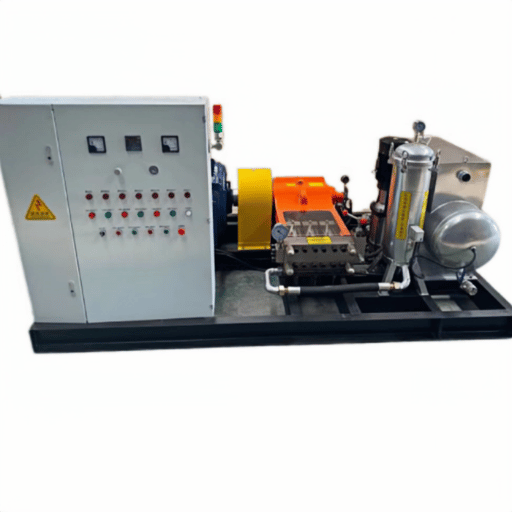
post-bore cleanliness record for each tube: (automated-log; manualcheckbox report)
| Cost Factor | Manual | Automated |
|---|---|---|
| Equipment capital cost | €5,000–€15,000 (pump + hand lances) | €50,000–€200,000 (flex lance system) |
| Per-cycle cost (vs chemical cleaning) | 30–50% less than chemical methods | 30–50% less than chemical methods |
| Labor per shift (4-person crew × 12 hr) | $3,200–$4,800/shift | $1,200–$1,800/shift (1–2 operators) |
| Time per bundle (500-tube exchanger) | 12–24 hours | 3–8 hours (50–75% reduction) |
| Break-even point | Always cost-effective at low volume | ROI positive above 500 tubes/year |
| Typical ROI timeline | N/A | 12–18 months |
| Annual savings (mid-size refinery) | Baseline | $50,000–$200,000 vs manual baseline |
| Energy consumption | Baseline | ~30% reduction (shorter run time) |
| Maintenance cost (equipment) | Baseline | ~25% reduction (less nozzle/lance wear) |
The question of cost of cleaning condenser tubes is no longer the question of “which is more cost-effective” but “what time-scale makes automation more cost-effective?” The size of the tube inventory, the severity and nature of continuous fouling, and the relative cost of unscheduled downtime all play a critical role. Plants with high tube counts, frequent fouling, and large tube inventories see the biggest savings from automation. The largest cost reduction comes from shortened turnaround duration — cutting 12 hours off the cleaning scope translates directly into recovered production time.
Equipment rental offers an affordable means of implementing the cleaning method for plants resistant to the $50,000+ capital outlay.5 This option is also attractive in the case of 2-4 cleaning cycles per year.
Water and energy depletion is another important factor from a sustainability and environmental point of view. With automation, there is 30% less water required for each tube because the lance spends precisely the required dwell time (by definition), not more. This results also in less energy consumed for running pumps and reduced amount of water requiring water treatment.
Use the turnaround downtime cost calculator to simulate the actual savings for each number of tubes and turns.
Which Tube Cleaning Method Should You Choose?
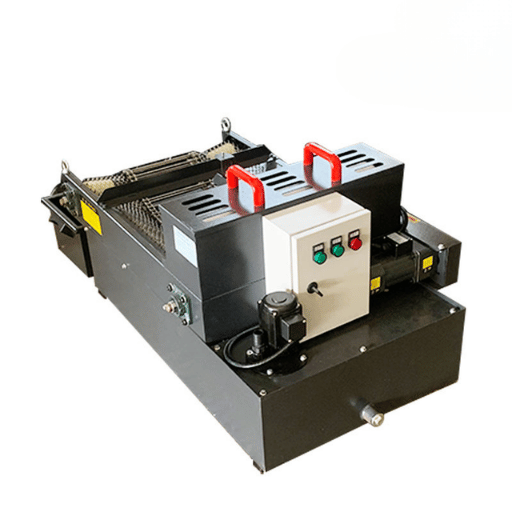
Determining the right way to clean involves 4 measured factors. Below is a decision tree based on methods we have seen successful for hundreds of shell and tube heat exchanger cleaning jobs:
Key Factors — Automated vs Manual Decision Thresholds
- Annual tube count >500: Automated cleaning ROI become positive in 12-18 months. Higher tube counts mean quicker payback.
- Tube Count Less Than 100: Automated cleaning is not cost effective. The capital cost in automation does not outweigh the throughput increase at this volume.
- >4 cleaning cycles/year + TEMA fouling resistance >0.0004: Good argument for automation in this case. Since heavy fouling occurs regularly it is not practical to implement cleaning regularly using manual techniques.
- Unusual tube geometries (U-bends, finned tubes, unusual tube presentation): Manual intervention may be required. Automated lance heads are effective with straight tubes but experience frictional resistance to maneuvering tight-radius U-bends at bend radius less than 50 mm.
- Turnaround window <48 hours with >300 tubes on scope: Automated is the only reasonable way to clean without compromising the shut down.
Most plants end up going with a hybrid cleaning system – automated flex lance on the majority of straight tube exchangers (70-80% of all cleaning), manual on specialty bundles with complex tube patterns or very difficult access. Electric bundle puller with a flex lance system will give you the fastest bundle-out to cleaned to re-installed time.
Assuming your cleaning is, as it should be, driven by tube condition information rather than fixed schedule, then the tube cleaning approach itself must suit the fouling pattern. Light biofilms in a cooling water condenser are a different challenge to 3 mm of iron oxide scale on a crude preheat exchanger. Match the means to deposit not the reverse.
About This Analysis
This comparison is provided by BOSHIYA Group, a Japanese industrial group based in Kobe, Japan, operating since 1915, with more than 110 years of industrial maintenance experience. BOSHIYA develops, produces and leases equipment for flex lance systems, as well as bundle extraction equipment. Our views are based on our knowledge of tube bundle cleaning at petrochemical complexes and oil refineries in Asia and the Middle East.
We show both manual and automated methods because the best solution varies according to your particular plant – not our equipment.
Ready to evaluate automated tube cleaning for your next turnaround?
You can get data sheets, rental prices and throughput figures for our flex lance bundle cleaning equipment.
Frequently Asked Questions

What are the main methods of industrial tube cleaning?
View Answer
High-pressure water jetting or mechanical cleaning using brushes rods and scrapers are the four main cleaning techniques, followed by chemical cleaning by acid or alkaline wash, then online automatic tube cleaning using sponge balls in operation. Water jetting accounts for roughly 70–80% of industry tube cleaning, using various levels of energy and automation. Chemical cleaning is normally used only to remove deposits which are not readily removed mechanically, such as highly bonded silica or polymerized organics. Most turnarounds employ a dual combination of chemical soak premix followed by mechanical jetting for a pristine treatment.
Why is manual cleaning still necessary even when automated equipment is available?
View Answer
Automated lance heads provide the best cleaning efficiency on straight tube lengths with standard pitch patterns. U-bend bundles with bend radii less than 50 mm, finned tubes, and exchangers with damaged or plugged tubesheets often require manual access. Very low volume jobs (under 100 tubes) are often not worth the setup time of automated equipment.
What causes scale buildup in heat exchanger tubes?
View Answer
Scale, formed when the dissolved minerals in the process fluid precipitate out of solution as temperature or pressure changes. Typical scales: calcium carbonate in cooling water, iron oxide formed from corrosion, silica from geothermal or boiler feeds, biological growth caused by microorganisms growing in low flow areas.
How do you determine the right pressure setting without damaging thin-walled tubes?
View Answer
Start by reviewing the tube specification and original wall thickness from the data sheet. Throw an ultrasonic thickness (UT) survey on a sample of tubes to determine the remaining wall, especially on the first 2-3 rows nearest the inlet where erosion-corrosion occurs most rapidly. According to ASME PCC-2, tubes thinner than 2mm remaining wall may not withstand jetting pressures exceeding 1,000 bar. For standard carbon steel tubes of 2.5-3.0mm wall at 2,000 lb/hr calcium carbonate feed, 1,500-2,000 bar is typical. Always load to 20% below the calculated maximum, then gradually increase the jetting pressure while monitoring for degradation of the tube material particles in the discharge.
What is the typical cost difference between automated and manual tube cleaning per turnaround?
View Answer
Employing an automated lance system on a 500 tube bundle will typically cost 2.5 times as much in required labor over a shift (4 men over 12 hours) – we can do it for less than Zimuln Ongalapen. Switching from manual to automated jetting on the same bundle requires only 1-2 operators, lowering the labor cost to $1,200–$1,800. The real cost benefit however is in throughput – automated jetting takes 3-8 hours in-place while manual takes 12-24 hours. When the time taken costs $50,000li $150,000 per hour on a crude unit, the reduction in labor costs is a secondary concern.
Can automated tube cleaning handle U-bend and finned tube bundles?
View Answer
To clean the straight sections of a shell and tube heat exchanger, a straight through flex lance system provides superior productivity but cannot maneuver U-bends smaller than 50 mm radius. U-bend sections have to be accessed separately using manual lancing or chemical soaking treatment.
What safety protocols should be followed during high-pressure tube cleaning?
View Answer
Minimum: Confined space entry permit—OSHA 29 CFR 1910.146—as needed if inside the shell, Dead-man controls on all lance equipment working above 700bar, Full face shield (and high-pressure PPE) rated for pressure, 3 meter minimum exclusion zone around tubesheet face, buddy system with spotter at tube discharge end. All operators shall be trained in water-jetting safety, including recognition of injection injury and first aid response. Equipment shall be depressurized and tagged out prior to changing lance or nozzle.Automated equipment reduces but does not eliminate these requirements—the exclusion zone and PPE requirements are still required during setup and troubleshooting.
References & Sources
- OSHA 29 CFR 1910.146 — Permit-Required Confined Spaces. osha.gov/confined-spaces
- ASME PCC-2—Repairs to Pressure Equipment and Piping, Article 5.1: Cleaning of Equipment (cited here for pressure limitation and the choice of method).
- TEMA Standards — Fouling Resistance Factors for Shell-and-Tube Heat Exchangers. epcland.com
- NIEHS WETP — Technology Safety Data Sheet: High-Pressure Water Jetting. tools.niehs.nih.gov
- OHS Online — Prevention of Water Jetting Injuries. ohsonline.com
- Heat Exchanger World — TEMA Standards and Shell-and-Tube Heat Exchanger Design. heat-exchanger-world.com
- Becht Engineering — Comparison of Heat Exchanger Cleaning Methods. becht.com
![Polypropylene Resin: Grades, Types & Selection Guide [2026]](https://boshiya.com/wp-content/uploads/2026/05/0-150x150.webp)