Get in Touch with BOSHIYA

Hydraulic Bundle Extractor for Heat Exchanger Tube Bundle Pull

Efficiently maintained heat exchangers ensure the proper functioning of any production machinery, both within and outside a manufacturing site. Surprisingly enough, the removal – or rather extraction – of tube bundles can be one of the more difficult tasks to accomplish as it requires time, effort, and skills when using conventional methods. However, the Hydraulic Bundle Extractor changes the game for the better in the sense that it was purposely manufactured to make the burdensome task of removing the tube bundles less hard and faster. Readers willing to find how such a novel invention helps decrease the inefficiencies and enhances safety during technician interventions should continue reading. If any of these people happen to be a plant manager, engineer or technician, one will learn how this tool will change the way heat exchanger maintenance is done. Follow along as we discuss the specification, advantages, and use of such a hydraulic bundle extractor system.
Contents
show
Introduction to Hydraulic Bundle Extractors
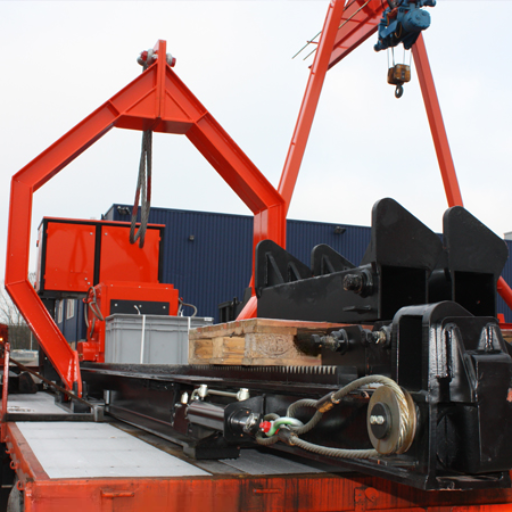
Specialized tools called Hydraulic Bundle Extractors are used for easy and effective removal and insertion of tube bundles in heat exchangers. The hydraulic system component in these tools are employed for effective handling of the heavy loads thus reducing physical stress and injuries. Such extractors make maintenance more efficient by reducing the turn-around time, increasing the work rate, and achieving bundle transfer in a safe and accurate way. Their durable and trustworthy construction encourages many industrial maintenance units to adopt them as this particular procedure is very important to them.
What is a Hydraulic Bundle Extractor?
One can define a hydraulic bundle extractor as a contraption that is effectively fitted with mechanical gear for the smooth extraction and reinsertion of heat tube supports mounted on heat exchangers. Such devices work depending on hydraulic systems allowing them to successfully handle tube bundles, eliminating the problem of their heavy weight or discomfort in handling. They come with features that allow one to perform the task with preciseness and brilliance even in complex or restricted environments such as adjustable grips, sophisticated control systems, and higher frame extension. The arguments finished its course as it is intended that they will assist in the adoption of extraction tools by reducing manpower with no compromise on safety as there will be less risk of injury. In industries such as the petrochemical, refinery and power generation operations, maintaining the status of heat exchangers – functioning efficiency and durability of equipment – is of utmost importance, hence the adoption of the hydraulic bundle extractor system.
Importance of Tube Bundle Extraction in Heat Exchangers
Tube bundle cleaning is a critical maintenance task for heat exchanger operation efficiency, which is a key component of petrochemical, refinery, and power-plant industries. Without regular removal and cleaning of these tube bundles, fouling, scaling, and blockages could occur if deposits or debris were allowed to accumulate within the tubes. Impediments of this sort can very much reduce heat-exchanger efficiency, consequently increasing energy consumption, increasing operating costs, or possibly leading to the equipment’s failure.
Also, if tube bundles are correctly taken out on time and would be maintained correctly, heat exchanger life could extend for as long as thirty and maybe beyond while maintenance would also assure overall that the systems’ unremitting performance. Nowadays, the modern maintenance methods for automated hydraulic bundle extractors are evident in reduced downtimes and labor costs-with the bonus of safety. When any form of extraction is deliberated, accurate levels of consistently contaminating the extracted contaminant content shall lead to optimized performances, thereafter paving the way for energy-efficiency conservation standards and emissions control. This simply denotes the importance of efficient tube bundle extraction for the best industrial operation, and environmental and economic material sustenance.
30+
Years Extended Equipment Life
↓
Reduced Downtime & Labor Costs
✓
Enhanced Operational Safety
Overview of Bundle Extraction Process
The tube bundle extraction process is done to safely extract or withdraw tube bundles from heat exchangers for maintenance or replacement. The process starts by carefully isolating the heat exchanger by switching all systems off and safely bringing work into the area. This is important in preventing any leaking or other hazards that may arise during extraction. Now it is all about extracting the fluid content, reducing any potential risks, and placing the unit in a condition of being pulled out.
Process Steps
- 1
System Isolation & Preparation
Carefully isolate the heat exchanger by switching all systems off and safely bringing work into the area. This is important in preventing any leaking or other hazards that may arise during extraction. Extract the fluid content and reduce any potential risks.
- 2
Precision Extraction
Upon preparation of the heat exchanger, the delicate bundle extraction procedure is carried out using special equipment. Doing this work with precision is a must to avoid damage to the bundle or to the surrounding area. The extraction device consciously pushes the bundle to break loose and slide out of the shell.
- 3
Safety Compliance During Operation
Operators need to observe safety standards by wearing the appropriate protective equipment and following safety in the operation of machinery. Protecting the integrity of the bundle and the heat exchanger shell is the most important thing at this point.
- 4
Post-Extraction Assessment & Reinsertion
After extraction, maintenance and assessment of the tube bundle are considered. This involves cleaning out any fouling, repairing damaged components, or outright replacement if strictly necessary. Accurate documentation and assessment ensure insights for future operations. The extracted bundle is either reinserted post-servicing or replaced to assure strengthened performance and lengthened equipment life span.
Components of a Hydraulic Bundle Extractor

Components of a Hydraulic Bundle Extractor
Key Components and Their Functions
⚙ Hydraulic Cylinder
The hydraulic cylinder is truly the primary force-producing component that thrusts or extracts the high strong from its housing. It works on pressurized hydraulic fluid, that ensures exhaustion and control in this process.
🔩 Main Frame & Supporting Structure
The frame supplies stability for the entire system, allowing for safe handling of heavy tube bundles. It was structurally designed for high load and for the maintenance of equilibrium while operating.
🎛 Control System
The control system, consisting of valves, switches, and control panels, acts respectively on hydraulic pressure, direct action of the cylinder, ensures exact and controlled operation and provides minimum risks.
⚡ Hydraulic Power Unit (HPU)
HPU supplies the pressurized hydraulic force that operates the opening for the tube. Its components include a pump, reservoir, and filters, all contributors to its consistent performance and reliability.
🔒 Clamping Devices
Clamping devices are used to secure the tube bundle during extraction and reinsertion while being designed for minimal damage to the tube bundle and a maximum holding grip.
🔄 Wheels & Mobility Systems
Most hydraulic tube bundle extractors come with wheels or have tracks, which make them easier to move and properly position by aligning them with the heat exchanger, thereby improving the efficiency of the operation.
These groups are interdependent in their functionality as they work together to ensure the safe, fast, efficient, and precise handling of tube bundles during their maintenance and replacement.
Hydraulic System Overview
The operation of the hydraulic bundle extractor needs a properly functioning hydraulic system. And this is what provides the force needed for the lifting, pulling and transferring of the tubes-this is critical because tubes should only be repositioned in smooth and continuous rotations while still being kept in a predefined position.
The hydraulic system typically comprises a hydraulic pump, control valves, and hydraulic cylinders. The hydraulic pump generates the pressure required by the cylinders to lift and push. Control valves control the speed and direction of the cylinder movement, ensuring smooth and controlled movements. Thus, any operator can easily maneuver the extraction unit, thus enhancing safety, plus productivity.
The advantages of the hydraulic system include their robustness and power. This system functions very well even under circumstances of extreme pressure and under adverse conditions, making the hydraulic system crucial for maintenance as well as replacement purposes. Regular checks and surveys need to be carried out on contributing parts, including fluid checks to protect the life of equipment and optimize the performance of machinery.
Durable Materials Used in Construction
Structures of hydraulic bundle lifters are generally fabricated from extremely strong materials in respect to strength, reliability, and wear resistance. Steel is one mainly used material for its high tensile strength and capability to stand up to heavy pressure during operation. Where enhanced strength and corrosion resistance take precedence, toughened alloys are widely employed, especially for the cases confronted by moisture and chemicals. Meanwhile, sealers and pumps exploit the contribution of more compliantly sophisticated materials in the form of high-grade rubbers or particularly polyurethane for seal or hose material for variation against flexibility and leakage. The combined materials thus serve as a strong foundation, assuring reliability, and safety for extended life in challenging industrial settings.
Operational Mechanism of the Hydraulic Bundle Extractor
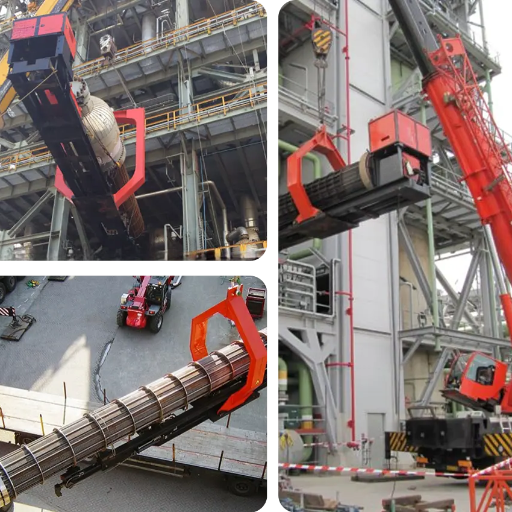
How the Pull and Push Functions Work
The hydraulic bundle extractor works using an advanced hydraulic system that provides smooth and precise pushing and pulling moment. This mechanism itself is responsible for the safe-effective pulling and reinsertion of the tube bundles into the heat exchangers, mostly during maintenance or cleaning.
Pull Function
Extraction Mode
Pulling takes place when hydraulic cylinders generate a controlled force that is utilized to take the bundles out of the heat exchanger shell. The high-pressure hydraulic pump services a pressure of up to 10-20 tons and sometimes more based on the other parameters and applications. The entire process initiates by fixing the clamping mechanism of the extractor onto the bundle. After this point, the hydraulic system would slowly pull the bundle out so as not to damage the tube bundle or even other surrounding equipment areas.
Push Function
Reinsertion Mode
Equally important is the thrusting function during the reinsertion of tube bundles. Hydraulic rams provide exerted pressure for thrusting the whole bundles back into its position with the precision alignment tool and avoiding to misalign or bend the tubes. With advanced hydraulic controls, operating bureaus can make small adjustments that seat bundle perfectly within the heat exchanger. Some modern hydraulic extractors also allow for variable speed control, ensuring delicate handling of sensitive components.
Mounting Techniques for Effective Operation
Mounting techniques must be taken care of during the operation of the hydraulic bundle extractor. The equipment must be positioned on a level, stable surface to prevent vibration or movement. Clamping the extractor securely with mounting brackets or some kind of clamps can be advantageous to maintain its position. It is all about the alignment, which means putting the hydraulic rams of the extractor exactly on the heat exchanger bundle; stress can be minimized on all components and also misalignment.
Regular inspection of mounting components like bolts, brackets, and supports can detect wear or damage, thereby reducing the operational failures. Proper calibration of machinery and adequate lubrication of machinery improve smooth operation and the long machine life. With the help of digital evolution, they are also supplemented with automatic alignment systems in enhancing the precision and reducing the setup time. So operators can scale the performance longevity and safety of a hydraulic bundle extractor with the proper mounting methodologies.
⚠ Safety Measures During Operation
Safety rules have to be strictly enforced while operating the hydraulic bundle extractor to avoid mishaps and mechanical damage. Machines should always be operated with all workers in the know about machine operation. As a caution before starting a machine, inspect it for any damaged or worn-out parts or the chances of hydraulic leaks slipping past from a mechanical connection. It is critically important to have knowledge of the machine’s load limit and proper use in order to steer away from over-expertising the machine with work.
- Keep a safe distance from all moving parts and ensure the operative area is clear of all unnecessary personnel.
- Operators should wear protective gloves, goggles, and steel-toe boots when operating the machine.
- Regular monitoring of hydraulic pressure and the machine’s alignment is crucial to minimize the risk of breakdown during use.
Lastly, in an unfortunate event, the tasks for the emergency stoppage and shutdown processes should be rehearsed into memory in order to maneuver in urgency. The said event itself may bring about discussions with the team members at various interruption stages toward checking progresses and perceived risk hints. It is subsequently on the performance of these safety measures that machine operators will allow a safe, secure, and efficient operation of hydraulic bundle extractors.
Applications of Hydraulic Bundle Extractors

Industries Utilizing Hydraulic Bundle Extractors
| Industry | Application |
|---|---|
| Oil and Gas Industry | In thorough use by refineries and petrochemical plants for methanation of heat exchangers. |
| Power Generation Industry | Power plants greatly need it for better heat exchanger bundle loading and unloading. |
| Chemical Processing Industry | At the service of the various heat exchangers in the plant for diverse chemical production functions. |
| Food and Beverage Industry | For food processing equipment orientation, cleaning, and change of tubes in heat exchangers. |
| Pulp and Paper Industry | To carry out maintenance of heat exchangers during the production processes. |
Case Studies: Successful Implementations
The examples undoubtedly explain the versatility and efficiency attributed to the use of hydraulic bundle extractors in these industries to help enhance productivity and ensure safety.
Future Trends in Tube Bundle Extraction Technology
The industry of tube bundle extraction is indeed advancing steadily by making use of advanced technologies to become more efficient and safer.
-
📡
Automation & IoT-Enabled Extractors
One good trend in the industry is the automation and IoT-enabled hydraulic bundle extractors. These machines are fitted with sensors and connected systems for keeping the operator up to date on everything, from operating and maintenance cycle to spotting a hard time during an operation, thereby reducing downtime and increasing operational efficiency well above the standard.
-
🔬
Advanced Materials & Lightweight Design
Another significant trend will be the use of advanced materials and easy-to-manage machines for extractors that are easier to carry. This trend will aim to reduce the weight of extractors by incorporating lightweight design inputs. Meanwhile, wearing of energy-friendly practices is becoming top-notch in the list. Manufacturers are looking into various designs that confirm less power consumption and high-performance powder systems.
-
♻
Sustainability & Eco-Friendly Design
Additionally, the push for sustainability will develop some extractors that rely on eco-friendly fluids and components.
-
🤖
AI & Machine Learning Integration
Nowadays, the oil and gas sector has become quite technology-intensive. The scheme of AI applications specifies that the industry is not taking up its place. A machine-learning-based proactive system can predict when a piece of machine equipment will break down before it happens. And then these correlative, predictive detection systems help guide the person(s) or algorithm monitoring equipment about where to look for the problem. The equated production machine has programmed these AI-based solutions with robotic arm guidance control to attack multiple sets of problems before completion.
Maintenance and Care for Hydraulic Bundle Extractors

Maintenance and Care for Hydraulic Bundle Extractors
Routine Maintenance Practices
🔍
Rough Inspection
Inspect the hydraulic system for any leakage, cracking, or wear. Check hoses, seals, and connections to ensure they are tight and in serviceable condition.
🛢
Fluid Levels
Keep an eye on the hydraulic fluid levels on regular checking, or fill them up with fluid suggested by the manufacturer. Change the fluid if it becomes contaminated, dirty, or deteriorated.
🔧
Filter Maintenance
Keep all the hydraulic system filters clear to prevent debris from getting into the system to operate properly.
💧
Lubrication
Apply suitable lubrication to moving parts, joints, and bearings in order to lower friction and wear.
📊
Pressure Settings Check
Make sure that all the hydraulic pressure settings are adjusted in accordance with manufacturers’ recommendations to obviate overloading.
🔩
Bolt and Fastener Secureness
Check that all the bolts and fasteners are securely tightened. This will maintain structural integrity while running.
📅
Scheduled Servicing
Follow the schedule very carefully. Periodic oil changes, lube job and car washes could put off most of the work for a while; it’s been checked for worn-out spares.
Common Issues and Troubleshooting
| Issue | Cause | Solution |
|---|---|---|
| Low Pressure / Reduced Performance | Low or contaminated hydraulic fluid levels | Check the level of hydraulic fluid and add new one as required. Look for leaks and contamination and replace filters accordingly. |
| Overheating | Long running time or poor cooling of the hydraulic system. | Let the system cool down. Make sure the cooling system is working fine. Clean any obstructions or any defects in the cooling elements. |
| Unusual Noises During Operation | Air trapped in hydraulic lines or worn components. | Allow air to bleed out from the hydraulic system. Inspect for wear and replace parts as necessary. |
| Erratic or Slow Movement | Blocked or damaged hydraulic hoses or an imbalance of the cylinder pressure. | Check hoses for any blockage or kinks and replace them if necessary. Ensure that the pressure setting is within the range prescribed. |
| Leaking Oil | Seals and gaskets that are damaged or missed. | Locate the leak and replace damaged seals or gaskets shortly to avoid further damage. |
For the outlined solution to these common problems, the effectiveness and life of the hydraulic bundle extractor are sustained effectively by following the solutions. Always consult the manufacturer’s manual for some specifics regarding troubleshooting.
Ensuring Longevity of Equipment
The hydraulic bundle extractor has ambitions to work faultlessly as long as its service life so consistent maintenance has to be forthcoming. Essentially, the best course of action is to set up and maintain a time for the combination of regular inspections, such as routine inspection of seals, gaskets, and connectors. Checking the level of fluids routinely and offering an environment of clean hydraulic oil to inhibit contamination is the safest mode of operation to avoid an event of hydraulic-system failure. Ensure following manufacturer’s guidelines for lubrication to decrease friction and increase moving parts in value. In addition, all materials should be safely stored in a dust-free and secure place in anticipation of their next use.
Training the operator to operate skillfully is the best way to minimize undue wear. Operators must be trained to know how to use equipment accurately and handle them properly. Overloading the extractor or overstepping its limited operating ability may significantly damage several parts. Documentation of proper maintenance details enables the user to track milestones of service and to discern if there is a pattern in the repeating problems. Exercising such practices assists enhancing the extractor’s performance and prolonging its durability so that it remains operation-ready for years to come.
Frequently Asked Questions (FAQs)
Q: Hydraulic tube bundle extractor model — what is this machine?
The hydraulic bundle tube exchanger machine consists of a stand-alone system meant for the extraction of tube bundles from heat exchangers and boilers while offering hydraulic power plant and hydraulic winch—specifically suited for raising the bundles out of place. These can be customized and have standard sizing and come in a mobile or a stationary form upon a platform or superstructure and can cater to the variation of diameter or flange configurations among the models. While this so assists the electrical control package, standard control options are normally remotely controlled or operated wirelessly.
Q: How does the hydraulic tube bundle extractor treat the differences in tube diameter and flange?
A hydraulic tube bundle extractor is engineered to treat the variances in tube diameters/flanges through a change of jaws, custom grapples, or flange adapters. This system presents framing to the tube sheet for hooking onto while at the same time offering tube alignment hands so as to bring the pull toward the center. In the event that the diameter does not correspond to usual or flanges are not of the standard, custom fittings and adjustable gripping systems shall be called for by the manufacturer to keep the extractor safe and effective for removal.
Q: Can the cleaner be operated from afar and are there any remote-control choices?
There are multiple cleaner configurations that allow remote control operation, with options for wired or wireless remote systems being available for the comfort of the operator in turning on the machine from a safe distance. This wireless remote control or wireless remote system will also make sure that there are no people in danger within the extraction zone. Control options include electromagnetic panels, handheld remotes, or any programmable logic controllers in OEM on automated sequences.
Q: How can a hydraulic winch and its safety mechanisms enhance safety in working conditions?
Hydraulic winch systems, including their integrated control options, enhance safety by providing a controlled set of pulling speeds and secure braking. The hydraulic winch being overloaded, emergency stops, wireless remote e-stop, and control stroke limiters reduces risk. Self-contained unit bindings with crisp operator interfaces and remote control allow crews to keep back clear from almost any pinch point, reflecting for an extraction process that is far more pleasant to the teams working on location.
Q: Would you like to distinguish the hydraulic tube bundle extractor model power options — diesel, electrical, or hybrid?
Typically, diesel-powered models allow for a versatile application, and they can be rather useful for jobs executed in remote areas where they are restricted from grid access. Electrical models have the advantage of low noise and less environmental emissions, which is good for indoor or refinery use. Finally, hybrids are a combination of electric controls and a diesel generator and can afford the users with better flexibility. The nature of the decision-making process is important toward the integration of the unit with the superstructure and progresses across whether the unit is self-contained or if it will rely on additional cranes or winches to gyrate complex lifts.
| Power Type | Best For | Key Advantage |
|---|---|---|
| Diesel | Remote locations without grid access | Versatile & independent of power grid |
| Electrical | Indoor / refinery use | Low noise & reduced environmental emissions |
| Hybrid | Complex lifts requiring flexibility | Combines electric controls with diesel generator |
Reference Sources
-
Refinery Experience with the Hydraulic Tube-Bundle Extractor: This paper discusses the use of hydraulic tube-bundle extractors in refineries, focusing on their application in shell-and-tube heat exchangers for efficient bundle removal. Access the study here.
-
Comprehensive Strategies for Addressing Tube and Tubesheet Joint Leaks in Shell-and-Tube Heat Exchangers: This research provides insights into heat exchanger maintenance, including strategies for addressing tube and tubesheet joint leaks. Read the article here.
-
Development of a Pipeline-Cleaning Robot for Heat-Exchanger Tubes: While focused on cleaning, this study highlights the use of hydraulic and pneumatic systems in heat exchanger maintenance. View the paper here.
-
Apparatus and Method for Withdrawing a Broken Tube Expander Tool: This article discusses hydraulic systems and their role in tube maintenance, which can be relevant to understanding hydraulic bundle extractors. Access the study here.
- Bundle Puller
![Polypropylene Resin: Grades, Types & Selection Guide [2026]](https://boshiya.com/wp-content/uploads/2026/05/0-150x150.webp)