Get in Touch with BOSHIYA


Contents
show
How Automated Bundle Cleaners Are Changing Heat Exchanger Maintenance
heat exchanger fouling removes hundreds of dollars annually from the worldwide refining business. In the US alone, preheat train heat exchanger fouling costs US$1 billion to US$1.2 billion every year in lost refinery output; and a mid-sized plant can lose more than $50,000 each per day in excess fuel costs. So-called manual tube bundle cleaning has been the standard response for decades. But it is slow, dangerous, and rapidly becoming obsolete relative to the demands of modern turnarounds. automated bundle cleaners, machines utilising high-pressure water jets under programmed control to remove fouling from tube bundles, are rapidly replacing manual crews. The market for automatic tube cleaning system is estimated to have been USD 145.94 million in 2024 and will grow at 4.6% CAGR to reach around USD 199.94 by 2031.
In this guide, we will discuss how automated bundle cleaning systems function, compare the major cleaning types, detail the selection processes for your plant and provide the safety information that is introducing this technology. If you run shell-and-tube heat exchangers in the refining, petrochemical and power generation industries, this article will inform your decision making process for each solution you consider.
What Is an Automated Bundle Cleaner and Why Does It Matter?
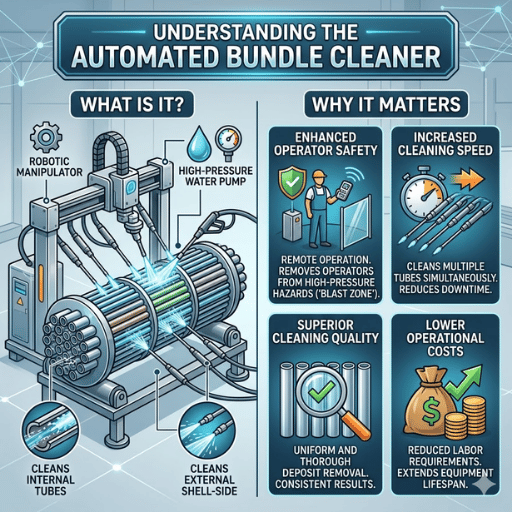
An automated bundle cleaner (machine-controlled high-pressure water jet system) is a process designed to remove heat exchanger fouling. Unlike manual tube cleaning, where operators manually direct the high-pressure lances, this type of system manoeuvres and energizes them from a remote or protected cabin station via a programmed control. Operators specify the parameters, and the machine follows the cleaning path across each tube row repeatedly.
So why automate? In summary, three points dominate the business case—productivity, safety, and cost recovery.
3–5×
Faster Than Manual Cleaning
$1–1.2B
Annual US Refinery Fouling Cost
0.25%
of Global GDP Lost to Fouling
During a typical turnaround, manually bundle cleaning takes multiple shifts per set of exchangers. automated equipment can clean up to five tubes per exposure at once. For a power plant or refinery operating dozens of them, this allows drastic schedule compression.
Economics also work in favor of automation. Exchanger fouling has been estimated to contribute 0.25% of GDP in developed countries and about 15% of total plant maintenance budgets go toward heat exchangers, with half of that being caused by fouling alone. Crude fouling is directly linked with about 10% of worldwide refining CO2 emissions, approximately 88 million tons annually. Every day an exchanger stays below peak efficiency, fuel costs and emissions climb further
In BOSHIYA’s field deployments across refinery turnarounds, our OBC units consistently reduce cleaning cycles from multiple shifts down to hours. That schedule compression is what plant managers value most, because every hour saved during a turnaround translates directly to earlier restart and recovered production revenue.
BOSHIYA Group has produced industrial cleaning equipment for over a century. Our external bundle cleaner products, the OBC series, were developed initially to solve the problem of refinery and petrochemical heat exchanger fouling, where the level of deposits consist of a range of sulphur- and calcium-based inhibitors.
How Tube Bundle Cleaning Systems Work: Lance, Hydraulic, and Robotic Methods
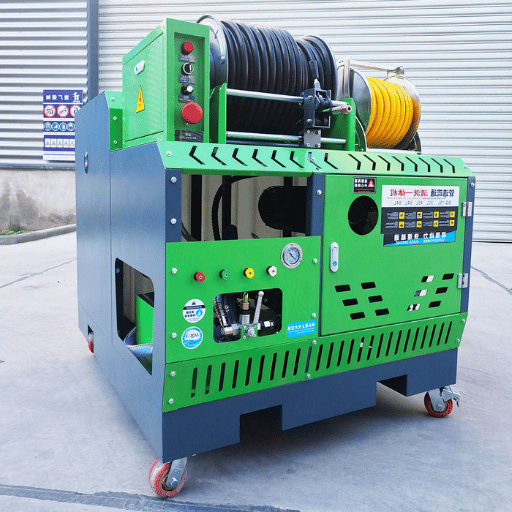
Tube bundle cleaning systems categorize broadly depending on the method used to supply high-pressure water to the fouled surface. They are either lance-based, hydraulic-driven, or robotic cleaning systems. Each cleaning system is suitable to different fouling severity levels, bundle geometries, and plant automation levels. Our engineering team classifies these three types based on years of field experience in refining, petrochemical, and power plants.
Lance-Based Systems
Lance-based cleaners use stiff or semi-stiff steel lances with rotating nozzles. A lance feed system forces the lance through or along tube lines to push high-pressure water (between 10,000 and 40,000 PSI) at fouling. Features of the BOSHIYA OBC-C include two steel lances coming off a programmable traverse system that works over a 10-meter horizontal bundle range. Air pressure in the lance feed system ranges from 45 to 95 PSI (3.0 to 6.3 bar). This pressure range keeps the lance move controllable and provides smooth lance experience.
Hydraulic Systems
Hydraulic bundle cleaners use hydraulic cylinders to position the cleaning head and control lance movement. These mechanisms deliver high force with precise speed control, making them suitable for heavy-deposit applications where maintaining a constant lance travel speed is desired. Hydraulic-driven systems can also power optional bundle rollers that rotate the tube bundle 360 degrees, allowing the cleaning head great access to every tube row without having to physically reposition the entire machine.
Robotic Systems
robotic cleaners added multi-Jikaj axes articulation and sensor feedback to the cleaning process. A robotic arm strives the nozzle to within sub-millimeter accuracy, and some equipment may incorporate camera feeds or ultrasonic thickness sensors to instantly confirm cleaning results. These units have the greatest Hahayjit cost but also the highest throughput levels of any type of Jiknok OCB with complex baffle arrangements.
| Method | Pressure Range | Best Application | Automation Level | Operator Exposure |
|---|---|---|---|---|
| Lance-Based | 10,000–40,000 PSI | Standard tube bundles, turnaround cleaning | Semi to fully automated | Low (enclosed cabin) |
| Hydraulic | 15,000–35,000 PSI | Heavy deposits, large bundles | Fully automated | Minimal (remote control) |
| Robotic | 10,000–40,000 PSI | Complex geometries, precision cleaning | Fully automated + sensor feedback | None (fully enclosed) |
For relatively straightforward surface cleaning, about 20,000 PSI in usually enough. Severe fouling, for example, calcium carbonate scale or coke deposits, may require pressures over 30,000. Other factors may influence selecting the appropriate pressure: softer tube materials such as copper need lower pressures, but harder and tougher metals such as carbon steel and stainless steel tolerate higher pressures.
💡 Pro Tip
When evaluating bundle cleaning methods, request a fouling sample analysis before specifying a pressure range. Knowing the deposit composition (organic vs. inorganic, hardness, thickness) prevents both under-cleaning and tube damage from excessive pressure.
Internal vs. External Bundle Cleaning: Which Approach Fits Your Application?
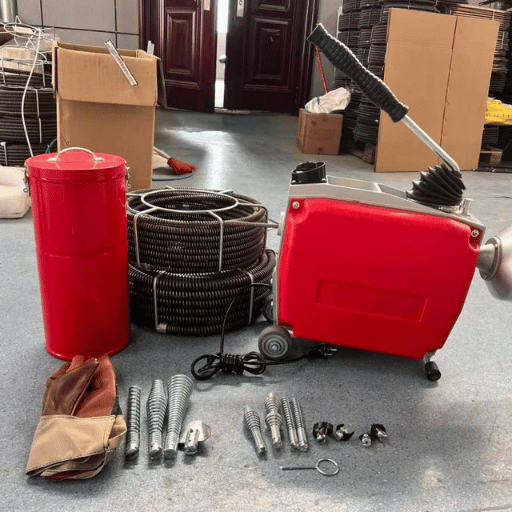
internal bundle cleaning targets tube fouling areas. Tube-side deposits lead to lower flow rates and heat transfer areas. external bundle cleaning, also commonly called shell-side cleaning, removes deposits on the exterior tube surfaces, tubes, bio-fouling on baffles, and tie rods. That is the major difference when choosing your equipment. Method of access pressure will drive your option.
Internal (Tube-Side) Cleaning
internal cleaning lets a lance or flex lance sit into each tube. A tube seat lance in the tube sheet face is one option. Each lance travels the entire tube length, while rotating nozzles blast deposits off of the interior wall. This method counters particulate buildup, biological growth, and scaled deposits that tend to build up during normal service. Flex lances work between 10,000 and 40,000 PSI and are ideal for straight tubes and U-tubes with plenty of bend radius.
External (Shell-Side) Cleaning
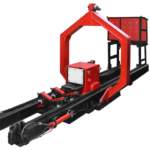
external cleaning is less complex, because it is on the shell side of a heat exchanger, which employs baffles, support plates and tube pitch spacing so tight the direct access is limited. This is where the BOSHIYA OBC-C automated bundle cleaning equipment provide the real value. Not only does OBC-C have 1500 bar ( 21,750 PSI) maximum working pressure, and a vertical working range of 2300 mm (91 in), it also has a horizontal pressure range over a full 10-meter length. OBC-C penetrates deep into the bundle from a single machine position, reaching areas that manual crews would need to clean through individually.
| Factor | Internal (Tube-Side) | External (Shell-Side) |
|---|---|---|
| Target Area | Inner tube walls | Outer tube surfaces, baffles, tie rods |
| Common Fouling | Scale, biological, particulate | Coke, chemical deposits, composite fouling |
| Equipment | Flex lance or rigid lance system | Automated bundle cleaner with traversing tower |
| Pressure Range | 10,000–40,000 PSI | 15,000–22,000 PSI typical |
| Access Requirement | Open tube sheet face | Bundle extracted from shell |
One of the most common errors when planning turnaround is to specify internal cleaning while the fouling actually occurs on the shell side. If your heat exchanger has square tube pitch (common in areas where shell side mechanical cleaning was designed to be performed) then that layout was selected because you already expected shell-side fouling and left the square spaces between tubes open to clean.
⚠️ Warning
If your heat exchanger was designed with triangular tube pitch but experiences heavy shell-side fouling, chemical cleaning may be the only practical option. Mechanical cleaning tools cannot fit through the tighter lane spacing of triangular layouts.
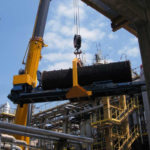
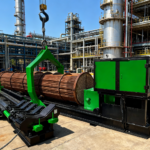
BOSHIYA’s OBC-C has a 180-degree turnable tower and optional hydraulic bundle rollers to allow 360-degree access to the bundle. Operators can clean between any row of tubes without manually rolling the bundle through an overhead crane, saving significant time and risk.
Safety and Productivity Gains: What the Data Shows

High-pressure water jetting is among the most dangerous maintenance chores in any refinery or chemical plant. At pressures over 10,000 PSI, a stream of water will cut through skin, muscle and even bone. Documented injuries have included lacerations, puncture wounds, traumatic amputations and even fatal fluid injection injuries where high-pressure water entered the body, causing massive internal tissue destruction.
OSHA mandates full protection gear (full body suits, full face shields, high-hazard helmets, steel-toed boots, waterproof gloves, hearing protectors) for operators operating above 10,000 PSI. However this gear can never keep the operator away from the water jet; the height and length of the multi shift can lead to fatigue and increased possibility of lapse.
3–5×
Faster Cleaning Speed
4.6%
Market CAGR (2024–2031)
45%
Power Plants Using Automated Systems
Automated bundle cleaners counter this hazard at the engineering control level, the highest tier on the hierarchy of controls. Instead of relying on PPE, operators sit inside a protected cabin or control the machine remotely. Water jets operate in an enclosed zone. There is no direct human exposure to the high-pressure stream during cleaning.
Plants running BOSHIYA OBC units report zero water-jetting contact incidents since installation, compared to an average of 2–3 near-misses per turnaround with manual crews. That safety record alone justifies the capital investment for many of our clients.
Beyond safety, the productivity math favors automation. Automated systems clean three to five times faster than manual methods. Multi-lance configurations can clean up to five tubes simultaneously, turning a 16-hour job into a 3- to 4-hour task. Forty-five percent of power plants have already integrated automated cleaning systems, and cooling system applications show over 40% adoption rates.
Relevant industry standards governing heat exchanger pressure equipment include ASME BPVC Section VIII for pressure vessel design, API 660 for shell-and-tube exchanger specifications, API STD 510 for in-service inspection, and ASME PCC-2 for pressure equipment repair. Any automated cleaning system should be evaluated against these standards to verify that operating pressures and mechanical loads remain within the exchanger’s design envelope. BOSHIYA’s OBC series carries CE and ISO 9001 certifications.
How to Choose the Right Bundle Cleaning Machine for Your Plant
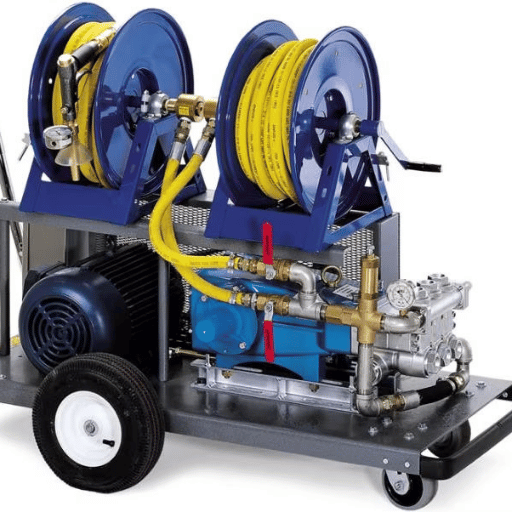
Any of the five plant specific factors may influence the automated bundle cleaner choice. If you oversize… capital budget and floor space are thrown out. If you undersize you will leave behind deposits and repeat cleaning passes thus destroying the speed advantage you bought the machine to do.
Five-Point Selection Framework
- ✔Bundle diameter range: Measure the largest and smallest bundles in your exchanger fleet. Verify that the machine’s vertical and horizontal working ranges cover your full inventory. The OBC-C’s 2300 mm vertical and 10,000 mm horizontal range covers most refinery-scale exchangers.
- ✔Fouling type: Identify whether deposits are particulate, biological, chemical, crystallization, or composite. Each fouling category responds differently to water pressure and nozzle geometry. Heavy coke deposits need higher pressures and slower lance traverse speeds.
- ✔Working pressure requirement: Match the pump’s maximum pressure to the fouling severity. Simple biological fouling may need only 20,000 PSI. Hard chemical scale can require 35,000 PSI or more. The OBC-C delivers up to 1500 bar (21,750 PSI) at a flow rate of 100–150 L/min.
- ✔Portability needs: Fixed installations suit refineries with large exchanger populations and permanent cleaning bays. Mobile or trailer-mounted systems work better for contract cleaning companies or plants that clean bundles at scattered locations across a large site.
- ✔Operator skill level: Fully automated systems with pre-programmed cleaning recipes require less operator training than semi-automated machines that need manual lance positioning. If your maintenance team rotates frequently, prioritize systems with intuitive remote controls and stored cleaning programs.
Sizing Guide by Plant Scale
| Plant Scale | Exchanger Count | Recommended Configuration | Key Feature Priority |
|---|---|---|---|
| Small (single unit) | 1–10 exchangers | Mobile semi-automated lance system | Portability, low setup time |
| Medium (refinery complex) | 10–50 exchangers | Fixed OBC with hydraulic bundle rollers | 360° access, multi-lance, remote control |
| Large (integrated complex) | 50+ exchangers | Multiple fixed stations + mobile backup unit | Throughput, programmable recipes, data logging |
We suggest beginning the choosing by conducting a bundle audit: identify all your exchangers by tube count, tube OD, tube pitch pattern, shell diameter, and results of previous fouling analysis. This set defines the minimal operating envelope and the pressure spec for your automated cleaner. Our applications engineering group at BOSHIYA applies this audit methodology with each new customer in order to 1) relate BOSHIYA’s external bundle cleaning systems to the real conditions of operation, not to a catalogue assumption 2) right-size the cleaning system to your actual plant conditions.
💡 Pro Tip
Request a trial cleaning on your most challenging exchanger before committing to a purchase. A trial reveals whether the machine’s pressure, reach, and nozzle configuration actually handle your specific fouling profile, something no specification sheet can guarantee.
Maintenance Best Practices for Long Equipment Life
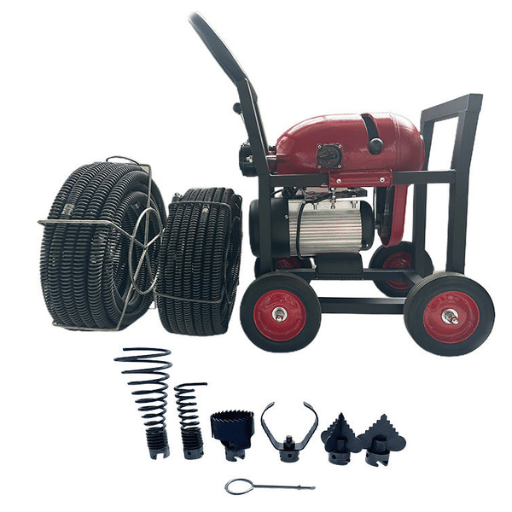
An automated bundle cleaner is a capital asset that is supposed to provide many years of trouble free operation, but only with regular preventive care: inattention to the machine can cause nozzle erosion, hydraulic leaks, and costly downtime at the most inappropriate of times the turnaround clock is ticking.
Six-Step Maintenance Checklist
- ✔Pre-turnaround pump test: Run the high-pressure pump at full rated pressure for 15 minutes and verify stable pressure readings. Fluctuations indicate worn seals or check valves.
- ✔Nozzle inspection: Measure nozzle orifice diameter with a pin gauge. Replace any nozzle worn beyond 10% of its original bore size. Worn nozzles reduce cleaning effectiveness and waste pump energy.
- ✔Lance straightness check: Roll each steel lance on a flat surface. A lance with more than 1 mm deflection per meter should be replaced to prevent uneven cleaning patterns.
- ✔Hydraulic system service: Change hydraulic fluid and filters at the intervals specified in the OEM manual. Inspect all hose connections for weeping or abrasion damage.
- ✔Control system verification: Test all remote control functions, emergency stops, and limit switches. Confirm that stored cleaning programs execute correctly through a dry run without water pressure.
- ✔Post-turnaround flush and storage: Flush the entire water circuit with clean water to remove debris. Drain all lines and store the machine in a dry, covered area to prevent corrosion.
💡 Pro Tip
Inspect nozzles after every 8 hours of continuous operation, not just between turnarounds. Abrasive fouling deposits like calcium scale accelerate nozzle wear dramatically compared to soft biological deposits.
Having over 100 years of industrial equipment experience BOSHIYA advocates keeping a parts kit on site with spare nozzles,lance tips,hydraulic seals and high-pressure fittings. Turnarounds lead times are often too long to get parts on the day needed and so a kit on site keeps the machine running when it needs to..
Frequently Asked Questions
Q: How does an automated bundle cleaner work?
View Answer
A programmable traverse system drives high-pressure water lances along or through the tube bundle. The operator sets pressure, lance speed, and pass count from a protected cabin. Rotating nozzles strip fouling from each tube row automatically.
Q: What is the 10/13 rule for heat exchangers?
View Answer
The 10/13 rule states that the shell-side design pressure of a heat exchanger must be at least 10/13 (approximately 77%) of the tube-side design pressure. This requirement originates from the ASME hydrostatic test protocol, which tests at 1.3 times the design pressure. The rule ensures that in a tube rupture scenario, the shell side can safely contain the resulting pressure spike without catastrophic failure. When specifying cleaning pressures for bundle cleaning equipment, engineers must verify that the operating pressure stays well within the exchanger’s rated design envelope.
Q: Can automated bundle cleaners handle all heat exchanger types?
View Answer
Most automated bundle cleaners target shell-and-tube exchangers, both fixed tubesheet and floating head designs. Plate, spiral, and air-cooled fin-fan exchangers need different equipment. Confirm the machine’s working range and pressure rating match your exchanger geometry before purchase.
Q: What are the three methods used to inspect heat exchanger tubes?
View Answer
The three primary inspection methods for heat exchanger tubes are eddy current testing (ECT), remote field testing (RFT), and ultrasonic testing (UT). ECT uses electromagnetic induction to detect wall thinning, pitting, and cracks in non-ferromagnetic tubes. RFT is the preferred method for ferromagnetic tubes like carbon steel. UT measures remaining wall thickness with high accuracy. These inspections are typically performed after bundle cleaning, since fouling deposits must be removed before inspection tools can make reliable contact with the tube wall. Cleaning quality directly affects inspection accuracy.
Q: Are automated bundle cleaners safe for operators?
View Answer
Yes. The operator works from an enclosed cabin or remote station, with zero direct exposure to the water jet. Manual jetting above 10,000 PSI demands full-body protective suits. An automated system eliminates that risk entirely.
Q: How much does an automated bundle cleaning system cost?
View Answer
Automated bundle cleaning system pricing varies based on configuration, working range, pressure rating, and included accessories such as hydraulic bundle rollers or multi-lance kits. A complete system with pump unit, cleaning machine, and controls typically represents a significant capital investment, but the payback period is often measured in turnarounds rather than years. Plants that clean 20 or more exchangers per turnaround typically recover the investment within one to two turnaround cycles through reduced labor hours, shorter schedules, and lower injury-related costs. Contact BOSHIYA for a project-specific quotation based on your exchanger fleet data.
Ready to Cut Your Next Turnaround in Half?
Share your heat exchanger fleet with us, and our applications engineering experts will advise on the optimal OBC configuration for your plant. Browse our full range of OBC products or contact us directly using the form below.
About This Analysis
Since 1915, BOSHIYA Group has designed and manufactured industrial cleaning equipment. This means we gathered over 110 years of field data on fouling behavior and cleaning performance. The turnaround time references and safety information report in this article are based upon published industry analysis, as well as field data gathered from operating records for OBC installations at client facilities.
The OBC line is specifically developed for tube bundle cleaning use.
References & Sources
- Fortune Business Insights — Automatic Tube Cleaning System Market Report (Market size, CAGR, adoption data)
- Heat Transfer Engineering — Economic and Environmental Implications of Fouling in Crude Oil Preheat Trains (2023)
- IntechOpen — Fouling in Heat Exchangers (Fouling types, mechanisms, prevention)
- OHS Online — Prevention of Water Jetting Injuries (Safety data, PPE requirements)
- ASME — Boiler and Pressure Vessel Code (Pressure vessel design standards)
- Altex Inc — API 660 & ASME Heat Exchanger Standards (Code requirements overview)
- HeatX Global — Estimating the Global Cost of Heat Exchanger Fouling (GDP impact, CO2 emissions data)
![Polypropylene Resin: Grades, Types & Selection Guide [2026]](https://boshiya.com/wp-content/uploads/2026/05/0-150x150.webp)