Get in Touch with BOSHIYA


How Outside Bundle Cleaners Work — And How to Pick the Right One for Your Plant
Contents
show
Any turnaround facility manager has felt it: the heat exchanger bundle comes out of the shell with deposits of scale, hydrocarbon sludge, and corrosion product on the outside, and the clock is already ticking. Manual cleaning crews spray from every angle within range, but some deposit bands are undisturbed, and the turnaround schedule creeps another shift behind.
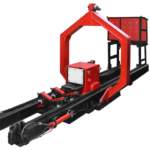
An outside bundle cleaner removes that guesswork. It grips the extracted tube bundle on hydraulic rollers, rotates it under a high-pressure nozzle bar, and strips the shell side deposit layer in a single pass – with the operator watching from an enclosed cabin instead of standing in the spray zone.
This manual explains how the equipment functions, the design values that are significant to an acquisition choice, and the safety criteria your team needs in order to operate it correctly. Whether you are buying a new outside bundle cleaner or switching from a hand lance, this guide draws on field experience with systems used in refinery and petrochemical turnarounds.
What Is an Outside Bundle Cleaner?
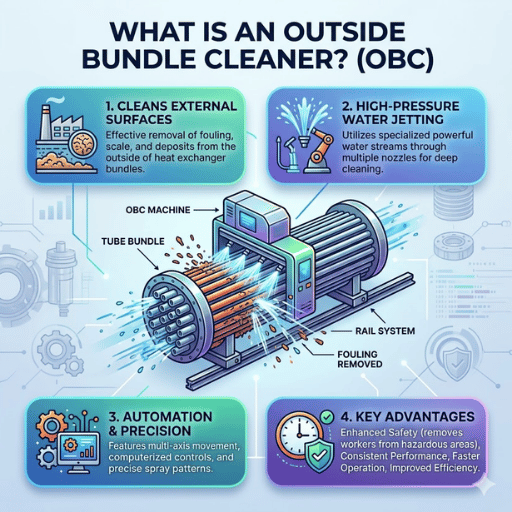
An outside bundle cleaner is a self-contained machine designed to clean the shell-side of a heat exchanger using high-pressure water jets. Once removed, the tube bundle is placed on the cleaner’s roller cradle, rotated while a traversing nozzle bar blasts fouling deposits off the outer tube surfaces at pressures between 10,000 and 40,000 psi (700-2,800 bar). All cleaning functions are remotely controlled by the operator from an enclosed cabin.
In the field, many names are bandied about – OBC, shell side bundle cleaner, external bundle cleaning system – but the basic operating procedure is not: rotate the bundle, cross traverse the nozzle bar, and allow pressure to do work that hand-held lances cannot.
On turnaround operations, these units typically clean a complete bundle in 2-4 hours versus 8-12 hours by manual means. This saving of time is the fundamental justification for their adoption: every hour gained on a single exchanger during a turnaround has direct cost implications for the whole shutdown schedule.
💡 Pro Tip
Not every heat exchanger requires an outside bundle cleaner. If the facility exclusively services a fixed-tubesheet exchanger that cannot be withdrawn, shell side cleaning may be done in place via lance systems. The outside bundle cleaner has been designed specifically for removable U-tube or floating-head bundles.
Why Shell Side Fouling Is a $16 Billion Problem
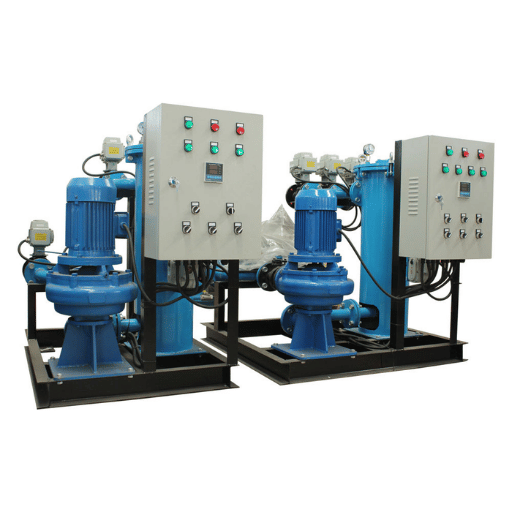
Shell side fouling is not just a maintenance task – it is one of the largest concealed expenses in the process industry. Deposits occurring on the outside of tube bundles form a thermal barrier, and make the entire processing unit have to consume more fuel to reach a given outlet temperature.
U.S Department of Energy research published by the OSTI notes that heat exchanger fouling costs American and British industry roughly $16.5 billion yearly. Of the total maintenance budget, about 15% is spent on heat exchangers, and about half of that expenditure traces back to fouling.
Shell side fouling is the most challenging to address. Unlike tube-side fouling, shell side deposits require the bundle to be extracted and cleaned externally. Four shell side fouling types are commonly encountered in refinery service:
- Scaling / precipitation fouling – crystallized salts, calcite and silica deposits from cooling water circuits
- Particulate fouling – rust, catalyst fines, and sand buildup, especially in crude preheat trains
- Corrosion fouling – iron sulfide and oxide layers formed in-situ on carbon steel tubes in sour streams
- Biological fouling – algae and biofilm in once-through cooling water exchangers, primarily at coastal facilities
⚠️ Common Mistake
Many plants continue to schedule shell side cleaning on defined calendar intervals – every 12 or 24 months – independently of actual fouling patterns. Monitoring the pressure drop trend across each exchanger and initiating cleaning when ΔP exceeds the design margin by 15-20% is a more cost-effective approach that prevents both premature cleaning (costly turnaround hours) and late cleaning (energy wastage and possible tube damage).
How an Outside Bundle Cleaner Works

An outside bundle cleaner functions by merging three mechanically controlled actions – bundle rotation, nozzle bar traverse, and high-pressure water delivery – into a single automated cycle. Inside a sealed cabin, the operator simultaneously actuates all three actions, avoiding direct exposure to high-pressure spray or contaminants stripped off the bundle surface. Here is the detailed process:
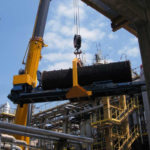
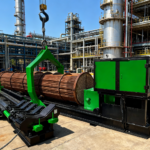
- Bundle removal and placement – A bundle extractor pulls the tube bundle from the heat exchanger shell. A crane or the extractor itself lifts the bundle onto the cleaner’s hydraulic roller cradle. Rollers adjust to handle varying bundle diameters.
- Bundle alignment and clamping – Next, position the bundle so the tubesheet clears the nozzle bar path. Hydraulic clamps or roller stops prevent axial movement during rotation.
- High-pressure pump connection – Connect the unit to an external high-pressure pump system via a reinforced hose. Typical operating pressures range from 10,000 to 20,000 psi (700-1,400 bar), though heavily scaled bundles may require as much as 40,000 psi (2,800 bar).
- Nozzle bar positioning – A nozzle bar assembly – carrying one or more rotating nozzles – is moved into its starting position at one end of the bundle. Its carriage travels along a rail-mounted track that the operator controls from the cabin.
- Cleaning pass – Power up the rollers to turn the bundle, then activate the nozzle bar traverse. Each rotating nozzle spins at high RPM while the carriage moves the bar along the full length of the bundle, delivering 360-degree water jet coverage to the shell side surface.
- Inspection and repeat – After the initial pass, the operator inspects the bundle visually or via cabin-mounted camera. Stubborn deposits may require a second pass at adjusted pressure or reduced traverse speed.
Field operators generally set nozzle bar traverse speed between 50 and 100 mm/sec depending on fouling intenseness. Lighter loads like loose particulate require faster traverse; hardite scale or coke deposits demand slower passes at higher pressure.
Our Recommended Startup Sequence
- Hydraulic system pressure check – confirm roller and carriage circuits at rated pressure
- Nozzle alignment verification – ensure the rotating nozzle clears the bundle by 50-80 mm at all positions
- Low-pressure pre-rinse at 3,000-5,000 psi – removes loose debris and confirms nozzle pattern
- Full-pressure cleaning pass – ramp to target pressure over 5-10 seconds, then engage traverse
A standard bundle is 6 meters long and 600 mm diameter, so an entire operation cycle takes roughly 2 to 3 hours including setup, cleaning, and post-clean rinse. That timeframe drops on repeat bundles when pump and roller settings are already dialed in.
Key Specifications to Compare When Choosing a Heat Exchanger Cleaning Machine
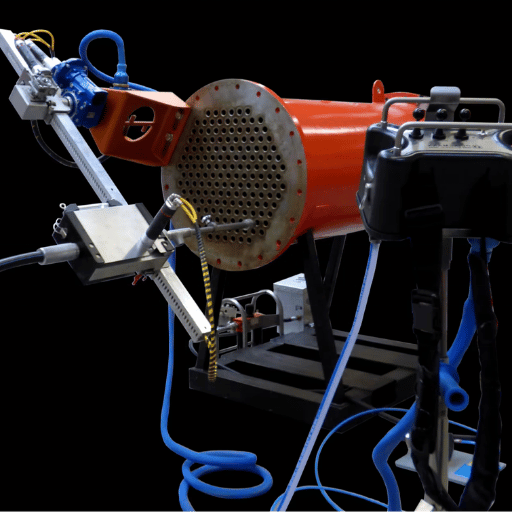
Not all outside bundle cleaners handle the same range of applications. Refinery exchangers, for example, tend to be heavier and longer than chemical plant units, and the fouling is typically harder. When screening equipment, we look initially at max bundle diameter, operating pressure range, and lance stroke length – everything else follows from there.
| Specification | Small / Portable | Mid-Range | Heavy-Duty |
|---|---|---|---|
| Max Bundle Diameter | Up to 600 mm (24 in) | Up to 1,200 mm (48 in) | Up to 1,800 mm (72 in) |
| Max Bundle Weight | 5 tons | 15 tons | 30+ tons |
| Operating Pressure | 10,000–15,000 psi (700–1,000 bar) | 10,000–20,000 psi (700–1,400 bar) | 15,000–40,000 psi (1,000–2,800 bar) |
| Nozzle Bar Stroke | 3–6 m (10–20 ft) | 6–9 m (20–30 ft) | 9–12 m (30–40 ft) |
| Power Source | Electric / hydraulic | Electric + hydraulic | Diesel-hydraulic or electric |
| Control Type | Remote pendant | Enclosed cabin + remote control | Enclosed HVAC cabin + PLC + camera |
| Transportation | Flatbed trailer | Dedicated trailer | Self-propelled or truck-mounted |
| Typical Use Case | Contractors, small plants | Chemical plants, mid-size refineries | Large refineries, LNG terminals |
Robotic nozzle bar systems with programmable traverse patterns and automatic standoff distance adjustment are becoming more common at larger facilities. These designs reduce operator input during the cleaning cycle and produce more consistent cleaning results, though they come at a higher capital cost and require more specialized maintenance.
Storage and transportation are equally important to consider. A portable unit that fits on a standard flatbed opens more deployment options than a self-propelled machine that needs its own road permit. For plants running fewer than 10 turnarounds per year, a trailer-mounted mid-range system often hits the best balance between capability and logistics.
Outside Bundle Cleaner vs Manual Tube Bundle Cleaning
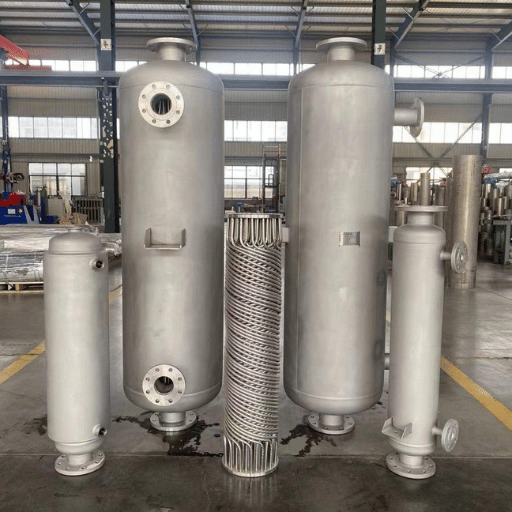
Choosing automated outside bundle cleaning equipment over manual methods comes down to three variables: speed, consistency, and operator safety. Here is how the two approaches stack up in practice.
| Factor | Outside Bundle Cleaner (Automated) | Manual Cleaning |
|---|---|---|
| Cleaning Time | 2–4 hours per bundle | 8–12 hours per bundle |
| Coverage | Full 360° rotation, uniform nozzle traverse | Operator-dependent, often misses far-side tubes |
| Labor Required | 1 trained operator in cabin | 2–4 workers holding lances |
| Operator Safety | Enclosed cabin, no direct spray exposure | PPE required, direct high-pressure exposure risk |
| Cleaning Performance | Consistent pass-to-pass results | Degrades as operators fatigue (after 2–3 hours) |
| Pressure Capability | 10,000–40,000 psi (machine-rated) | Typically capped at 15,000 psi (hose-handling limit) |
| Productivity | 3–5 bundles per shift | 1 bundle per shift |
In manual bundle cleaning, the most common problem is uneven nozzle coverage. After two to three hours of directing a high-pressure lance by hand, operators fatigue. Spray angles shift, traverse speed becomes inconsistent, and deposits on the far side of the bundle – the tubes hardest to reach from ground level – survive the cleaning pass. That bundle goes back into the shell with residual fouling that accelerates the next fouling cycle.
Automated outside bundle cleaning systems deliver consistent 360-degree coverage at uniform traverse speed throughout the entire operation. Unlike a tired worker, the rotating nozzle bar never slows down, loses focus, or favors one section of the bundle over another. That consistency directly translates to more efficient cleaning results and longer run lengths between turnarounds.
According to the WaterJet Technology Association (WJTA) Industry Best Practices (2nd Edition, 2021), high-pressure water jetting injuries can cause damage comparable to gunshot wounds, and manual operators face the highest exposure risk. Automated systems with enclosed operator cabins eliminate direct contact with the water jet and the contaminated debris stream – a safety improvement that also simplifies compliance with OSHA 29 CFR 1910.147 lockout/tagout requirements.
💡 Key Takeaway
If your plant cleans more than 15 tube bundles per turnaround, the time savings from an automated outside bundle cleaner typically pay back the equipment cost within 2-3 shutdown cycles – before counting the reduction in worker compensation claims from high-pressure jetting injuries.
How to Choose the Right Bundle Cleaner for Your Plant
Selecting the right outside bundle cleaning system starts with matching the machine to your largest exchanger and worst fouling case – not your average case. If the equipment cannot handle the heaviest bundle or the hardest scale in your inventory, you will still need manual backup for those jobs, which defeats the purpose of the investment.
- ✔
Bundle diameter range — measure your largest and smallest exchangers; confirm the cleaner’s roller cradle adjusts to cover both ends - ✔
Fouling type and severity — soft particulate needs 10,000 psi; hardite scale or coke requires 20,000+ psi with durable components rated for sustained high-pressure operation - ✔
Turnaround frequency – if running 3+ shutdowns each year, owning the equipment makes sense; if you are running only 1 a year it may make sense to rent or lease a contractor supplied unit. - ✔
Site mobility needs – will the cleaner stay at one cleaning bay, or does it need to move between units? Trailer-mounted designs offer easy transportation and storage between jobs - ✔
Operator cabin design – HVAC cabin with camera feed and full remote control is the baseline for refinery work; open-frame units with pendant control are acceptable for lighter-duty chemical plant applications - ✔
After-sales support and spare parts – nozzle tips, hose assemblies, and hydraulic seals are consumables; confirm the supplier stocks these parts or can ship within 48 hours
Our team at BOSHIYA has supported turnaround cleaning operations in refineries and petrochemical plants for over a century. One factor gets overlooked more than any other in purchasing decisions: nozzle bar stroke length. Buyers match the machine to their average bundle length, then discover their longest exchanger – usually a crude preheat train unit – hangs two meters off the end of the nozzle travel. Always size for the longest bundle in your plant inventory, then use the adjustable stroke for shorter units.
“We tell every client the same thing: buy for your worst-case bundle and your worst-case fouling. A machine that handles 90% of your exchangers still leaves the 10% that cause the most turnaround delays to be cleaned by hand.”
— BOSHIYA Equipment Engineering Team
For plants evaluating their first outside bundle cleaner purchase, a mid-range trailer-mounted solution is often the best starting point – we recommend a unit that covers bundles up to 1,200 mm diameter and 9 meters in length. This configuration handles the majority of shell-and-tube exchangers in a typical refinery while keeping the equipment mobile enough to serve multiple cleaning bays.
Request a Quote for Your Plant →
Frequently Asked Questions
Q: How does an outside bundle cleaner work?
View Answer
It rotates the extracted tube bundle on hydraulic rollers while a high-pressure nozzle bar traverses the full length, blasting fouling off the shell side at 10,000-40,000 psi.
Q: Is an outside bundle cleaner safe for operators?
View Answer
Yes. The operator sits inside an enclosed cabin – typically HVAC-equipped – with no direct exposure to the high-pressure water jet or contaminated debris. This design aligns with OSHA 29 CFR 1910.147 lockout/tagout requirements and WJTA best practices for high-pressure waterjetting, which classify enclosed operator stations as a primary engineering control for injury prevention.
Q: What pressure do outside bundle cleaners operate at?
View Answer
Most units operate between 10,000 and 20,000 psi (700-1,400 bar) for standard fouling. Heavy-duty models rated for hardite scale, coke deposits, or marine growth can run at up to 40,000 psi (2,800 bar). The required pressure depends on the fouling type and how long the deposit has been building.
Q: How long does it take to clean a tube bundle?
View Answer
A standard bundle (6 meters long, 600 mm diameter) typically takes 2-4 hours with an automated outside bundle cleaner, including setup and post-clean rinse. Manual cleaning of the same bundle usually takes 8-12 hours. Heavily fouled or oversized bundles may require additional passes.
Q: Can an outside bundle cleaner handle heavily fouled bundles?
View Answer
Yes, but the machine must be rated for the required pressure. Soft fouling (loose particulate, light biofilm) cleans at 10,000-15,000 psi. Hard fouling (baked-on coke, hardite scale, crystallized salts) may need 20,000-40,000 psi and slower nozzle bar traverse speeds. Always match the equipment pressure rating to the worst fouling case in your plant.
Q: What maintenance does an outside bundle cleaner need?
View Answer
Routine maintenance includes inspecting and replacing nozzle tips (wear items that degrade with use), checking hydraulic hose integrity and fittings, lubricating roller bearings and traverse rails, and verifying cabin seal integrity. Most operators follow a pre-shift checklist plus a detailed inspection after every 100 operating hours. The high-pressure pump unit – usually a separate skid – has its own maintenance schedule per the pump manufacturer’s guidelines. Hydraulic fluid levels and filter condition should also be checked weekly during active turnaround periods. Keeping a spare set of nozzle tips and seals on site prevents downtime if a component fails mid-shift.
About This Guide
BOSHIYA Group has manufactured and serviced bundle cleaning equipment since 1915. The operating data and selection criteria in this guide draw from our equipment engineering division’s work with refineries and petrochemical facilities across Asia and the Middle East. We build and sell outside bundle cleaners – which means we have a commercial interest in this topic, and also means we have direct access to field performance data that third-party reviewers typically do not.
References & Sources
- The Cost of Heat Exchanger Fouling in the US Industries — U.S. Department of Energy, Office of Scientific and Technical Information (OSTI)
- Fouling in Heat Exchangers — IntechOpen (Academic Publisher)
- Fouling In Heat Exchangers: A Costly Problem — IMPO Magazine
- 29 CFR 1910.147 — The Control of Hazardous Energy (Lockout/Tagout) — U.S. Occupational Safety and Health Administration (OSHA)
- Industry Best Practices for the Use of High Pressure Waterjetting Equipment (2nd Edition, 2021) — WaterJet Technology Association (WJTA)
- PCC-2 — Repair of Pressure Equipment and Piping — American Society of Mechanical Engineers (ASME)
![Polypropylene Resin: Grades, Types & Selection Guide [2026]](https://boshiya.com/wp-content/uploads/2026/05/0-150x150.webp)