Get in Touch with BOSHIYA

HDPE vs LDPE vs LLDPE: Key Differences, Properties & How to Choose (2025)

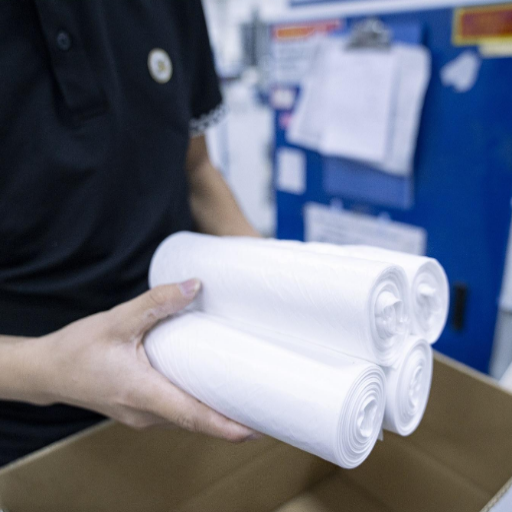
Here’s where engineers often go wrong: That crunchy plastic bag you fight to wrestle away from the cashier in the supermarket?
Contents
show
Almost always not LDPE, thin-film HDPE. The more subdued, softer one you squeeze the first few times?
Usually LLDPE. And the one that shreds, no matter how gently you grasp it?
That’s LDPE. Three bags, all from the same family of polyethylene, each with a different set of properties— and getting them confused in a specification can cause serious trouble.
For petrochemical procurement teams, plant engineers, and packaging specifiers, understanding the key differences between HDPE, LDPE, and LLDPE is not an academic exercise. It determines which resin you order, which liner goes into your storage tank, which film wraps your pallet, and which pipe handles your process fluid. This guide covers the molecular structure, properties, applications, and a decision framework that makes grade selection straightforward. For the pallet-wrapping application, compare industrial stretch film from UD Packaging using the load dimensions, wrapping method and required containment, as resin type alone does not define finished-pack performance.
Quick Specs at a Glance
HDPE
High-Density Polyethylene
Density: 0.941–0.965 g/cm³
Tensile Yield: 24–38 MPa
Shore D: 60–73
Recycle Code: #2
LLDPE
Linear Low-Density Polyethylene
Density: 0.915–0.940 g/cm³
Tensile Yield: 14–25 MPa
Shore D: 55–65
Recycle Code: #4 (grouped)
LDPE
Low-Density Polyethylene
Density: 0.910–0.925 g/cm³
Tensile Yield: 8–12 MPa
Shore D: 41–46
Recycle Code: #4
Sources: ASTM D3350, D1505, D792; MatWeb materials database; PPI Drainage Handbook Ch.2; ProfPlastics Mechanical Properties Reference.
What Are HDPE, LDPE, and LLDPE? The Three Branches of Polyethylene
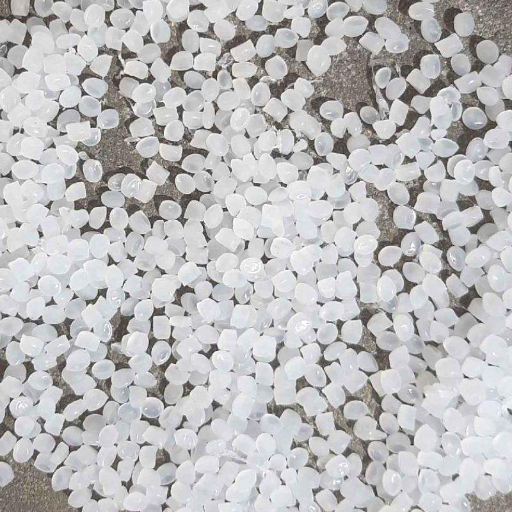
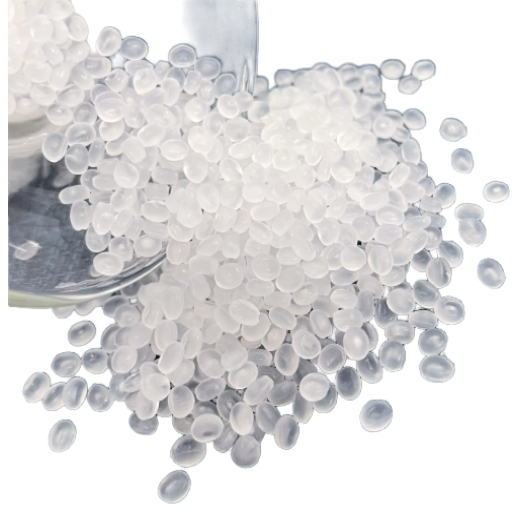
They are all variants of the same family of plastic — polyethylene — the world’s most common plastic, made from long chains of polymerized ethylene (CH₂=CH₂). Selection depends on how those chains are assembled: their architecture, their crystallinity, and an optional addition of a second monomer, known as a comonomer. This affects every property downstream: stiffness, ductility, durability, and the ability to process the material.
HDPE (high-density polyethylene) was first commercialized in 1953 by Karl Ziegler and Erhard Holzkamp using organometallic catalysts. Its near-linear chains pack tightly, producing a polymer with the highest crystallinity (70–90%) of the three grades — and the most rigidity.
LDPE (low-density polyethylene) arrived earlier, in 1933 at ICI, through a high-pressure free-radical process. Its highly branched chains cannot pack efficiently — crystallinity drops to 40–50% — making it the softest, most flexible, and lowest-density grade.
LLDPE (linear low-density polyethylene), introduced commercially by DuPont in 1959 and scaled by Union Carbide in the 1970s, is a deliberate hybrid. It is produced by copolymerizing ethylene with short-chain alpha-olefins (butene, hexene, or octene) at low pressure. The result: a linear backbone with controlled short branches that produce low-density behavior combined with significantly higher toughness than LDPE. It occupies the middle ground — and for many film applications, it has become the dominant choice.
How Molecular Structure Drives Performance
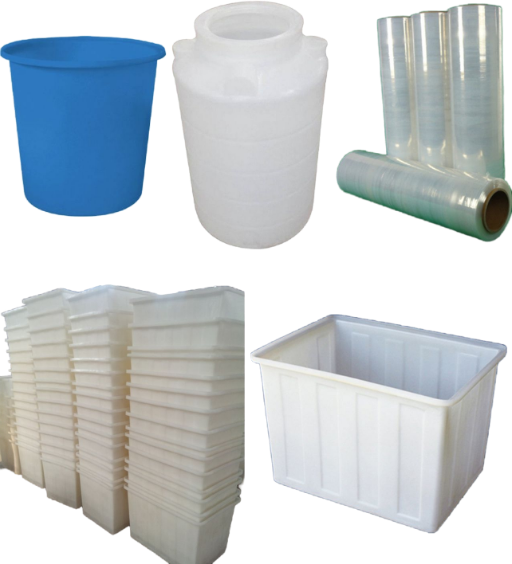
How do the different performance features of these 3 plastics line up with their respective chain structures?
To design with plastics you need to know the molecular geometry-not simply memorize a spec number.
LDPE is produced at extreme pressures (1,000–3,000 atm) via free-radical polymerization. Free-radical polymerization generates both long-chain and short-chain branches growing off the main polymer backbone at random intervals. These short branches prevent crystalline packing, which is precisely why LDPE stays soft and pliable — but the same structural disorder limits its mechanical ceiling. Its broad molecular weight distribution (MWD), however, makes it forgiving on older extrusion equipment.
HDPE uses Ziegler-Natta or Phillips catalysts at low pressure (10–80 atm). Ziegler-Natta and Phillips catalysts yield a tightly controlled polymerization of ethylene with virtually no branching. This linear architecture allows crystalline domains to form extensively — think of it as neat, parallel stacks of chains with virtually no gaps. High crystallinity = high density, high stiffness, and outstanding chemical resistance because the amorphous zones where solvents can permeate are minimized. HDPE’s high strength-to-density ratio makes it the default choice for structural plastic applications.
LLDPE uses gas-phase or solution-phase reactors with alpha-olefin comonomers — butene (C4), hexene (C6), or octene (C8) — to insert precisely sized short branches at controlled locations along an otherwise linear backbone. Key insight: these short, uniform branches disrupt crystallinity just enough to create flexibility, while the linear main chain still supports significant tensile strength and load transfer. Research published in PMC (PMC8198324) confirms that LLDPE’s yield behavior at low temperatures is strain-rate dependent — a property relevant to cold-chain packaging and Arctic pipeline applications.
Key Properties Compared: A Technical Snapshot
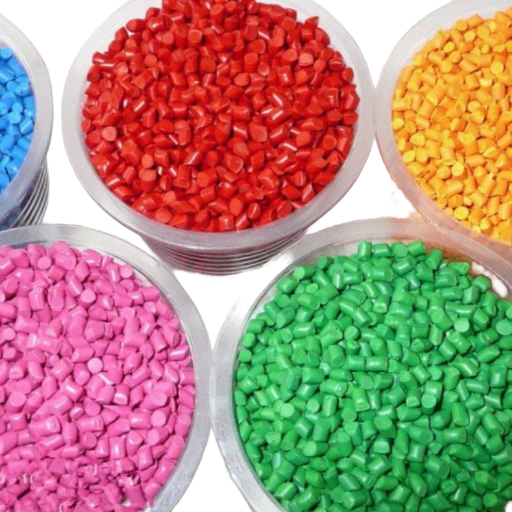
Most published comparisons are based on qualitative designations (e.g. “HIGH” or “LOW”). All figures below use ASTM-referenced quantitative ranges from—among other sources—MatWeb (244 LDPE grades), Plastics Pipe Institute materials guide, and ProfPlastics’ engineering reference. These are the values that should be listed in a material spec., not a marketing brochure.
| Property | LDPE | LLDPE | HDPE | Test Method |
|---|---|---|---|---|
| Density (g/cm³) | 0.910–0.925 | 0.915–0.940 | 0.941–0.965 | ASTM D1505 / D792 |
| Shore D Hardness | 41–46 | 55–65 | 60–73 | ASTM D2240 |
| Tensile Yield Strength (MPa) | 8–12 | 14–25 | 24–38 | ASTM D638 |
| Elongation at Break (%) | 100–600 | 500–900 | 50–800 | ASTM D638 |
| Flexural Modulus (GPa) | 0.09–0.26 | 0.25–0.55 | 0.76–1.10 | ASTM D790 |
| Melting Point (°C) | 105–115 | 120–130 | 130–140 | DSC |
| Crystallinity (%) | 40–50 | 50–60 | 70–90 | WAXD / DSC |
| Chemical Resistance | Good | Good–Very Good | Excellent | ASTM D543 |
When absorbing information, one seemingly minute detail to remember is: HDPE has a tensile yield strength (24-38 MPa) three times higher than that of LDPE (8-12 MPa). And that is the knowledge that makes all the difference in qualifying a pipe-used structural resin from flexible film used in packaging – specific to the 70-90% crystallinity of HDPE as opposed to that of LDPE by 40-50%.
Where Each Grade Is Used: Applications by Industry

For each one of these polyethylene grades, specific applications have made their way into a well-identifiable set, which depends on the outlined performance profile. These three polyolefins thus constitute nearly every industrial application.
HDPE Applications
- Pressure pipes (ASTM D3350 pipe grade)
- Chemical storage drums and industrial containers
- Blow-molded bottles (HDPE #2 — milk jugs, detergent)
- Fuel tanks (automotive, industrial)
- Geomembranes for containment liners
- Thin-film grocery bags (crinkle/glossy type)
- Cutting boards, playground equipment
- Marine and dockside fenders
LLDPE Applications
- Stretch films and pallet wrap
- Heavy-duty bags and liners
- Agricultural films (mulch, silage wrap, greenhouse)
- Geomembranes (flexible liner grade)
- Rotomolded tanks and containers
- Flexible tubing and hoses
- Solar panel encapsulation films (emerging)
- Flexible packaging for food and e-commerce
LDPE Applications
- Wire and cable insulation (excellent dielectric constant ~2.25)
- Squeeze bottles and dispensing packaging
- Bread bags and produce bags
- Shrink wrap (tunneling-grade)
- Medical tubing (autoclave-clear grades)
- Laboratory ware (wash bottles, trays)
- Coatings for paper and board
- Irrigation tubing
For petrochemical plant operations, the most common grade selections are HDPE for tank liners, pipe manifolds, and corrosion-resistant structural parts; LLDPE for flexible containment barriers and secondary containment liners; and LDPE for equipment labeling, electrical isolation, and laboratory fittings. The wrong grade choice — particularly confusing LDPE and HDPE for a containment application — can create compliance failures under API-650 or EPA secondary containment rules.
HDPE vs LDPE: When Rigidity Beats Flexibility
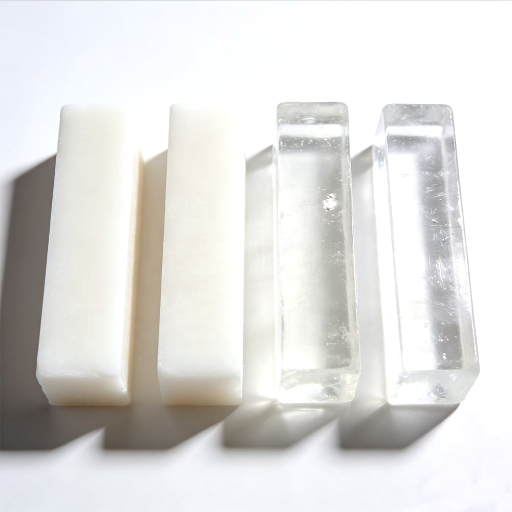
Answering the HDPE vs LDPE question often comes down to a single axis: one or the other will suit what you require. Is the application one of structural load-bearing function, or one of conformability and flexibility?
HDPE Advantages Over LDPE
- 3× higher tensile yield (24–38 MPa vs. 8–12 MPa, ASTM D638)
- Superior chemical resistance — higher crystallinity limits solvent permeation
- Excellent UV resistance with stabilizer systems – HDPE piping lasts decades outdoors
- Good resistance to chemicals including concentrated acids and alkalis
- Lower creep at elevated service temperatures
HDPE Limitations vs. LDPE
- Environmental stress cracking (ESC) – vulnerable under stress + chemical attack; test per ASTM D1693
- More difficult to process – higher melt temperatures (200-280C) lead to more energy consumed
- Less flexible – Shore D 60-73 limits conformity to uneven surfaces
- Unit volume density is higher than LDPE at equal wall thickness
Environmental stress cracking deserves particular attention for oil refinery and chemical plant applications. HDPE under sustained mechanical stress (from pipe clamps, fittings, or assembly pressure) combined with surfactant or solvent exposure can fail by stress cracking at loads well below the nominal tensile yield point. LDPE, with its amorphous structure, is actually more resistant to stress cracking — its flexibility dissipates stress before crack initiation.
Rule of thumb: If your specification requires tensile yield strength above 20 MPa, dimensional stability at elevated temperature, or resistance to hydrocarbon immersion, HDPE is the correct choice. If you need conformable, flexible parts at ambient temperature that tolerate vibration and mechanical flex, LDPE warrants serious consideration — particularly for secondary containment liners in non-load-bearing configurations.
LDPE vs LLDPE: The Upgrade That Redefined Film — But Did Not Replace Everything
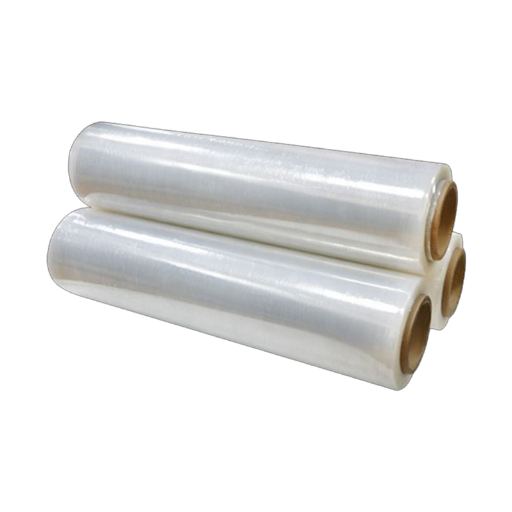
Conventional wisdom holds that LLDPE simply displaced LDPE in film applications. That assumption misses some story lines. LDPE has maintained its foothold in certain areas of the market – for examples, in farm and heavy-duty bags and certain flexible film applications – for reasons that can be traced to molecular structure, rather than marketing.
LLDPE vs LDPE — Where the Numbers Diverge
| Metric | LDPE | LLDPE | Winner |
|---|---|---|---|
| Tensile yield strength | 8–12 MPa | 14–25 MPa | LLDPE (+50–100%) |
| Elongation at break | 100–600% | 500–900% | LLDPE (stretch wrap) |
| Puncture resistance | Moderate | Excellent | LLDPE (2–3×) |
| Processability (older extruders) | Excellent (broad MWD) | Good (narrow MWD = back-pressure) | LDPE (legacy lines) |
| Optical clarity (film) | High (autoclave-clear) | Good (slightly hazy) | LDPE (medical/pharma) |
| Tear resistance | Moderate | Excellent | LLDPE |
| Cost (commodity grade) | Baseline | Butene: parity; Octene: +$50–100/t | LDPE (marginal) |
The significantly elevated tensile strength and puncture/endurance of LLDPE make it the optimal material for agricultural films, stretch film, and bale wrap – applications in which a puncture or tear represents tangible costs. But any wider upgrade to LLDPE to take advantage of those properties would run into back-pressure problems with many older blown film conversions that were not built to process LLDPE with its narrower MWD (broad MWD is the core LDPE strength). Many converters run LDPE/LLDPE mixes (ususally 80:20 to 50:50) to reflect that benefit of LLDPE without the technical issues.
The PE Selection Triangle: A Decision Framework for Grade Selection
Coordinate the three grades as corners of a triangle. Each corner signifies a performance hypothesis: Flexibility (LDPE),Rigidity (HDPE), Toughness (LLDPE). The trick is this: each of the three is unable to deliver on all three points simultaneously. If you can position the application within this triangle, target the grade that moves it as near the desired corner as processing constraints allow.
The PE Selection Triangle
HDPE
RIGIDITY
24–38 MPa yield
LLDPE
TOUGHNESS
500–900% elongation
LDPE
FLEXIBILITY
Shore D 41–46
No grade can do all three well. Select the corner that services the primary application pressure point.
Use this condition sheet to match your application needs to the best grade:
| If your application requires… | Choose | Reason |
|---|---|---|
| Tensile yield strength > 20 MPa | HDPE | Only grade reliably above 24 MPa at yield |
| Film elongation > 400% with puncture resistance | LLDPE | Achieves 500–900%; superior impact and puncture resistance |
| Chemical immersion (strong acids/alkalis) | HDPE | 70–90% crystallinity minimizes permeation pathways |
| Wire & cable insulation or medical-grade transparency | LDPE | Dielectric constant ~2.25; autoclave-clear grades available |
| Cold-temperature flexibility (below −40°C) | LLDPE | Maintains flex and toughness well below −40°C |
| Stretch/pallet wrap for logistics | LLDPE | Cling + elongation + puncture resistance combination |
| Curbside recyclability (consumer packaging) | HDPE (#2) | 26% US residential recycling rate; widely accepted curbside |
| Legacy extruder processing without retrofits | LDPE | Broad MWD prevents back-pressure problems in older dies |
If your project involves specifying polyethylene grades for an EPC project or plant upgrade, Boshiya’s team can review material specifications and alignment with process requirements. Contact our petrochemical specialists to discuss grade selection for your application.
Recycling and Sustainability: Codes, Actual Rates, and What Is Changing
These three grades converge on one major point: All carry different RIC codes and come with different economic/technical logistics to recovery and recycle. Use the insight to fuel product stewardship, EPR, and end-of-life requirements.
②
HDPE
Widely recyclable (curbside)
~26%
actual US residential recovery rate
④
LLDPE
Grouped under #4 (no own code)
<1%
film recovery rate (store drop-off only)
④
LDPE
“Check locally” (limited curbside)
<1%
film recovery rate (store drop-off only)
Between HDPE and the two flexible film grades, the recycling gap is stark: HDPE natural bottles have realized approximately 26% residential post-consumer recovery, whereas both LLDPE and LDPE films combined have realized less than 1% in terms of residential post-consumer recycling because they are not accepted into curbside recycling programs are only collected via in-store drop-off collection points available at many large retailers. These figures are available from the Recycling Partnership State of Recycling 2024 report, which tracks the annual generation of 739,178 tons of HDPE bottles, and the collection of 188,704 tons of material in the US. At the processing stage, specify polyethylene recycling machinery from Kitech around the actual rigid or film feedstock, sorting quality and contamination load rather than treating all polyethylene waste as one uniform stream.
Regulatory pressure is intensifying. Four US states (California, Colorado, Maine, Oregon) have passed EPR packaging regulations, with Washington mandating 50% recycled content in plastic containers by 2031. Europe’s Packaging and Packaging Waste Regulation (PPWR) mandates 55% recycled plastic packaging by 2030. For procurement teams, material specification decisions made today will fall within compliance jurisdictions inside most capital-project planning horizons. NREL’s 2025 research (NREL/TP-5400-90552) on chemically recyclable polyethylene provides insight into viable options for processing mixed PE streams — directly relevant to industrial polyethylene liner disposal initiatives.
Market Outlook: Which Polyethylene Grade Is Growing Fastest?
All three grades are seeing market growth, but growth rates and fundamental drivers differ significantly — differences that should influence sourcing methodology and long-term contract commitments.
LLDPE — Fastest Growing
5.23%
CAGR 2025–2034
$70.5B (2024) → $117.4B (2034)
Films = 62.89% of demand
HDPE — Largest Share
46.1%
of total PE market in 2024
Total PE: $145.9B (2024) → $224.5B (2030), CAGR 7.4%
North America LLDPE
5.4%
CAGR 2025–2030
$18.2B (2024) → $24.8B (2030)
Driven by flexible packaging
Market analysts posit that the LLDPE market is surging at a greater clip than the other classes, fueled by e-commerce flexible packaging needs, food-grade, and agricultural film demand from the Asia-Pacific region, and testing solar encapsulation film applications. LLDPE film production accounts for circa 62.89% of total LLDPE demand, which suggests that flexible packaging demand is the primary growth driver.
HDPE continues to be the dominant grade as a percentage of PE market share (46.1%), supported by continuing infrastructure investment – such as piping for water and gas distribution, construction-related products, and industrial packaging. Consequently, petrochemical projects’ maintenance or new build construction variables relative to HDPE pipe and liner specification demands are highly likely to correlate with growth in the upstream capacity of the Middle Eastern and North American cracker complexes – where ethylene and polyethylene are non- competitively priced as a result of shale-gas economics.
From a procurement strategic perspective, LLDPEbutene-grade sold at commodity parity to LDPE in most markets – therefore would be a neutral-cost upgrade to different film specifications, provided the extruder can accommodate it – whilst HDPE pricing generally interacts with ethylene pricing, meaning North American trades relate to a daily $200-300/t edge over Asian naphtha-based spot sources – a material consideration when deciding upon import-tier or local solutions. This also remains countered by the fact that chemical equipment capacity supporting production of PE continues to increase – with Borealis’ 1.4 million ton/year Abu Dhabi project is more than 50% complete as at early 2025.
Frequently Asked Questions
What is the difference between LDPE, LLDPE, and HDPE?
View Answer
LDPE (low-density polyethylene) is a highly branched, soft, flexible polymer with density 0.910–0.925 g/cm³, tensile yield of 8–12 MPa (ASTM D638), and crystallinity of 40–50%. LLDPE (linear low-density polyethylene) has a linear backbone with short controlled branches, density 0.915–0.940 g/cm³, and tensile yield 14–25 MPa — delivering markedly better toughness than LDPE at similar density. HDPE (high-density polyethylene) is nearly linear, highly crystalline (70–90%), with density 0.941–0.965 g/cm³ and tensile yield 24–38 MPa — three times stronger than LDPE (ASTM D638). Key differences trace back to molecular architecture and polymerization route: high-pressure free-radical (1,000–3,000 atm) for LDPE vs. low-pressure catalytic (10–80 atm Ziegler-Natta or Phillips) for HDPE and LLDPE. For packaging and industrial applications, grade selection typically comes down to whether flexibility, toughness, or structural rigidity is the governing design criterion.
Are garbage bags HDPE or LDPE?
View Answer
Most household bin liners are LLDPE or LDPE/LLDPE blends. Thin crinkly supermarket bags are usually HDPE (high gloss, crinkly). Stretchy, soft bin liners — LLDPE.
Which is better, LLDPE or HDPE?
View Answer
Neither is universally “better” — each grade serves different performance requirements. HDPE suits structural applications requiring tensile yield above 24 MPa, chemical resistance against concentrated solvents, and dimensional stability. LLDPE is preferred for flexible film applications requiring puncture resistance, high elongation, and cold-temperature toughness. Apply the PE Selection Triangle: choose HDPE for rigidity, LLDPE for toughness, LDPE for flexibility and processability.
What are the disadvantages of LLDPE?
View Answer
LLDPE’s narrow molecular weight distribution (MWD) creates higher back-pressure in older blown film extruders, which can cause die-line defects and reduce output rates on legacy equipment. Optical clarity is also lower than LDPE, making LLDPE less suitable where film transparency is critical (e.g., medical packaging). Octene-grade LLDPE carries a cost premium ($50–100/t) over commodity LDPE. On the recycling front, LLDPE films share less than 1% US residential recycling rates with LDPE — both require store drop-off programs.
Can HDPE, LDPE, and LLDPE be recycled together?
View Answer
Not currently — each grade carries a different RIC code and is sorted separately. No mechanical recycling process is designed to blend all three in consistent proportions. Chemical recycling may change this: NREL’s 2025 research indicates that pyrolysis and solvolysis can handle mixed polyethylene streams, returning monomer or fuel. Reaching industrial scale will likely take a decade, but work on chemical recovery is actively advancing.
Working on a Petrochemical Project?
Boshiya supports petrochemical and chemical plant operations with equipment, EPC services, and technical support.
From technical services to EPC project delivery — including refinery and oil refinery applications.
Related Articles
Petrochemical Heat Exchanger Maintenance
Maintenance strategies for heat exchangers in petrochemical service
Refinery Turnaround Bundle Extraction
Optimizing bundle extraction during planned refinery shutdowns
Chemical Plant Bundle Puller Guide
Selecting and operating bundle pullers in chemical plant environments
Boshiya Petrochemical & Chemical Services
Equipment and services for the petrochemical and chemical sector
![Polypropylene Resin: Grades, Types & Selection Guide [2026]](https://boshiya.com/wp-content/uploads/2026/05/0-150x150.webp)