Get in Touch with BOSHIYA


Automated vs Manual Bundle Cleaning: Which Method Delivers Better Results for Your Heat Exchangers?
Heat exchanger tube bundles grow fouling deposits that reduce heat transfer, increase energy expenses, and reduce equipment lifespan. Choosing between an automated bundle cleaning system and a manual method impacts cycle times, personnel hazard potential, fouling removal quality, and overall owner costs. This guide outlines both systems with actual cost information, throughput targets, and accessibility parameters so you can confidently select what works best in your plant.
Quick Specs: Automated vs Manual Bundle Cleaning
| Parameter | Automated System | Manual Method |
|---|---|---|
| Cleaning time per bundle | 2-6 hours | 8-24 hours |
| Tube throughput rate | 100-200 tubes/hr | 10-20 tubes/hr |
| Operating pressure range | 500-3,000 bar (7,250-43,500 PSI) | 350-2,750 bar (5,000-40,000 PSI) |
| Operator exposure level | Remote operation, minimal confined space entry | Direct contact, confined space entry required |
| Equipment investment | $80,000-$350,000+ | $5,000-$25,000 |
| Best application | High-volume refineries, 50+ exchangers, frequent turnarounds | Small plants, irregular geometries, U-tube bends, spot cleaning |
Bundle Cleaning at a Glance — Automated vs Manual Compared
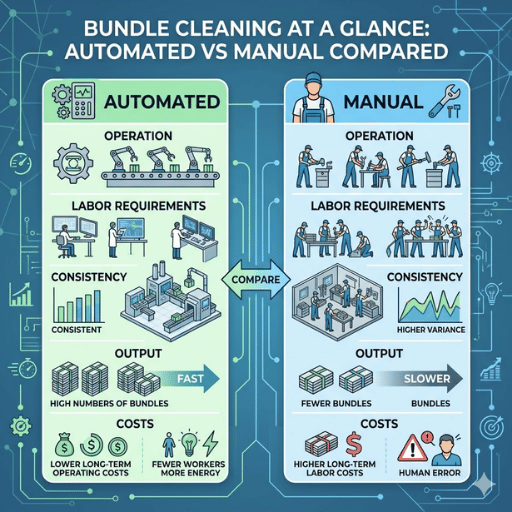
All heat exchangers and fin-fan coolers in a refining or petrochemical operation experience fouling deposit build-up. From chemical scales and biological sludge to particulate accumulations and naphthenic corrosion, the cleaning strategy you employ decides how quickly that unit reenters service and what level of thermal transfer efficiency you recoup. Both automated cleaning and manual approaches play a role in effective maintenance programs — the key is identifying which offers the throughput and inspection compliance your plant requires.
Manual tube bundle cleaning usually is performed using high-pressure water lances, tube brushes, and chemical cleansers to manually scour fouling from the tubes. In many cases, manual cleaning remains the preferred option for smaller installations and for bundles with irregular tube configurations that automated equipment cannot index along.
| Metric | Automated Cleaning | Manual Cleaning |
|---|---|---|
| Throughput | 100-200 tubes/hr | 10-20 tubes/hr |
| Cleaning variance | ±5% | ±15-30% |
| Confined space entries/event | 0-2 | 4-12 |
| Crew size | 2-3 operators | 4-8 operators |
| Data logging | Automatic per-tube records | Manual paper logs |
In contrast, automated tube cleaning uses PLC-controlled lances that move along the tubesheet with programmable settings, rapidly eroding fouling at a rate five to ten times faster than hand-held manual methods. Both approaches have specific advantages and limitations, which are summarized below in several comparison tables.
How Manual Bundle Cleaning Works — Process, Tools, and Limitations
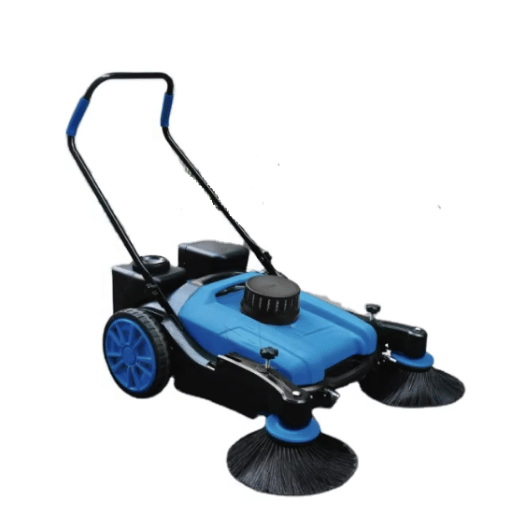
Manual tube bundle cleaning is the traditional method for fouling removal and involves taking an item off line – removing the tubes from the vessel, and then chemically and mechanically cleaning the individual tubes before returning the bundle to the service.
Step-by-Step Manual Process
- Hydroblasting – Operators using a hand-held lance below the water pressure of 5,000-40,000 PSI, will direct the water stream through the tube sheet onto each tube while moving the lance along the length of the tube. The nozzle rotates jet induced the intense velocity impact of the water jets can blast the accumulated fouling off of each tube, removing deposits and/or loose scales. This process is very slow, and the typical tube cleaning rate is 10-20 tubes per hour depending on tube length and fouling severity.
- Mechanical lancing and brushes – For heavily calcified scale or corrosion products, the tube can be wiped or scrubbed with rotating brush devices, similar to toothbrushes, that are strategically sized to net a particular tube ID. Each tube must be individually manipulated manually.
- Chemical soak – For stubborn biological or chemical fouling, the tubes are filled with acid or alkaline cleansers for 2 to 12 hours. Each tube is then mechanically cleaned to remove loosened deposits.
Manual tubesheet cleaning is a confined space entry under OSHA 29 CFR 1910.146 using a prepared tube entry. Each entry must be considered an authorized confined space entry and a confined space permit must be acquired. Each entry to a tube sheet requires atmospheric monitoring, a rescue standby team, and an entry permit which adds more time and personnel expense to every manual cleaning operation.
📐 Engineering Note
Water pressures used in the manual cleaning process range from the relatively low pressures needed for light silt or general fouling removal(5,000 PSI) to pressures up to 40,000 PSI for hardite scale in a refinery bundle. Operations above 2000 PSI must conform to OSHA instructions to wear a full face shield, hearing protection (>85 d B TWA), and waterproof gloves. When the water jet exceeds 10,000 PSI it can cut through human tissue if in contact- standoff distance and lance restraint systems are musts at this pressure.
More common mistake is attempting to make up lost cleaning time by rushing manual procedures during tight shutdown windows. This leaves fouling deposits behind, where they serve as the nucleation point for re-fouling, reducing the allowed inter-cleaning cycle from 18 months to as little as 6-8 months. This makes man-hours spent on fouling removal much less effective. The additional wear and tear on cleaning implements means dull brushes or worn scrub nozzles are overlooked which degrades cleaning power even further by reducing the force applied without operator notice.
Key is also that manual cleaning gives flexibility as to how much fouling is removed and the cost of implementation, but that flexibility comes at a human cost- manual cleaning is more demanding on operators and exposes them to hazards from high pressure tools, confined space entry, and the carrying of heavy implements.
How Automated Bundle Cleaning Systems Work
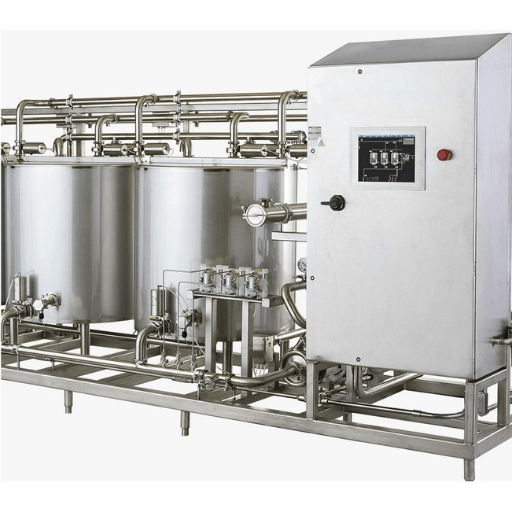
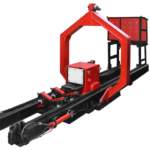
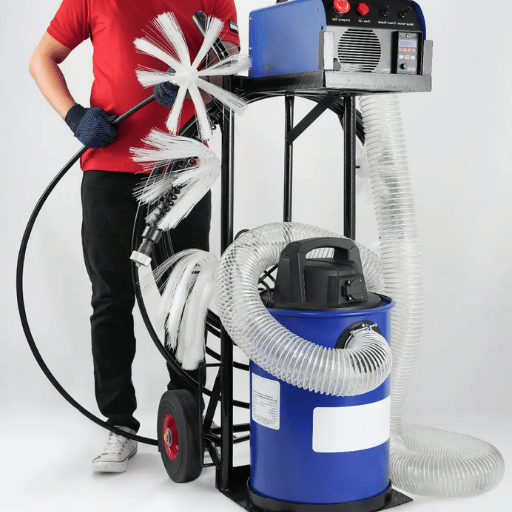
An automated tube bundle cleaning system replaces the handheld lance with a programmer-controlled indexing robot that zeroes in on each tube opening, fires a pre-programmed cleaning cycle, then moves on to the next tube in a grid. Delivered is a clean system with equal dwell time and spray rotation guaranteed on every tube in each cycle, eliminating the human operator bias and allowing a near-constant cleaning quality.
Core Components
Automatic tube bundle cleaners (ATCS) are often constructed of three independent subsystems:
- Indexer frame and lance carriage. Four-swivel welding attachments allow the entire head to be positioned right in front of each tube in turn. Frame can translate in a linear fashion vertically and horizontally, positioning the lance to each tube in a programmed order.
- Flexible lance. A semi-rigid hose navigates the bends found in U-tube bundles and is not hindered by radius down to 1.5 tube OD.
- Rigid lance. A feed-and-advance pipe system pushes a hydraulically- oriented cleaning head at controlled feed rates, with orbital cleaning heads rotating at 200-500 RPM for uniform deposit removal and verified tube cleanliness.
Operational pressures range from 500-3,000 bars, and program times from 15-45 seconds per tube depending on fouling levels. Times at full spray and dwell are adjustable within the system, which can be operated at any desired throughput rate of 100-200 tubes/hr. The capture system filters and recycles the removed debris.
Market Context and Adoption
The global market for automated tube cleaning systems (ATCS) has grown 5.42 percent to $135.58 million in sales as of 2024 in response to increased refinery turnaround demands and safety considerations. According to research, 35% of new systems were equipped with smart sensors to predict and address re-fouling cycles before they can become problematic.
Initial operator training and trials lasted 3-5 days, with a subsequent ability to have a two-person team to operate against a manual-cleaning of the same bundle requiring much larger crews (4-8).
Bottom line: Automated bundle cleaning is a process, not a craft skill. Benefit: significant reduction of audit time and elimination of some routine maintenance. Cost: up-front investment in automated cleaning tools and the availability of tube geometries within the bounds of the indexing system.
Cleaning Effectiveness and Consistency
The cleaning outcome is about finding the right method for the right fouling type. Well cleaned (>95% of deposits removed), thorough cleaning from a cost perspective will increase run length, heat transfer coefficient and avoid unplanned shutdown. Poor cleaning, as in 20-30% of the tubes are partially blocked, have costs that far exceed the benefit of a cheaper method.
Effectiveness by Fouling Type
| Fouling Type | Automated Effectiveness | Manual Effectiveness | Recommended Method |
|---|---|---|---|
| Particulate (silt, rust, mud) | 95-99% removal | 80-95% removal | Automated preferred |
| Corrosion deposits | 90-97% removal | 75-90% removal | Automated preferred |
| Biological (biofilm, algae) | 90-95% removal | 85-95% removal | Either; chemical pre-soak helps both |
| Crystallization (CaCO₃, silica) | 85-95% removal | 70-85% removal | Automated + chemical pre-treatment |
| Chemical reaction (polymerization, coking) | 80-92% removal | 65-80% removal | Automated at max pressure + mechanical |
| Freezing / solidification | 75-90% removal | 70-85% removal | Thermal treatment first, then either method |
Official DOE figures estimate that U.S. industry is losing $4.2-10 billion annually due to fouling—increased fuel costs, lost production, and maintenance expenses. An even small amount of deposits result in disproportionately high costs: IntechOpen fouling research reports a 0.6 mm thick layer on surface of the tubes can result in as much as a 40% hike in fuel consumption. Other industry-related data show that 55% of heat exchanger efficiency defects are due to the tube restraints being blocked.
Regular cleaning—hitting every tube with the same force and the same duration—matters as much as maximum cleaning force. Automated systems provide consistent cleaning results, repeatable and uniform to 5% across the entire tubesheet, thus facilitating contamination control programs and validation. Manual methods show 15—30% variation, depending on human error, operator fatigue, technique and time-consuming rework during turnarounds.
Bottom line: For rapid, repeatable, high percentage fouling removal across a large number of tubes, automated is still easier/better than manual cleaning. For odd spot work or unusual application/ fouling conditions where judgment may be needed-on any one application or tube-to-tube, manual ops can still provide benefits.
Safety and Regulatory Compliance
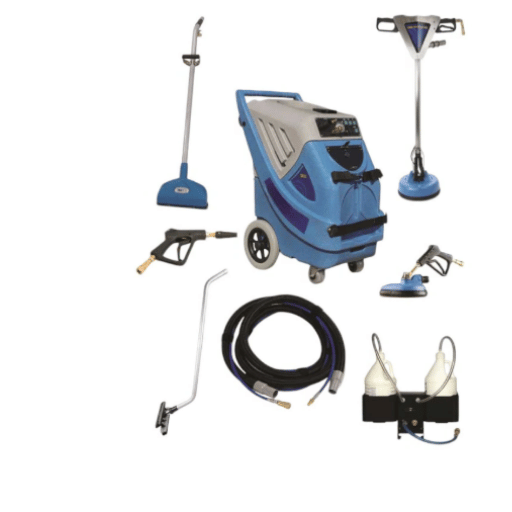
Safety is the only real decisive argument for automated bundle cleaning at high frequency. You have risk associated with each confined space entry, with each hour working with a high-pressure lance, with each chemical cleaning exposure. OSHA and ASME PCC-2 lays down the minimum – but ultimately we want to eliminate the events.
Confined Space Entry — The Core Risk
Manual cleaning of heat exchanger channel heads can be included in OSHA 29 CFR 1910.146 permit-required confined space regulations. Every entry must have a test of the atmosphere (O 2 , LEL, HS,CO), an experienced attendant outside the space, stand-by rescue equipment, and writing an entry permit. The cleaning of a large heat exchanger would be from 4-12 confined space entries occurring over 8-24 hours for the manual cleaning.
Automated systems, instead are installed on the face of the tubeset and be operated from outside the plant, so entries are from 0 to 2 for the initial installation and the final inspection.
PPE Requirements
Health and safety standards require specific protective equipment based on operating pressure:
- All pressures: hard hat, safety glasses, waterproof gloves, and steel-toe boots.
- Above 2,000 PSI: full face shield (mandatory replacement for safety glasses)
- Above 85 dB TWA: hearing protection (nearly all hydroblasting activities)
- ✔ Chemical cleaning: chemical-resistant suits, respiratory protection per SDS
📐 Engineering Note
ASME PCC-2-2022 defines acceptance criteria for tube plugging on bundles returned to service after cleaning and inspection. Shell side operating limits are: 14 bar (200 psi) and 205C (400F). If you plug more than 10% of tubes in a bundle, you will need a re-rating or replacement analysis per TEMA standards. Records of all plugged tubes should be kept during cleaning – both cleaning methods require plugged tubes to be numbered with the tube number, but computer operations will automatically keep this record as they use the PIG.
✔ Compliance Checklist
- Confined space entry permit completed and posted (OSHA 1910.146)
- ✔ Atmospheric monitoring active throughout entry duration
- Rescue team and equipment staged within 2 minutes of entry point
- ✔ All operators trained on high-pressure equipment (documented annually)
- PPE inspection prior to every shift, replace broken face shields, gloves, hearing protection
- SDS for chemical used at work site posted; spill containment in place
- Tubes plugged recorded in accordance with ASME PCC-2 and mechanical integrity program at the plant
- Documented post-cleaning inspection (borescope or pressure testing, per AFPM exchanger monitoring guidelines)
The key is that the computerized systems will not eliminate all regulatory issues, but they will significantly lower the number of confined space entries and of direct operator exposure incidents – the two most dangerous activities when cleaning bundles.
Automated Systems
Advantages
- ✔ Consistent results with ±5% variance across every tube
- Decreased number of confined space entries (0-2 compared to 4-12 per event)
- ✔ 50-75% faster turnaround compared to manual methods
- ✔ Real-time data logging for per-tube cleaning records
- ✔ Reduced labor costs (2-3 operators vs 4-8)
Limitations
- ⚠️ $80K-$350K+ upfront investment
- Some bundle designs are limited to certain tube diameters and pitches
- ⚠️ Requires 3-5 day operator training program
- ⚠️ Limited effectiveness for severely damaged or deformed bundles
Manual Methods
Advantages
- ✔ Low entry cost ($5K-$25K for equipment)
- ✔ Flexible for irregular geometries and tight U-tube bends
- ✔ No specialized equipment infrastructure needed
- ✔ Immediate deployment — no lead time for setup
Limitations
- ⚠️ ±15-30% cleaning variance between tubes
- ⚠️ Confined space safety risks with every cleaning event
- ⚠️ Labor-intensive at 10-20 tubes/hr throughput
- Operator dependance affects quality and consistency of results
Cost Analysis — Manual vs Automated Bundle Cleaning

Cost according to most decisions on bundle cleaning but in fact these calculations must compare more than just the cost of the equipment. Efficiency during cleaning, the amount of time the plant can be kept running, and the frequency with which cleaning is done are all factors that lead to return on investment. From published data available in Processing Magazine and IMPO Magazine, the cost of a single heat exchanger cleaning event, including labor, consumables, downtime, and waste disposal, is about the same whether manual or automated – but automation changes the number of events per year and the length of each event.
Cost Breakdown Comparison
| Cost Category | Automated System | Manual Method |
|---|---|---|
| Equipment (one-time) | $80,000-$350,000+ | $5,000-$25,000 |
| Labor per event (crew × hours) | $2,400-$5,400 (2-3 crew, 2-6 hrs @ $150-300/hr) | $9,600-$57,600 (4-8 crew, 8-24 hrs @ $150-300/hr) |
| Consumables per event | $500-$2,000 (nozzles, seals) | $300-$1,500 (brushes, nozzles, chemicals) |
| Downtime cost (lost production) | $10,000-$30,000 (2-6 hr window) | $40,000-$120,000 (8-24 hr window) |
| Annual cost (10 events/yr) | $129,000-$374,000 (Year 1, incl. equipment) | $504,000-$1,816,000 |
Facilities that convert from manual to automated bundle cleaning report paybacks in anywhere from 12-18 months, with annual cost reductions of between 50,000 and 200,000 ( $63,000-$252,000 USD). The savings are most often in reduced time (fewer man hours per cleaning), not in lower consumable or maintenance cost.
💡 Tip: Quick ROI Calculation
ROI = (Annual Manual Cost − Annual Automated Cost − Equipment Cost) ÷ Equipment Cost × 100%
Example: A plant spending $800K/year on manual cleaning switches to a $200K automated cleaning system costing $250K/year to operate. ROI in Year 1 = ($800K − $250K − $200K) ÷ $200K = 175%. The equipment pays for itself before the end of the first year.
ROI by Plant Size
- Small plant (5-15 exchangers, 2-4 cleanings/year) – Manual cleaning is still best economically. Investing in computers and equipment is difficult with low utilization of the automatic systems. Contract services by other companies should be investigated.
- Mid-size plant (15-50 exchangers, 4-8 cleanings/year) – Break-even point for automation. Savings on throughput, time, and labor savings will begin covering the equipment costs in 18-24 months.
- Large refinery (50+ exchangers, 8+ cleanings/year) – equipment has the potential to be cost-effective. ROI is normally 8-12 months. Longer time savings will pay for the equipment.
Myth:30 automated cleanings pay for themselves in throughput gains at high-volume facilities. Small operations should compare contract-based automation versus owner-operated equipment before investing capital.
Which Bundle Cleaning System Fits Your Operation?
Deciding between automated and manual cleaning is characterized by five factor types. Some automation methods are ideal for all plants, others have specific operational constraints. Choose the method that bests suits your exchanger inventory, turnaround schedule, and decontamination safety precautions. Use this idea map to decide, then request vendor pricing.
Decision Checklist
- Exchanger inventory: More than 30 exchangers? Automated systems are cost-effective above this threshold.
- Cleaning frequency: More than 4 cleaning cycles per year? Automation ROI due to labor savings grows quickly after 4.
- Tube geometry: Vertical or horizontal, coils or plates? Standard or wide or uneven pitch? Guidance on particulate supply and heat transfer coefficient selection.
- Decontamination protocol:High value—hot deconprogramming? Source of personnel traffic safety problems?
- Financial balancing sheet: Capex funding over $80K-350K+? Can’t get that much? Contract outsourcing, automation without an owner capital expense, is available.
- Particulates: Light dusting is equally suited to either method. Heavy scale buildup suffers from the consistent high pressure of automated methods, and the variable pressures of human operators.
Manual cleaning methods are viable for smaller plants, with less frequent turnaround schedules, and minimal fouling extremes. Automated methods excel in facilities with rolling 12-or-more turnaround schedules performing higher throughput. Productivity and safety considerations far outweigh budget concerns in these cases.
BOSHIYA offers outsource automated and manual bundle cleaning services for refineries, petrochemical plants, and power plants. We can evaluate your fleet and recommend the optimal combination of speed and safety; download our brochure for more information, or call us with your fleet specs for a site visit.
FAQ — Bundle Cleaning Systems
Q: What is the difference between manual and automated bundle cleaning?
View Answer
Manual bundle cleaning combines a hand-held high-pressure lance with brushes and chemicals to remove particles by either operator action or chemical reaction. Automated bundle cleaning uses PLC-fired indexing fixtures which position a cleaning lance at each tube for remote operation. Both use similar pressure ranges, but automated systems remove the fatigue and variation of a human operator, requiring 90% less labor, and reducing cleanup time from 200 hr / 3-man days to 40 hrs / 1 man day. The capacity does not change.
Q: How often should heat exchanger tube bundles be cleaned?
View Answer
Frequency of cleaning directly relates to the severity of fouling, process fluids, and operating temps – 90% of industrial exchangers need service every 6-24 months. Outliers include municipal cooling water exchangers, which tend toward a 6-12 month cleaning interval, and cryogenic gas-gas exchangers, which can approach 24+ months since the last cleaning.
Q: Can automated systems clean severely fouled tube bundles?
View Answer
Yes, but subject to restrictions. Automated pressure-cleaning equipment functioning in the 2,000-3,000 bar range is effective when using hardite scale, for coke formation, and during substantial crystallization as long as the tubes are physically intact (they do not crush or dent excessively, and the tube-to-train wall is not below minimum thickness). Dusty and structures tubes that are unacceptably compromised with dents, buckles, and wall thin below minimum thickness must be visually inspected and manually cleaned ahead of automated power cleaning to prevent catastrophic tube failure under pressure. A hybrid mix is optimal for a combination of moderate organic fouling and mechanical damage: perform automated cleaning on intact tube, bring damaged tube for manual inspection and only treat mechanically compromised tube.
Q: What are the main types of tube bundle cleaning methods?
View Answer
Power cleaning systems for tube bundles fall into 4 broad categories: hydroblasting (5,000-40,000 PSI water jets), mechanical cleaning (rotating brushes and scrapers, slug launchers), ultrasonic cleaning (for precision components and light fouling), chemical circulation (dissolving deposits by acid + alkaline washes with inline filtration), and automated PLC controlled lance packages combining hydroblasting with programmable tube-by-tube automated indexing. Widespread industry practices use chemical pre-treatment/soak to mass soften deposits before deploy hydroblaster or automated lance out to clean, given the fouling type, tube metallurgy, and train fit-up, there is no “one size fits all” selection for effective cleaning.
Q: How much does an automated bundle cleaning system cost?
View Answer
The cost to purchase automated heat exchanger tube-cleaning equipment varies from less than for simple, portable single lance to more than for advanced multi-lance robotic kits with integrated data collection technology. Operating and maintaining the equipment costs an additional annually for all the chemicals, supplies, and training. For plants unable to provide the capital outlay, a contract cleaning service provider may be more economical.
Q: Is manual bundle cleaning still necessary with automated equipment?
View Answer
For most industrial applications, automated is a Yes, but be prepared for manual cleaning to address very irregular tube properties or during un-planned integrity discovery. Automated jetting systems work well under high-volume conditions, in straight forward geometries, and with intact tubes, but manual efforts still required with deviations. Many plants feature both so automated when feasible, and manual when necessary.
Need Professional Bundle Cleaning Services?
PETROLEUM Equipment Manufacturer, BOSHIYA Group, supplies automated bundle cleaning, and manual cleaning rigs to refineries, chemical plants, and power plants.
About This Analysis
This presented analysis utilizing published OSHA work force safety codes, PMT O ring standards, and US DOE fouling cost studies. Cost data and throughput estimates are drawn from widespread industry experience with automated cleaning hardware as of 2024-2025. Capacity, cleaning time, and service life are site-specific, always review a proposed kit against your plant parameters beforehand!
References & Sources
- OSHA 29 CFR 1910.146 — Permit-Required Confined Spaces (osha.gov)
- ASME PCC-2-2022: Repair of Pressure Equipment and Piping (asme.org)
- DOE/OSTI: The Cost of Heat Exchanger Fouling in US Industries (osti.gov)
- TEMA Standards — Tubular Exchanger Manufacturers Association (tema.org)
- AFPM: Exchanger Fouling Monitoring (afpm.org)
- IntechOpen: Fouling in Heat Exchangers (intechopen.com)
- Processing Magazine: Top 10 Heat Exchanger Mistakes (processingmagazine.com)
![Polypropylene Resin: Grades, Types & Selection Guide [2026]](https://boshiya.com/wp-content/uploads/2026/05/0-150x150.webp)