Get in Touch with BOSHIYA


The Right Approach to Tube Cleaning Safety: Precautions, PPE, and Proven Methods
Contents
show
Between 2011 and 2018, 1,030 workers lost their lives in confined spaces across the United States, averaging around 92 deaths annually. Tube cleaning is ranked among the most hazards-rich processes of any industrial maintenance activity because it merges confined space entry, chemical hazards and high-pressure equipment into a single process. As a result, worksites experience injection injuries, airborne toxins, equipment failures and heat stress-or all three-while customers face challenges in finding new ways to automate processes and eliminate hazards. Whether you’re cleaning heat exchangers, condensers or boiler tubes, tube cleaning safety requires a disciplined, data-driven, no-shortcut methodology that prioritizes hazard controls, guarantees PPE appropriateness and increases understanding.
1,030
Confined Space Deaths (2011–2018)
2.1M
Workers Entering Permit-Required Confined Spaces Annually
~100 PSI
Pressure Threshold for Skin Penetration
Why Tube Cleaning Safety Matters in Industrial Maintenance

Tube cleaning safety comprises the set of specific procedures, personal protective equipment requirements, hazard mitigation measures and procedure-related safeguards used to safely clean fouling deposits, scale, and contamination from industrial tube systems-including heat exchangers, condensers, boilers, and process piping-in accordance with OSHA’s confined space, chemical exposure and high-pressure equipment requirements.
Industrial tube cleaning is always a disruptive undertaking. Heat exchanger tubes grow calcium carbonate scale, hydrocarbon residue and biological fouling in process columns and other hot service applications that reduce heat transfer efficiencies and increase energy consumption. Condensers accumulating corrosion, the byproduct of combustion, constrict water and air flues reducing power plant efficiency and creating excessive heat loads. Power plant boiler tubes grow mineral deposits on the waterside that increase resistance to heat transfer and cause tube rupture and catastrophic loss of life. These diverse phenomena demand diverse solutions, and they also engender diverse hazards.
Data from the Bureau of Labor Statistics, 1,030 lives lost between 2011 and 2018 and 2.1 million workers entered permit-required confined spaces annually in the United States. To this day, refinery and petrochemical plant workers entering vessel shells, working inside header boxes and crawling through channel boxes often execute approach work in a confined space-including working within the vessel shell-in which atmosphere, limited egress and engulfing hazards, combine.
Across the full spectrum of pipe cleaning tasks, high-pressure water jetting introduces the potential for injection injuries. A 2019 Water Jetting Association case review published in PMC identified 42 injection injury cases resulting in 4 fatalities. Human skin can be penetrated by water at pressures as low as 100 PSI, light years below the 10,000 to 40,000 PSI levels typical of industrial tube cleaning-just the range in which accidents occur. Excess pressure simply provides the distance for injury to take effect.
Chemical cleaning solutions like hydrochloric and sulfuric acids and chelant compounds to dissolve deposits introduce new risks of airborne toxins, splash hazards and long-term waste disposal concerns. Residue disposal-related exposures exist even after the cleaning activity ends.
This level of hazard potential is precisely why tube cleaning safety cannot be a subtext. A specific line-of-sight, job-specific hazard mitigation approach must unfold step by step:
Common Tube Cleaning Methods and Their Safety Risks

Tube cleaning crews employ three dominant, and equally dangerous, cleaning methods: chemical, mechanical and water jetting. Each one has its own hazards, which demand specific hazard controls. In the field, selecting high-pressure water jetting gloves when your people really need to wear pressure-rated hand protection to reduce the risk of hand blow-offs is one of the most common and frightening threats facing industrial workers today.
Chemical Cleaning
Chemical cleaning uses acids, alkalis and chelating chemicals to descale mineral deposits, biological fouling and corrosion products inside tubes. HCl has an OSHA PEL ceiling of 5 ppm. Sulfuric acid mist has a PEL of 1 mg/m. Both levels can be reached, let alone exceeded in poorly ventilated tube bundles. According to OSHA, more than 3,500 chemical burns are sustained each year by employees on the job in the United States. Hazardous waste collection and disposal is subject to EPA limits for wastewater discharge-a step that is often skipped when push comes to shove, safety managers being unaware or uncaring.
Mechanical Cleaning
Mechanical Cleaning uses rotating brushes, scrapers or drill-mounted tools to physically remove hard deposits from tube surfaces. Main hazards are tool kick-back whenever the cleaner head encounters an obstacle, ejection of a metal fragment and noise levels more than 95 dBA inside enclosed vessels. Internally facing headers involve confined space conditions and crawl-in capabilities so operators can best react to a kicked-back tool. For equipment able to handle bundle-scale operations, a dedicated tube side bundle cleaner offers far more control and better positioning.
High-Pressure Water Jetting
High Pressure Water Jetting operation uses between 10,000 and 40,000 psi force to blast rust from tubes. Has the capability to deal with the broadest variety of fouling conditions while presenting the highest inevitable injury risks. Injection injuries, hose whip, and recoil are ever-present hazards. Confined space conditions impose more restrictions on escape routes and reaction time, all while aggravating the noise factor and adding water to walk surfaces.
| Cleaning Method | Primary Hazards | Risk Level |
|---|---|---|
| Chemical Cleaning | Acid burns, toxic fume inhalation, residue disposal violations, splash exposure | High — PEL ceilings easily exceeded in confined spaces |
| Mechanical Cleaning | Tool kickback, metal fragment ejection, noise exposure (>95 dBA), confined space | Moderate–High — depends on deposit hardness and space constraints |
| High-Pressure Water Jetting | Injection injuries, hose whip/recoil, confined space flooding, noise >100 dBA | Very High — skin penetration at ~100 PSI; operating at 10,000–40,000 PSI |
⚠️ Important
Never use two bits of PPE for the same hand with different high-energy mediums. Chemical-resistant neoprene gloves would provide zero resistance to a 15,000-psi water jet. Pressure-rated gloves are merely resistant to chemicals. Each method requires its own PPE set, chosen for the energy of the method.
High-Pressure Water Jetting Hazards and Safety Precautions

High Pressure Water Jetting is the most effective method to clean tubes in heat exchanger and condenser systems, however it is considered to be the most hazardous task a worker can perform. It is unforgiving physics: 15,000-psi water exiting a nozzle at approximately 1,400 fps cuts equally well through steel, concrete and human flesh.
Injection Injuries: The Hidden Killer
According to NCBI StatPearls, 30-40% of high-pressure injection injuries result in amputation. When treatment is delayed beyond 6 hours this rate increases to 58%. This is because of the technique of injury; the entry wound may appear minor-a tiny puncture or cut-but inside the fluid dissects through tissue, leading to compartment syndrome, tissue necrosis, and vascular injury. Water can penetrate skin with pressures as low as 100 psi; traditional industrial tube cleaning equipment operates at 100 to 400 times that pressure.
According to the WJTA (Water Jet Technology Association), a face shield is required on any operation in excess of 2,000 PSI. At 4,000 PSI, water can easily tear through facial tissues. At the pressures achieved by tube cleaning—10,000 to 40,000 PSI direct contact with the jet stream would be a surgical-grade event.
Confined Space Compounding
Tube cleaning frequently occurs inside vessel shells and channel boxes that qualify as permit-required confined spaces under OSHA 29 CFR 1910.146. Inside these spaces, high-pressure water jetting hazards multiply. Noise levels exceed 100 dBA and reverberate off metal walls. Water accumulates on the floor, creating slip hazards. Spray ricochet can redirect pressurized water toward the operator from unexpected angles. Egress is limited—a single manway or nozzle opening—meaning the operator cannot move quickly away from a failed hose or dropped lance.
Lockout/tagout procedures under OSHA 29 CFR 1910.147 must be verified before any tube cleaning work begins. Zero energy state means: pumps isolated, pressure bled to zero, valves locked, and atmospheric testing completed for oxygen, combustibles, and toxic gases.
💡 Pre-Job Safety Checklist for High-Pressure Tube Cleaning
- Atmospheric testing completed (O2, LEL, H2S, CO)
- Lockout/tagout verified by two qualified persons
- Hose and lance inspected for wear, kinks, and coupling integrity
- Dead-man trigger tested at low pressure before ramping up
- Communication protocol established between operator and attendant
- Emergency rescue plan reviewed and rescue equipment staged
- All personnel wearing correct pressure-rated PPE
⚠️ Important
Skipping atmospheric testing is the single most cited OSHA violation in confined space fatalities. Never assume “it was fine last time.” Atmospheric conditions inside vessels change between shifts, especially after chemical cleaning residue has been sitting overnight.
PPE Requirements for Tube Cleaning Operations

Personal protective equipment for tube cleaning is not one-size-fits-all. The correct PPE ensemble depends entirely on the cleaning method, the fouling chemistry, the operating pressure, and the workspace geometry. Mixing PPE across methods—or selecting based on availability rather than the hazard profile—is a setup for serious injury. Even the best PPE cannot replace proper training and procedural controls; it is the last line of defense, not the first.
Base PPE for All Tube Cleaning Operations
- ✔ Hard hat (ANSI Z89.1 Type I or Type II based on overhead hazard assessment)
- ✔ Safety goggles with side shields (ANSI Z87.1 rated)
- ✔ Steel-toe boots with slip-resistant soles (ASTM F2413)
- ✔ Hearing protection — plugs (NRR 25+) or muffs (NRR 30+) based on noise survey
- ✔ Work gloves appropriate to the task (leather, nitrile, or pressure-rated)
Chemical Cleaning PPE Additions
Chemical tube cleaning demands splash-rated face shields (not just safety glasses), chemical-resistant gloves matched to the specific acid or alkali in use (neoprene for HCl, butyl rubber for H2SO4), chemical-resistant aprons or suits, and a respirator with the correct cartridge—acid gas cartridge for mineral acids, organic vapor for solvent-based cleaners. Residue on PPE surfaces must be decontaminated before removal to prevent contamination through secondary skin contact.
High-Pressure Water Jetting PPE Additions
For hydro jetting safety, operators need pressure-rated protective garments. TST (Technical Safety Training) suits are rated up to 3,000 bar and provide the highest level of water jet protection. Metatarsal guards protect the foot area that steel-toe caps do not cover. Full-face visors rated for water jet splash replace standard safety glasses. Gloves must be specifically rated for high-pressure water exposure—standard leather or nitrile gloves provide no meaningful protection against jet penetration.
Inspection and Replacement Schedule
Regular inspection is non-negotiable. Before every tube cleaning job, inspect all PPE for cuts, abrasions, chemical degradation, and closure integrity. Stitching on pressure-rated suits degrades with repeated rinse cycles. Most manufacturers specify a 12-month active-use limit or immediate retirement after any contact event—whichever comes first. Document every inspection in the job safety file.
💡 Pro Tip
Keep a PPE compatibility matrix posted at the job site. List each cleaning method in rows and each PPE item in columns. Color-code: green for required, red for insufficient. This eliminates the guesswork that leads to cross-method PPE errors.
Step-by-Step Safe Tube Cleaning Procedure

A structured, repeatable procedure is the backbone of thorough cleaning of tube bundles. The following five-step sequence applies regardless of cleaning method. Each step includes a safety checkpoint that must be verified before proceeding.
Step 1: Pre-Job Safety Assessment
Start with a full hazard inventory. Confirm contamination type (mineral scale, hydrocarbon fouling, biological growth, or corrosion products) which will dictate the right cleaning method, PPE needs, and waste disposal protocol. Check equipment history: when was it last cleaned, was there tube damage, is there any asbestos insulation.
Do a walk around, check access, and check rescue equipment placement.
Safety Checkpoint: Hazard inventory signed by both the cleaning supervisor and the facility safety representative before any equipment is staged.
Step 2: Isolation and Lockout/Tagout
Bring the equipment to a zero energy state. Isolate all process connections, flush fluids, and confirm zero pressure on all gauges. Use lockout/tagout per OSHA 29 CFR 1910.147.
For confined space entry, perform atmospheric testing per OSHA 1910.146, oxygen (19.5-23.5%), LEL (< 10%), and toxic gas concentrations (below PEL). Monitoring must be maintained during entire entry.
Safety Checkpoint: Lockout/tagout verification by two independent qualified persons. Atmospheric test results documented and posted at the entry point.
Step 3: Equipment Setup and Inspection
Confirm that the cleaner is suitable for this service. Check hose integrity, inspect for any wear (kinks, cuts, bulges). Confirm the couplings and fittings show no indications of wear.
Run the hose at a lower pressure (500psi) to ensure that all connections survive before increasing to operating pressure. For a mechanical brush or scraper cleaner, ensure that the brush/scraper is in good condition, and the drive motor is rotating correctly. A specific tube bundle cleaner should be used for a given tube ID and length, and for effective deposit removal.
Safety Checkpoint: Equipment inspection form completed. Low-pressure test passed. All personnel confirmed in correct PPE.
Step 4: Cleaning Execution
Operator position is important. For water jetting, the operator shouldn’t be standing right behind the lance, as hose whip travels rearward. The confined space attendant should be in constant communication by hand signals or radio (voice isn’t possible in excess of 95 dBA).
Dead-man trigger must be intact: release the trigger drops pressure immediately. Do not tape, tie or override the dead-man control. Emergency stop procedures should be practiced prior to start of work.
Safety Checkpoint: Communication test completed. Dead-man trigger verified. All non-essential personnel cleared from the exclusion zone.
Step 5: Post-Cleaning Inspection and Documentation
Post-clean, conduct a tube cleanliness and integrity inspection. Visually inspect for obvious damage: pitting, wall thinning or erosion grooves. For critical service (e.g. high-pressure steam, lethal service fluids), eddy current testing or hydrostatic testing yields quantifiable information about tube wall thickness.
Record contamination type and volumes removed, cooling and other cleaning parameters, equipment anomalies and tube condition findings. This information will be useful for subsequent cleaning cycles, and as regulatory records.
Safety Checkpoint: Post-cleaning inspection report filed. Waste manifested and disposed per facility permit. Lockout/tagout released only after all personnel accounted for.
💡 Key Takeaway
Everything in this process is in there because someone was injured or killed by not doing it. The pre-job assessment intercepts hazards before they can become accidents. Lockout/tagout intercepts stored energy from being released.
Equipment inspection intercepts failures before they can injure someone. Disciplined execution and post-job documentation bring the process full circle. BOSHIYA’s inspection methodology, refined across 2,000+ installations, treats each checkpoint as a hard gate – not a suggestion
How Automated Tube Cleaning Systems Reduce Safety Risks

Elimination of workers from the hazard zone is the most important method of protecting operator safety from tube cleaning hazards. This forms the fundamental premise of automation and removal of human operators from the tube cleaning process: robotic lance handling within confined spaces.
Traditional manual tube cleaning involves the operator being wedged into a confined vessel with a 15,000+ PSI water jet for hours at a time. An automated tube cleaning system changes that equation entirely. Remote cabin operation allows for the operator to control the lance position, pressure and feed rate from outside of the vessel and monitor the progress using cameras, ppm meters and pressure indicators without ever having to enter the confined space and with substantially reduced entry time.
Multi-lance configurations can maintain exact pressure and power across every tube pass. Operators get tired, their lance angle drifts, their feed rate drops-off and their reaction time unravels over an 8-hour shift. Automated systems can be set to run from the first tube to the last without variation in power or positioning. Better cleaning results occur and any incidents caused by an operator losing reaction time are eliminated.
Automated pressure cutoff systems, sensor based monitoring and control provides another safety barrier. If the lance resistance exceeds a set limit-this can indicate a blockage or a tube obstruction-it automatically shuts down the clean system. No reliance on operator reaction time to mitigate destruction. No “push through it” decision under production downtime pressure.
Automated tube cleaning systems have proven to significantly lower the operator proximity incident rate because of the safeties built into the remediation process. How do automated systems improve operator proximity incidents? By removing the operators from the immediate cleaning zone. The key for quantifying automated system success is confined space entry time. Automated systems cut confined space entry by 70 to 90 % over manual remediation.
Disclosing here: automated systems still require trained personnel. The machine does the dirty, dangerous work. A qualified technician must set the system parameters, monitor the operation and be available to address exceptions. Safety and efficiency are enhanced but not sacrificed.
Preventive Maintenance and Inspection Scheduling

Cleaning as a maintenance process is much like a check-up in a doctor’s office. Note the difference in image: cleaning devices remove contaminants providing clear access points to determine if tube bundles are suitable for continued equipment life, or if repairs are necessary. There are three technologies predominantly used in inspection following cleaning:
- Visual inspection to identify significant pitting, erosion grooves, corrosion patterns, and weld defect monitoring. Economical, quick and easy but limited to surface:
- Eddy current testing (ECT) monitors for wall thinning, cracks and pits without physical contact. Best for non-ferromagnetic tube bundles: copper alloy, stainless, titanium:
- Hydrostatic testing applies pressure to evaluate leak tight integrity of the tube bundle. Performed post repair (corrosion and weld) per ASME PCC-2:
API 510 guidelines for maximum internal inspection intervals is half of the remaining corrosion life span (10-year maximum). ASME PCC-2 repair standards require post repair non-destructive testing of welds and tube for material integrity. Not just recommendations or advice but definitive regulation.
All around tracking for the maintenance cycle is accomplished with the documentation to contribute to this process. Each cleaning run should produce a document with the type of fouling encountered and its severity, cleaning method and parameters, inspection findings, and correction measures. The information from one cycle is then used to plan the next routine cleaning cycle.
If the corrosion rates increase or the fouling rates increase it is time to decide if going with BOSHIYA’s tube cleaning equipment or with a design change (replacement of tube material, process alteration) will be more economical.
| Service Type | Typical Cleaning Interval | Inspection Method |
|---|---|---|
| Cooling Water (mild fouling) | 12–24 months | Visual + ECT sampling |
| Hydrocarbon Process (heavy fouling) | 6–12 months | Full ECT + hydrostatic |
| Steam Generation (critical service) | Per API 510 calculation | ECT + ultrasonic thickness |
Inspection showing tube wall thickness below minimum design requires tube plugging or tube replacement. Some indication of escalation include: tube plugging exceeds 10%, through wall pitting along several tubes, or corrosion rate is above the design rating for corrosion allowance. This is when infrastructure planning takes over from maintenance.
Frequently Asked Questions

Q: What PPE is essential for tube cleaning personnel?
View Answer
Hard hat, safety glasses (ANSI Z87.1), steel-toe boots, hearing protection (NRR 25+), and gloves matched to the task. Need to add for acid cleaning a respirator and chemical resistant suit. For high-pressure jetting the proper garments are pressure rated, metatarsal guards and a full face visor.
Q: What are the core PPE requirements for high-pressure tube cleaning?
View Answer
High-pressure tube cleaning needs pressure-rated protective suit (TST standard up to 3000 bar), full-face visor for water jet splash, metatarsal foot protector, hearing protection NRR 30+ and up, and pressure-rated gloves. Regular leather or nitrile gloves are not adequate. The WJTA requires face shields on all 2000 PSI or higher.
All pressure-rated PPE must be checked before every shift for cuts, abrasions, and damage or holes in the stitching.
Q: How often should water jetting PPE be replaced?
View Answer
Following a 12-month operational period or immediately following any direct contact with the pressurized stream. Check before each shift.
Q: What should you do if water penetrates PPE during tube cleaning?
View Answer
Cease work immediately, shut pump down. Do not remove PPE at injury site-transport to emergency medical care. This 6 hour window applies even with a seemingly minor wound (small puncture), since internal tissue may be severely damaged.
Notify site safety officer. Initiate incident investigation following the procedure for your facility:
Q: What is mechanical tube cleaning?
View Answer
Scrapers, rotating brushes, drill-mounted tools and power driven cutters travelled through the tubes physically dislodging hard scale, CaCO3 or light corrosion build up. Compared to water jetting, these are quieter, easier and less dangerous. Possible risks include tool kickback from cleaner head touching an obstruction and expelled fragments when the tube wall has become spalled, and noise levels exceeding 95 dBA within narrow vessels.
Brittle materials may generate dangerous airborne dust; dust extraction might be required when certain types of deposit such as calcium fluoride scale are cleaned mechanically. Personnel must wear face visors, hearing protection (NRR 30+), and anti-vibration gloves.
Q: What are the safety precautions when using chemical cleaning solutions?
View Answer
Always read the SDS for each chemical used beforehand. Wear appropriate chemical resistant gloves for the requested acid or alkali (neoprene for HCl, butyl rubber for sulfuric acid). Wear splash-rated face shields and appropriate respirator cartridge type.
Keep ventilation to OSHA PEL levels—HCl ceiling is 5 ppm, H2SO4 is 1 mg/m³. Neutralize and dispose of remaining solutions following facility wastewater permits. NEVER mix acid types.
Need Safer Tube Cleaning Equipment?
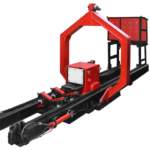
BOSHIYA’s automated tube bundle cleaners will operate up to 1,500 bar with remote cabin control and will protect your staff from the blast zone.
About This Safety Guide
BOSHIYA has been manufacturing automated tube and bundle cleaning equipment for over 110 years. With thousands of installations in refineries, petrochemical, and power plants around the world, our engineers have deployed our technology in the field and are intimately familiar with the hazards, workflows, and equipment discussed in this guide.
References & Sources
- Fatal Occupational Injuries in Confined Spaces, 2011–2019 — Bureau of Labor Statistics
- Water Jetting Association Injury Case Review (2019) — PMC / National Library of Medicine
- High Pressure Injection Injuries — NCBI StatPearls
- Annotated Table Z-1: Permissible Exposure Limits — OSHA
- Chemical Hazards and Toxic Substances Overview — OSHA
- Industry Best Practices for the Use of High Pressure Waterjetting Equipment — WJTA-IMCA
- ANSI/ISEA Z87.1 Standard for Eye and Face Protection — ISEA
- API 510: Pressure Vessel Inspection Code — American Petroleum Institute
![Polypropylene Resin: Grades, Types & Selection Guide [2026]](https://boshiya.com/wp-content/uploads/2026/05/0-150x150.webp)