Get in Touch with BOSHIYA

Since 1915 · CE Certified · ISO 9001
Bundle Puller & Tube Bundle Extractor
for Heat Exchanger Maintenance
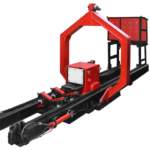
Diesel and electric bundle pullers from 25 to 150 tons. Aerial, self-propelled, and truck-mounted configurations for refinery turnarounds, petrochemical plants, and power generation — including areas where cranes can’t reach.
MODEL: BP-SERIES // VIEW_01

Who We Are
A Bundle Puller Manufacturer
with Over a Century Behind It
"Most companies selling this kind of equipment are resellers. They buy from someone else's floor, put their name on it, add a margin. That's the business model."
Boshiya Doesn't Work That Way — We're a Vertically Integrated Factory.
From Metalworking to Heavy Industry
Short version of the backstory: we started in 1915 as a single metalworking operation. Grew into forging, then precision components, then heavy industrial equipment. The bundle puller line came about thirty years ago. I was actually part of the early design team — we'd been watching crews on refinery shutdowns fight with rented machines that didn't quite fit. So we built our own.
Customers noticed. Asked to buy them. Today we ship aerial bundle extractor systems, truck-mounted rigs, and self-propelled units to refineries across sixty-plus countries.
Bundle Puller & Extractor Product Line
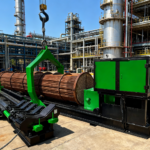
We make two core product families: diesel engine bundle pullers and electric bundle pullers. Within each family, models range from compact 25-ton units (good for smaller fin-fan coolers and like under piping racks with limited headroom) up to 150-ton machines that handle the largest crude preheat exchangers you'll find in any refinery. Both can pull and push — extraction and reinsertion with the same equipment. Whether you need a tube bundle puller for a single turnaround or a fleet of truck-mounted bundle pullers for multi-site service contracts, the full lineup is available to order with standard 6–8 week lead times. We also build lifter attachments and transportation frames for moving bundles between the exchanger and cleaning stations.
Diesel Engine Bundle Pullers
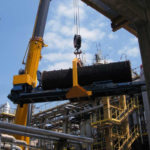
The diesel line is our workhorse. Self-contained power — no electrical hookup needed. An aerial bundle puller runs off a high-performance diesel engine driving a hydraulic pump and reinforced multi-speed gearbox. Spark arrestors come standard (required for refinery hazardous area work), and the whole machine gets lifted into position with a single crane pick. Once it's up there, the operator works remotely.
Model 25
Compact unit for lighter exchangers and tight-access installations. Ideal for fin-fan coolers and small reboilers.
25TPull Force
6,100mmLength
Ø1,600mmFrame
Model 45
Mid-range capacity. Covers the bulk of shell-and-tube exchangers in typical petrochemical layouts.
45TPull Force
8,000mmLength
Ø2,000mmFrame
Model 60
Versatile heavy-duty option — handles most refinery exchangers without needing the largest machines.
60TPull Force
8,000mmLength
Ø2,000mmFrame
Model 80
Built for large crude preheat and process exchangers. Variable pull force settings for different bundle conditions.
80TPull Force
8,000mmLength
Ø2,750mmFrame
Model 100
High-capacity extraction for heavy bundles in power generation condensers and large-diameter shells.
100TPull Force
10,000mmLength
Ø3,000mmFrame
Model 125 / 150
Maximum capacity. Purpose-built for the largest heat exchangers in refinery and LNG service.
125–150TPull Force
12,000mmLength
Ø3,500mmFrame
Electric Bundle Pullers
Same extraction capability, different power source. The electric line runs quieter, produces zero local emissions, and works especially well in enclosed or environmentally sensitive facilities. PLC-controlled with automatic load monitoring and overload protection. If your plant has strict noise or emission rules — or if you're pulling bundles even inside buildings — this is the better fit.
Electric Model 30
Entry-level electric extractor. Clean operation for confined spaces and indoor maintenance bays.
30TPull Force
6,100mmLength
Ø1,400mmFrame
Electric Model 60
Mid-range electric. Ideal for chemical plants with indoor exchangers and emission-restricted zones.
60TPull Force
9,000mmLength
Ø2,200mmFrame
Electric Model 100 / 150
Full-scale electric extraction for large power plant condensers and heavy process exchangers.
100–150TPull Force
up to 15,000mmLength
Ø2,800–3,500mmFrame
Configuration Note
All models support custom bundle length extensions (1m front, 2m or 3m rear), custom lifting frame diameters, and adjustable pulling force. Talk to us about your specific exchanger inventory — we'll match the right machine to the job.
Online Tool
Heat Exchanger Bundle Weight Calculator
Estimate your tube bundle weight before selecting a puller — input shell diameter, tube count, length, and material to get a working figure.
Open Calculator
Bundle Extractor Capacity & Technical Specifications
Here's what the numbers actually look like. Two tables below — one for the diesel line, one for electric. These are rated maximums; real-world selection should factor in a 20–30% safety margin above your heaviest bundle weight.
Diesel Engine Bundle Puller Specifications
| Model | Max Weight (kg) | Max Length (mm) | Frame Ø (mm) | Pull Force (ton) | Extensions |
|---|---|---|---|---|---|
| 25 | 25,000 | 6,100 | 1,600 (opt. 2,000) | 30 | Optional 1m / 2m / 3m |
| 45 | 45,000 | 8,000 | 2,000 (opt. to 3,500) | 60 | Optional 1m / 2m / 3m |
| 60 | 60,000 | 8,000 | 2,000 (opt. to 3,500) | 30 / 50 / 60 | Optional 1m / 2m / 3m |
| 80 | 80,000 | 8,000 | 2,750 (opt. to 3,500) | 35 / 65 / 80 | Optional 1m / 2m / 3m |
| 100 | 100,000 | 10,000 | 3,000 (opt. to 3,500) | 40 / 80 / 100 | Optional 1m / 2m / 3m |
| 125 | 125,000 | 12,000 | 3,500 | 50 / 100 / 125 | Optional 1m / 2m / 3m |
| 150 | 150,000 | 12,000 | 3,500 | 50 / 100 / 150 | Optional 1m / 2m / 3m |
Electric Bundle Puller Specifications
| Model | Max Weight (kg) | Max Length (mm) | Max Ø (mm) | Pull Force (ton) | Custom Length |
|---|---|---|---|---|---|
| 30 | 30,000 | 6,100 | 1,400 | 30 | Supported |
| 45 | 45,000 | 9,000 | 1,800 | 45 | Supported |
| 60 | 60,000 | 9,000 | 2,200 | 60 | Supported |
| 75 | 75,000 | 12,000 | 2,400 | 75 | Supported |
| 85 | 85,000 | 12,000 | 2,600 | 85 | Supported |
| 100 | 100,000 | 15,000 | 2,800 | 100 | Supported |
| 150 | 150,000 | 15,000 | 3,500 | 150 | Supported |
Quick Sizing Tip
For a tube bundle weighing 45 tons with a length of 9 meters, you'd want at minimum a 60-ton diesel or 60-ton electric unit. If the bundle has been in service for 3+ years without a pull, go one size up — corrosion between tubes and baffles adds friction that doesn't show up in the weight number.
Interactive Tool
Bundle Extractor Capacity Selector
Not sure which model fits your exchanger? Use the capacity selector to match bundle weight, length, and diameter to the right machine.
Open Selector
:: B2B_FLEET_SOLUTIONS ::
Wholesale Bundle Puller
Wholesale Bundle Puller
Supply & Fleet Packages
If you're an industrial service contractor running turnarounds at multiple plants — or a fleet manager looking to bring bundle extraction in-house — we do this regularly. Our wholesale pricing typically starts at 3+ units and scales from there.
14 MONTHS
BREAK-EVEN TIME FOR A 6-MACHINE FLEET
(REAL DATA: CANADIAN OIL SANDS OPERATOR)
(REAL DATA: CANADIAN OIL SANDS OPERATOR)
Procurement Logic:
MOQ for standard models is 1 unit. For wholesale fleet pricing, the threshold is 3 units — mix and match between diesel and electric across any capacity.
Get a Fleet Quote01
OEM & Custom Builds
Custom frame diameters, extended length, modified pull force configs, branded livery. We've done it all — even a trailer-mounted variant that didn't exist in our catalog until a client in Qatar asked for it.
STATUS: FULLY CUSTOMIZABLE
02
Operator Training
On-site training included with fleet orders. Two weeks gets most crews to independent operation. We've trained operators with zero hydraulic equipment experience — the controls are straightforward by design.
DURATION: 2 WEEKS ON-SITE
03
Parts & Support
Spare parts kits shipped with every unit. Regional support contacts in the Middle East, Southeast Asia, and North America. Typical lead time on replacement parts: 5-10 business days.
LEAD TIME: 5-10 BUSINESS DAYS
Common Extraction Problems —
And How We've Solved Them
"Real scenarios from actual jobs. Not hypothetical situations."
01

Scenario: Obstruction
No Crane Access Under Pipe Racks
Older refineries pack piping in everywhere. Exchangers end up buried under racks with 3-4 meters of clearance. Cranes physically cannot reach them.
Solution: Aerial Unit
Independent Operation
An aerial bundle extractor lifts into position once, then operates independently. We pulled 28 bundles from under a pipe rack — no scaffolding needed.
02

Scenario: Corrosion Bond
Stuck Bundles After Years in Service
Tube-to-baffle corrosion bonds a bundle inside the shell. Traditional methods — hydraulic jacks, forklifts — can't apply enough sustained force.
Solution: 150-Ton Force
Controlled Hydraulics
Our machines apply up to 150 tons of sustained force. In Indonesia, a 75-ton bundle stuck for four years came free at 65 tons pressure.
03
Scenario: Critical Path
Turnaround Schedule Pressure
Plant downtime costs $500K+ per day. Bundle extraction is usually on the critical path, and delays cascade through the entire schedule.
Solution: High-Speed Fleet
5-6 Exchanges Per Day
A single bundle puller can handle 5-6 exchanges per day. On a 16-day window in Texas, three machines covered 86 exchangers early.
04

Scenario: Restricted Zone
Indoor & Emission-Restricted Areas
Some facilities won't allow diesel equipment indoors. Chemical plants and food-grade operations often have strict zero-emission zones.
Solution: Electric Unit
Zero Local Emissions
Electric bundle pullers — zero local emissions, low noise, PLC-controlled. We've deployed them even inside buildings at a pharmaceutical site.
:: GLOBAL_FIELD_LOG ::
Project Stories From the Field
Refinery Turnaround: 86 Bundles in 14 Days
Mission: Zero Crane Dependency
A Texas Gulf Coast refinery called us after their original vendor backed out. The scope: 86 heat exchangers in a 16-day window. About a third were under overhead piping with less than 4 meters clearance — no crane access.
We deployed three diesel-powered bundle pullers (two 60-ton, one 45-ton). The 60-ton machines handled bundles 8 meters long, weighing 40 tons each, completely independently.
"I've never seen a turnaround where the bundle extraction wasn't the bottleneck. This time it wasn't even close."
14 DAYS
Project Completion (2 Days Early)
Ammonia Plant: Self-Propelled Extraction
Mission: No Crane, Narrow Corridors
An ammonia facility in Indonesia needed 14 high-pressure bundles pulled (up to 75 tons). The layout forced everything through 5-meter wide corridors with weak flooring.
We sent our 80-ton electric self-propelled extractor. When Bundle #3 stuck due to corrosion, we applied 65 tons of sustained hydraulic force. After 90 seconds of steady pressure, it broke free safely.
9 DAYS
Total Execution Time
Budgeted Time: 18 Days
Qatar LNG Terminal: Aerial + Truck Combo
Mission: Logistics Across 2km Facility
28 exchangers spread across 2 kilometers. Moving equipment was the main bottleneck. We deployed a hybrid fleet: two aerial extractors for heavy lifts, plus one truck-mounted unit for lighter loads (<30 tons).
The truck-mounted unit could relocate in 20 minutes (vs 2+ hours for crane setups). That mobility made up for time lost to 48°C ambient heat.
21 DAYS
Execution Time
Efficiency: +40% vs Schedule
Comparison Tool
Diesel vs Electric Bundle Puller
Not sure which power type fits your operation? Compare key specs, use cases, and trade-offs side by side.
Select a capacity class above to see the full comparison and our recommendation for your scenario.
:: KNOWLEDGE_BASE ::
Frequently Asked Questions
Short version: it's a hydraulic machine that clamps onto a heat exchanger shell flange and applies controlled force to pull the tube bundle out horizontally. Our units range from 25 to 150 tons of pulling capacity. The operator controls everything remotely — typically from 10-20 meters away — and a standard extraction takes under 10 minutes once the machine is positioned. Think of it as replacing a crane, a rigging crew, and a lot of manual labor with one self-contained piece of equipment.
Depends on where you're working. Diesel runs anywhere — no grid power needed, which is why it's the default for outdoor refinery turnarounds, remote sites, and field work. The diesel models include spark arrestors for hazardous area operation. Electric runs cleaner and quieter (zero local emissions) and is better for indoor work, confined spaces, or facilities with strict environmental rules. We've had chemical plants and food-grade processors specifically request electric because diesel exhaust wasn't an option in their operating areas. Both types cover the same capacity range.
The aerial bundle extractor is built specifically for this. A single crane lifts the machine into position at the exchanger — that's the only crane pick you need. Once positioned, it operates independently: pulls the bundle, holds it for cleaning and inspection access, and can push it back in for reinstallation. For areas where even a single crane pick isn't possible, our self-propelled models can travel through corridors and under piping on their own power. We pulled 28 bundles from under a pipe rack at a Gulf Coast refinery — no scaffolding, no rigging changes.
Start with the gross weight of your heaviest tube bundle and add 20-30% margin. A 40-ton bundle should go on at minimum a 45 to 60-ton machine. If the exchanger hasn't been opened in 3+ years, go one size up — corrosion between tubes and baffles creates friction that doesn't show in the weight spec. Our diesel line covers 25, 45, 60, 80, 100, 125, and 150 tons. Electric covers 30, 45, 60, 75, 85, 100, and 150 tons. If you're not sure, send us the bundle dimensions and shell ID — we'll size it for you.
The actual pull? Five to fifteen minutes depending on bundle condition and length. Setup and positioning add 30-60 minutes per exchanger. During a recent turnaround, our team averaged 6 complete cycles per machine per day — that includes clamping, extraction, cleaning access, inspection, reinstallation, and repositioning. Stuck bundles take longer (one took us 90 seconds of sustained 65-ton force before it released) but those are the exception, not the rule.
Yes — probably more than you'd expect. Both our diesel and electric lines support custom bundle length extensions (1m front, 2m or 3m rear add-ons), custom lifting frame diameters to match non-standard shell sizes, and adjustable pull force configurations. We've also built one-off variants for offshore platforms and trailer-mounted units for clients who needed to move between plant sites on public roads. For wholesale fleet orders (3+ units), we include on-site operator training in the package.
Every model we make handles pull and push operations with the same hydraulic system. Pull to extract the aerial tube bundle from the shell. Push to reinsert it after cleaning and inspection — or to reposition a stuck bundle during extraction. The dual-action capability means one machine covers the entire service cycle: extraction, handling, and reinstallation.
Diesel models: spark arrestors for hazardous areas, remote wireless controls (operator stays 10-20m away from the load), hydraulic load-sensing gauges with overload cutoff, vibration dampening, and automatic balance systems. Electric models add PLC-based automatic load monitoring, programmable overload protection, emergency stop functions, and zero-emission operation for confined spaces. All models carry CE certification and are built under ISO 9001 quality management. We also follow applicable ASME and API 660 standards for the exchanger service equipment category.
/// Next Steps
Ready to Talk About Your
Ready to Talk About Your
Bundle Extraction Needs?
Whether you need a single machine for an upcoming turnaround or a full fleet for multi-site operations — we'll put together a recommendation based on your actual exchanger inventory and site conditions. No generic proposals.
![Polypropylene Resin: Grades, Types & Selection Guide [2026]](https://boshiya.com/wp-content/uploads/2026/05/0-150x150.webp)