Get in Touch with BOSHIYA

Methanol Prices: Global Market Guide for Buyers [2025–2026]

Methanol Prices Explained: What You Are Actually Paying Per Ton, Per Gallon & By Region
Contents
show
global methanol prices reached record levels in early 2026 – not due to depleted paper supplies, but because an isolated chokepoint eliminated nearly 20% of world’s supply capacity overnight. Far-closure of the Strait of Hormuz, in February-March 2026, following US-Israel war on Iran, caused QatarEnergy to invoke force majeure and raised regional prices by 14-87% YoY by April 2026.
Chemical buyers, procurement managers and traders will be able to use this as a reference: current methanol prices per kilogram, per metric ton and per gallon; the five key market drivers; regional comparisons; and a no-nonsense forecast for 2026. Data comes from IMARC Group, BusinessAnalytiq and ChemAnalyst market reports as of April-May 2026.
Quick Facts: methanol prices (April 2026)
- North America: $1.10–1.12/kg ($1,100–1,120/MT | $3.29–3.35/gal)
- Europe: $0.71–0.98/kg ($710–980/MT | $2.13–2.94/gal)
- Southeast Asia: $0.69–0.71/kg ($690–710/MT | $2.07–2.13/gal)
- Middle East: $0.55–0.56/kg ($550–560/MT | $1.65–1.68/gal)
- Northeast Asia: $0.41–0.48/kg ($410–480/MT | $1.23–1.44/gal)
Bulk FOB/CIF spot rates. $/gallon calc: methanol density 0.7912 kg/L; 334 gal/MT.
1. Methanol Prices at a Glance: $/kg, $/MT, and $/Gallon
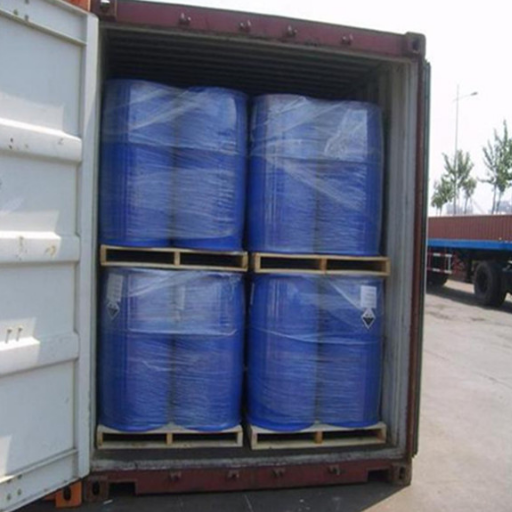
Applied is a look at multiple seven region bulk methanol prices assessments over April 2026, translating all three units into one. Most purchasing/procurement teams seek $/MT for large quantity pack sales and $/kg for small custom orders; the number that most influences transportation and US-genre blending is the gallon equivalent.
| Region | $/kg | $/MT | $/gallon (appro×.) | YoY Change |
|---|---|---|---|---|
| North America | $1.10–1.12 | $1,100–1,120 | $3.29–3.35 | +41.0% |
| Europe | $0.71–0.98 | $710–980 | $2.13–2.94 | +14.5% |
| Southeast Asia | $0.69–0.71 | $690–710 | $2.07–2.13 | +86.5% |
| Middle East | $0.55–0.56 | $550–560 | $1.65–1.68 | +61.8% |
| South America | $0.52–0.53 | $520–530 | $1.56–1.59 | +67.7% |
| Northeast Asia | $0.41–0.48 | $410–480 | $1.23–1.44 | +20.6% |
| Africa | $0.40–0.65 | $400–650 | $1.20–1.95 | +14.3% |
Sources: IMARC Group, BusinessAnalytiq (April 2026).
Spot bulk rates; Europe range displays contract vs. spot assessment differential. YoY = April 2026 vs. April 2025.
European prices diverged mostly because of a big spread between metric/industry midpoint ($0.71/kg) and IMARC’s spot/c2f reference ($0.98/kg). The latter comes from European long-term contract rates; the former, from shorter term surcharges.
2. What Drives Methanol Prices? 5 Key Factors
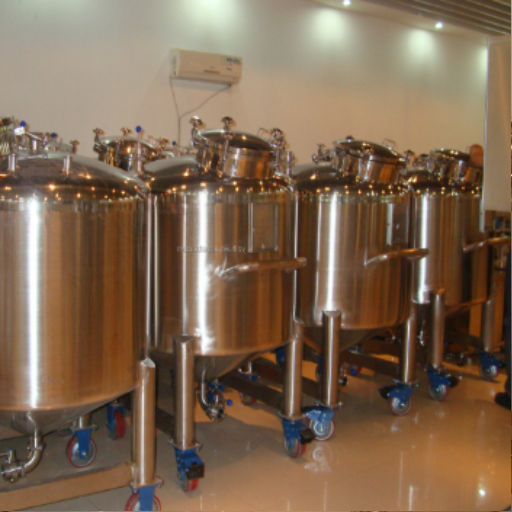
The methanol price market is more volatile and liquid than the typical industrial chemistry. Since methanol prices cost is very sensitive to volatile energy markets, we look at five effects that drive most price fluctuations.
1. Natural Gas Feedstock Cost
natural gas is the single smallest variable that affects between 40-55% of global methanol production costs and roughly 59-60% of global methanol production overall. North America and Europe show a prompt (~4 week) correlation between Henry Hub gas prices and methanol prices. Middle Eastern markets see approximately the same lag, thanks to relatively cheap associated gas that oil fields produce.
2. Geopolitical Supply Disruption
Early 2026’s Strait of Hormuz closure not only disrupted supplies in world markets; it affected global methanol suppliers in days. Nearly 18% of global methanol product capacity lay in areas that suffered facility destruction, unplanned plant outages, and shipping bans, leaving buyers scrambling to buy spot and potentially blocking them out of supplies for weeks.
3. Chinese Coal-to-Methanol (CTM) Capacity
export’s coal-derived methanol drives prices in Asia-Pacific: methanol prices are 30-40% lower than NG- derived in China, adding to the European price support.80% of methanol capacity in China is based on coal. When domestic methanol covers Chinese internal needs, export supplies America and lowers prices. When Chinese demand weakens, Chinese supplies depress global prices.
4. Downstream Demand from MTO, MTBE, and Formaldehyde
Of the three main global methanol derivatives, the largest dosage group is formaldehyde and its derivatives, which make up roughly 23- 38% of the group. 2 This product is foundational to a range of construction adhesives and plastics/ resins. The second most dominant application is methanol-to-olefins/ methanol-to-propylene (MTO/ MTP, and indeed the fastest growth group), accounting for up to 40% of demand and with the Global 2nd lowest demand penetration (38 L/A) in 2026. MTO demand will directly impact methanol price in China.
When olefin numbers get depressed, MTO plants limit run rates, methanol demand suffers.
5. Seasonal Procurement Cycles
Methanol demand peaks in Q2 as construction activity picks up across the US and Europe, driving formaldehyde demand. Buyers build inventories in Q1, creating early-year price firmness. Mid-summer procurement slow-downs give spot prices a brief window to soften — as buyers in India and Southeast Asia found in mid-2025 when they delayed purchases hoping for further declines, only to face 40–87% price surges by April 2026.
3. Methanol Prices by Region: The 2026 Paradox
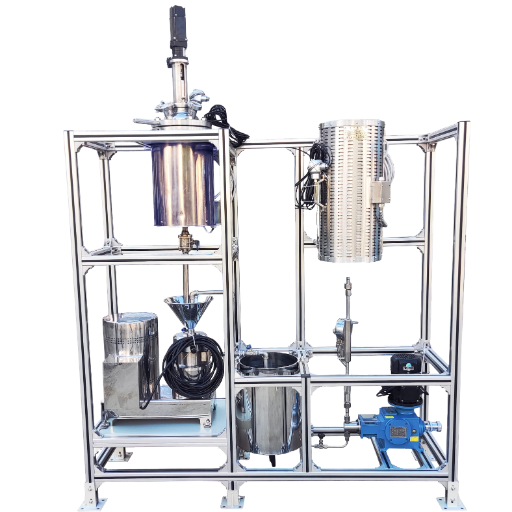
Here is the surprising truth behind the 2026 methanol trade: world capacity has reached record levels but for every region prices have rallied. You can have record capacity but if the ships cannot sail then you get record prices!
The year-over-year price figures clearly indicate this trend in the table above. Southeast Asia took the largest hit with a year-over-year change of +86.5% due mainly to the reliance on Middle Eastern methanol imports originating via the Strait of Hormuz. North America on its own with its own substantial methanol production in Gulf Coast natural gas 8 plants was still affected with a year-over-year change of +41% due to the rise in export demand along with increased feedstock costs.
Q1 2026 Spot FOB Price Reference
Procuremen of Resource FOB data for Q1 2026 lists the underpriced benchmark prices: China (CFR Qingdao 425/Mt in March; India (Ex-Delhi/ NCR) 807/MT in March ( more than double the China rate) predictably due to India being heavily import depended on supply disruptions; US (DEL Louisiana) 734/MT in February; Germany 336/MT in February. China’s domestic price increased from near RMB 2.32/kg in January to RMB 2.75/kg in March an increase of 18.5% in just two months.
Just for comparison December 2025 prices were very low: North America $690/MT, Europe $620/MT, Northeast Asia $350/MT, Middle East $360/MT. Prices rose from December to April due to the geopolitical premium added to seasonal increase.
4. Methanol Production Economics: Why the Price Floor Matters
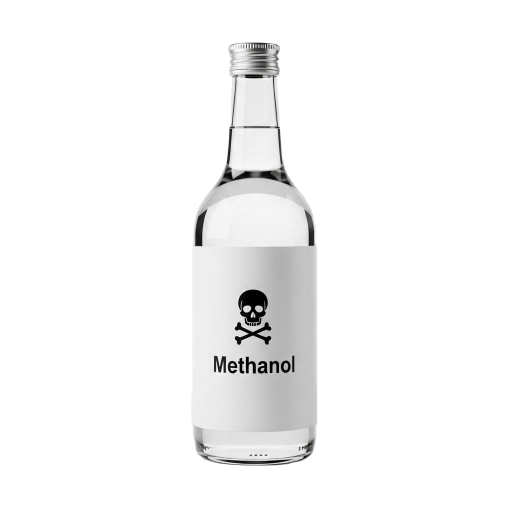
Knowledge of production cost tells you how low methanol prices cannot efficiently go. Both main production routes — SMR and coal gasification — rely on a copper-zinc oxide catalyst in the methanol synthesis loop, and catalyst replacement cycles add ~$5–8/MT to operating cost. The two routes create very different cost floors.
| Production Route | Primary Feedstock | Est. Production Cost | Key Regions |
|---|---|---|---|
| Gray methanol (SMR) | Natural gas | ~$160/MT | USA, Saudi Arabia, Middle East, Trinidad and Tobago |
| Coal-to-methanol (CTM) | Coal + water | ~$110–140/MT | China (dominant) |
| Blue methanol (SMR + CCS) | Natural gas + carbon capture | ~$230/MT | USA, Europe (emerging) |
| E-methanol (green H₂ + CO₂) | Renewable electricity + CO₂ | $1,000–1,200/MT | Europe, select projects |
Production cost estimates: Websearch, compiled from industry reports (OpenPR, IMARC, Intratec, 2025), Market Prices shown represent a. freight, margin and demand/supply premium over production cost.
Crude oil price and natural gas price both influence methanol production economics: crude oil as the benchmark for competing energy products, and natural gas as the direct feedstock. When oil price rises, methanol’s competitiveness as a fuel substitute improves, supporting demand. Between production cost (~$160/MT for NG-based plants) and current North American market prices (~$1,100/MT) sits the geopolitical premium, freight, regional supply tightness, and distribution margins stacked through the supply chain in early 2026. China’s coal-to-methanol capacity, despite its lower cost, cannot easily redirect to cover global supply gaps because CTM output is largely consumed domestically by MTO plants. Countries that produce methanol via NG — including Saudi Arabia and Qatar — faced compounded disruption during the Strait of Hormuz closure, since both the feedstock and the export routes were simultaneously constrained.
5. Who Buys Methanol? Key Applications Driving Demand
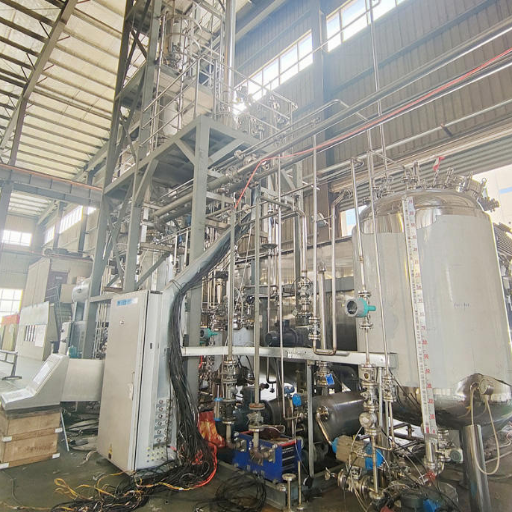
methanol: a platform chemical feeding dozens of downstream industries. Size and growth rate of those industries shape methanol price trends.
- Construction adhesives, resins and coatings; formaldehyde-consumption accounts for 23-38% of global methanol demand. Construction activity maintains the Q2 seasonal peak and accounts for development of methanol prices often in spring.
- Methanol-to-Olefins/Propylene (MTO/MTP) (~35–40% projected, 2026): fastest-growing application, producing ethylene, polyethylene, polypropylene, and related petrochemical derivatives. China’s MTO capacity exceeded 25 million tonnes per year in 2024. When olefin margins turn positive, MTO plants run hard and pull methanol demand sharply higher.
- Consumes at 5-7% of world demand are acetic acid, a key plastics/raw materials solvent; trading closely in line with general industrial activity.
- As a gasoline octane improver, methyl tert-butyl ether (MTBE, ~8–10% of methanol demand) remains heavily employed across Asia and the Middle East, some US and European phase-outs notwithstanding.
- Shipping and fuel blending are growing demand categories. Methanol-fueled ships are expanding across multiple fleets, driven by IMO 2030 decarbonization targets. Unlike ethanol, methanol can be used in higher blend concentrations in marine engines without modification — Maersk’s dual-fuel methanol program (Oct 2024) signals a structural demand shift underway.
global methanol market was worth c$39.6bn in 2025 and assumes $57.3bn in forecast by 2034 for a CAGR of 4.18%; IMARC Group. Watching supply and demand signals from these applications — particularly MTO operating rates and new construction starts — gives buyers a reliable early indicator of methanol price direction in any given quarter. Methanol price forecasts from leading analysts track these demand shifts closely as leading indicators.
6. Green Methanol: Understanding the Sustainability Premium
Corporate sustainability targets are driving green methanol demand forward, but the cost gap with conventional methanol remains the central challenge for most buyers. Here is where the market stands in 2026.
Green methanol derived from green hydrogen using renewable electricity and captured CO2 costs over $1,000 per MT to produce; implied $1,200/MT. Compared to conventional market prices of $400-$800/MT, this is a 2-3 premium. In 2020, the difference was 5-6. This is a remarkably slow process, but it is happening.
Key milestones shaping the green methanol cost trajectory:
- European Energy and Mitsui commissioned the world’s first full-scale e-methanol facility at Kassø, Denmark, in May 2025, using renewable wind power and captured CO2 from a local biogas plant.
- Maersk-LONGi agreement (Oct 2024), committing to a long-term supply of bio-methanol for an expanding methanol powered fleet, showed the willingness of large buyers to pay the premium under long term.
- Bureau Veritas within April 2025 confirmed supply of HyOrc’s RDF( trash-derived fuel) all-Hovipit process to methanol and calculated output cost of 350-370/MT – acceptable European baseline prices. This negative-cost feedstock ‘municipal waste tipping fee’ model could profoundly affect low-carbon methanol economics.
Metalast most industrial buyers have today is on scale the only relatively cost-efficient option available. Green supply commitments are overseen through long-term delivery commitments from shipping sector. fuelEU Maritime, as of 2025, is compounding the early adoption shift within European shipping sector.
7. Buying Methanol in Bulk: A Practical Procurement Guide
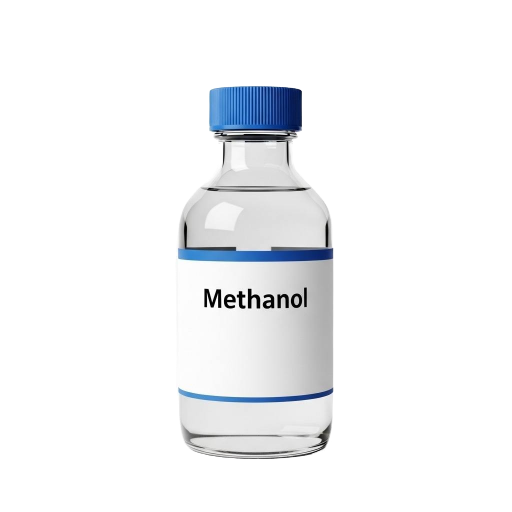
Volume is king in methanol procurement, dictating what prices can be obtained, what container mode of delivery can be employed, and whether spot or contractual terms are more advantageous for the buyer. Four volume segments inform procurement strategy.
| Volume Tier | Typical Format | Pricing Basis | Best Strategy |
|---|---|---|---|
| Tier 1 < 1 MT |
200 L drums, IBC totes | Retail spot + markup | Buy as needed; limited negotiating power at this volume |
| Tier 2 1–20 MT |
IBC containers (1,000 L) / flexi-tanks | Spot with 5–15% discount | Short-term spot quotes; compare 3+ suppliers |
| Tier 3 20–200 MT |
ISO tank containers (20–25 MT) | Contract-linked or quarterly pricing | Monthly fixed-price terms; forward lock-in in volatile markets |
| Tier 4 200+ MT |
Bulk liquid vessel / rail tanker | FOB/CIF negotiated annually | Long-term supply agreement with pricing formula |
Spot vs. Contract: What the 2026 Price Shock Revealed About Buyers. Market-beating 2026 Q1 buyers were those on contract entered into prior to the Strait of Hormuz disruption (see logup for more detail). Market-stressing spot-only buyers in Southeast Asia and India saw prices double in one week (disruption week of April 3). At a time when market sensitivity to geopolitical news is more extreme than ever, migrating one quarter of annual volumes to a term contract mitigates powerlessness during a volatility round.
US and Latin American suppliers have become the primary alternative supply destinations for Asian traders following the Strait disruption – a reminder that alternative supply sources should be identified prior to a crisis, not during one.
Need Bulk Methanol Pricing?
Boshiya provides industrial methanol to the IBC, ISO tank, and bulk vessel markets. Our team can provide current FOB prices and lead times within 24 hours.
8. Methanol Price Outlook: 2025–2026 Scenarios
“While methanol demand growth from 2020 to 2025 averaged under 1pc, we expect average annual growth rates of 2.5–3.0pc per year to return in the forecast period.”
— Methanol Institute, via Argus Advisory (April 2026)
Underlying structural demand factors are bullish: MTO growth, marine fuel adoption, and chemical derivative requirements should boost methanol demand for the foreseeable future. The 2026 near-term outlook is more uncertain. Outlooks for methanol vary significantly across market analysts – IMARC Group’s 4.18% CAGR through 2034 compares to the Methanol Institute’s data (via Argus Advisory) indicating 2.5-3.0% – owing to the 2026 geopolitical premium heightening the risk of unreliable linear projections. For context, methanol traded at multi-year lows around 2021 before recovering through 2022, then moved sideways through 2023–2024 before the current geopolitical spike. Three scenarios are plausible for H2 2026, depending on how the conflict resolves.
| Scenario | Conditions | NA Price Range (H2 2026) | Buyer Action |
|---|---|---|---|
| Bull | Conflict continues; Strait stays disrupted; Qatar production stalled | $1,200–1,400/MT | Lock in contracts immediately |
| Base | Partial ceasefire; Strait reopens partially; supply gradual recovery | $700–$900/MT | Blend spot + contract; build strategic inventory |
| Bear | Full resolution + China CTM oversupply offloaded to export markets | $400–$500/MT | Delay long-term contracts; buy spot opportunistically |
As of May 2026, QatarEnergy’s force majeure and ongoing Strait shipping restrictions make the base scenario the most likely path. Methanol Institute’s long-term CAGR forecast of 2.5–3.0% points to a recovering market once geopolitical noise clears, supported by the structural shift toward methanol as a marine fuel and a chemical feedstock for the energy transition.
Source Methanol Through a Supplier Who Tracks the Market
Boshiya’s petrochemical supply team tracks methanol spot and term prices in North America, Europe, Southeast Asia, and the Middle East on a daily basis. Whether you need a one-off ISO tank quote or a long-term supply program, our team provides same-day pricing guidance.
Frequently Asked Questions About Methanol Prices
What is the current price of methanol per gallon?
methanol April 2026 bulk prices: North America US$3.29-3.35 per gallon, Southeast Asia US$2.07-2.13 per gallon, Northeast Asia US$1.23-1.44 per gallon. All quotes are wholesale spot prices for bulk volumes; retail and small volume purchases are subject to a mark up.
How much does methanol cost per metric ton?
methanol prices are scaled significantly by market and location. During April 2026 North America prices were trading at $1,100-1,120/MT, Europe at US$710-980/MT, Southeast Asia at US$690-710/MT, and Northeast Asia at US$410-480/MT. Based on historic prices in December 2025 they were all 40-60% below recent levels, showing how markets can move swiftly in a supply disruptions environment.
Why are methanol prices so high in 2026?
Strait of Hormuz disruption in February-March 2026, instigated by the US-Israel war on Iran, displaced some 18 % of global methanol-using capacity. QatarEnergy announced force majeure, and other major shipping routes suspended transits, releasing supply shortages through out the immediate areas in both Asia and Europe. That spike caps off what was already an surging natural gas cost base that determines the production economics of 59% of global methanol supply.
How does natural gas price affect methanol cost?
Natural gas is the feedstock that underpins 59% of global methanol production, and that makes-up around 60% of the overall production cost in natural gas steam methane reforming (SMR) facilities. A 10% increase in Henry Hub natural gas prices generally passes through into North American methanol production costs in a 5-7% increase over around 4-8 weeks. Middle Eastern and US Gulf Coast producers, having access to cheap associated gas, enjoy a structural cost advantage relative to European producers reliant on pipeline feedstock.
What is green methanol and why does it cost more?
Green methanol (e-methanol) is produced using green hydrogen — made from renewable electricity via electrolysis — combined with captured CO₂. This process eliminates fossil feedstock but requires large amounts of renewable electricity and carbon capture infrastructure, pushing production costs above $1,000–1,200/MT. At 2–3 times the current conventional market price, it remains a premium product. Bio-methanol (from biomass gasification) sits between the two on cost, while newer waste-to-methanol technology — such as HyOrc’s Bureau Veritas-validated process — targets €350–370/MT, potentially competing with conventional European contract prices. Costs across all green pathways are falling as commercial-scale projects like the Kassø plant in Denmark reach production, and the IMO’s net-zero shipping targets for 2050 are pulling investment into the sector at an accelerating pace.
About Boshiya: Boshiya is a global supplier of petrochemical and specialty chemical products including methanol, solvents, and intermediates. Our supply network spans North America, Europe, Southeast Asia, and the Middle East, allowing us to source and deliver in IBC containers, ISO tanks, or bulk vessel quantities. View our methanol supply capabilities
![Polypropylene Resin: Grades, Types & Selection Guide [2026]](https://boshiya.com/wp-content/uploads/2026/05/0-150x150.webp)