Get in Touch with BOSHIYA


Contents
show
Refinery Turnaround Cleaning: Decontamination Process, Technology, and Preparation
Published March 17, 2026 | 12 min read
Every petroleum refinery reaches a point where the normal operations must cease. Fouling builds up in heat exchangers. Corrosion particles coat reactor internals. Hydrocarbon residues plate vessel surfaces. The only remedial course in responding to these challenges – and the safety dangers posed therein – is a planned turnaround with full-scope industrial cleaning.
Below we document the entire refinery turnaround cleaning spectrum: its scope, chemical and mechanical methods, effective scheduling, and project cost. No matter how small – a single crude distillation unit – or how large – an entire petrochemical complex – this information section remains relevant to your scheduled downtime.
What Is Refinery Turnaround Cleaning and Why Refineries Need It

A turnaround (often also called a TAR or T/A) is a premier downtime in which a complete process unit or plant section is halted for maintenance, inspection, and repair. In petroleum refining, turnaround represent the single most costly maintenance event of an operating cycle. They are scheduled at intervals of 2-5 years within a given unit, yielding to regulatory demands, resistance conditions, and operational reliability data.
This cleaning stage begins the turnaround. Prior to opening inspection hatches, the process equipment must first be cleaned and rendered safe for human entry with the removal of residual hydrocarbons, the neutralization of toxic gases such as hydrogen sulfide, and the removal of pyrophoric appliances that could ignite upon contact with air.
Three related terms are worth clarifying. A shutdown is general stoppage of a unit – scheduled or otherwise. A turnaround is a major scheduled shutdown inclusive of inspection and repair. An outage refers to an emergency stoppage resulting from equipment failure or other circumstance.
Cleaning sets the standard on all others to follow. If vessels and exchangers are not properly decontaminated, inspection teams cannot enter safely, mechanical work suffers delays, and the entire turnaround timeline veers. In a refinery operation where each day of withdrawl costs hundreds of thousands of dollars, these schedule slips equal to corporate revenue erosion.
What has emerged in modern refineries and petrochemical plants can be characterized as advanced steam flushing and manual methods. Chemical cleaning techniques now predominate because they are more expedient, generate greater uniformity of results, and lessen worker exposure. Institutions such as BOSHIYA bundle cleaning solutions bring over a century of maintenance equipment expertise to this field.
Why Turnaround Cleaning Is Critical for Refinery Operations
Hazards inside a refinery that has operated continuously are not functions of the mind. They are chemical, incontrovertible, and tangible. Turnaround cleaning exists to keep them in check before entry into confined spaces.
Pyrophoric Iron Sulfide: The Hidden Ignition Source
Hydrogen sulfide (H2S) has a unique reactivity with ferrous oxides in vented vessels, creating ferrous sulfide (Fe S). This is pyrophoric – a material that spontaneously fires on air contact. Running open a vessel with FeS deposits without chemical treatment creates an equally certain fuel-source. Published research on pyrophoric iron sulfide has demonstrated instantaneous ignition at ambient temperature.
Hydrocarbon Vapor and Benzene Exposure
Residual hydrocarbons emit combustible vapors. Of particular concern is a known carcinogen in hundreds of refinery streams benzene. OSHA limiting concentration PEL is 1 ppm (8 hour TWA); NIOSH recommended limit, 0.1 ppm. Without decontamination, inside equipment benzene concentrations can be many orders of magnitude above standards.
⚠️ Important
Between 2011 and 2018, OSHA reports 1,030 workers have died as a result of confined space incidents. Petroleum refining has, since 1992, caused more deaths from elevated chemical emissions than all other industries combined 52 fatalities and 250 injuries in 36 catastrophic incidents, per OSHA Petroleum refinery PSM NEP.
Fouling and Its Impact on Equipment Performance
In addition to safety, fouling of deposits – scale, coke, polymers, corrosion: impair heat transfer and reduce throughput, and worsens corrosion. If not removed during a turnaround, fouling deposits will reduce subsequent cycle run length and require an early shutdown.
| Hazard Category | Source | Risk Level | Primary Mitigation |
|---|---|---|---|
| Pyrophoric ignition | Iron sulfide (FeS) | Critical | Chemical oxidation / passivation |
| Toxic gas exposure | H2S, benzene vapors | Critical | Chemical degas + vapor monitoring |
| Flammable atmosphere | Residual hydrocarbons | High | Vapor-phase decontamination |
| Heat transfer loss | Scale, coke, polymer fouling | Moderate | Chemical + mechanical cleaning |
| Corrosion acceleration | Acid deposits, chloride salts | Moderate | Alkaline wash + passivation |
Chemical Cleaning and Decontamination Methods for Turnarounds
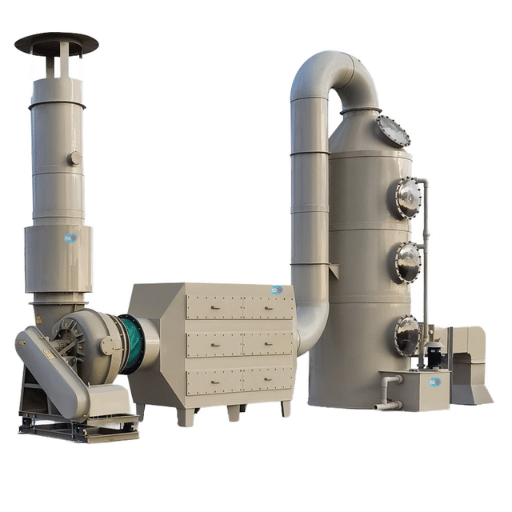
Chemical cleaning has become dominant for turnaround decontamination because it can reach surfaces manual decontamination tools cannot, processes the entire systems at once, and has detectible safety endpoints; the following is how the primary methods work in practice.
Closed-Loop Chemical Circulation
A chemical solution is forced through equipment in a closed circuit, entering at a single connection, contact with tubes or vessel internals, and exiting into a mixing tank. Fouling deposits wash away as the solution passes through. decontamination technicians observe the solution’s concentration, pH, and temperature; when the returning fluid’s chemistry stabilizes, the circuit can be drained and flushed.
Specific to heat exchangers, closed loop circulation cleans both the tube side and the shell side simultaneously, without even pulling the bundle. This is where specialized bundle cleaning technology becomes handy; especially for heavy fouling that circulation alone cannot remove.
Vapor-Phase Decontamination
Large columns and vessels with structural limits that prohibit full liquid fill cannot be filled with liquid. Vapor phase decontamination introduces heated chemical vapor into the vessel. Vapor condenses on internal surfaces, reacts with hydrocarbon films and pyrophoric deposits, and is vented through scrubbers. This method is applied to distillation columns with trays or packed beds.
Chemical Degassing
Chemical degas addresses the flammable and toxic gas hazard inside equipment. Specialty chemicals interact with dissolved hydrocarbons and H2S neutralizing them to non-hazardous forms. In typical FCC unit, chemical degas reduces Lower flammability of chemical from over 100% to less than 1% in 8 to 12 hours, a feat that would take steam purging 24 to 48 hours to accomplish.
Steam-Chemical Hybrid Methods
For heavy residuals internal equipment – vacuum residuum piping or coker fractionator bottoms – a hybrid process utilizes steam for bulk removal and chemical for fine decontamination treatment. Steam retards vigorous deposits; the chemical stage destroys residual films and oxidizes pyrophoric iron sulfide.
Proprietary vs. Commodity Chemistry
Proprietary chemistry- specifically designed for refinery decontamination – can operate twice as fast and yield safer endpoints during a reduced as commodity acids or caustic solutions at an additional cost, of course. Often time-savings and reduced re-work, however, make the difference a bargain. Be sure to verify chemicals compatibility when basing your choice of equipment. Alkaline solutions are appropriate for systems with organic fouling, such as carbon steel systems, while inorganic scale like calcium carbonate and iron oxide are the target of acids, which brings the challenge of corrosion inhibitors.
Chemical circulation with equipment designed for removing deposits from tube bundles is a combination that will outperform either strategy independently for specific tube bundle deposits.
| Method | Best For | Typical Duration | Limitations |
|---|---|---|---|
| Chemical circulation | Exchangers, piping, reactors | 6–24 hours per circuit | Cannot remove hard calcium or calcite scale alone |
| Vapor-phase decontamination | Columns, towers, large vessels | 12–36 hours | Requires scrubber system for exhaust |
| Steam purging | Initial bulk hydrocarbon removal | 24–48 hours | Slow; does not neutralize FeS |
| Mechanical (pigging, scraping) | Pipelines, straight-run piping | Varies by length | Limited to accessible geometries |
| Hydroblasting (10,000–40,000 PSI) | Tube internals, surface prep | 1–4 hours per exchanger | Requires bundle extraction first |
Planning and Preparation for Refinery Turnaround Cleaning

A well-planned turnaround cleaning phase 6 to 12 months prior to the unit’s scheduled outage; Planung process determines what is in scope, what resources will be mobilized, what sequence of tasks is most effective, and what contingencies are, and where; inadequate planning most often results in turnaround schedule delays.
Scope Definition and Prioritization
Cleaning scope should be written at the level of a equipment. Which vessels require full decontamination? Which exchangers will be pulled for heat exchanger tube cleaning? Which piping circuits need chemical flush? Talk to the operations and inspection teams to compile a list of each and rank each by safety cruciality and turnaround-path dependent.
Crew Mobilization and Equipment Staging
Cleaning crews should be on-location ready to begin the experiment when the unit hits its intended operating temperature. Mobilization- transport, lodging, safety orientations, site-specific cleaning instruction- should be completed during planning, not during the safety shutdown. Equipment staging follows the same plan: chemical tanks, hoses, pumps, monitors, and waste containers strategically placed between work zones beforehand.
Permit-to-Work and Isolation Procedures
Every cleaning activity requires a valid work permit specifying scope, hazards, and responsible personnel. equipment isolation- blinds, valve lockouts, electrical disconnections- should be completed and verified prior to chemical intoduction. This is another bureaucratic endeavor that significantly impacts safetyes when it does not go as planned; also where turnarounds either stay on schedule or begin to fall behind.
💡 Pro Tip
A dedicated cleaning co-ordinator, reporting directly to the turnaround manager and not the maintenance or operations, should be appointed; de-prioritization of cleaning activities due to mechanical and inspection work competing for access points is a common turnaround oversight.
Common Planning Mistakes That Cause Delays
- ✔
Failing to calculate chemical volumes is the number one reason for cleaning failures; running out of chemicals mid-circuit requiring restart adds an additional 12-24 hours to the turnaround schedule. - ✔
Scheduling cleaning and mechanical work at the same elevation causes congestion and safety conflicts. - ✔
Missing waste disposal permits create additional delays — spent chemicals block the equipment for the next circuit. - ✔
Omission of exchanger cleaning when conceptualizing the initial scope of work on the way to a fouled bundle results in unavoidably increased unplanned turnaround to clean what should have been included. - ✔
A lack of secondary chemicals stockpiles can set back the effort for days when remote delivery delays delay the shift to cleaning.
Equipment and Systems Used in Turnaround Cleaning
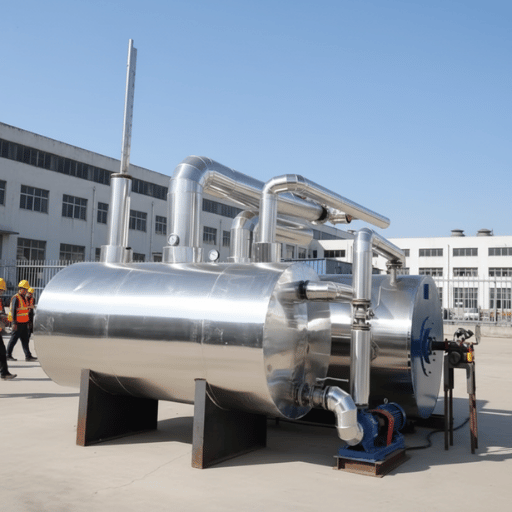
A large-scale style cleaning may involve systems operating a high-flow technology to clear systems, which impacts quality, speed, and cost in a direct manner.
Heat Exchanger Bundle Cleaning
Shell-and-tube heat exchangers are highly susceptible to equipment fouling. cleaning on the tube-side is typically accomplished with high-pressure water lances or chemicals circulation. Removing deposits from the shell-side space among tubes is a more difficult challenge due to overly constrictive geometry.
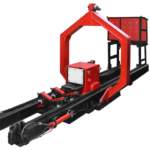
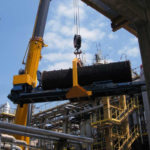
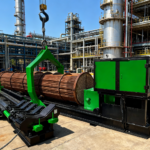
The BOSHIYA Outside Bundle Cleaner (offered by remote-operate system) provides 1,500 bar (21,750 PSI) water pressure directly to the exterior surfaces of the tube bundle. Published field data indicates that this exchanger cleaning equipment outperforms manual cleaning of the bundle by 3 times while reducing costs by about 50%. Remote operation also reduces worker injury risk from pressurized ( jet ) water.
For refineries processing heavy crudes, running coker units produces dense coke and asphaltene deposits which drops out on shell-side surfaces. The Outside Bundle Cleaner handles these deposits.
Column and Tower Cleaning
Distillation columns and reactor vessels: various methods are used inside the vessels. Trayed columns can be piped for a vapour treatment, and given water -washes of every tray. Filled columns should be packed removed for off-site cleaning, and then the vessel shell can be cleaned by chemical spray or high-pressure water.
Tank Cleaning
Storage tanks and process drums are loaded with sludge, scale, and heavy hydrocarbon rags. Automated tank cleaning nozzles shoots chemical solutions or hot water in an automated pattern over all surface bringing prodigious amounts of slurry. This slurry is pumped to a recirculation system that recovers reusable hydrocarbons and concentrates the waste.
Supporting Equipment
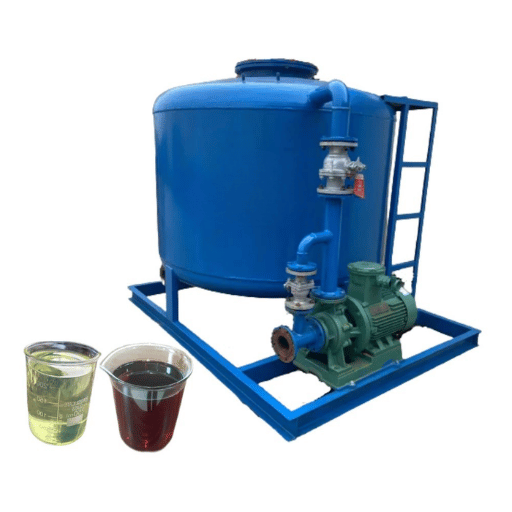
High pressure Water Jetting trucks (up to 40000 PSI) perform surface prep+heavy deposits. Vacuum trucks remove sewer sludge and liquid waste. Chemical recirculation skids general purpose self-contained units with pump pair, heater, strainer pairs and dosing Network were fitted with closed loop circulation capability.
Many refineries now filter and recondition chemical solutions (circuits) for different sets of exchangers before disposal; reducing both cost+volume of waste. Many operators reuse reconditioned chemistry on several exchangers before final disposal.
1,500 bar
Operating Pressure
3x Faster
vs. Manual Cleaning
50%
Cost Reduction
Safety and Regulatory Compliance During Turnaround Cleaning

Safety during turnaround cleaning is covered by federal regulation, industry standards, and each company’s technical procedures. Non-compliance can lead to OSHA citations or even a fatality.
Confined Space Entry After Decontamination
Prior to access to any worker to a vessel or exchanger shell, every atmospheric contaminant hazard has to be excluded. According to OSHA 1910.146, a written confined space entry program providing for atmospheric testing, ventilation, attendant coverage, and rescue procedures has to be established. Entry permits must record LEL below 10%, oxygen between 19.5-23.5%, H2S below 10 ppm and benzene below 0.5 ppm short-term.
Continuous Atmospheric Monitoring
Gas conditions within equipment may fluctuate as residual hydrocarbons off-gas from surfaces of the metal. API 2015 requires the continuous monitoring of the atmosphere during entry. Multi-gas detectors keep by each entry team member emit alarms if deteriorating conditions are detected.
At each shift change, the readings need to be confirmed.
Benzene-Specific Requirements
OSHA 1910.1028 specifies a benzene PEL of 1 ppm (8 hour TWA) and STEL of 5 ppm over 15 minutes. EPA designates benzene as a Carcinogenic Group A and NIOSH recommends a REL of 0.1 ppm. The air filter, chemical decontamination, is the primary control to accomplish this before entering the vessel.
PPE and Environmental Controls
Workers using handling cleaning chemicals must wear suits, gloves, face shields and RESPIRATORS with chemical resistant materials. Spent solutions must be neutralized, tested and thrown away according to site waste disposal plan. API occupational safety guidelines outline the requirements for chemical handling during turnaround operations.
Having purpose-built cleaning tools for exchanger maintenance reduces worker contact with toxic chemicals or high-partial-pressure equipment according to the hierarchy-of-control model the OSHA and API both recommend.
Cost Factors and Timeline for Refinery Turnaround Cleaning

Existing cleaning solutions for turnaround costs depend on unit size, fouling severity, and refinery placement. Understanding the cost breakdown helps managers budget and compare options.
What Drives Turnaround Cleaning Costs
Primary cost drivers include:
- equipment count: Each vessel, exchanger, and piping circuit increases labor, chemical, and time costs.
- Fouling severity: Light hydrocarbon films clean more rapidly than calcified coke, inorganic scale, or polymerized deposits.
- chemical amount: Premium proprietary chemistry at $15-50 per gallon. Larger equipment means more solution required.
- Crew size: A medium-unit crew involves 15-30 technicians on 12-hour schedules. Remote-sites increase per diem charges.
- Waste management: Hazzardous waste specifies much higher management costs.
Duration Benchmarks
A full refinery turnaround before re-start takes 20-45 days. Cleaning takes the first 3-7 days. Recent examples:
35–45 days
Deer Park Refinery TAR
47 days
Co-op Regina Refinery
$80M+
IOL Nanticoke TAR Budget
Chemical cleaning more often reduces turnaround completion versus mechanical-only reduction. Successfully opens the path to 12-36 hrs earlier, chemical processes according to the critical path. With lost production worth $500,000 to $1 million per day, even gaining 1 day ends up feasible.
Evaluating Service Providers
When selecting a cleaning contractor or tube bundle cleaning systems, require evidence document: before-and after cleanliness, time-to-safe-entry, references. Do not expect lowest quote to result in best overall value as overruns cost millions daily.
For the complete cleaning inventory, look through our cleaning equipment catalog, then explore how automated bundle cleaning meets your turnaround plan.
Frequently Asked Questions
What is a refinery turnaround?
View Answer
A refinery turnaround is a planned shutdown of a process unit for maintenance, inspection, and repair. They happen every 2-5 years per unit, occupying 20-45 days and decontaminating, pulling, opening, inspecting, repairing, then returning to service.
How much does a refinery turnaround cost?
View Answer
Costs range from $10 million for a single unit to over $100 million for a full-refinery turnaround. The IOL Nanticoke turnaround budget exceeded $80 million. Lost production adds $500,000 to $1 million per day. Chemical cleaning costs make up roughly 5-15% of the total turnaround budget, but schedule overruns from inadequate cleaning carry a far greater cost impact.
How long does a refinery turnaround take?
View Answer
Most run 20 to 45 days total. Cleaning takes the first 3 to 7.
What is the difference between a shutdown and a turnaround?
View Answer
A shutdown is any stoppage. A turnaround is planned with a defined scope.
Why is refinery turnaround cleaning necessary?
View Answer
It removes toxic materials – hydrocarbons, H2S, pyrophoric iron sulfide, benzene – from equipment before worker entry. Without proper cleaning, confined space entry is often fatal. OSHA recorded 1,030 confined space deaths between 2011 and 2018. The process also removes fouling that degrades heat transfer and throughput during the subsequent operating cycle, which can force an early unplanned shutdown if left unchecked.
What can you do to prepare for a safe refinery turnaround?
View Answer
Start 6 to 12 months ahead. Define cleaning scope per equipment, pre-order chemicals, plan waste permits, mobilize crews before shutdown, develop permit-to-work procedures. Ensure cleaning program is managed by a dedicated turnaround cleaning coordinator who reports directly to the turnaround manager.
Why do refineries use chemical decontamination during turnarounds?
View Answer
Speed. Chemical degas drops LEL from above 100% to below 1% in 8 to 12 hours instead of 24 to 48 for steam alone.
Need Turnaround Cleaning Equipment?
Connect your team to automated bundle cleaning systems on your next refinery turnaround.
Our Perspective
BOSHIYA Group has over 110 years in industrial manufacturing, with a maintenance equipment tube bundle cleaning division. We write about refinery turnaround cleaning because our refineries engineers connect how to remove exchanger fouling during turnarounds directly with refineries queries. Below is field expertise gained from worldwide petroleum and petrochemical plants.
References & Sources
- Confined Spaces: Hazards and solutions – OSHA
- Petroleum refinery process safety Management National Emphasis Program – OSHA
- Benzene Standard 1910.1028 — OSHA
- Benzene – NIOSH Pocket Guide to chemical Hazards – CDC/NIOSH
- Occupational safety in refineries – API
- API 2015: Requirements for Safe Work in Inert Confined Spaces – API
- Refinery Turnarounds 101 — AFPM
- Benzene Hazard Summary — EPA
- pyrophoric Iron Sulfide Research – MDPI Sustainability
![Polypropylene Resin: Grades, Types & Selection Guide [2026]](https://boshiya.com/wp-content/uploads/2026/05/0-150x150.webp)