Get in Touch with BOSHIYA

Oil Refinery Equipment &
Petroleum Refining Solutions
BOSHIYA Group designs and builds the equipment that keeps oil refineries running — from crude distillation units and FCC reactors to pressure vessels, heat exchangers, and full modular refinery packages. Over a century of engineering. Delivered to 40+ countries.
Request a Quote
About the Manufacturer
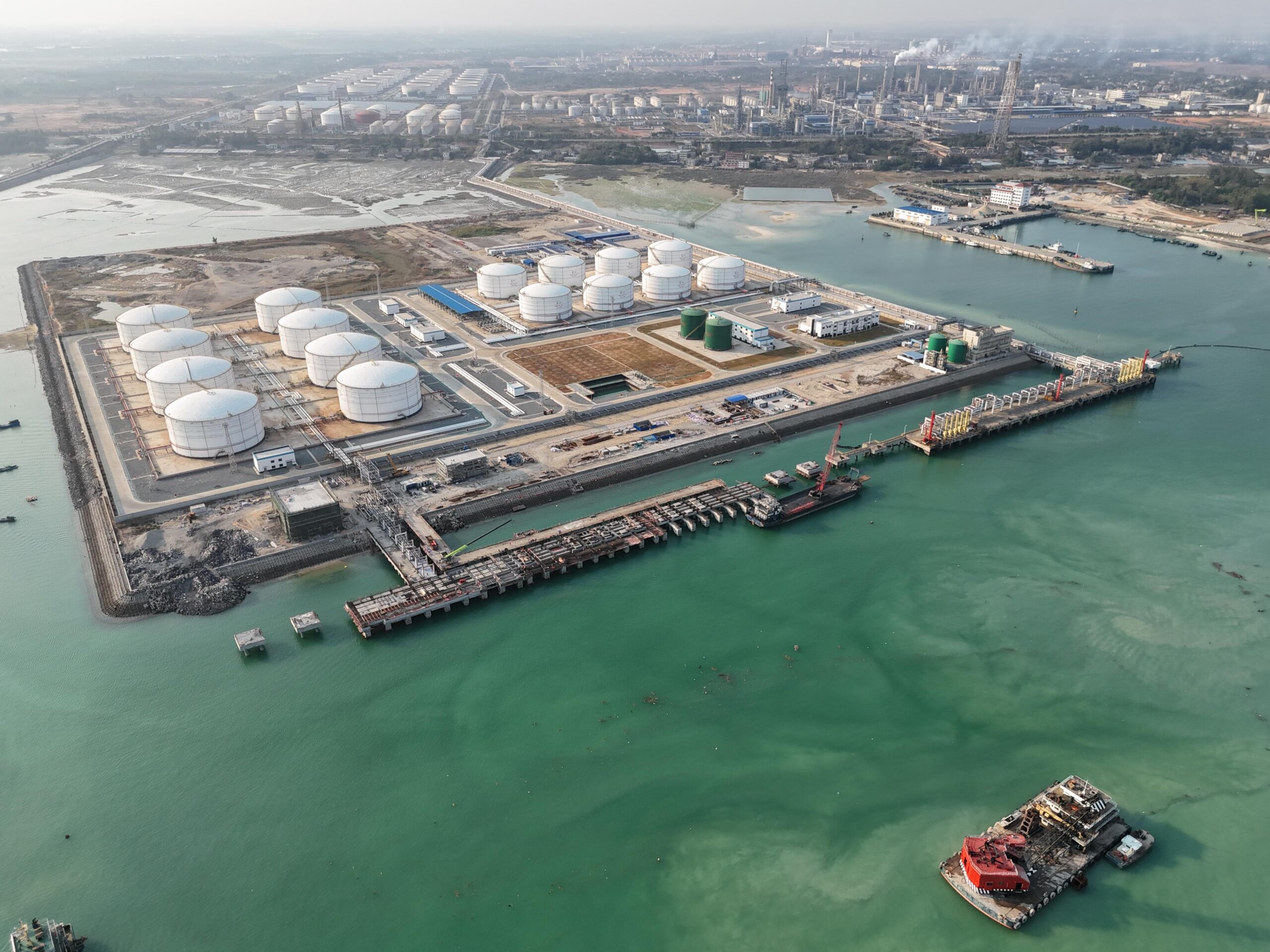
BOSHIYA Group — Oil Refinery Equipment Manufacturer & Supplier
Look, there are a lot of companies that stamp “refinery equipment” on their website and call it a day. We’ve been doing this since 1915. Not always refinery work — the first few decades were mostly boilermaking and structural steel — but by the 1960s we were fabricating our first distillation columns and pressure vessels for petroleum refineries across East Asia. That history matters when you’re buying equipment that runs at 400°C and 50 bar for years on end.
Fabrication Capability
Today BOSHIYA operates three fabrication facilities with a combined shop floor of about 120,000 square meters. We hold ASME U and U2 stamps, API monograms for key product lines, CE/PED certification for European markets, and ISO 9001 across all plants. Our annual output capacity sits around 60,000 metric tons of finished equipment — reactors, columns, heat exchangers, storage tanks, pipe spools, the works.
Global Engineering Team
We’ve shipped to 43 countries at last count. The Gulf states, West Africa, Southeast Asia, Central Asia, South America. A lot of repeat customers, which honestly tells you more than any certification badge can. The engineering team is about 85 people — process, mechanical, piping, electrical, instrumentation — and we keep a full-time QA/QC department with Level III NDE examiners on staff. Not subcontracted. On staff.
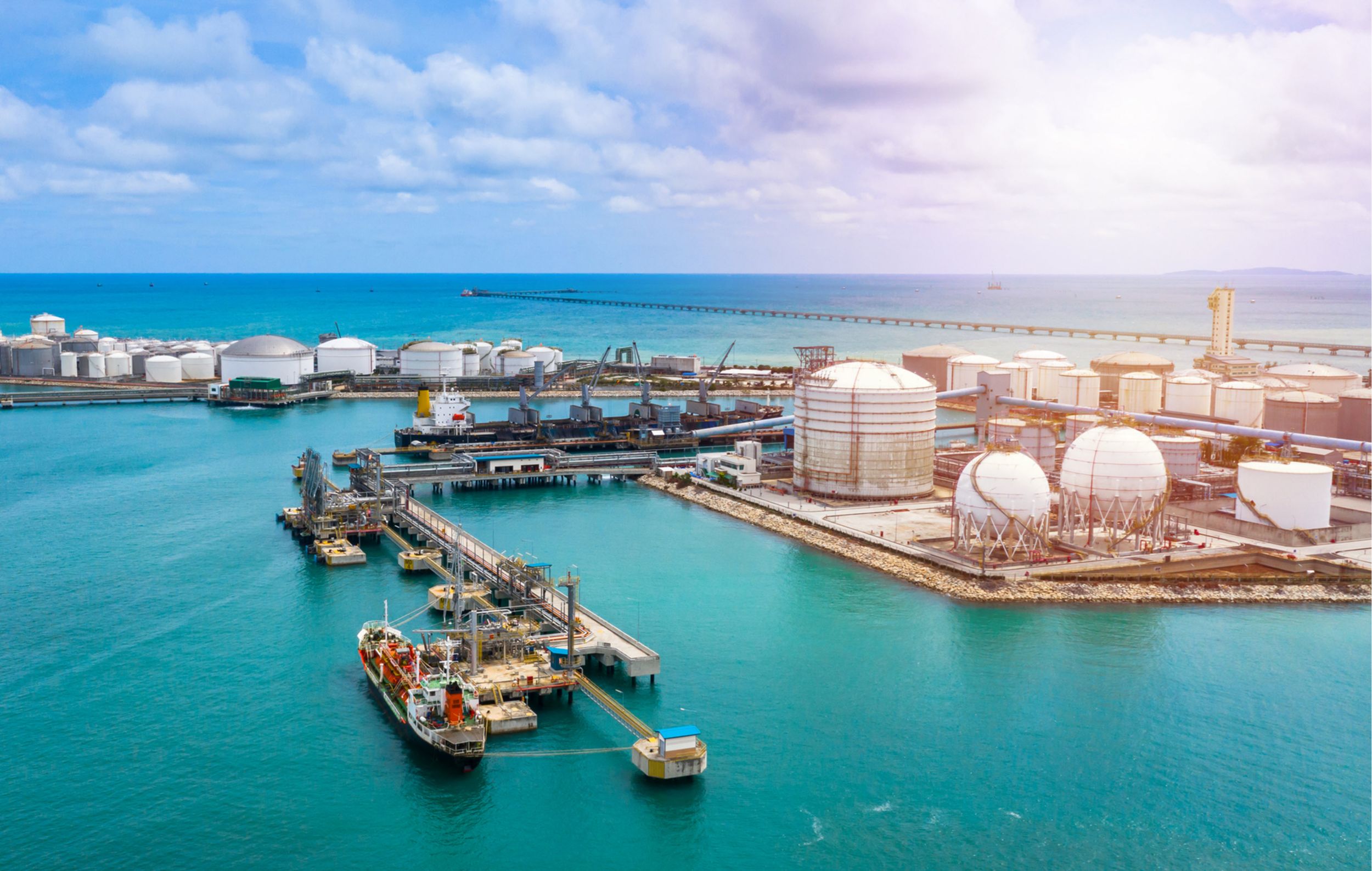
Fabrication Shop / Unit 03
Oil Refinery Process Equipment — From Distillation to Dispatch
Every refinery is different. A 5,000 bpd modular plant in Nigeria has almost nothing in common with a 400,000 bpd complex on the Gulf Coast — except that both need equipment that works the first time.
01 // Primary Separation
Crude Distillation Units (CDU)
Atmospheric columns, pre-flash drums, overhead condensers. Capacities from 1,000 to 100,000+ bpd. Carbon steel to Monel clad.
02 // Vacuum Processing
Vacuum Distillation Units (VDU)
Large-diameter vacuum columns with structured packing. We handle the full package: column, overhead system, transfer line, and heat exchangers.
03 // Conversion
FCC & Hydrocracker Equipment
Reactor vessels, regenerators, cyclone internals, and high-pressure separators. ASME Div 2 and NACE MR0175 compliant.
04 // Heat Transfer
Shell-and-Tube Heat Exchangers
TEMA BEM, BEU, AES configs. Carbon steel to titanium. Built up to 120 tons single-lift weight for refinery preheat trains.
05 // Pressure Equipment
Pressure Vessels & Reactors
Separators, knockout drums, hydrotreater reactors. Wall thickness up to 200mm. Cladding, overlay welding, and full internal lining.
06 // Modular Systems
Modular & Skid-Mounted Refineries
Complete packages (CDU + VDU + utilities) on transportable skids. 1,000 to 30,000 bpd. Designed for rapid installation in remote regions.
07 // Treating
Desulfurization & Hydrotreating
Reactor systems, hydrogen recycle loops, amine scrubbers, and sulfur recovery units for meeting ultra-low sulfur fuel specs.
08 // Reforming
Catalytic Reforming Equipment
Semi-regenerative and CCR reactor trains. Reform naphtha into high-octane gasoline components and hydrogen co-product.
09 // Storage & Blending
Storage Tanks & Blending Systems
API 650/620 tanks for crude and refined products. Floating/fixed roof designs. In-line blending systems for gasoline and diesel.
Configure Your Refinery Package
Match your crude slate and capacity targets to the right equipment list using our online tool.
Refinery Equipment Specifications & Capacity Ranges
Every number in this table comes from our actual fabrication records — not marketing brochures. If you need something outside these ranges, we should talk. Custom engineering is half of what we do.
| Equipment Type | Capacity / Size Range | Design Codes | Key Materials | Typical Lead Time |
|---|---|---|---|---|
| Crude Distillation Column | 1,000–100,000+ bpd | ASME VIII Div 1/2 | SA516-70, SS316L clad, Monel | 16–28 wks |
| Vacuum Column | Dia. up to 12m, length 50m+ | ASME VIII, TEMA | SA516-70, SS410S internals | 20–32 wks |
| FCC Reactor / Regenerator | 10,000–80,000 bpd feed | ASME VIII Div 2, NACE | SA387 Gr.11/22, refractory | 24–36 wks |
| Shell-and-Tube Exchanger | Up to 2,000 m², 120 ton | ASME VIII, TEMA R/C/B | CS, SS, duplex, Ti, Inconel | 12–24 wks |
| Pressure Vessel (General) | Dia. up to 7m, wall 200mm | ASME VIII Div 1/2, PED | SA516, SA387, SS, clad | 10–20 wks |
| Hydrotreater Reactor | 5,000–60,000 bpd | ASME VIII Div 2, API 934 | 2.25Cr-1Mo-V + SS overlay | 20–32 wks |
| Modular Refinery Package | 1,000–30,000 bpd | ASME, API, ATEX opt | Various per unit | 8–14 mos |
| Storage Tank (API 650) | 100–100,000 m³ | API 650/620 | Carbon steel, SS304 | 8–16 wks |
Wholesale Oil Refinery Equipment — OEM, EPC & Fleet Supply
About 60% of our volume goes through EPC contractors and engineering firms — companies like Technip, Saipem, and regional EPCs. They don’t buy one vessel at a time. They buy entire equipment lists for refinery construction or turnaround projects.
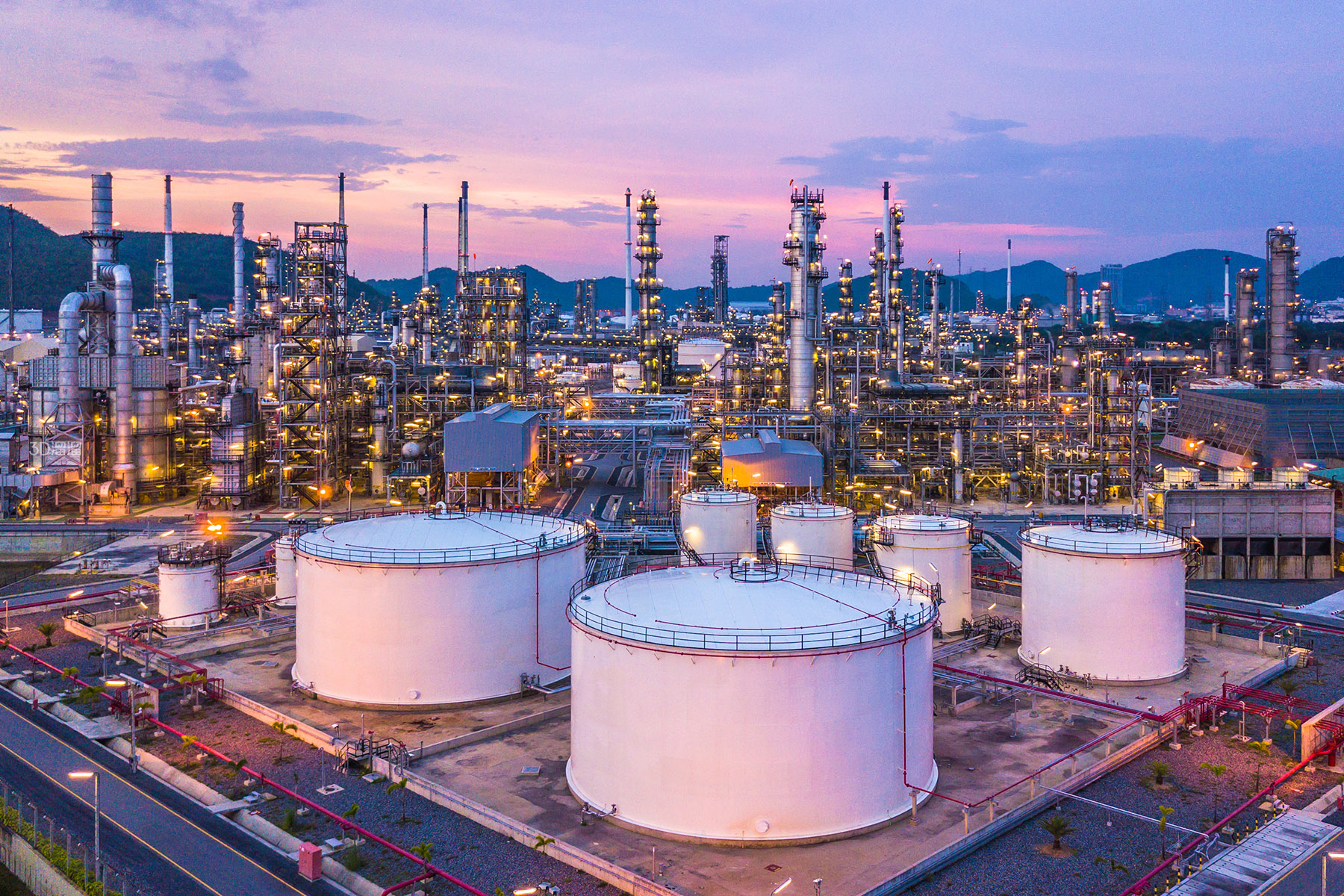
How We Work With EPCs
An EPC wins a contract (e.g., a 50,000 bpd refinery). They issue a requisition package — maybe 40 to 120 line items. We quote the lot, negotiate on the heaviest items, and lock in a fabrication schedule that maps to their erection sequence. Phased delivery means nothing sits in a laydown yard for six months collecting sand.
Fleet Buyers & OEM Partnerships
For repeat customers, we offer blanket pricing on standard vessel designs. If you order the same separator spec across multiple projects, we keep drawings on file and pre-qualify materials, cutting lead times by 20–30%. For OEM partners with proprietary designs, we fabricate strictly to your drawings under your QA protocol.
MOQ Policy Flexible
Heavy Reactors: MOQ = 1 unit.
Standard Exchangers: Typically MOQ = 3 units (to justify production run).
Modular Packages: Always project-specific, no minimums.
Problems We Solve for Oil Refineries — And the Projects That Prove It
Refineries don’t call us when everything is going well. They call when a turnaround deadline is slipping or when they need 86 pressure vessels. Here are the real scenarios we handle.
⚠ The Problem
Turnaround Deadlines With Zero Margin
Refineries lose $500k to $2M per day of unplanned downtime. When a turnaround window is 28 days, you can’t afford equipment that shows up on day 29.
Our Approach
We stage critical spares, run parallel fabrication streams, and ship pre-tested assemblies to minimize on-site work.
✓ PROJECT EVIDENCE: GULF COAST CDU
Delivered 42 valve trays & 6 re-tubed exchangers in 19 days. Unit back online 2 days ahead of schedule.
⚠ The Problem
Vendor Quality You Can’t Verify From 8,000 Miles Away
Overseas buyers worry about getting equipment that doesn’t match the spec. We’ve seen competitors ship vessels with undocumented material substitutions.
Our Approach
Third-party inspection from day one (Lloyd’s, BV, TUV). Full MDR with real-time photo documentation. You can send your own QA team — we clear the schedule for them.
⚠ The Problem
Modular Refinery Failing in Tropical Conditions
Modular refineries designed for temperate climates often fail in West Africa and the Gulf — corrosion, overheating, and condenser fouling within the first year.
Our Approach
We spec for the environment, not the catalog. Duplex stainless for coastal overheads, oversized air-fin coolers for 48°C ambient.
✓ PROJECT EVIDENCE: NIGERIA MODULAR PLANT
Hit 4,800 bpd throughput within 6 months of commissioning. Zero thermal derating issues.
⚠ The Problem
Aging FCC Internals Bleeding Money on Catalyst Loss
Cyclone efficiency below 99.5% sounds fine, until you calculate $2 million a year in lost catalyst at a 45,000 bpd feed rate.
Our Approach
Reverse-engineer OEM designs when drawings are lost. Fabricate complete Stellite hard-faced internals. Pre-assemble in shop.
✓ PROJECT EVIDENCE: SOUTHEAST ASIA
Improved efficiency: 99.5% → 99.92%. Installation completed in 9 days.
★ FEATURED CASE STUDY
86 Pressure Vessels for Gulf Conversion Refinery
The Challenge: A national oil company needed 86 ASME Div 1/2 vessels with NACE MR0175 compliance for a new 200,000 bpd refinery. The order sheet ran to six pages.
The Execution: Their QA team spent four days in our shop auditing welding procedures before the first cut. We delivered in eight phased shipments over 14 months. Two vessels were flagged during final radiography; we cut, re-welded, and re-documented immediately.
✓ FINAL RESULT
On-time delivery rate: 100%. All 86 vessels cleared site acceptance.
“We evaluated seven manufacturers for this package. BOSHIYA’s documentation quality and willingness to accommodate our QA protocols set them apart.”
— Project Manager, EPC Contractor
— Project Manager, EPC Contractor
What is a hydrocarbon and how does it relate to crude oil production?
Hydrocarbons are molecules built from hydrogen and carbon — they're the primary building blocks of crude oil. During crude oil production, what comes out of the ground is a mix of thousands of different hydrocarbon molecules. Refineries and petrochemical facilities separate, crack, and reform this mix into valuable products like gasoline, diesel, and feedstocks. Think of crude as raw ingredients and the refinery as the kitchen.
How does a distillation tower separate crude oil based on their boiling points?
Crude oil is heated to 350–370°C and fed into the tower. Components with lower boiling points rise and vaporize at the top (light naphtha, LPG), while heavier fractions condense lower down. Kerosene, diesel, and atmospheric residue are pulled at various tray levels 24/7. One column can separate crude into numerous petroleum products.
Why does a refinery run 24 hours a day, 365 days a year?
It's driven by economics; shutting down and restarting costs millions and can take over a week to stabilize. Continuous operation maximizes the capacity to process thousand barrels of crude oil per calendar day. A planned turnaround happens every 3 to 5 years and can cost between $50 and $500 million.
What safety and environmental risks are associated with oil refinery operations?
Risks include fires, explosions, and toxic exposure like hydrogen sulfide. Modern safety relies on gas detection, pressure relief, and emergency shutdown systems. Environmental risks involve air/water emissions and flaring. Investment in closed-loop systems and vapor recovery units captures what previously went to the flare stack.
What products come from an oil refinery besides gasoline and diesel?
Beyond fuels, refineries produce jet fuel, kerosene, heating oil, lubricant base stocks, asphalt, petroleum coke, and petrochemical feedstocks like naphtha and LPG. These feedstocks become raw materials for chemicals and plastics found in packaging and medical equipment.
How do refineries turn crude oil into various fuels?
The process involves separation (distillation) and conversion. Catalytic cracking and hydrocracking break heavy gas oil into lighter, cleaner fuels. Reforming boosts octane in naphtha for gasoline, while hydrotreating removes sulfur to meet emission standards.
How do different hydrocarbon molecules determine product quality?
Small, straight-chain molecules are ideal for gasoline, while branched and cyclic molecules affect octane. Larger molecules at the bottom of the column suit diesel, lubricants, or asphalt. Sulfur and nitrogen are impurities that must be removed via hydrotreating.
Who are the major players in refining and how do capacities affect supply?
Major operators include Marathon Petroleum, Valero, ExxonMobil, and Saudi Aramco. Jamnagar in India is the world's largest refinery at 1.24 million barrels per day. The U.S. has approximately 132 operating refineries with a combined capacity of ~18.4 million barrels per day. Refinery maintenance can impact regional gasoline prices within days.
![Polypropylene Resin: Grades, Types & Selection Guide [2026]](https://boshiya.com/wp-content/uploads/2026/05/0-150x150.webp)