Get in Touch with BOSHIYA

Since 1915 · ISO 9001 · CE Certified
Steel and Metal Plants — Design, Build, Modernize
BOSHIYA Group engineers and delivers complete iron and steel production plants. Blast furnace lines, EAF mini-mills, hybrid DRI-EAF facilities — from raw concept to first heat.
Request a Quote
340+
Projects Delivered
45
Countries Served
5M+
Tonnes Capacity
109
Years Operation
BOSHIYA Group: Steel Plant Manufacturer & Supplier With a Century of Experience
I’ve been in this industry long enough to watch it change — twice. The first shift happened in the late ’90s when mini-mills started eating into integrated producers’ market share. The second one is happening right now, and it’s bigger: the global push toward EAF-based steelmaking and decarbonization. BOSHIYA has been part of both.
We were founded in 1915. That’s not a marketing line — it means we’ve been building and modernizing steel plants through two world wars, multiple oil crises, the rise of China’s steel sector, and now the green steel transition. Our engineering centers in India, Ohio, and Indiana handle everything from initial feasibility studies through commissioning.
What Sets Us Apart?
Honestly, it’s not one thing. It’s the combination: metallurgical know-how (our team includes 40+ engineers with advanced degrees in ferrous metallurgy), a manufacturing base that can produce critical components in-house, and — maybe most important — the willingness to take on projects other firms walk away from. The Gujarat modernization we did in 2023? Three contractors turned it down. We said yes. It worked out.
Iron and Steel Production Plants: The Three Configurations That Matter
Steel production hit 1,883 million tonnes globally in 2024. If you’re planning a new plant or technology switch, you need to understand the fundamental differences in scale, investment, and market fit.
Integrated Steel Mill
BF-BOF Route
Starts with raw iron ore and coke. The blast furnace reduces ore to pig iron at 1,500°C+, then the basic oxygen furnace refines it. Massive scale required.
Best for: High-volume flat products, automotive-grade steel, markets with cheap ore supply.
CapEx (Greenfield)
$2-5 Billion
Output Scale
3-5M Tonnes/Yr
CO₂ Emission
~2.33 t/t
EAF Mini-Mill
Electric Arc Furnace
Melts scrap steel using electric arcs at 3,000°C+. No blast furnace needed. Footprint is a fraction of an integrated mill. 71.8% of US production is now EAF.
Best for: Long products, specialty steel, regions with scrap availability.
CapEx (Greenfield)
$300-600 Million
Timeline
14-20 Months
CO₂ Emission
~0.68 t/t
Hybrid DRI-EAF Plant
Low-Carbon Route
Combines Direct Reduced Iron (gas/hydrogen based) with EAF melting. Cuts energy by 15-25% vs cold-charge EAF. 42% of new capacity globally uses this tech.
Best for: Regions with cheap gas/H₂, premium grades, decarbonization targets.
Efficiency
-25% Energy Use
CO₂ Emission
1.37 to <0.5 t/t
Market Trend
High Growth
Not sure which configuration fits your project?
Our engineering team has designed all three. We’ll help you figure out what makes sense for your site and budget.
Steel Plant Capacity & Specification Comparison
Numbers matter in this business. A blast furnace with a 12-meter hearth performs nothing like one with an 8-meter hearth — and the downstream equipment has to match. Here’s how the three main plant types compare on the specs that actually drive procurement decisions.
| Parameter | Integrated Mill (BF-BOF) | EAF Mini-Mill | Hybrid DRI-EAF |
|---|---|---|---|
| Typical Annual Capacity | 2–8 million tonnes | 0.3–1.5 million tonnes | 1–3 million tonnes |
| Primary Feed | Iron ore + coke | Scrap steel | Iron ore pellets + gas/H₂ |
| Furnace Temperature | BF: 1,500°C / BOF: 1,600°C | 3,000°C+ (arc) | DRI: 900°C / EAF: 3,000°C |
| Power Consumption | ~18–22 GJ/tonne | 430–460 kWh/tonne | 350–400 kWh/tonne (hot charge) |
| CO₂ Emissions | 2.33 tCO₂/tonne | 0.68 tCO₂/tonne | 1.37 (gas) / <0.5 (H₂) |
| Capital Cost (Greenfield) | $2–5 billion | $300–600 million | $800M–1.5 billion |
| Time to First Heat | 36–60 months | 14–20 months | 18–28 months |
| Workforce | 2,000–5,000 | 300–800 | 500–1,200 |
| Footprint (acres) | 500–2,000 | 50–200 | 150–500 |
| Product Focus | Flat: HRC, CRC, coated coils | Long: rebar, bars, wire rod | Both flat and long products |
Note: A quick note on that power consumption column. EAF numbers look low compared to integrated mills, but that’s because the BF-BOF figure includes the energy embedded in coke production. Apples-to-apples comparisons require total energy accounting — something we do for every feasibility study. The difference is still significant, just not as dramatic as the raw numbers suggest.
Global Steel Production: Where Things Stand in 2025
World crude steel output in 2024 was 1,883 million tonnes. China produced the bulk of that — roughly 1,005 million tonnes, though December 2025 data shows a 10.3% year-over-year decline in monthly output. India is the counter-story: 14.8 million tonnes per month in late 2025, up 10.1% year-over-year. The US sits at 6.9 million tonnes monthly, with EAF dominating at 71.8% of total raw steel production.
Japan’s monthly output runs about 6.6 million tonnes — down 4.8% — as producers like JFE Steel and Kobe Steel plan EAF replacements for aging blast furnaces.
The Industry Shift
The global iron and steel industry is shifting fast. Secondary steel — material produced from scrap through EAF — now accounts for 29.1% of output, up from 25% a decade ago. Major players are adapting. Cleveland-Cliffs, the largest flat-rolled steel producer in North America, operates multiple EAF and BF-BOF lines. Nippon Steel in Japan — the world’s fourth-largest producer — recently announced EAF investments at several production facilities.
The trend line is clear enough. EAF capacity has grown 11% since 2020, with another 24% increase projected by 2030. Half of all steelmaking capacity currently under development uses EAF technology. If current projects proceed as planned, the global fleet could hit 36% EAF steelmaking by 2030 — close to the IEA’s 37% target for its net-zero pathway. According to World Steel Association data, the shift is accelerating annually.
Strategic Evaluation: What about mothballed plants?
We get asked this more than you’d think. Restarting a mothballed steel mill — especially one with an open hearth furnace or older BF — requires serious evaluation. Ownership transfer, environmental compliance, operational readiness assessments, equipment integrity checks.
Sometimes it makes sense to purchase and retrofit a dormant facility rather than build greenfield. Sometimes it doesn’t. We’ve evaluated over 30 mothballed sites in the last decade and recommended proceeding on about a third of them. The rest? Better to start fresh.
The Rule of Thumb: If the structural steel, foundations, and raw materials handling are still sound, retrofitting can save 30-40% vs. greenfield. If the core process equipment needs replacing anyway, the savings evaporate.
Comparison Tool
Blast Furnace vs Electric Arc Furnace
Side-by-side comparison of the two dominant steelmaking routes. Toggle to include the hybrid DRI-EAF option.
Need help deciding which steelmaking route fits your project? BOSHIYA has built all three — let us run the numbers for your specific situation.
Request a Recommendation →Wholesale Steel Plant Equipment & Turnkey Supply
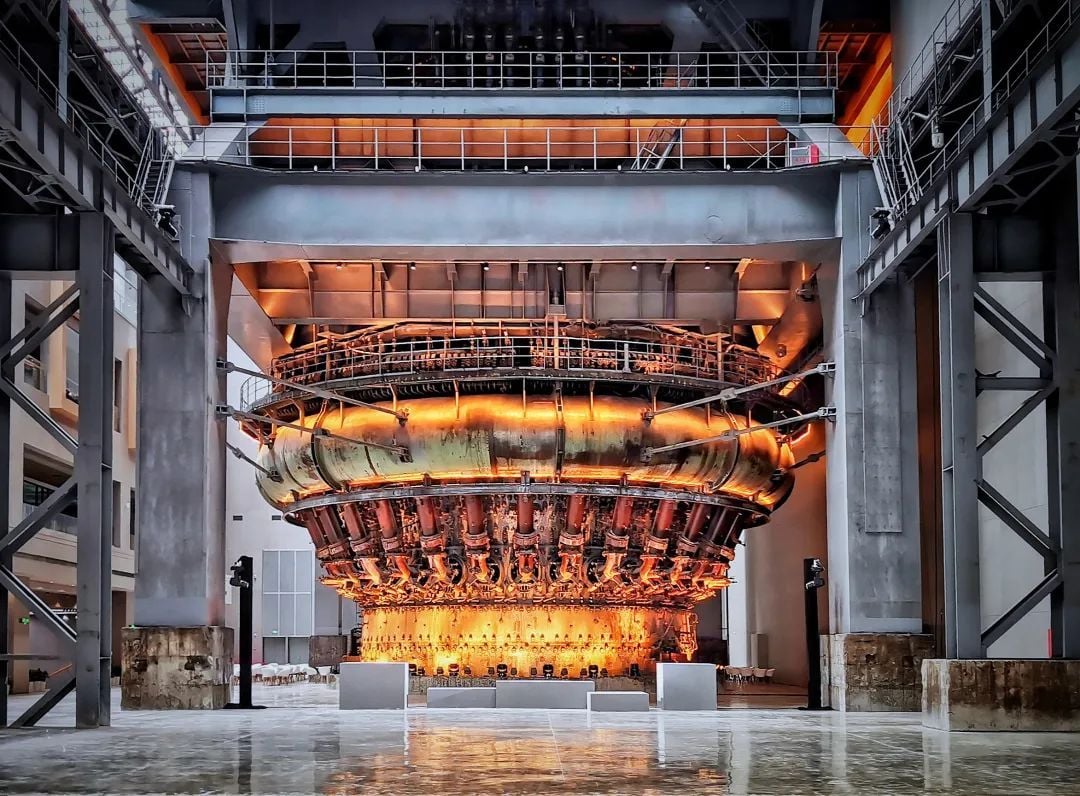
Here's something people don't always realize: BOSHIYA doesn't just design plants. We manufacture key components — furnace shells, electrode arms, ladle turrets, continuous casting molds, rolling mill stands — in our own production facilities.
/// Component Lead Time Analysis
*Avg. reduction in project timeline for critical path items.
Turnkey Plant Delivery
Full scope from engineering through commissioning. BF relines, EAF greenfield builds, hybrid DRI-EAF installations. We handle permitting support, civil works coordination, equipment supply, erection, and startup. Single point of responsibility — no finger-pointing between contractors.
Equipment Supply (OEM & Custom)
Individual equipment packages: furnace assemblies, casting machines, rolling mill components, water treatment systems, fume extraction, and electrical systems. OEM replacement parts for existing plants. Custom engineering for non-standard requirements — from 20-tonne ladle furnaces to 150-tonne DC EAFs.
Fleet & Bulk Orders
Multi-plant procurement programs for groups operating several mills. Standardized equipment packages reduce per-unit cost by 12-18%. We currently supply fleet programs to three steel groups managing 6+ plants each. MOQ depends on equipment type.
Modernization & Upgrades
Existing plant too slow, too dirty, or too expensive to run? We do mid-life upgrades: adding continuous casting to ingot-based lines, upgrading gauge control on hot strip mills, converting BF-BOF to EAF, installing DRI capacity. Most upgrades pay back within 2-4 years.
Real Problems, Real Steel Plant Solutions
Every project starts with a problem. Sometimes it's a furnace past its campaign life, sometimes a mandate to cut emissions. Here are the scenarios we deal with most often.
/// SCENARIO 01: AGING ASSET
Problem: Aging Blast Furnace, Rising Costs
Coke rates climbing year over year. Hot metal quality inconsistent. Reline overdue but budget is tight. This is easily the most common call we get.
Our Approach: Full diagnostic first (refractory mapping, cooling audit). Then a targeted reline plan addressing worst areas without a complete rebuild.
Project Example: Gulf Coast, USA
> 12m hearth BF reline in 47 days
> Coke rate: 520 → 465 kg/t
> Daily output: 3,800 → 4,400 tonnes
> Life projection: 14+ years
> Coke rate: 520 → 465 kg/t
> Daily output: 3,800 → 4,400 tonnes
> Life projection: 14+ years
/// SCENARIO 02: SPEED TO MARKET
Problem: Need Capacity Fast — Greenfield EAF
Market window is open. A new plant usually takes 3-4 years. But an EAF mini-mill — with the right team and pre-planning — can go from dirt to first heat in under 15 months.
Our Approach: Parallel-path execution. Foundation work starts while equipment is fabricated. Critical-path components pre-ordered during negotiation.
Project Example: Vietnam Greenfield
> 120t AC EAF: 14 months to first heat
> Capacity: 650k t/y reached in 18 mos
> Power: 445 kWh/t (beat avg of 460)
> Scrap yield: 91.2%
> Capacity: 650k t/y reached in 18 mos
> Power: 445 kWh/t (beat avg of 460)
> Scrap yield: 91.2%
/// SCENARIO 03: ZERO DOWNTIME
Problem: Modernize Without Stopping Production
The plant has to keep running. Every hour of downtime is lost revenue. You can't just shut everything down for a year.
Our Approach: Obsessive workflow mapping. Heavy lifts happen during scheduled windows. We've swapped finishing stands in 72-hour shutdowns.
Project Example: Gujarat, India
> Max single-point downtime: 72 hours
> Output: 1.2M → 1.55M tonnes/yr
> Min gauge: 2.0mm → 1.2mm
> Rejection rate: 4.1% → 1.8%
> Output: 1.2M → 1.55M tonnes/yr
> Min gauge: 2.0mm → 1.2mm
> Rejection rate: 4.1% → 1.8%
/// SCENARIO 04: GREEN TRANSITION
Problem: Decarbonization Mandate (BF to EAF)
Producers are facing mandates to cut CO₂ by 40-50%. The math points to EAF, but the conversion logistics are complicated.
Our Approach: Redesign the entire material flow (DRI, hot charging, electrical). Keep BOF online as backup during transition.
Project Example: Gulf Region Hybrid
> BF-BOF to 2M t/y DRI + 150t DC EAF
> Timeline: 18 months (Target 20)
> CO₂: 2.1 → 1.1 t/t (48% cut)
> Power: 380 kWh/t (Hot DRI)
> Timeline: 18 months (Target 20)
> CO₂: 2.1 → 1.1 t/t (48% cut)
> Power: 380 kWh/t (Hot DRI)
Steel Products & Grades We Help Our Clients Produce
The equipment we build determines what our clients can sell. That's why we don't just think about tonnage — we think about the product mix. Here are the capabilities across our installed base.
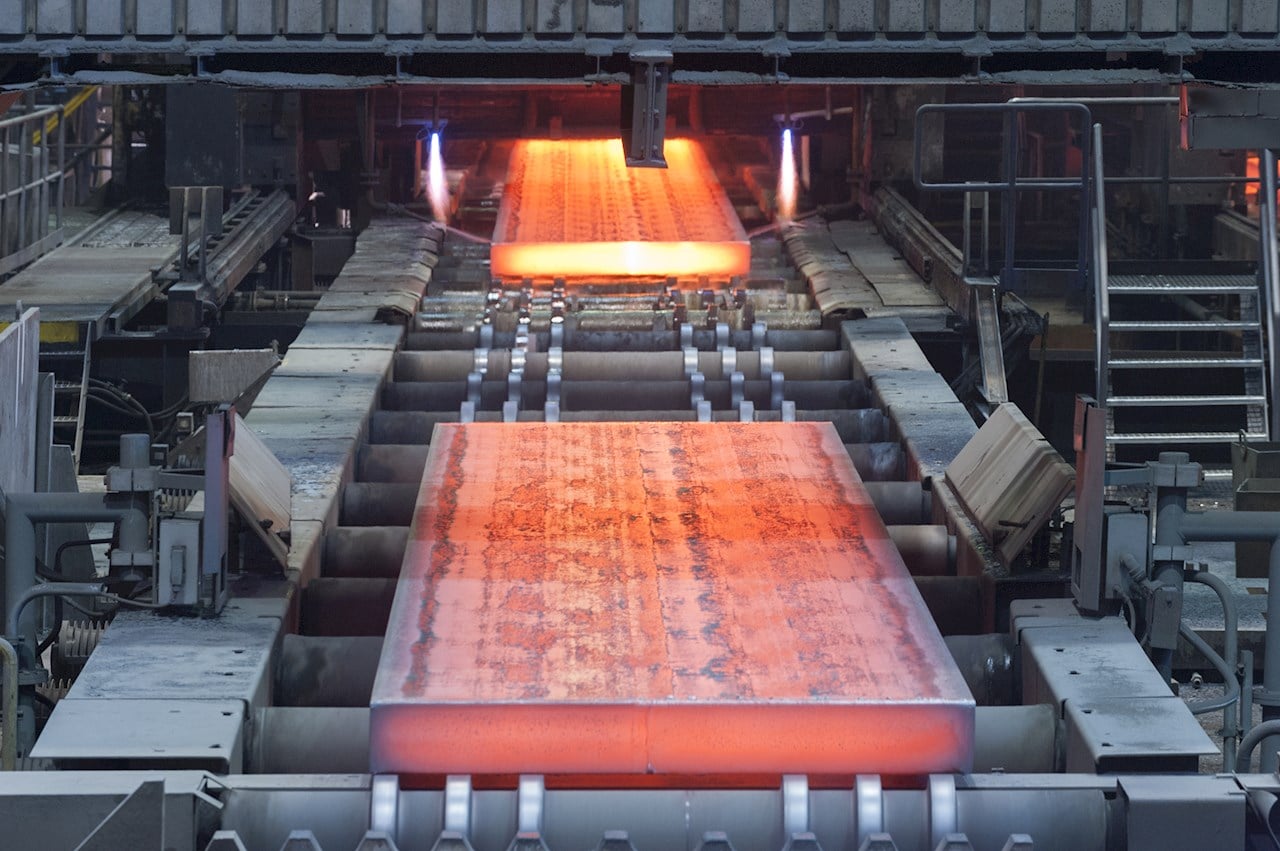
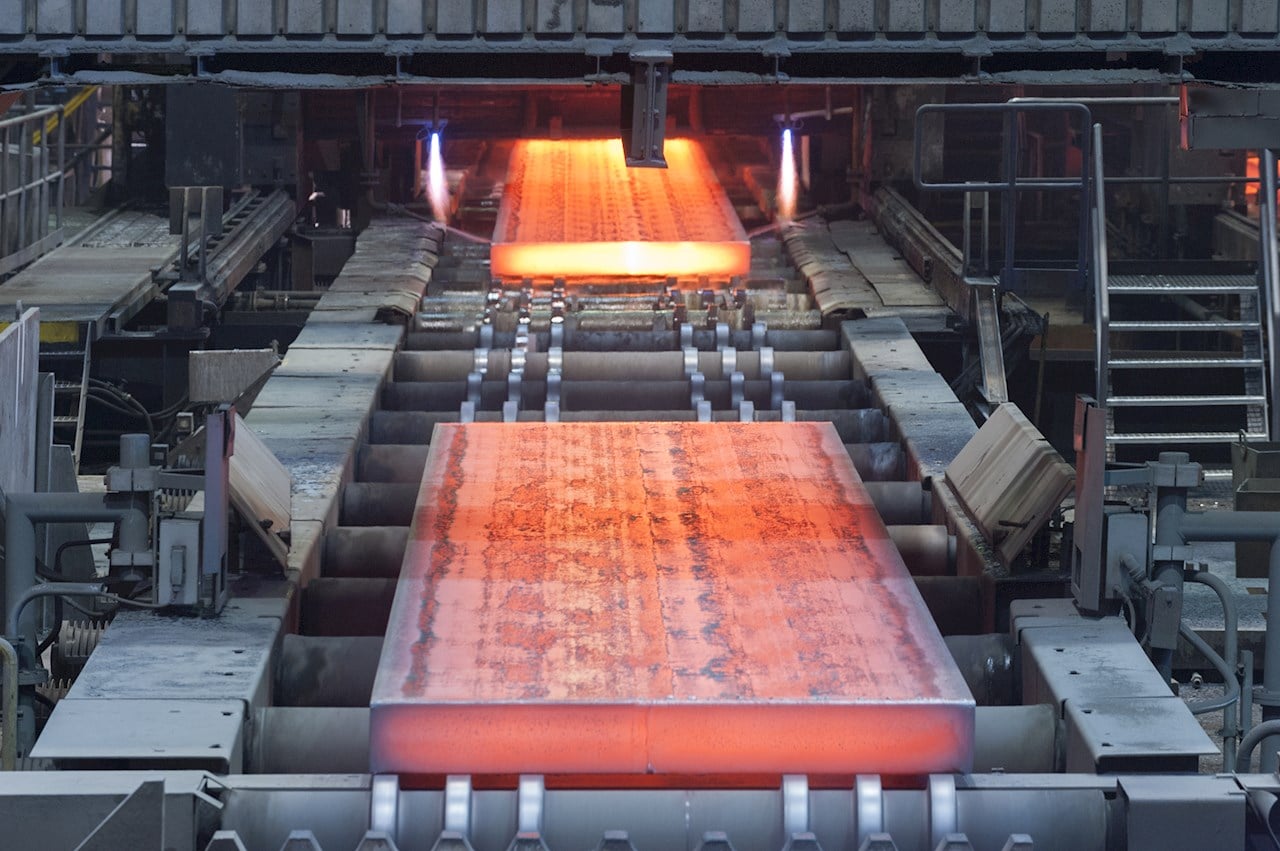
 /// Flat Product Application
Flat Products
- Output Types
- HRC, CRC, galvanized sheets, heavy plate.
- Capabilities
- Gauge: 0.3mm – 150mm
Width: Max 2,100mm - Applications
- Automotive body panels, construction cladding.
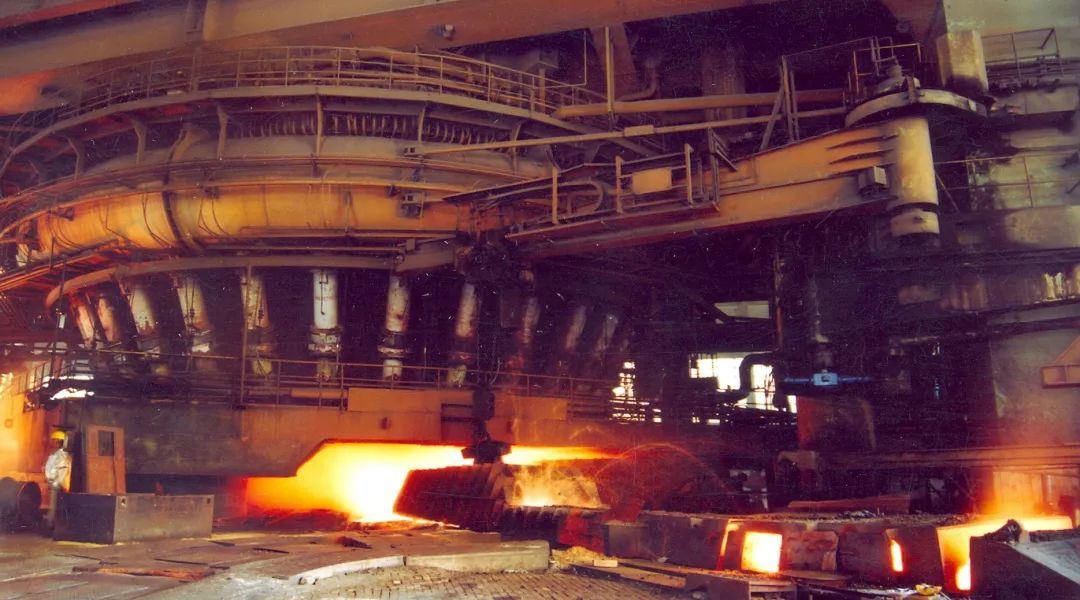 /// Structural Application
Long Products
- Output Types
- Rebar, structural beams (I, H), wire rod, pipe.
- Capabilities
- Size: 5.5mm rod – 1,000mm beam
- Applications
- Infrastructure, concrete reinforcement.
 /// Specialty Forming
Specialty & Stainless
- Material Grades
- Ferritic, austenitic, duplex stainless. HSLA.
- Performance
- Wear Plate: 400-500 BHN
- Process Note
- Requires tight casting & rolling process control.
 /// Downstream Fabrication
Semi-Finished
- Product Forms
- Slabs, billets, and blooms for rerollers.
- Dimensions
- Slabs: 800-2,100mm
Billets: 100-200mm sq - Casting Tech
- Straight-mold or curved-mold configurations.
Sustainability in Steel Production: What Actually Works
I'll be direct about this. Steel manufacturing accounts for roughly 7-8% of global CO₂ emissions. That's not a number anyone in this industry can ignore. We focus on sustainability engineering, not marketing.
EAF-DRI Integration
The single biggest emissions reduction available today. Replacing a BF-BOF line with DRI-EAF cuts CO₂ from 2.33 to 1.37 tonnes per tonne of steel on natural gas, and below 0.5 with hydrogen-based DRI. We've completed three DRI-EAF integrations in the last four years — the most recent one in the Gulf achieved a 48% emissions cut. The technology is proven. It's the execution that's hard.
Scrap & Circular Steel
Scrap-based EAF steelmaking produces 0.68 tCO₂ per tonne — 71% below BF-BOF. Global ferrous scrap consumption hit 588 million tonnes in 2023. The constraint isn't technology — it's scrap availability and quality. We design our EAF plants to handle mixed-quality scrap with sorting and pre-processing systems that most competitors skip, addressing the bottleneck in developing regions.
Heat Recovery & Energy Efficiency
Waste heat from EAF off-gas, BF top-gas, and coke oven gas — there's a lot of energy leaving a steel plant that doesn't need to. We integrate waste heat boilers, regenerative preheating on combustion systems, and hot-charging DRI (feeding DRI into the EAF at 600°C+ instead of ambient temperature, which saves 15-25% on melting energy).
The Path Forward
The path forward includes hydrogen-ready furnace designs (we're building them now), oxy-fuel burners for reduced nitrogen and energy use, carbon capture on BF operations where replacement isn't yet feasible, and electrification of auxiliary processes. But I'm not going to pretend we've figured it all out. The honest truth is that decarbonizing steel fully will take decades and trillions of dollars. We're working on the parts we can control.
01
What are the main types of steel plants?
Three types cover about 99% of global steel production. Integrated mills run on the BF-BOF route — iron ore goes in one end, finished steel comes out the other. They're huge (2-8 million tonnes per year) and capital-intensive. Mini-mills use electric arc furnaces to melt scrap. Smaller footprint, lower emissions, faster to build. Then there's the hybrid approach — DRI fed into an EAF — which is gaining ground fast, especially in regions with cheap natural gas.
02
How much does it cost to build a steel plant?
It depends — a lot. An EAF mini-mill producing 500,000 to 800,000 tonnes per year typically costs $300-600 million. A large integrated mill with a blast furnace? You're looking at $2-5 billion. DRI-EAF hybrids fall somewhere in between — $800 million to $1.5 billion. Modernization projects range from $50 million to $800 million depending on scope.
03
What's the difference between BF-BOF and EAF steelmaking?
The short version: BF-BOF starts with iron ore, EAF starts with scrap (or DRI). BF-BOF uses a blast furnace to make pig iron from ore and coke, then a basic oxygen furnace to refine it. It produces 70% of the world's steel. EAF skips the blast furnace entirely. Electric arcs at 3,000°C melt scrap steel directly. Lower capital cost, much lower emissions (0.68 vs. 2.33 tCO₂ per tonne), faster startup time.
04
How long does it take to build an EAF steel plant?
Greenfield EAF plants take 14-24 months from groundbreaking to first heat. Our fastest was 14 months in Vietnam. Brownfield conversions can be faster: 10-18 months. Integrated mills with blast furnaces take much longer — 36-60 months. The critical path items are usually the main electrical supply and continuous casting machine.
05
What factors matter most for steel plant location?
In order of importance: raw material access (iron ore for BF, scrap for EAF), energy cost and grid capacity (EAF plants can draw 80+ MVA), water supply (2-5 cubic meters per tonne), logistics infrastructure (port or rail), labor market, and environmental regulations. Electricity pricing alone is a critical differentiator.
06
Can a blast furnace plant be converted to EAF?
Yes — and it's increasingly common. Tata Steel and JFE Steel are doing exactly this. We've done conversions in the Gulf region (BF-BOF to DRI-EAF hybrid) achieving a 48% cut in CO₂. Conversion timelines run 18-30 months. The main challenge is keeping some production running during the transition.
07
What is DRI and how does it fit into modern steelmaking?
DRI (Direct Reduced Iron) is iron ore reduced to metallic iron without melting, using natural gas or hydrogen. It's a clean feedstock for EAF steelmaking. DRI-EAF on natural gas produces about 1.37 tCO₂ per tonne of steel; with green hydrogen, that drops below 0.5. DRI accounts for 42% of all new ironmaking capacity under development.
08
What maintenance does a steel plant need?
Unplanned downtime runs $50k-$200k+ per hour. Major scheduled maintenance includes blast furnace relines (every 10-20 years), EAF refractory and electrode replacement, continuous caster segment maintenance, rolling mill roll changes, and water treatment upkeep. We offer long-term maintenance contracts and spare parts supply.
![Polypropylene Resin: Grades, Types & Selection Guide [2026]](https://boshiya.com/wp-content/uploads/2026/05/0-150x150.webp)