BOSHIYAと連絡を取りましょう


ポリマー MFI は、材料と試験条件が数値と一致する場合にのみ役立ちます。このガイドでは、樹脂バイヤー、研究室チーム、プロセス エンジニアに、メルトフローの結果を比較し、多くの不一致を調査し、サプライヤーからプラントへの引き渡しに耐えられるデータを要求する方法を示します。.
内容
ショー
2026年8月更新しました
ポリマー MFI は条件結合の質量流量の結果であり、一般に g/10 分の MFR として報告されます。. 防御可能な比較には、正確な材料、方法、温度、荷重、サンプル履歴、結果の種類が一致する必要があります。そうでない場合、2 つの数値は異なるテスト質問に答えます。.
クイックスペック
- 質量結果: MFR、通常は g/10 分で表されます
- ボリュームの結果: MVR は通常 cm3/10 分で表されます
- レビューされた現在の方法: ASTM D1238-26、ISO 1133-1:2022、および ISO 1133-2:2011
- 最良の使用: 好みの品質管理と調査
- 次の代用ではありません: レオロジー曲線、機械的テスト、組成分析、またはコンプライアンス記録
覚えておくべきこと
- ネイキッド MFI 値は、転送可能なポリマー特性ではありません。.
- MFI値の一致は、一致する本番動作を保証するものではありません。.
- MFI と MVR は異なる量です。変換には試験温度での溶融密度が必要です。.
- ニアリミットロットの処分には、代表的なサンプリング、測定の不確実性、および合意された決定ルールが必要です。.
ポリマー MFI が測定するものと測定しないもの
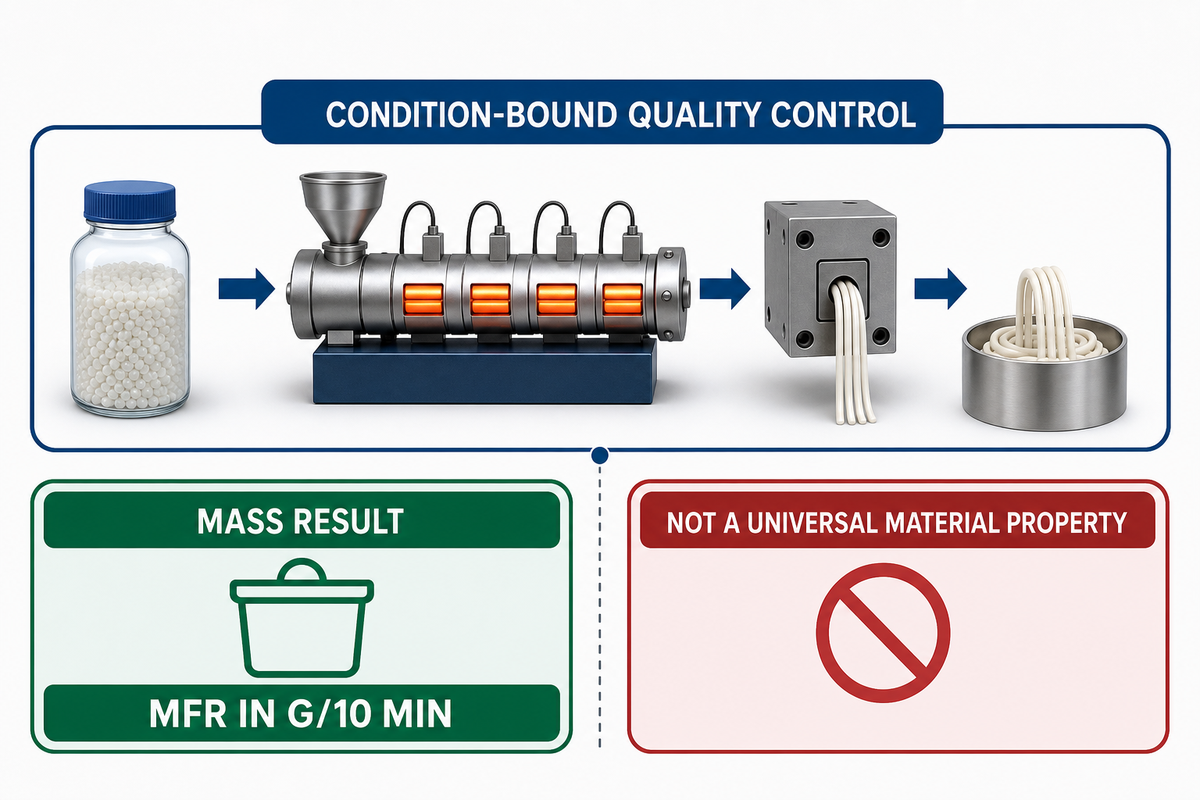
メルトフローインデックスは、定義された温度と負荷の下で正規化された 10 分間隔で指定されたダイを溶融熱可塑性プラスチックが通過する量を記録します。. これは経験的なものであるため、結果はテスト内の材料の応答を表すものであり、樹脂のすべての特性や生産ラインでの性能を表すものではありません。.
現在の専門用語では、MFI は通常、質量ベースで測定されるメルト フロー レート (MFR) の略語です。メルト フローを測定すると、装置、力、温度、タイミングを制御できるため、ポリマー プロセッサーに高速一貫性信号が与えられます。条件が一致するたびに、その結果は同じポリマー グレードのロットを比較するのに役立ちます。.
高分子科学では、MFI とポリマー特性の関係は状況に応じたままです。MFI は 1 つの条件下での流れを示しますが、機械的特性、ポリマーの加工ウィンドウ、分子量分布の広さ、およびポリマーのその他の特性については、別の証拠が必要です。特定のアプリケーション。.
質量ベースのMFIは、単にポリマーサンプルの重量ではなく、押出物の質量から測定されるため、従来の結果は10 分あたりのグラム数です; それは、デバイスに流れる材料の能力と、その構造がその応答を生成する理由ではなく、そのテストの下でポリマーがどのように流れるかを記録します。.
よくある間違い: この数値を粘度、分子量、機械的強度、または組成の直接測定値として扱う。これらの特性は検証された材料システム内で相関している可能性がありますが、流動結果はそれ自体を証明するものではありません。.
結果を普遍的な材料特性としてではなく、条件に縛られた品質管理パラメータとして使用します。.
テイクアウト: MFI は、管理された比較に役立ちます。強度、純度、耐久性、規制ステータスについて未確認の主張を行うことはできません。.
テストする前に、ASTM D1238-26、ISO 1133-1:2022、または ISO 1133-2:2011 を選択してください
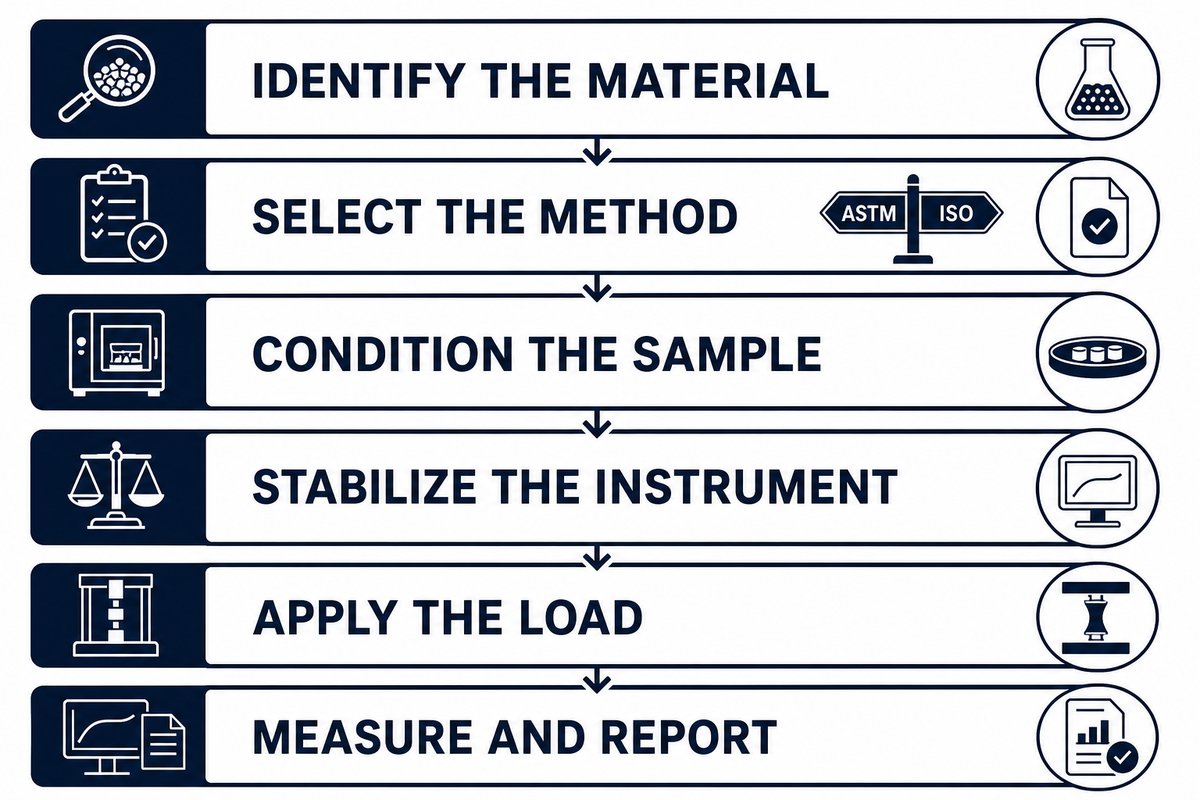
材料の管理仕様と感度によって、どのメルトフロー手順が適用されるかが決まります。. ASTM D1238-26 および ISO 1133-1:2022 は、適切な熱可塑性プラスチックのための押出プラストメーター法を対象としていますが、ISO 1133-2:2011 は、水分または時間温度履歴によってレオロジー挙動が大きく変化する材料を対象としています。.
ラボラトリーは「MFI を実行する」から始めるべきではありません。スタッフはまず材料規格を特定するか、標準供給条件がない場合は利害関係者が合意した条件を特定する必要があります。その合意を購入仕様に記録することは購入者の管理であり、ISO の記述要件ではありません。.
- 素材を特定する ¤ 家族、グレード、サプライヤーコード、および該当する材料仕様を記録します。.
- メソッドを選択します ○素材に適したアクティブなASTMまたはISO手順を選択してください。.
- サンプルを調整します ¤ 文書化された乾燥と取り扱いの履歴に従ってください。.
- 楽器を安定させる ¤ バレルとサンプルを指定されたテスト状態に戻します。.
- 負荷を適用します ○都合の良い条件を置き換えることなく、記載された質量と手順を使用してください。.
- 測定と報告 ¤ MFR の場合は時限押出物を収集し、MVR の場合はピストン変位を取得し、完全な状態記録を保持します。.
MFI試験中、溶融ポリマーは、指定された直径と長さのダイを通って移動します; 選択された温度と所定の荷重は、測定された流れに影響を与えます.MFI測定は、一致する試験条件でも、製造温度と圧力を含むラインの加工条件、または製造スクリュー、ゲート、またはダイ内の完全な熱可塑性メルトフロー特性を再現できず、材料が流れる原因を特定しません。.
ASTMの公式 D1238-26 範囲と重要性のページ ASTM と ISO 1133 は同じ主題を扱っているが、技術的には異なることに注意してください。 ISO の パート 2 の範囲 また、テスト中にレオロジーが著しく変化すると、この方法が不適切になる可能性があることも警告しています。.
MFI値はどのように計算しますか?
MFRは測定された押出物の質量と収集時間から得られ、次に選択された手順に従って10 分ベースに正規化されます 収集された各グラムは天びん上に記録されます 平易な形では、MFRは収集された質量に600 を乗じて収集時間を秒単位で割ったものに等しくなります それでも、計算はそれ自体では有効ではありません: 温度、負荷、タイミングルール、ダイジオメトリ、サンプル調製、および適用可能な方法は結果に添付されたままである必要があります。.
テイクアウト: 試験片を準備する前に手順を選択します; 正しい計算は間違った状態を修復することはできません。.
比較可能な MFI データの 6 フィールド条件ロック
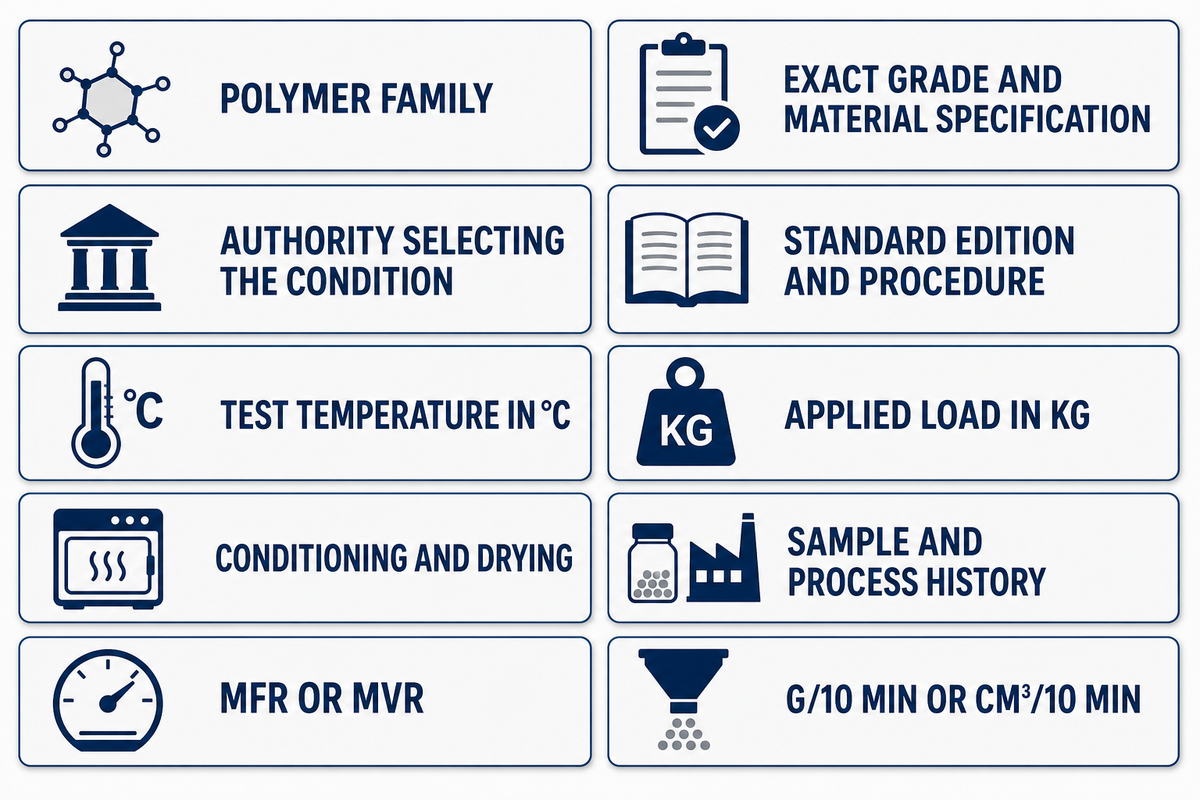
6 フィールド条件ロックは正規化ルールです: マテリアルの同一性の後にのみ 2 つの MFI 値を比較します。 、, 条件権限と方法, 、 温度 、 負荷 、 サンプル 履歴 、 および 結果タイプ オールマッチ. 1 つのフィールドが欠落しているため、きちんとした数値比較が未解決のデータ品質の問題に変わります。.
調達ではサプライヤーの証明書、入ってくる研究室では保持されたペレット、生産ではラインの動作が確認されます。6 つのフィールドを合わせると、3 つのグループすべてに共有レコードが与えられます。以下の各フィールドは、提案ではなく、停止/停止チェックです。.
| レコード ライン | 何を修正する必要があります | 違うなら | 制限 |
|---|---|---|---|
| 1A に | ポリマーファミリー | 比較を停止 | クロスファミリーランキングは有効ではありません |
| 1B を | 正確なグレードと材料の仕様 | 別の素材として扱います | 添加剤とアーキテクチャは異なる場合があります |
| 2A に | 条件を選択する当局 | 準拠仕様を解決します | ウェブチャートは権威ではありません |
| 2B を | 標準版と手順 | 技術的な違いを調整します | ASTMとISOは交換可能なラベルではありません |
| 3 | テスト温度 (°C) | 比較しないでください | 溶融応答は温度によって変化します |
| 4 | 適用される荷重 (kg) | 比較しないでください | 負荷は課せられたストレスを変化させます |
| 5A を | コンディショニングと乾燥 | 再調整と再テスト | 特に湿気に敏感な材料にとって重要です |
| 5B を | サンプルとプロセスの履歴 | バージン、再処理、および熟成サンプルを分離します | 歴史はポリマーの挙動を変える可能性があります |
| 6A に | MFR または MVR | 数量は分けて保管してください | 質量と体積は異なる次元です |
| 6B を | g/10 分または cm³/10 分 | 使用前にレポートを修正してください | 単位のない数値は不完全です |
テイクアウト: どちらの値も同じ 6 フィールド条件からのものであることが証明されるまで、どのチームも「12 が 13 に近い」かどうかについて議論すべきではありません。.
MFI の高低が実際に意味するもの
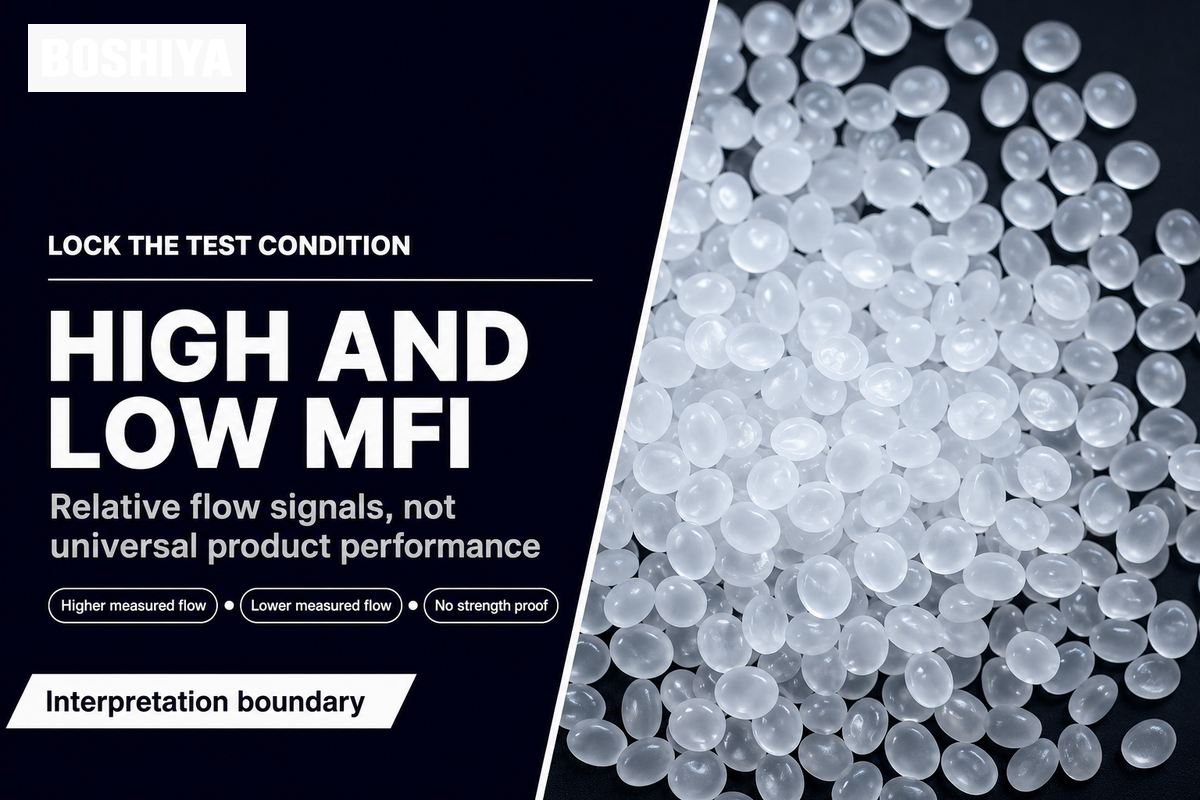
1 つのポリマー グレードと 1 つのロックされたテスト条件内では、通常、MFI が高いほど溶融物がダイをより容易に通過することを意味し、MFI が低いほど同じ正規化された間隔で通過する質量が少なくなります。. その比較は相対的なままです;どちらのラベルも普遍的な処理ウィンドウや製品のパフォーマンスを確立しません。.
より高いMFI、同じ材料および状態
- 正規化された 10 分間隔でさらに多くの質量が出口します
- 多くの場合、この低せん断試験では見かけの抵抗が低いものと一致します
- 多くのフラグを立てたり、歴史が変わったりする可能性があります
- 低い強さを証明しません
より低いMFI、同じ材料および状態
- 正規化された 10 分間隔での出口の質量が少なくなります
- 多くの場合、このテストでは見かけの抵抗が高くなります
- 別のロットまたは物質的な歴史にフラグを立てる場合があります
- より高い強さを証明しません
高いMFIとはどういう意味ですか?
MFI が高いということは、内部でのみ測定される質量流量が大きいことを意味します 記載されたテスト. 。 like for likeの制御された比較の中では、溶融粘度との関係はしばしば逆であるが、普遍的な規則として “反比例” は強すぎる。 molecular-weight distribution, long-chain branching, fillers, moisture, and shear rate can change production behavior without preserve an simple one-number relationship.
よくある間違い: サプライヤーの材料仕様と実際の加工試験を確認せずに、一般的なハイ/ロー チャートから射出成形または押出グレードを選択します。.
テイクアウト: 一致するシステム内で高 MFI または低 MFI を解釈し、アプリケーションを実際に制御するプロパティを確認します。.
MFI は通常 MFR を意味します; MVR は異なります
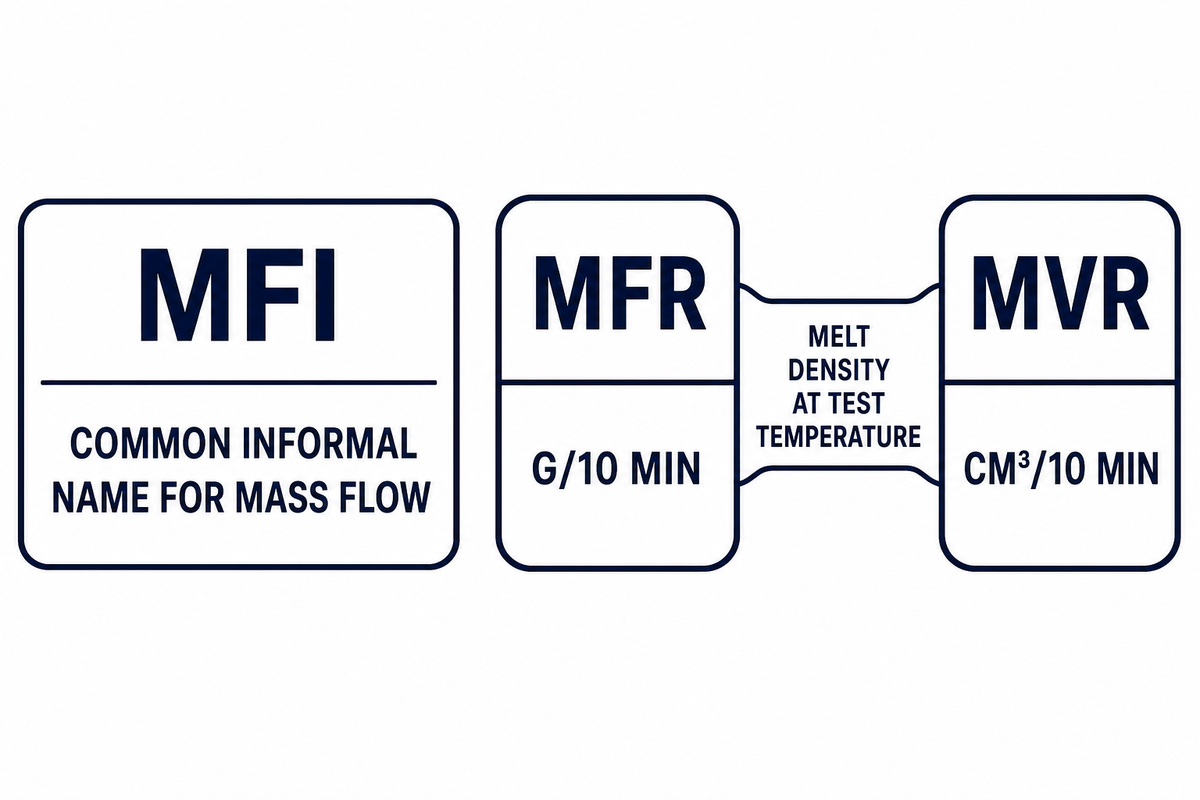
MFI は一般に質量ベースの MFR 結果に名前を付けますが、MVR は正規化された間隔中に基準点を通過する溶融体積を記録します。. ISO 1133-1 試験温度での溶融密度がわかっている場合にのみ変換が可能になるため、質量と体積の結果をラベルだけで交換する必要はありません。.
| 期間 | 数量 | 代表的なユニット | バイヤー 使用 |
|---|---|---|---|
| MFI | マスフローの一般的な非公式名 | g/10分 | レポートが本当にMFRを意味するかどうかを確認します |
| MFR | ポリマー押出物の質量 | g/10分 | 類似の質量流量の比較 |
| MVR | 溶ける容積は変位しました | cm³/10分 | 密度またはフィラーの内容が重要な場合に役立ちます |
MFRとMFIの違いは何ですか?
MFRは標準化された質量流量です。 MFIは、多くのデータシートが同じタイプの結果に対して依然として使用している古い用語または非公式な用語です。 MVRはMFIの別の綴りではありません:それはボリュームの結果です。充填された化合物と充填されていない化合物は異なる溶融密度を有する可能性があるため、ISOはMVRをそのような比較に有用であると特定し、MFRとMVRの間で変換する前に試験温度での密度を必要とします。.
高メルトフロー、高メルトフローレート、および低メルトフローレートは比較ラベルです。材料と試験条件に一致せずに粘度に反比例する MFI を呼び出すことは誤解を招きますが、材料のメルト密度またはフィラー含有量が変化すると、メルトボリュームレートが質量流量と並んで役立つ場合があります。.
テイクアウト: 実験室に量と単位を詳しく述べてもらいましょう; ラベルのない “フローインデックス” からMFRやMVRを推測しないでください。”
PE、PP、PET、ABS 番号を直接比較できない理由

熱可塑性ポリマーは材料に適した条件下でテストされ、異なる構造、履歴、仕様を備えているため、PE、PP、PET、および ABS の結果を 1 つのユニバーサル MFI チャートにランク付けすることはできません。. ファミリー全体で、温度、負荷、手順、または湿度の状態が異なると、低い数値よりも高い数値が得られる場合があります。.
たとえば、サプライヤーは230 °C、2.16 kgでPPを報告する場合がありますが、その条件はすべてのプラスチックのデフォルトではありません。 PP固有の範囲を必要とする読者は、別のガイドを使用する必要があります ポリプロピレン樹脂グレード選択. 。ポリエチレンファミリーの場合は、 HDPE、LDPE、LLDPEの比較 ファミリーとアプリケーションのコンテキストが引き続き可視化される必要がある理由を説明します。ポリマー業界全体で、ポリマー加工の指導とポリマー技術の進歩は、複数の樹脂ファミリーを 1 つのランクオーダーに減らすのではなく、グレード、手順、状態を維持する場合に最も効果的です。.
検索期間の警告: 「ポリマーのメルトフローインデックス」、「ポリマーメルトフローテスター」、または「ポリマーのメルトフローレート」のリクエストは、多くの場合、文脈自由グラフにつながります。同様に、「ポリマー MFI テーブル」、「MFI 式」、または「MFI 標準」クエリは、結果が購入の指針となる前に、依然として材料固有の条件権限を必要とします。.
シナリオ: 購入者は、1 つのフロー番号と別のフロー番号を含む PP データシートを含む PET 証明書を受け取り、次にどの樹脂が「より良く流れる」かを尋ねます。正しい応答はランキングではありません。まず、各値が MFR か MVR かを特定し、両方のテスト条件を検証し、乾燥履歴を確認します。材料が異なるプロセスや部品に使用される場合、製造試験またはレオロジー比較によって実際の質問により直接的に答えられます。.
テイクアウト: 数値から条件を削除することなく、ポリマーのグレードをその支配的な材料とプロセスのコンテキスト内で比較します。.
MFI が生産行動の予測を停止する場所
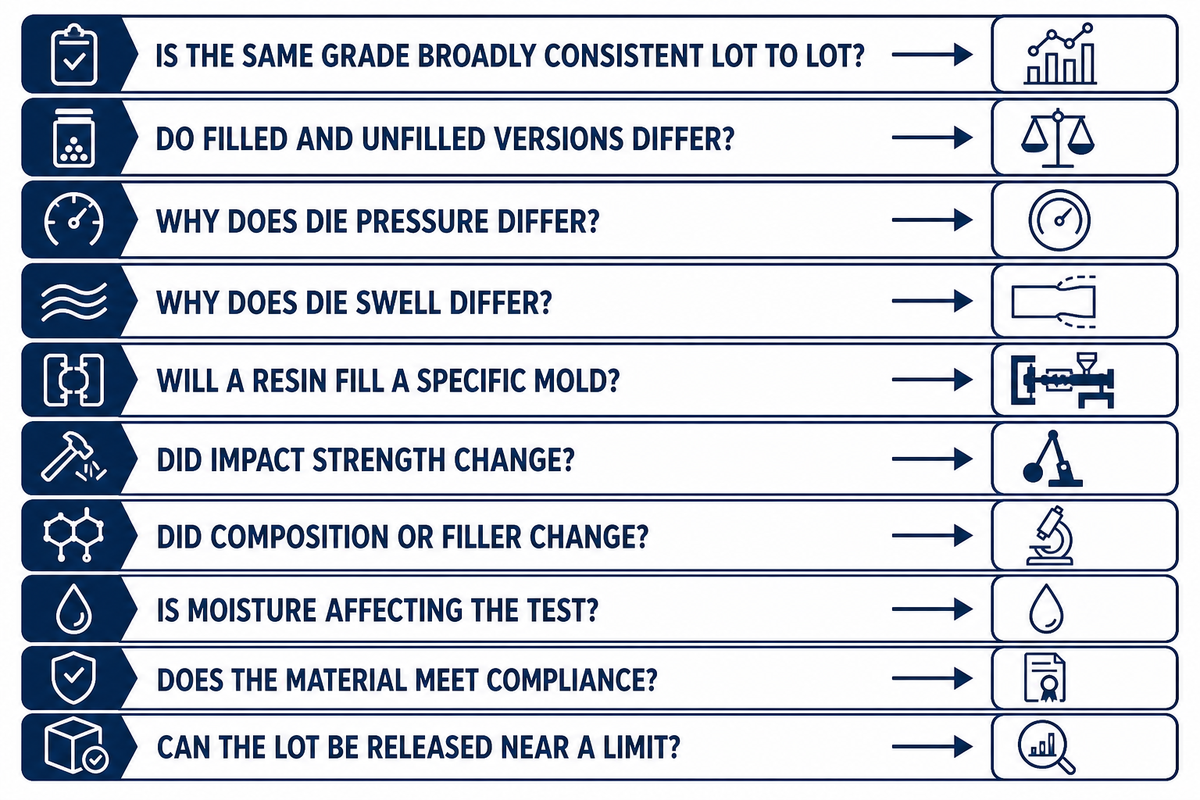
MFI エスカレーション マトリックスは、1 つの低せん断流結果が答えることができる質問と、密度、レオロジー、機械的試験、化学分析、またはプロセス試行が必要な質問を分離します。. 同じ MFI を持つ 2 つのポリマーは、せん断速度、温度、分岐、弾性、フィラー、ダイの形状が変化すると、異なる動作をする可能性があります。.
ISO 1133-1:2022 試験せん断速度は通常の加工よりもはるかに低いことに注意してください。したがって、金型圧力、せん断薄化、またはスケールアップが決定を促進する場合、ポリマー溶融物の全粘度曲線または伸長流量データの方が有益です。.
| 決定 質問 | 最初の画面 | に エスカレート | 制限事項 / に適していません |
|---|---|---|---|
| 同じ学年はロットごとにほぼ一貫していますか? | コンディションロックmfr | 再テストと不確実性のレビュー | 他のプロパティの均一性を証明しません |
| 塗りつぶされたバージョンと塗りつぶされていないバージョンは異なりますか? | MFR プラス MVR | 溶融密度と組成 | 質量流量だけでは密度効果が隠れます |
| なぜダイの圧力が異なるのですか? | 画面としてのMFI | せん断粘度曲線 | 1 つの低せん断点がライン プロファイルを見逃します |
| なぜダイ スウェルが異なるのですか? | コンテキストとしてのMFI | 弾性および伸長レオロジー | 弾性測定ではありません |
| 樹脂は特定の金型に充填されますか? | サプライヤー MFR | 金型フローのレビューとプロセスのトライアル | ツールやゲートをモデル化しません |
| インパクト強度は変化しましたか? | トリガーとしてのMFI | 機械試験 | 直接的な機械的強度の証明はありません |
| 組成またはフィラーは変化しましたか? | MFR/MVRの比較 | 密度と化学分析 | 成分を特定できません |
| 水分はテストに影響していますか? | 条件付き再テスト | 水分試験と高感度材料法 | 方向だけでは水分を識別しません |
| 材料はコンプライアンスを満たしていますか? | なし | 必要な申告と適合性テスト | MFIはコンプライアンス証明書ではありません |
| ロットは限界近くに解放できますか? | Mfi を複製 | サンプリング、不確実性、および決定ルール | 再現性だけでは不十分です |
MFIだけで購入しないとき: 決定が衝撃、引張挙動、組成、食品接触状態、添加物含有量、圧力降下、ダイの膨潤、または狭い処理ウィンドウに関するものである場合、その結果を測定するテストが必要です。サプライヤーフローデータは候補をスクリーニングできますが、異なる特性の証拠を置き換えることはできません。.
テイクアウト: フロー数が一致すると、2 つの材料が交換可能であるという主張ではなく、より詳細な比較が正当化されます。.
ロットツーライン MFI 調査ループ
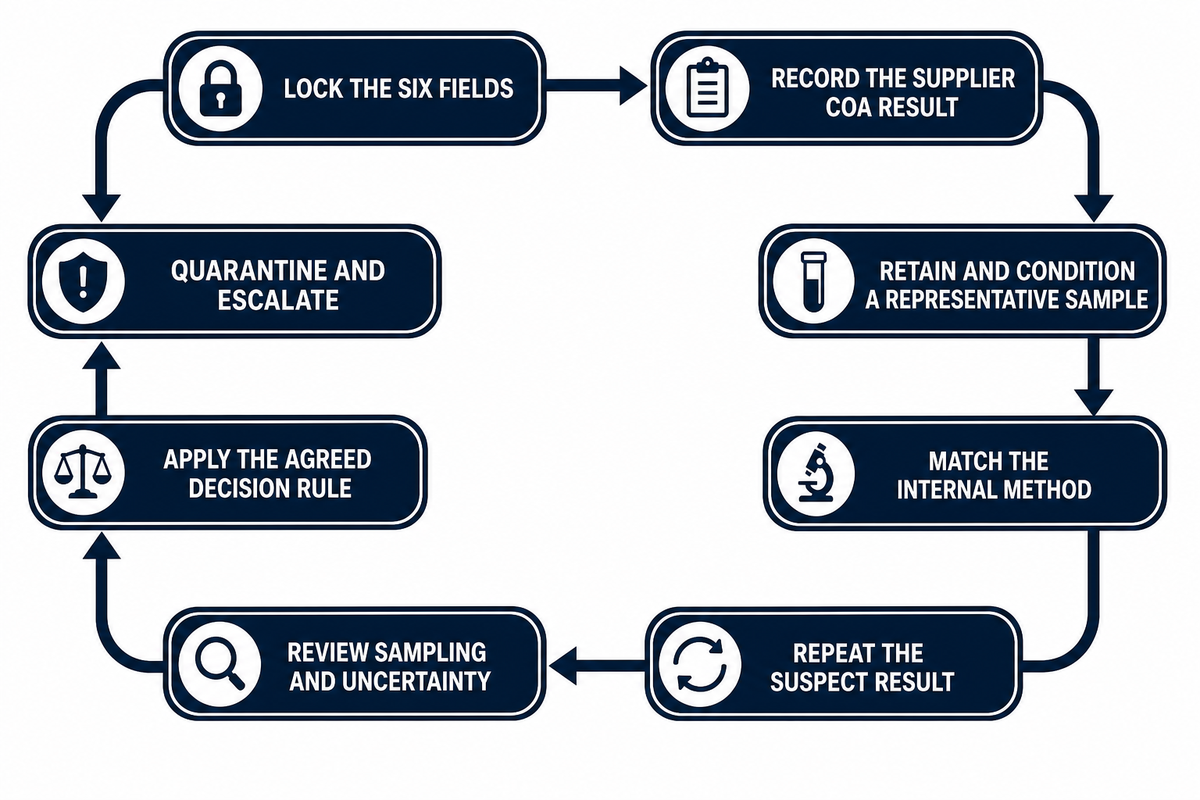
ロットツーライン MFI 調査ループは、不一致を制御されたシーケンスに変換します。ロットの保存、方法の一致、代表的なサンプルの再テスト、不確実性の考慮、合意された適合ルールの適用、未解決の差異のエスカレーションなどです。. 設計上、このループは調査します。それ自体では普遍的な許容範囲を作成したり、リリースを承認したりすることはできません。.
厳密な複製拡散であっても、より大きな総不確実性と共存する可能性があります。 NISTの2026年 SRM 1474c 認証スタディ は、30 の判定で0.016 g/10 分の標準偏差を報告したが、拡大された不確かさは、その1 つのポリエチレンの材料と状態について0.20 g/10 分であった。 これらの値はサプライヤーの許容差ではない; それらは、なぜ再現性と決定の不確実性が異なる疑問であるかを示している。.
- 購入仕様書の 6 つのフィールドをロックします。.
- サプライヤーの分析証明書の結果と記載された制限を記録します。.
- ロットを表すサンプルを保持、識別、調整します。.
- 内部メソッドがサプライヤーまたは材料メソッドと一致していることを確認します。.
- 原因を割り当てる前に、疑わしい結果を繰り返します。.
- サンプリング範囲、実験室の不確実性、およびガードバンドを確認します。.
- 一般的な Web シリーズではなく、合意された適合性決定ルールを適用します。.
- 管理された再検査で不一致が生き残った場合、隔離され、エスカレートします。.
シナリオ: 入ってくる結果は購入限度をわずかに超えていますが、サプライヤーとバイヤーは異なる乾燥履歴を使用しました 品質は材料を拒否するのではなく隔離します 研究所スタッフは保持されたサンプルを再調整し、温度と負荷を確認し、測定を繰り返し、不確実性ステートメントを確認します 調達 その後、契約の決定ルールを適用します そのシーケンスは、1 回の繰り返しテストでほぼ限界に近い適合性の決定が解決されるふりをすることなく、生産を保護します。.
より広範なプラントおよび樹脂の取り扱いに関するディスカッションについては、BOSHIYA を通じて技術的なハンドオフをルーティングしてください 樹脂の取り扱いとプロセス統合プロジェクトの範囲 チームまたはスコープをリクエストします テクニカルサービスレビュー.
テイクアウト: まず検疫し、次に重要な証拠を方法、サンプリング、不確実性の証拠から分離します。.
MFI シフトが劣化について教えてくれるのに、教えてくれないのは何でしょうか
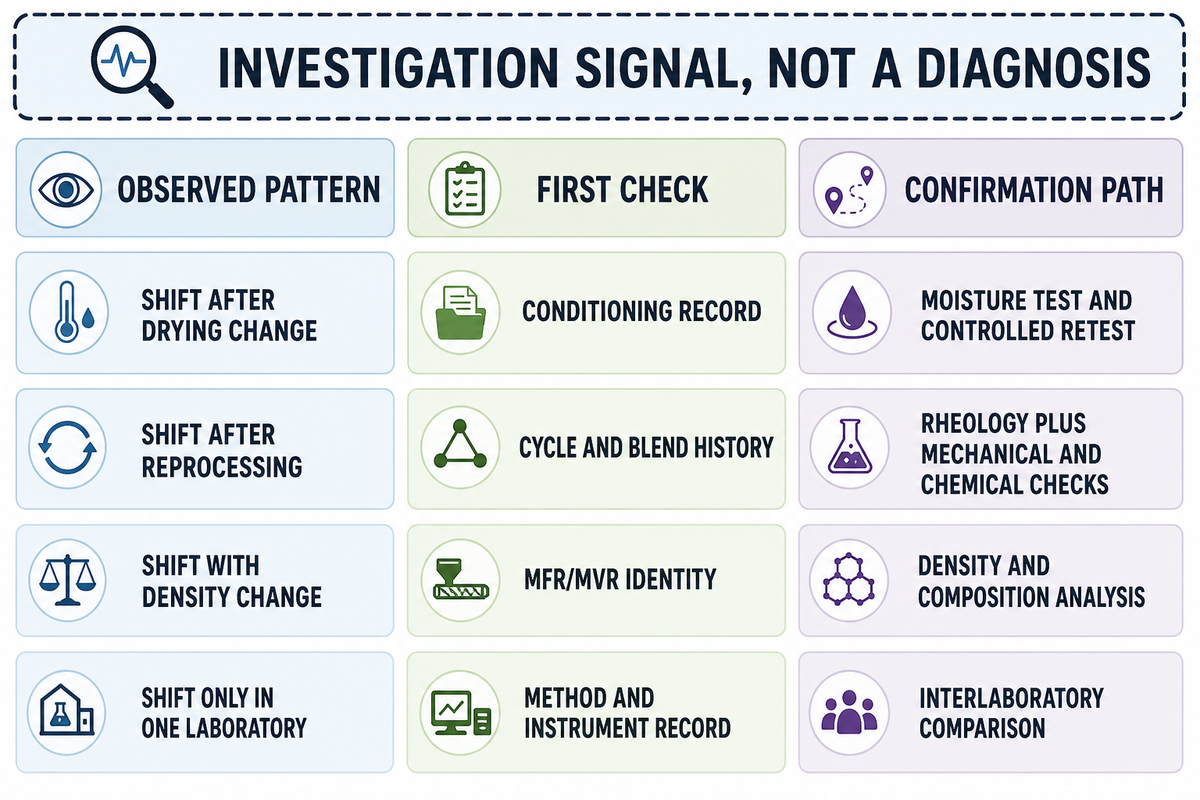
MFI シフトは調査信号であり、劣化、リサイクル含有量、湿気による損傷、汚染の診断ではありません。. 高分子化学と材料履歴に応じて、結果は上向きまたは下向きに移動する可能性があります。どちらの方向も、追加の証拠による確認なしにメカニズムを特定しません。.
時間と温度の履歴と乾燥により試験中に材料が変化する可能性があるため、湿気に敏感なポリマーには特別な注意が必要です。 2026年、a Scientific Reports の測定システム研究 研究対象となったポリアミド複合材料の測定値には、荷重、温度、乾燥、予熱が影響を与えることがわかりました。報告された 3.179% の再現性と 12.208% の再現性の値は、普遍的な受け入れ規則ではなく、その研究に属します。.
| 観測されたパターン | 最初のチェック | 確認 パス |
|---|---|---|
| 乾燥後のシフトが変わります | コンディショニング レコード | 水分試験と制御された再試験 |
| 再処理後のシフト | サイクルとブレンド履歴 | レオロジーに加えて機械的および化学的チェック |
| 密度変化でシフト | MFR/MVR アイデンティティ | 密度と組成の分析 |
| 1 つの研究室でのみシフトします | 方法と楽器の記録 | 研究室間の比較 |
テイクアウト: サンプルを保存し、確認テストを選択します; MFI方向のみから損傷メカニズムに名前を付けないでください。.
ポリマーロットを拒否する前に 8 回のチェック
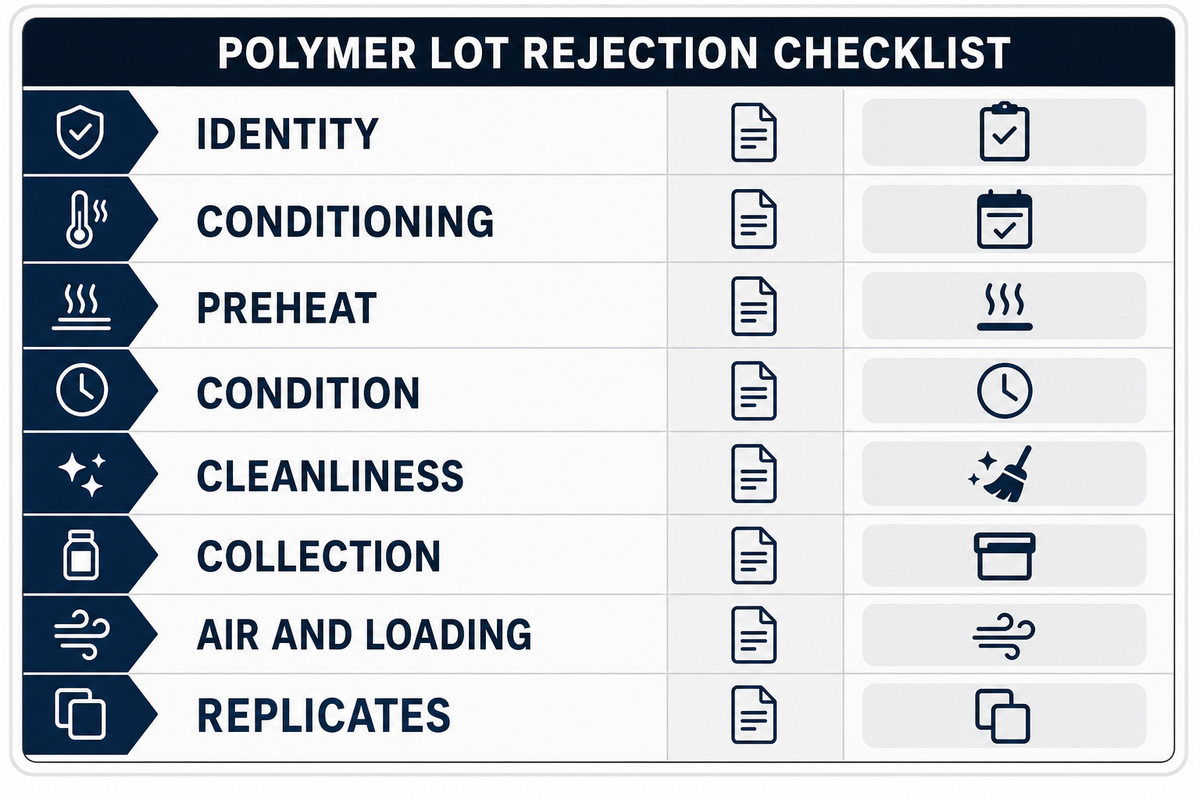
たくさん拒否する前に、材料の同一性、コンディショニング、予熱、温度と負荷、機器の清浄度、切断と重量の練習、空気または空隙を確認し、動作を再現してください。. これら 8 つのチェックにより、再現可能な材料信号が、防止可能な測定システムまたはサンプル履歴の問題から分離されます。.
2024年 著者のオープンソース メルトフロー装置を検証する研究 校正、洗浄、固定設定、および作業の複製を文書化します。 NPL の技術レビューでは、オペレーターの負荷、空気、切断、サンプル量、密度、および低せん断の制限が追加されています。.
する
- 正確な材質とグレードを確認します
- 乾燥とサンプルの履歴を保存します
- バレル、ダイ、ピストンの清浄度を確認してください
- 校正を確認し、スプレッドを再現します
しない
- サプライヤーと内部条件を混ぜる
- 気泡やローディングテクニックを無視します
- 限界に近い不確実性の質問を丸めてください
- MFI を使用して、無関係なプロパティを推測します
| チェック | 記録 | アクション |
|---|---|---|
| 1.アイデンティティ | 家族、学年、ロット | 不一致の場合は停止します |
| 2.コンディショニング | 乾燥と保管 | 文書化されていない場合は再調整します |
| 3.予熱する | タイミングと熱履歴 | メソッドに繰り返します |
| 4 条件 | 温度、負荷、手順 | 仕様を合わせる |
| 5.清潔さ | バレル、ダイ、ピストン | 洗浄し、点検して下さい |
| 六 コレクション | タイミングとバランスをカットします | タイミングや計量に関する問題を修正します |
| 7 空気およびローディング | 泡、空隙、サンプル量 | 一貫してリロード |
| 8、複製します | 拡散および保持されたサンプル | 処分前に調査する |
テイクアウト: メソッドレコードで結果がテストセットアップではなく樹脂に属する理由が説明されている場合、多くの決定がより強力になります。.
RFQ および分析証明書で MFI を指定する方法
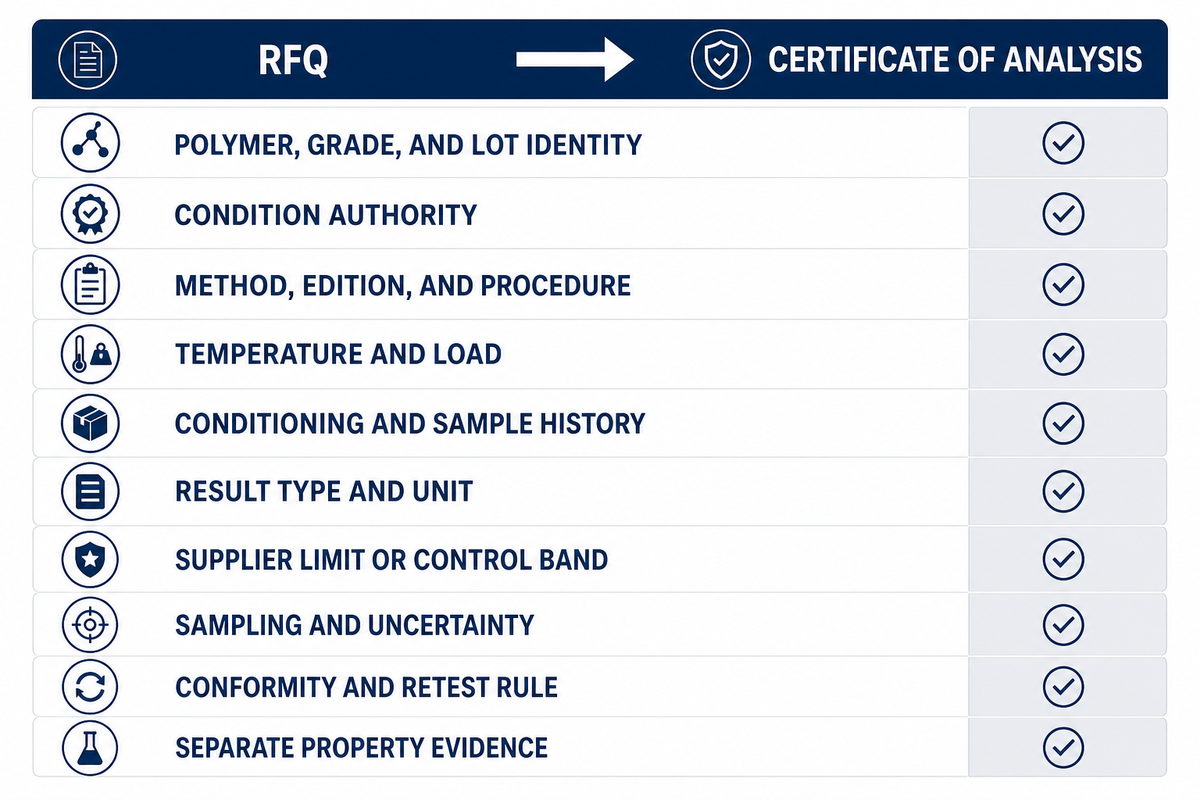
使用可能な RFQ は、樹脂、状態権限、アクティブな方法と手順、温度、負荷、サンプル調整、MFR または MVR ユニット、サプライヤー制限、サンプリング計画、不確実性、決定ルール、および再テスト パスに名前を付けます。. 返送された分析証明書フィールドは、調達と品質が同等と比較できるように、リクエストを反映する必要があります。.
見積依頼に以下のチェックリストをコピーします。空白のフィールドは意図的です。一般的な記事ではなく、重要な規格または利害関係者間の合意が条件を提供する必要があります。.
RFQチェックリスト ――これらを見積依頼にコピーします:
| パラメータ | 推奨範囲 | なぜそれが重要なのか | 検証方法 |
|---|---|---|---|
| ポリマー、グレード、ロットのアイデンティティ | 正確な指定指定 | グレード間の比較を防ぎます | 購入仕様書とCoA |
| 条件 権限 | 材料標準または合意された条件 | 条件が適用される理由を確立します | 引用された条項または合意 |
| 方法、版、手順 | アクティブ 適用 版 | 技術的なコンテキストを保持します | 研究室レポート |
| 温度と負荷 | ___ °C / ___ kg | 課されるテスト条件を定義します | 楽器記録 |
| コンディショニングとサンプル履歴 | 材料固有の要件 | 湿気と熱履歴を制御します | 乾燥と取り扱いログ |
| 結果の種類と単位 | mfr (g/10 分) または MVR (cm3/10 分) | 質量を体積から分離します | CoA分野と方法 |
| サプライヤーの制限または制御バンド | アプリケーション固有 | 商業的な期待を定義します | 承認された材料指定 |
| サンプリングと不確実性 | 代表的な計画に加えて、表明された不確実性 | 防御可能なほぼ限界の決定をサポートします | サンプリング計画と実験室の範囲 |
| 適合性と再テストのルール | 合意された決定ルールと保持されたサンプル パス | 即席ロット処分を防止します | 品質協定 |
| 別々の財産証拠 | 必要に応じて、密度、機械、添加剤、およびコンプライアンスの記録 | MFI を証拠境界内に保ちます | 独立したレポートと宣言 |
シナリオ: 調達チームは、両方が「MFI 20」と記載した2 つのオファーを比較します。サプライヤーAは、完全な方法、温度、負荷、コンディショニングレコード、および仕様帯域でMFRを報告します。サプライヤーBは、番号のみを提供します。技術的には、オファーは同等ではありません。調達では、価格比較の前に条件レコードを完了するようサプライヤーBに求めますが、品質はサンプリングと入荷検査を管理する適合規則を定義します。.
BOSHIYA は、その境界を通じてより広いプロジェクトの境界について議論できます より広範な樹脂プロジェクトの境界レビュー ページ と エンジニアリング、調達、建設サービス. .それらの商業的な議論は、樹脂特有の実験室証拠に取って代わるものではない。.
キーテイクアウェイ
完全な MFI 購入レコードは、ロックされた 6 つの条件フィールドをサンプリング、不確実性、および適合ルールに接続します。数字だけではそれはできません。.
よくある質問frequently Asked Questions
同じMFIを持つ2 つのポリマーは異なるプロセスを実行できますか?
答え
はい。 1 つの MFI 結果は、1 つの温度、負荷、装置の形状、および低せん断領域を表します。 2 つのポリマーは、分子量分布、長鎖分岐、フィラー含有量、弾性、水分履歴、およびせん断感度が異なる一方で、質量流量数を共有できます。狭いゲート、高せん断ねじ、および伸縮ダイは、メルトフロー インデクサーが再現しない差異を暴露する可能性があります。生産挙動が重要な場合は、レオロジー、密度、機械的データ、またはプロセス試行を使用し、すべての比較の横に元の状態記録を保持します。 1 つの実験室番号を一致させることで、ツール、部品、または操作ウィンドウ間の互換性の主張ではなく、制御された試行計画が促されるはずです。.
MFI は粘度曲線を置き換えることができますか?
答え
第 MFI は、制御された比較のための単一の低せん断流結果です。粘度曲線は、射出成形または押出によって課せられる条件に近い、変化するせん断速度と温度にわたって溶融物がどのように反応するかを示します。圧力、せん断薄化、分岐、スケールアップ、またはプロセスウィンドウの設計が選択を制御する場合は、レオメーターを使用します。.
サプライヤー分析証明書にはどのような MFI 情報が属しますか?
答え
正確なポリマーとグレード、アクティブなテスト基準と手順、温度、適用荷重、調整または乾燥の要件、および結果があるかどうかを要求します mfr (g/10 分) または MVR (cm3/10 分). .値を承認された材料仕様に結び、ロットのアイデンティティを保持する 限界近くでは、購入契約書はまた、サンプリング、不確実性、適合性、および再テストのルールを指す必要があります 密度、機械的、添加剤、およびコンプライアンスの証拠は、別々のままです。.
リサイクルされたプラスチックが別の MFI を示すのはなぜですか?
答え
再処理、熱、湿気、ブレンド組成、充填剤、汚染、反応性の変化により、ポリマーの挙動が変化する可能性があります。結果が異なると、単一の原因診断ではなく、材料とプロセスの履歴を確認する必要があります。代表的なサンプルを保存し、疑わしい変化を測定する確認テストを選択します。.
受信MFI結果が失敗した後、購入者は何をすべきですか?
答え
ロットを検疫し、6 つの条件フィールドすべてを検証し、保持され適切に調整されたサンプルでテストを繰り返し、機器の清浄度と校正を検査し、合意されたサンプリング、不確実性、および適合性ルールの不一致が説明できないままになった場合は、密度、機械的、化学的、湿気、またはレオロジーテストにエスカレートします。.
技術的な会話に完全なテスト記録を持ってきてください
6 つの条件フィールド、サプライヤー分析証明書、サンプリング計画、および未解決のプラント質問を送信します。これにより、樹脂やプロセスの議論がより迅速になり、商業レビューが実験室の証拠から切り離されます。.
参考文献と出典
- ASTMインターナショナル、ASTM D1238-26 ⁄ アクティブなメソッドの範囲、重要性、条件依存性、および制限。.
- ISO 1133-1:2022 ¤ MFR および MVR 手順、密度依存変換、および処理せん断制限。.
- ISO 1133-2:2011 ¤ 時間と温度の履歴または湿気に敏感な材料に対する方法。適用範囲には制限があります。.
- NIST SP 260-267、SRM 1474c ――材料固有の再現性と拡張不確実性の例.
- Materials (2024)、オープンソースのメルトフロー装置の著者チームの検証 ――校正、洗浄、制御された設定、および再現テスト。.
- Scientific Reports (2026)、湿気に敏感な複合測定研究 ¤ 研究対象システム内の負荷、温度、乾燥、予熱の影響。.
- 国立物理研究所、CMMT(A)231 ¤ オペレーター、荷重、切断、密度、低せん断、および伸張流の制限。.
![ポリプロピレン樹脂: グレード、タイプ&選択ガイド [2026]](https://boshiya.com/wp-content/uploads/2026/05/0-150x150.webp)