BOSHIYAと連絡を取りましょう


2026 年 8 月更新。産業調達と安全境界の精度についてレビュー済み。.
内容
ショー
メタノール製造 は、合成ガスの調製、触媒合成、精製による炭素含有原料のメタノールへの工業的変換です。ほとんどの従来のプラントでは、天然ガスは粗メタノールへの触媒変換の前に合成ガスに再形成されます。他のメタノール製造方法は、石炭、バイオマス、生物起源の廃棄物、再生不可能な廃棄物の流れ、回収された二酸化炭素、および再生可能電力からの水素から開始できます。CO2 の直接水素化は、単にラベルが異なる従来の合成ガス プラントではないため、フロントエンドを変えます。.
購入者にとって、プロセスルートは重要です。なぜなら、プロセスルートは、炭素プロファイル、プラントの制約、文書パッケージ、容量の仮定、安全性のレビュー、および適用適合性を変更するからです。このガイドでは、メタノールの製造を実用的なレベルで説明し、ルートの説明をグレード、パッケージング、COA、SDS/TDS、トレーサビリティ、および問い合わせデータの購入者チェックリストに変えます。.
クイック回答: 工業用メタノールの製造は通常、原料の調製、触媒メタノールの合成、蒸留または精製という 3 つの関連段階に従います。天然ガス、石炭、バイオマス、廃棄物由来、CO2/H2 ルートは反応器の前で異なるため、購入者はそのルートを純度、書類、包装、最終用途、安全管理、仕向地要件、および規制された炭素起因性の主張に接続する必要があります。.
産業実務におけるメタノール生産の意味
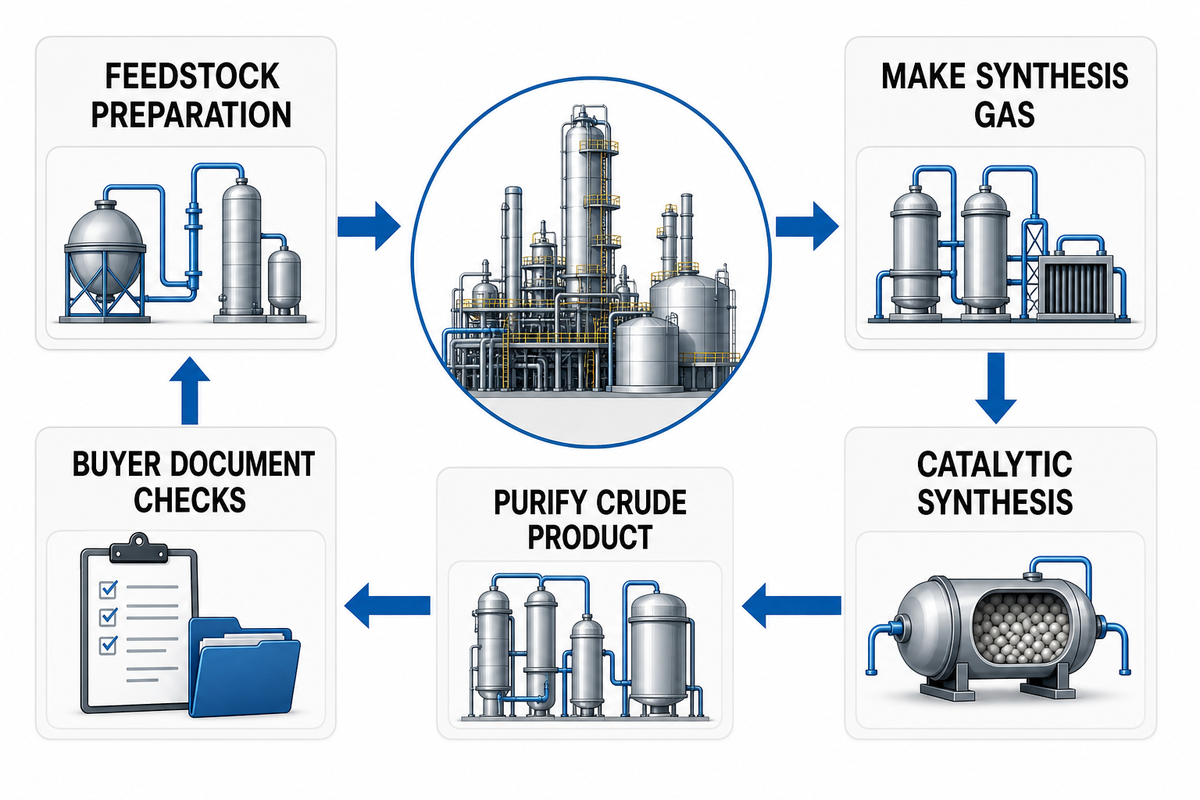
産業実務において、メタノール製造は単一の機械や 1 つの普遍的なレシピではありません。原料を使用可能な化学中間体に変換する製造システムです。一般的な論理は安定しています。原料を準備し、合成ガスを作り、合成ガスの組成を調整し、触媒合成によってメタノールを製造し、粗生成物を精製します。.
A メタノール研究所生産概要 は、天然ガスを現代の工業用メタノール生産のための主要な原料として説明し、世界規模のメタノール生産プラントが約5,000 メートルトン/日を生産できることに注目しています。 買い手がその数字を米国のショートトンに変換した場合、, NISTのおおよその換算表 1トン、つまり1,000kgを約1.10ショートトンとして使用するため、購入者は容量を比較する前に単位を定義する必要があります。. 米国 エネルギー省 の 代替 燃料 データセンター また、天然ガスを水蒸気改質して合成ガスにし、その後触媒ベースでメタノールと水蒸気に変換するという共通の経路についても説明します。.
化石ルートは依然としてほとんどの購入者にとって実用的なベースラインですが、古いルートシェアの数値には日付が必要です。 2021年の見通しでは、, IRENA とメタノール研究所 天然ガスからの世界のメタノール生産量約65%、石炭からのメタノール生産量約35%、および総生産量0.2%未満の再生可能メタノールを報告しました。これらの数値は、現在の2026年の生産シェア国勢調査ではなく、2021年のルートミックスベースラインとして使用します。.
その説明は化学の質問に答えますが、購入の質問は終わっていません。メタノールの供給業者を比較する場合、購入者はまた、その材料がAAグレードか別のグレードか、どのような書類が提供されているか、どのように梱包されているか、どの用途をサポートしているか、保管または取り扱いの前にどのような安全情報を検討する必要があるかを尋ねる必要があります。.
| 質問 | 実用的な答え | バイヤー インパクト |
|---|---|---|
| 生産されるもの? | メタノール、メチルアルコールまたは木アルコールとも呼ばれます。. | グレード、COA、SDS、TDS、最終用途の適合性を確認します。. |
| どのようなルートが使用されますか? | 天然ガス、石炭、バイオマス、廃棄物由来、または CO2 と水素。. | ルートは炭素の主張、供給の継続性、文書に影響します。. |
| 主な記事の境界は何ですか? | ライブ価格補償ではなく、プロセスと購入者のチェック。. | ぼしやのセパレートを使用する メタノール価格の推進要因 価格固有の意図に関するページ. |
コアメタノール製造プロセス: 原料から合成ガス、反応器、蒸留
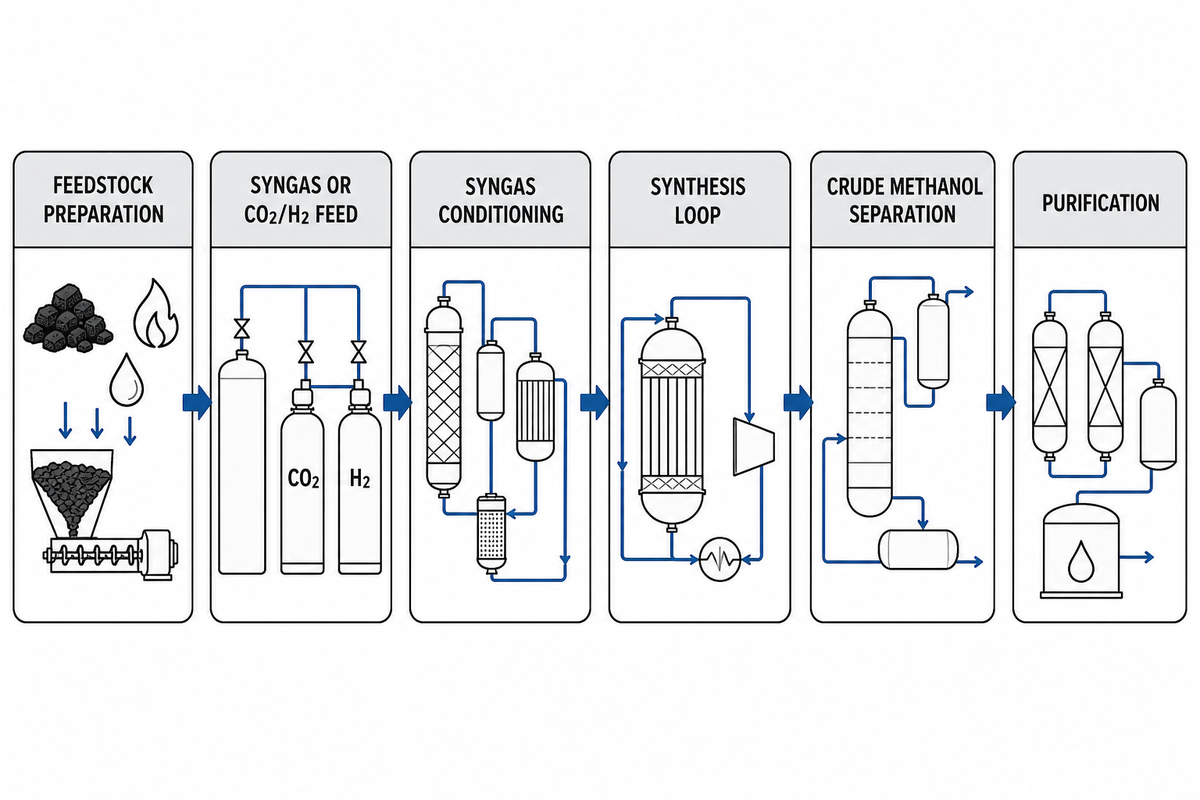
メタノールの生産は原料から始まるが、フロントエンドは普遍的ではない 天然ガスルートでは、メタンに富むガスが処理され、再形成される; the DOE AFDC メタノール 参照 は、この従来の経路を、触媒変換前の合成ガスへの水蒸気改質として説明している。 これは有用な概要であり、唯一の天然ガス構成ではない。 a peer-reviewed 水蒸気改質と自動熱改質を比較したエネルギー記事 は、両方を間接的な低圧メタノール合成の主要な合成ガス経路として扱い、スケーラビリティのため、約 2,500 mtpd を超えると自動熱改質が好まれると指摘しています。石炭ルートでは、石炭はガス化され、通常、合成ループが予測どおりに動作する前に、より重いガス浄化、シフト、硫黄または酸性ガスの除去、水銀制御、およびパージ管理が必要になります。.
生産能力計画は、生産プロセスとスケールの参照を同じルートとユニットシステムに結び付け続ける必要があります。実際的なチェックはルート固有です。5,000 トン/日の世界規模の言語、2,500 mtpd の蒸気改質または自動熱改質のスケール ノート、およびサプライヤーの実際の銘板容量を比較してから、同じ原子炉列、浄化システム、または蒸留負荷の証拠として扱います。.
RFQ 言語の場合、ルート、触媒、浄化義務、エネルギー価格、動作境界がすべて答えを変える可能性があるため、メタノール収率と選択性を最大化する個別の製造プロセスを製造コストに関する主張から切り離します。.
合成ガス、または合成ガスは、通常、メタノール合成反応器に適合しなければならない割合で水素、一酸化炭素、二酸化炭素を含みます ガス化ルートでは、合成ガスの製造がクリーンアップとコンディショニング前の主要なフロントエンド作業ルートに応じて、オペレータは、クリーンアップ、圧縮、CO2 管理、または水ガスシフト反応を通じてガスを調整することがあります; DOE NETL 合成ガス 誘導 汚染物質の除去と H2 から CO への調整が、石炭ベースのガス化フローの材料プロセス段階となり得ることを示しています。 DOE NETL の 石炭からメタノールへのプロセス構成 また、原子炉よりも広いプラントの境界を作る: ガス冷却、急冷とスクラブ、酸味のあるWGS、水銀除去、酸性ガス除去、メタノール合成、蒸留、PSA水素回収、パージガスボイラー、硫黄回収、およびオプションのCO2 乾燥/圧縮は、合成ブロックの周りに座るオペレーターは合成ガスを作るだけではありません; 彼らは触媒上で反応し、回収、パージ、副産物、排出ストリームを制御できる組成とプラントシステムを作成しています。.
クリーンアップは触媒保護ステップでもあります 硫黄やその他の微量汚染物質は、単に環境面の問題ではありません; それらは触媒寿命を短くしたり、ループの挙動を変えることができます。 に関するPubMedインデックス付きの研究 鋼材のオフガスメタノール合成 製鉄所のオフガスには硫化水素が含まれる可能性があり、h2s は市販の Cu/ZnO/Al2O3 メタノール合成触媒を不活性化する可能性があるという報告。天然ガス、石炭、バイオマス、鉄鋼ガス、廃ガス、または回収炭素ルートについては、供給汚染物質の制限、硫黄研磨またはガードベッドの設計基準、触媒毒の保証除外、およびガスが合成ループに入る前に非標準供給スイングがどのように監視されるかを尋ねてください。.
限定操作エンベロープ リファレンスは、読者が工業用合成を化学のみの概要から分離するのに役立ちます。 DOE NETL の 合成ガスからメタノールへの変換 pageは、従来の商用気相固定床ルートについて説明しており、合成は通常、触媒供給業者に応じて約600 から1,700 psig、400 から600 deg Fである。その圧力範囲はおよそ4.1 から11.7 MPaに等しいため、NETLの説明的な文言をプロセスカテゴリーラベルに変えないでください:2024 年のレビュー、, 触媒開発から反応器設計まで, 、現在の工業用低圧メタノール合成約5 から10 MPaと歴史的な高圧合成約25 から30 MPaについて説明しています。 、プラントの運転指示やライセンスされたプロセス設計の代替としてではなく、ルートの深さと危険性のレビューのコンテキストとして範囲を使用します。.
コア合成化学はコンパクトですが重要です。 に関する PubMed Central のレビュー CO2からのメタノール合成 主な反応を CO + 2H2 -> CH3OH、CO2 + 3H2 -> CH3OH + H2O、および逆水-ガスシフト反応 CO2 + H2 -> CO + H2O として要約します。このレビューでは、従来の触媒を銅ベースの Cu/ZnO システムとして枠組み化し、メタノール合成を発熱および平衡または速度論的に制限されていると説明しています。そのため、反応器の設計、リサイクル、および熱除去は原料のみの選択ではなく行われます。フラウンホーファーレビュー、, メタノール合成 = 変化する原材料景観における産業の課題, 、合成ガスの組成チェック購入者がエンジニアリングチームに尋ねることができるを追加: 化学量論的数 SN = (H2 = CO2) / (CO + CO2) 、SN = 2 での化学量論的変換と2 以下の水素短供給副生成物リスクを生み出すこれらの方程式は正味のエンジニアリング反応であり、完全な表面メカニズムではありません: PubMed-indexed Cu-Zn 触媒に関する米国化学会の研究ジャーナル CO/CO2/H2 混合供給物では CO2 水素化がメタノール形成を支配し、CO はカチオン性亜鉛を還元して金属部位を露出させることで活性触媒表面の調整に役立つと報告しています。.
直接CO2 水素化は、単純な原料から合成ガスへのストーリーの最も明確な例外です。 PubMed Centralのレビュー、, CO2からのメタノール合成, 、特定の反応のニーズを持つルートとして直接CO2-メタノールを扱う: 不利な熱力学、高い水の生産、およびメタノールの選択性を高いCO2 変換で高く保つ必要性 それは買い手のルートの質問が化粧品ではないことを意味します 天然ガス改質、石炭ガス化、バイオマスまたは廃ガス化、およびCO2 プラス水素は、異なる供給準備、水の形成、触媒ストレス、水素需要、および積分限界を持つことができます。.
一般的なメタノール合成ループの内部では、調整された合成ガスが圧縮され、加熱され、ガスの一部のみが 1 回のパスで変換される反応器システムを通過します。未反応のガスは通常リサイクルされるため、ループは最初に反応しなかった水素、一酸化炭素、二酸化炭素を引き続き使用できます。不活性ガスや微量成分は、リサイクル ループに蓄積しないように少量のパージが必要になる場合があります。購入者にとって、それは重要です。なぜなら、「反応器の出力」は完成したメタノールと同じではないからです。ループ設計、パージ挙動、触媒の状態、上流の浄化はすべて、最終精製前の粗メタノール組成に影響を与える可能性があります。.
このプロセス概要はプラント設計の安全ファイルではありません。 methanol synthesis gas can include monoxide and hydrogen before conversion; メタノール合成ガスは変換前に一酸化炭素と水素を含むことができます; CDC/NIOSH 一酸化炭素 誘導 一方、一酸化炭素は急性有毒吸入の危険性として扱われます 米国 DOE 水素 安全 ガイダンス 水素の可燃性の範囲が広いこと、発火エネルギーが低いこと、ほとんど目に見えない炎、換気/漏れ検出の必要性、材料適合性に関する懸念を強調します。これらの危険は、サプライヤーの製品ページや COA だけではなく、プロセスセーフティおよび EHS レビューに属します。.
粗メタノール分離も、ラボ証明書だけでなく、プロセス段階です。 reactor流出物が冷却された後、凝縮液は、メタノール、水、およびルート固有の軽質または重質成分を含むことができます 蒸留は、その後、必要な販売グレードに向かってストリームをもたらす理由です 買い手のCOAレビューは、プロセスの説明の下流に座るべきです: 純度、水、酸性度、外観、蒸留挙動、および微量有機不純物は、生産ルートとハンドリングチェーンの製品品質の出力であり、任意の貨物に貼り付けられた独立したラベルではありません。.
反応器の後、粗メタノールはまだ水および他の成分を含んでいる 蒸留は、必要な仕様に製品を分離する これは実用的な調達モデルであり、普遍的なプラントフロー図ではない 直接CO2 水素化、石炭ガス化、自動熱改質、および他の経路設計は、ユーティリティ、オフサイト、回収、排出ガス処理、および原子炉の制約を変更することができるので、買い手は、すべてのプラントが同じプロセスブロックを持っているという証拠としてではなく、質問のためのチェックリストとして6 段階のシーケンスを扱うべきである。.
これが、購入者が「天然ガスからのメタノール」または「グリーンメタノール」を完全な仕様として扱うべきではない理由です。 ルートの出所と完成品ロットの適合性は別の層です。ルートステートメントは、炭素、供給、およびトレーサビリティの主張を評価するのに役立ちます; COAの結果、名前付き仕様、サンプリング履歴、梱包、および荷役は、納品されたロットが必要な純度と用途に適合するかどうかを検証するのに役立ちます。それらはそれ自体では証明されません:測定の不確実性、サンプリング方法、ラボの能力、貨物の同一性、および受け入れ制限は依然として意図された用途に適合する必要があります。 ASTM D1152-24 は複数の製造方法に対して 99.85% メタノールをカバーできるため、ルートの同一性だけでは完成品グレードの適合性を証明できません。.
| ステップ | 何が起こるか | 購入者が確認すべきこと |
|---|---|---|
| 1.原料の準備 | 天然ガス、石炭、バイオマス、廃棄物由来、または CO2/H2 ルートが準備されます。. | ルートの開示および炭素または再生可能な請求の根拠。. |
| 2.合成ガスまたはCO2/H2 供給ルート | 改質、ガス化、または CO2/H2 の直接調製により、反応器供給物が生成されます。. | ルートが証明書の言語または排出量レポートに影響を与えるかどうか。. |
| 3.合成ガスコンディショニング | 水素、一酸化炭素、二酸化炭素の比率が調整されます。. | 供給の一貫性と特別な書類が必要かどうか。. |
| 4.圧縮合成ループ | 条件付きガスは反応器に入ります;未反応のガスはリサイクルおよびパージできます。. | ルート、クリーンアップ、ループの動作が不純物や炭素の主張に影響を与えるかどうか。. |
| 5.粗メタノール分離 | 反応器の流出物は冷却され、仕上げ前に凝縮されます。. | 水、光の端、またはルート固有のコンポーネントに注意が必要かどうか。. |
| 六 浄化 | 蒸留により水と軽質/重質成分が除去され、目標グレードに満たされます。. | COA値、SDS/TDS、パッケージング、バッチトレーサビリティ。. |
原料ルートが炭素、リスク、証拠をどのように変化させるか
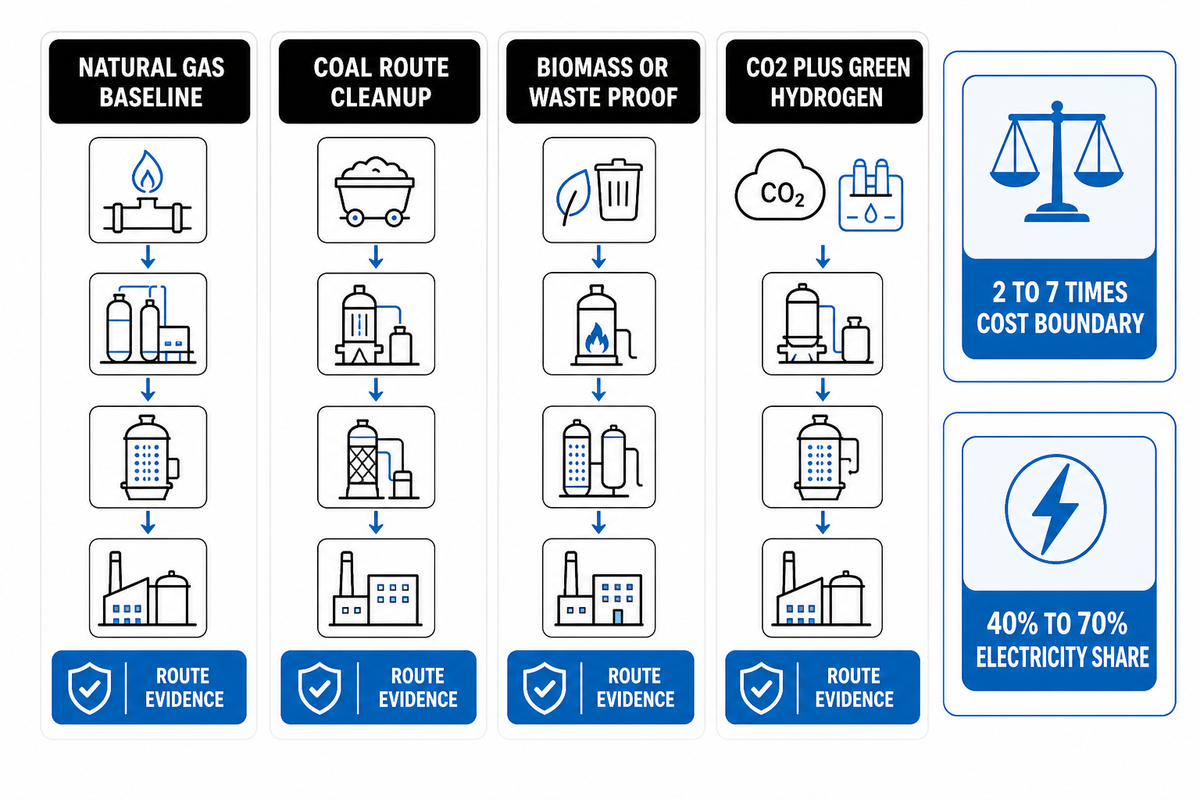
原料ルートは、エネルギー使用量、浄化負担、排出証明、およびクレーム言語を変更するため、世界のメタノール生産における最も重要な違いの 1 つです。天然ガス、石炭、バイオマス、廃棄物由来、CO2/H2 ルートはすべてメタノールにつながる可能性がありますが、購入者は、原料、プロセス境界、および保管過程の証拠がなければ、炭素ラベルまたは再生可能ラベルを交換可能であると扱うべきではありません。.
IRENA とメタノール研究所 バイオマス、特定の廃棄物資源、または回収された CO2 と再生可能水素を使用できるルートとして再生可能メタノールをフレーム化します。 A CO2 と再生可能水素からの持続可能なメタノール生産に関する最近のオープンアクセスレビュー CO2 水素化を Power-to-X 経路として扱います。その経路は有望ですが、すべてのメタノール供給を「グリーン」にするわけではなく、廃棄物由来の経路には、指定された規制された原料カテゴリーがまだ必要です。購入者は確認できます EU の再生可能エネルギー指令の統合テキスト ルートクレームがリサイクル炭素または再生可能燃料言語に依存する場合 再生不可能な廃棄物または生物起源の廃棄物言語を使用するルートクレームについては、こちらも確認してください 指令 (EU) 2018/2001:廃棄物処理ガス、排気ガス、輸送目標適格性は、個別の概念であり、一般的なグリーンラベルではない。買い手は文書に裏付けられたルートクレームを必要とし、合成メタノールは電力強度を厳しく検討する必要がある IEA グローバル 水素 レビュー 2024 炭素含有水素ベースの燃料は、化石燃料の比較対照に勝つために、合成メタノールの約 160-190 g CO2-eq/kWh の範囲にある非常に低炭素の電力が必要であると述べています。同じ IEA の議論では、最大の削減量を生物起源または大気中の CO2 と結び付け、配分の選択がメタノールに割り当てられる排出量に影響を与えるため、化石点源 CO2、生物起源 CO2、および直接空気捕捉 CO2 は、電気のしきい値が満たされているからといって同等として扱われるべきではないと警告しています。.
化石原料の炭素リスクも、同じ広範なルートラベル内で異なります。ザ IEA グローバル メタン トラッカー 2026 の主要な調査結果 石油とガスの生産における上流のメタン強度は国によって大きく異なり、最も優れたパフォーマンスは最悪の100 倍以上であるとします。 IEAのメタン方法論の議論では、推定値は測定データ、衛星データ、推測データを使用しており、多くの地域で依然として不確実であると述べています。メタノール購入者にとって、これは「天然ガスベース」または「石炭ベース」が完全なライフサイクル炭素の答えではないことを意味します。サプライヤー固有の原料の起源、測定されたメタン強度、鉱山または油田の状況、および選択された会計方法により、炭素の比較が変更される可能性があります。.
ルート比較では、購入者の請求が炭素、水素、または水に依存する場合に数値を使用する必要がありますが、数値には慎重にラベルを付ける必要があります。 2024 NREL 関連の環境科学技術モデル 反応性炭素の捕捉とメタノールへの変換 1 つのベースラインの排ガス CO2 水素化プロセスと 1 つの反応性炭素捕捉ケースを比較しました。そのモデル化されたシナリオでは、ゆりかごからゲートまでの炭素強度は 0.50 対 0.55 kg CO2e/kg メタノールであり、水の消費量は 12.89 対 10.21 kg H2O/kg メタノールでした。この研究では、予備的な RCC パフォーマンス入力が使用され、RCC 実験の H2/メタノール質量比目標が与えられます。位置、電力強度、CO2 発生源、割り当て方法、開始年、原子炉の性能が結果を変える可能性があるため、これらの値は価格ベンチマークや一般的なメタノール生産ベンチマークではなく、シナリオ TEA/LCA の証拠として扱われます。.
ルートレベルの生産経済は依然としてメタノール生産レビューに属しています; それはライブスポット価格カバレッジとはまったく異なります。 IEAの分析 CO2 を利用すること CO2 由来のメタノールとメタンの推定生産コストは、化石物質の対応物よりも 2 ~ 7 倍高いことが多く、通常、電気が生産コストの 40% ~ 70% を占めるという報告。現在の見積もりとしてではなく、ルートスクリーニングの制約として使用してください。CO2 からメタノールへの RFQ には、電力価格の仮定、電解槽の利用率、CO2 の回収と浄化のコスト、水素貯蔵の必要性、炭素クレジットのロジック、およびサプライヤーが天然ガスと比較しているかどうかが記載される必要があります。 、石炭、バイオマス、または廃棄物由来のメタノール。.
技術の成熟度は別のルートリスクです。 CO2 水素化と反応性炭素回収設計は技術的に信頼できるかもしれませんが、購入者は、確立された天然ガスや石炭のメタノール ルートと同じ運用成熟度や供給継続性を持っていると考えるべきではありません。. IEA Global Hydrogen Review 2026 生産章 データは、水素投入プロジェクトが依然として現在のチェックを必要とする理由を示している: 新しい低排出水素最終投資決定は2025 年に0.8 Mtpaを下回った、コミット生産は2030 年までに4.3 Mtに達し、発表された2030 年プロジェクトパイプラインは10 Mt縮小して27 Mtに達するこれらの数字は水素システムの成熟度シグナルであり、e-メタノール固有のFIDやオフテイクプルーフではない。合成メタノールの場合、成熟度質問はIEAの電力強度閾値からの物理的排出問題の隣にあり、サプライヤーの主張が依存する場合、メタノール固有のプロジェクト証拠に対して更新されるべきである。.
供給の継続性はライブプライシングのトピックではありませんが、ルートリスクのレビューに属します。. IEA Global Hydrogen Review 2026 エグゼクティブサマリー 中東紛争により、メタノールを含む水素ベースの製品の生産と貿易が混乱したと述べ、また、この地域はメタノール生産量が17%近く、メタノール貿易量がほぼ45%を占めているが、ホルムズ海峡の混乱により製品の流れが制限されているとも述べている。購入者はこのプロセスガイドでスポット市場予測を必要としませんが、継続性が重要な場合には、地域、港のルート、輸出エクスポージャー、緊急時供給を別のRFQ質問として扱う必要があります。.
従来のバイヤーは、安定した供給、等級、および文書だけを必要とするかもしれません; 炭素会計、輸送用燃料、またはその他の燃料クレームは、ルートの証拠を必要とします ルートラベルは、電気ミックス、水素源、CO2 源、輸送境界、割り当て方法、認証プログラム、保管モデル、およびローカルルールセットがすべてサポート可能なものを変更する可能性があるため、規制された炭素属性を証明しません 請求が再生可能な起源に依存する場合、 欧州委員会の自主的なスキームのガイダンス 外部監査人は原材料やエネルギーの起源から燃料の生産者や取引業者までのチェーンを検証すると述べている。. 委員会実施規則 (EU) 2022/996 マスバランスの混合と帰属を許可するため、購入者は帰属された特性と分離された物理的起源を区別する必要があります。海洋燃料の主張には、 IMO ライフ サイクル GHG フレームワーク, 、CO2、メタン、亜酸化窒素の井戸からタンクへ、タンクからウェイクへ、井戸からウェイクへの会計を分離します。.
炭素比較も比較する前に同じ機能単位と系境界が必要である。 例えば、 米国 EPA 再生可能燃料標準ライフサイクル ページ 原料の生産と輸送、燃料の生産と流通、完成した燃料の使用、置き換えられた石油燃料との比較が含まれます。これは燃料政策の経路境界であり、ゆりかごからゲートまでの化学原料の設置面積や海洋井戸からウェイクまでの計算と自動的に同じものではありません。.
燃料プログラムのクレームは法的詳細を追加するため、範囲を維持します。 EU の低炭素、RFNBO、およびリサイクル炭素燃料法では、関連しているが異なるルールが使用されます 委任規則 (EU) 2023/1185 化石源から採取された一部の CO2 処理は、発生源に応じて 2035 年または 2040 年に期限が設定されています。出荷については、IMO の公式 GHG 作品 ページ mepc/es.2が2026年に採択検討を延期した後も、net-zero FrameworkはMARPOL附属書VI修正草案のままであると述べている。購入者は、すべてのライフサイクルラベルを同じ法的地位として扱うのではなく、どのプログラムが主張されているかを尋ねる必要がある。.
メタノールの製造にはどのような原材料が使用されますか?
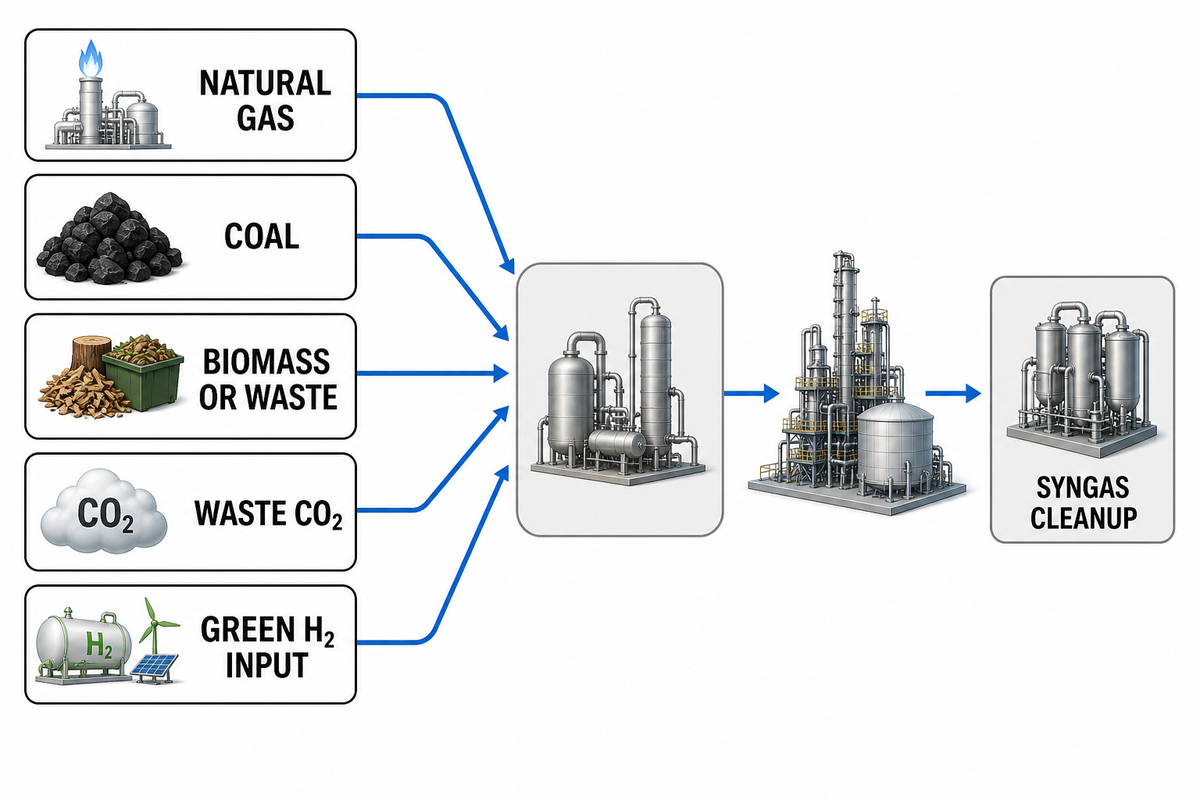
従来の産業ルートでは天然ガスが通常の原料ですが、それだけが唯一の選択肢ではありません。. メタノール 研究所 石炭、バイオマス、都市固形廃棄物、バイオガス、廃棄物 CO2、再生可能電力経路もリストされています。一般的な下流のロジックは、メタノールの合成と精製に入る反応性の炭素と水素の流れを生成または使用することです。.
その違いは学術的なものだけではありません。石炭ベースのメタノールは、より多くの調整を必要とする可能性があり、異なる炭素プロファイルを持つ可能性があります。バイオマスまたは廃棄物由来のメタノールは、原料の信頼性、規制された原料カテゴリー、ガス洗浄の負担、および認証に依存します。. 米国 DOE の熱化学変換ガイダンス 合成ガスの浄化により、タール、酸性ガス、アンモニア、アルカリ金属、微粒子を除去できると述べています; 硫黄研磨により硫化水素を低減でき、水-ガスシフトにより水素-炭素-一酸化物の比率が調整できます。 CO2 プラスグリーン水素は、上流システムを電力、電解槽、CO2 回収、原子炉統合の問題に変えます。プレゼンテーションで魅力的に見えるルートは、大規模に調達するのが難しくなる可能性があります。 2024年の査読済み 脱化石メタノールに関する環境管理研究ジャーナル トウモロコシ、廃棄物バイオマス、直接大気回収、セメントの CO2 ルートを比較したところ、炭素の利用可能性、エネルギー、水、土地需要、場所がすべて実現可能性を変えることがわかりました。.
緑色で再生可能なメタノール: 便利ですが、クエリ全体ではありません
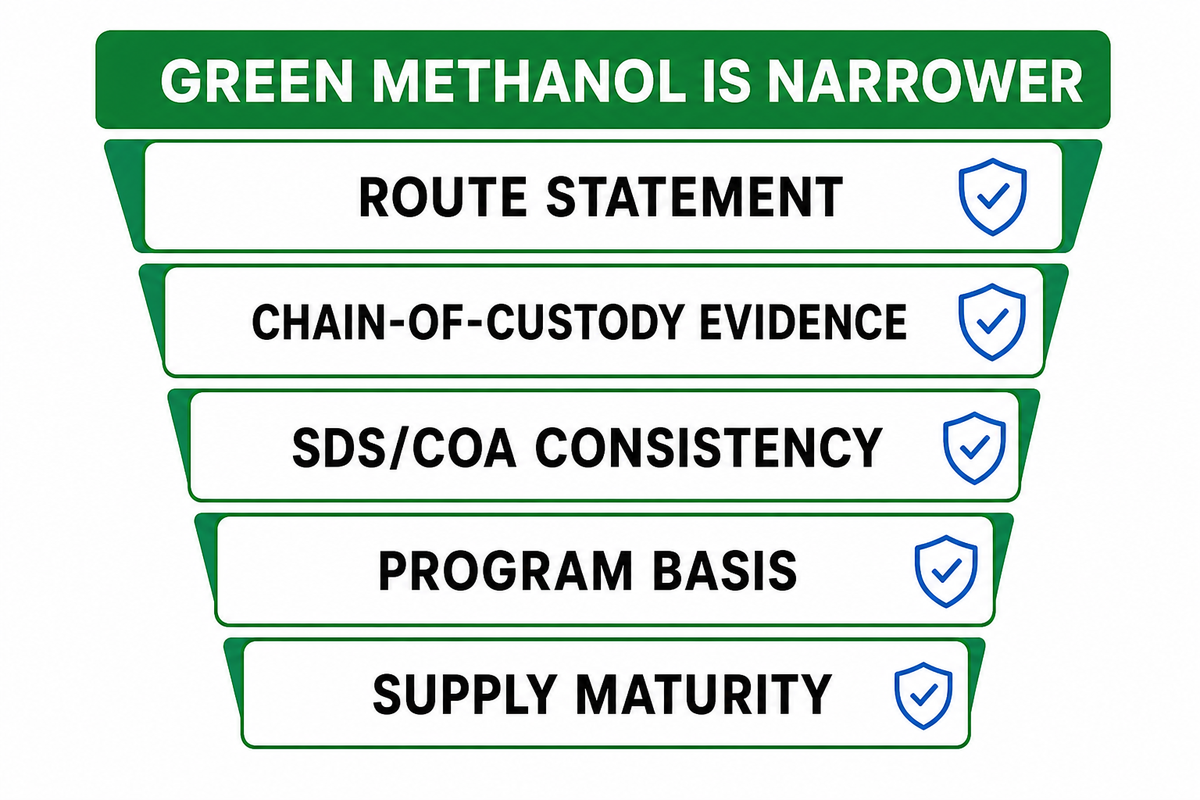
グリーンメタノールは重要ですが、広範な検索クエリ「メタノール生成」よりも狭いです。“ IRENA およびメタノール研究所による再生可能メタノールのガイダンス バイオマス、適格な廃棄物資源、または CO2 プラス再生可能水素ルートを指しますが、その数値ルートミックスシェアは 2021 年の見通しに属します。メタノールの従来の生産には依然として天然ガスまたは石炭が使用される可能性があり、再生不可能な廃棄物から作られたメタノールは、該当する燃料カテゴリーとプログラム根拠なしに再生可能ラベルに折りたたまれるべきではありません。 EU の輸送規則の下では、第 25 条および第 29a 条の温室効果ガス節約要件が満たされる場合、リサイクル炭素燃料クレームは条件付き目標適格性を依然として持つことができますが、原料は法定のリサイクル炭素の定義に適合する必要があります。対象となる EU 燃料クレームには、取引レベルのトレーサビリティも必要になる場合があります 欧州委員会の連合データベース 液体および気体の再生可能およびリサイクル炭素燃料の取引、変換ステップ、下流取引、持続可能性の証明識別子、および温室効果ガス メタデータを記録します。グリーンおよびリサイクル炭素の両方のカテゴリはメタノールの合成と蒸留で終わる可能性がありますが、上流の原料、排出量の計算、証明要件、供給成熟度は異なります。.
産業バイヤーにとって、最も有用な質問は 、 「グリーンメタノールは同じ方法で生産されていますか?」 「ルートのどの部分が異なり、どのような証拠がそれを証明していますか?」 再生可能なメタノールの主張は、ルートステートメント、該当する場合は保管過程の証拠、SDS/COAの一貫性、および意図された用途の明確な説明によって裏付けられる必要があります。 請求が燃料または規制プログラムに結びついている場合は、プログラムの基礎に名前を付けます: EU RFNBO の電力基準、自主的スキーム監査、マスバランス帰属、回収された炭素時間制限、および IMO ウェルトゥウェイク会計は、交換可能なルートラベル 1 つではなく、完全な世界的な法的範囲ではありません。.
安全性と仕様チェック 購入者はスキップしないでください
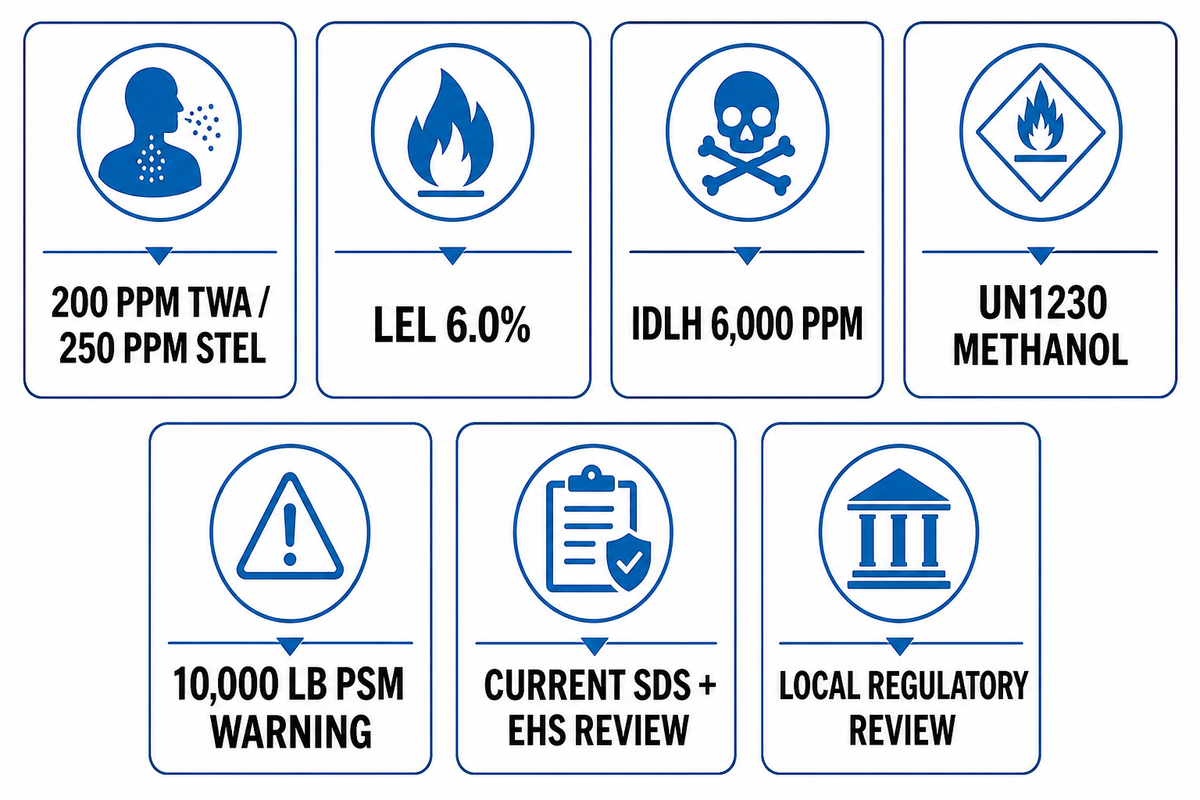
メタノールは化学産業で使用されますが、有毒で可燃性もあります。. CDC/NIOSH はメタノールをリストしています cas 67-56-1 の下で、200 ppm TWA の NIOSH REL とスキン表記付きの 250 ppm STEL を与えます。同じ NIOSH ページには LEL 6.0% と 6,000 ppm の改訂版 IDLH がリストされています。. OSHA の注釈付き PEL テーブル OSHA PEL 参照として、200 ppm / 260 mg/m3 のメチルアルコールをリストします。.
それらの数字はこの記事を扱マニュアルに変えていません それらは、メタノールの購入が現在のSDS、施設EHSレビュー、保管適合性チェック、輸送分類レビュー、換気計画、および受領または使用前のローカル規制レビューを含むべきであるというバイヤーレベルのシグナルです 輸送分類は独自の法的ワークストリームです: 49 CFR 172.101 は、クラス3 および梱包グループIIを持つUN1230 メタノールをリストする一方 PHMSA 解釈 05-0062 危険物表には、国内および国際メタノールのエントリが別々にあると述べています: 国際エントリは、ディビジョン6.1 の補助ラベルを必要とし、国内エントリはそうではありません。 PHMSA材料は、UN1230 メタノールが3 (6.1) 、 IIとして表示されるときにまだ表示できますが、荷送人は、1 つのラベルルールをどこにでも適用する代わりに、国内、国際、モーダル、目的地、混合物、および包装要件を区別する必要があります EU 行きの購入は、別の層を追加することができます: OECD eChemPortal はメタノール CAS 67-56-1 をインデックスします ECHA REACH および EU 調和 CLP 分類エントリへ。 A CDC/NIOSH 緊急対応カード また、臭気は低曝露を検出するには十分ではなく、皮膚の吸収が重要であり、メタノール蒸気は換気の悪い低地または狭い場所に集まり、蒸気は発火源に移動してフラッシュバックする可能性があり、健康への悪影響は無症候性の期間後にのみ現れる可能性があると警告しています。 1〜72時間。.
施設レベルの安全性は、購入書類パッケージの上にも置くことができます。. OSHA の プロセス 安全 管理 ページ 29 CFR 1910.119 は、引火性液体およびガスの閾値量をカバーしており、破滅的放出の危険性を特定、評価、および制御するためのプログラムが必要であることを述べています。 現在 OSHA 1910.119 テキスト カテゴリー1 の可燃性ガスまたは引火点が100 deg F (37.8 deg C) 未満の可燃性液体については、注意事項を条件として、調達警告を10,000 lb (4,535.9 kg) と1 か所に配置した現在のもの 29 CFR 1910.119 の eCFR テキスト これが数量限定ではない理由を示しています。燃料使用の除外、大気タンク貯蔵、小売、石油またはガスの操業、遠隔施設の状況、接続または近くの「プロセス」の定義はすべて、適用性に影響を与える可能性があります。.
受領サイト在庫は別の境界ですが、購入者の EHS チームに残しておく必要があります。このガイドでは、アクセス可能な主要な参照先であるため、米国、EU、および IMO の例が使用されています。完全なグローバル コンプライアンス マップではありません。米国のサイトについては、レビューに EPCRA 在庫レポート、TRI 適格性、TSCA CDR 輸入業者または製造業者レポート、CERCLA リリース通知が含まれる場合があります。米国以外の購入者は、米国のチェックリストをコピーするのではなく、地元の危険物、化学物質の在庫、輸入、港、職場、緊急時計画のルールを通じて同じ質問を実行する必要があります。.
使用終了材料は別の廃棄物問題を作成します。 EPA の 有害廃棄物の特定ガイダンス f003 のメタノールを含む使用済み非ハロゲン化溶剤、U154 のメタノールを含む廃棄済み未使用の商業化学製品、および特性が適用される場合、引火点が 60 °C 未満の液体などの発火性有害廃棄物については D001 をリストします。すべてのメタノール含有廃棄物に F003 を適用しないでください。連邦政府のリストは使用済み溶剤の使用と使用前の混合条件に結び付けられており、反応物、製品成分、燃料、または洗浄助剤として使用されるメタノールは、異なる発生器レベルの廃棄物測定が必要になる場合があります。廃棄物状況のレビューは、購入数量、輸送ラベル、CERCLA 放出報告、EPCRA 在庫、または TRI 適格性とは異なります。購入者は、規格外のメタノール、未使用、または使用済みメタノールを廃棄する前に、サイト EHS および適格な廃棄物ベンダーを関与させる必要があります。.
サプライヤーの会話を具体的にする COA、SDS、TDS (利用可能な場合)、グレードステートメント、パッケージの詳細、バッチトレーサビリティ、および意図された用途の一致を尋ねます。メタノールがホルムアルデヒド、MTBE、酢酸、メタノールからオレフィン、溶媒ブレンド、燃料関連試験、またはアンモニア生成隣接性をサポートする場合、予想される記録は同一ではない可能性があります。.
安全境界
実際の取り扱いの決定には、SDS、規制、輸送、保管、および施設の公式 EHS 文書を使用してください。この記事では、購入者のチェックと供給元が支援する制限について説明します。サイト固有の安全手順やプラントレベルの環境許可に代わるものではありません。. 米国 EPA MON NESHAP の概要 は、RFQショートカットではなく、別のプラントと排出の境界である。海洋または水辺の燃料使用の場合、 NOAA メタノール ファクトシート 生分解による酸素欠乏や明るい条件下でのほとんど目に見えない火災など、流出と対応の境界を追加します。 IMOの 代替燃料流出への備えに関する研究開発フォーラム メタノール、アンモニア、水素、lng、lpg、バイオ/e-燃料などの燃料が関与する流出に関する知識と能力のギャップを個別に警告するため、iso の燃料品質と乗組員の訓練だけでは汚染対応の準備が整っていることを証明することはできません。.
生産ルートから購入仕様まで
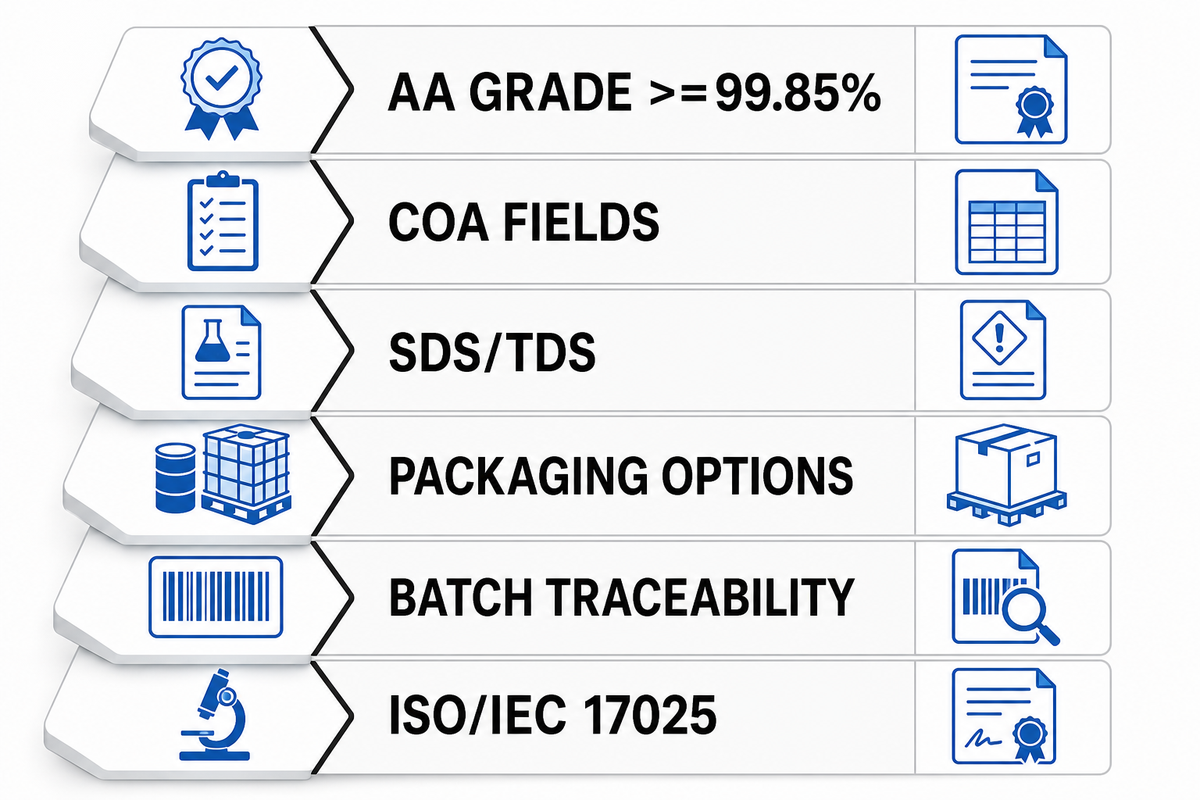
強力なRFQは “メタノール” だけを求めるわけではありません グレード、純度、書類パッケージ、数量、梱包、仕向地、アプリケーション、納期、および任意のルート関連の要件を求めるものです ここでプロセスガイドは、調達、エンジニアリング、およびコンプライアンスチームに役立ちます。.
ぼしやの石油化学製品ページには、メタノールがAAグレードとして記載されており、純度は>=99.85%と記載されており、パッケージングオプションはバルク容器、IBC、ドラム、アプリケーションはホルムアルデヒド、MTBE、酢酸を含むが、それをぼしやがメタノール生産プラントを運営している証拠としてではなく、ぼしやのファーストパーティ製品および調達ハンドオフとして扱います また、AAグレードまたは工業グレードは、契約全体ではなく、仕様の会話の開始として扱います: IMPCA は、そのメタノール仕様を参照仕様として説明しています, 、特定の要件はまだバイヤー-サプライヤー契約に属しながら。 non-marine産業仕様作業のため、, ASTM D1152-24 は別の基準点です: それは一般的なガイドとして99.85%グレードのメタノールをカバーし、同時に、OSHA、サプライヤーSDS、およびローカル規制を参照するようにユーザーに伝えます。 boshiyaのAAグレードの文言、IMPCA参照、およびASTM D1152-24 は交換可能であると仮定しないでください; 契約の必須仕様、COAフィールド、および許容限度を指名します 製品の適合性、ルートの出所、管理チェーン、および規制されたライフサイクル-炭素属性は、別の証拠層です。.
仕様証拠は、サンプルと貨物の履歴が信頼できる場合にのみ役立ちます。. IMPCA の標準とベストプラクティスのページ 複数のメタノール取り扱い手順が混乱や誤った取り扱いを招く可能性があることに注意し、陸上や船舶での手順についてはメタノールサンプリング法を指摘 NISTが主催する全国度量衡会議の報告書でも、メタノール燃料サンプルには腐食が発生する可能性があるためアルミニウム容器を使用すべきではないと警告し、メタノール燃料またはメタノールを含むブレンドについては316Lシリーズのステンレス鋼サンプル容器を推奨しています NISTの 計量トレーサビリティポリシー 文書レビューのための別の警告を追加します: トレーサビリティだけでは目的への適合性を保証せず、ユーザーはトレーサビリティクレームの妥当性と測定の不確実性がニーズに十分小さいかどうかを評価する必要がありますラボの能力は別の層です: 公式 ISO/IEC 17025 の概要 この規格により、研究所はテスト、サンプリング、または校正に関する能力と有効な結果を実証できると述べています NIST NVLAP ISO/IEC 17025 に対して認定研究所を評価し、ディレクトリとメソッドパラメータの検索ツールを提供します。 methanol COAの場合、ラボの認定および認定範囲が、実際に使用されているメタノール試験方法、分析物、サンプルの種類、サンプリング活動をカバーしていることを確認します; 認定組織名だけでは結果レベルの妥当性と同じではないことを報告する必要があります方法、サンプルID、ロットまたは貨物ID、契約の受け入れ制限、200 kgのドラムまたは1,000 kgのIBCなどのパッケージベース、質量、ppm、mg/kg、またはmg/Lによる%などの単位、および受け入れ制限が必要な場合は不確実性を記載します COA/仕様適合性、測定の不確実性、ラボの方法、認定範囲、サンプルの保管、サンプルとコンテナの互換性、荷物の取り扱い、およびポストプロダクションロジスティクスを別のRFQ質問として保持します。.
最終用途は分析的な質問をさらに絞り込むことができます。 An メタノールガスクロマトグラフィー分析に関する ASTM 作業項目 と言うのは、不純物の組成は生産プロセスによって異なり、下流ユーザーによって注目される重要な不純物が異なり、輸送によって芳香族化合物や MTBE などの汚染物質が混入する可能性があるということです。その作業項目はまだ開発中であるため、完成したテスト方法の義務としてではなく、微量不純物の感受性に関する警告として扱うことです。.
ルートに敏感な購入の場合、見積書にルートまたはルートのカテゴリーを記載できるかどうかを尋ねます。従来の購入の場合、グレード、入手可能性、および文書がより重要になる可能性があります。再生可能、リサイクル炭素、電子メタノール、または認定された低炭素ディスカッションの場合、ルート証拠、保管過程の証拠、および保管モデルの詳細のないマーケティング速記は受け入れません。 などのルート フレームワークを使用します IRENA 再生可能メタノールレポート 証明すべきことの証拠として.
バイヤーの決定マトリックス: ルート、ドキュメント、およびアプリケーションの適合
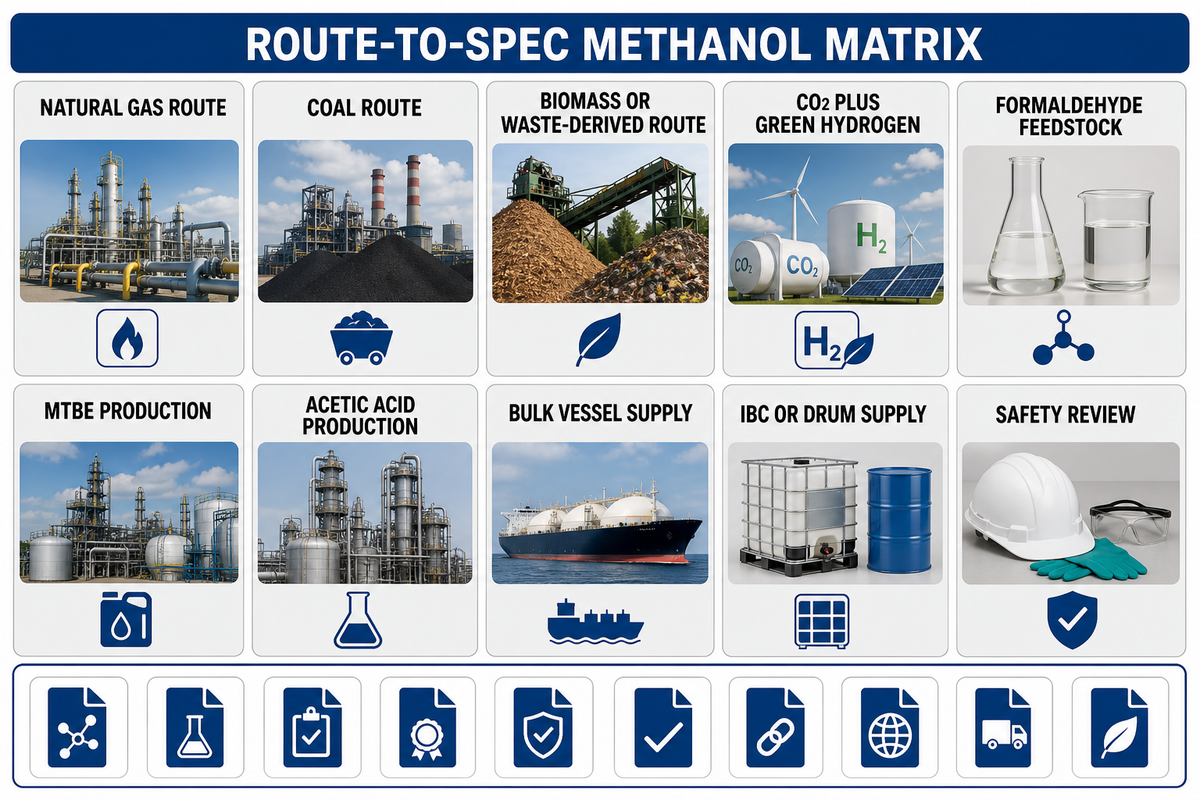
を使います 10 ポイントのルートからスペックへのメタノール マトリックス お問い合わせを送信する前に。からのルート証拠を使用して、メタノールの生産ルートとアプリケーションを実際の購入チェックに変換します メタノール 研究所 そして再生可能ルートのフレーミング イレーナ.
| ルートの種類またはユースケース | 変わるもの | 要求するための文書 | バイヤーノート |
|---|---|---|---|
| 天然ガスルート | 従来の合成ガス製造とメタノール合成。. | COA、SDS、グレード、原産地(該当する場合)。. | 多くの場合、ルートとドキュメントの比較のための実用的なベースラインです。. |
| 石炭ルート | ガス化と合成ガスの調整はより複雑になる可能性があります。. | COA、SDS、炭素プロファイルが重要な場合はルートステートメント。. | 一部の市場では便利ですが、炭素の仮定は明確でなければなりません。. |
| バイオマスまたは廃棄物由来のルート | 原料源、信頼性、認証に関する質問が増加します。. | ルート証拠、持続可能性記録、COA、SDS. | プログラム固有の文書証跡がなければ、「再生可能」または低炭素を想定しないでください。再生不可能な廃棄物には、再生可能なラベルの代わりにリサイクルされた炭素燃料処理が必要になる場合があります。. |
| CO2 プラスグリーン水素 | CO2 源、水素、電解槽の電力、および統合により実現可能性が推進されます。. | ルートステートメント、認証、COA、SDS、供給継続性の証拠。. | 電子メタノールの議論に最適ですが、すべての日常的な購入ではありません。炭素の主張には依然として境界証拠が必要です。. |
| ホルムアルデヒド原料 | 純度と不純物の許容度が議論を推進します。. | AAグレードステートメント、COA、バッチトレーサビリティ. | Boshiya はホルムアルデヒドをメタノールの用途として挙げています。. |
| MTBEプロダクション | 燃料関連のサプライチェーンおよび文書要件が適用される場合があります。. | COA、SDS、輸送および目的地の要件。. | メタノール燃料と MTBE のコンテキストを分離したままにします。. ISO 6583:2024 は、custody-transfer fuel-quality specification; である; IMO燃料マッピング igfコードのメタノール要件はまだ詳細ではなく、msc.1/circ.1621は暫定的なガイダンスのままであると述べています。. IMO MSC 111 また、燃料としてメチル/エチルアルコールを使用する船舶の船員に対する暫定訓練ガイドラインも承認されたため、燃料の品質は規制、乗組員の能力、または流出対応の準備状況と同じではありません。. |
| 酢酸の製造 | 下流化学の仕様整合性は重要です。. | COA、純度、含水量が指定されている場合。. | ぼしやはメタノールの用途として酢酸を挙げています。. |
| バルク容器の供給 | 数量、目的地、港、配送タイミングが支配的です。. | COA、SDS、物流書類、数量確認. | Boshiya は、石油化学ページの一部の船舶数量について 5,000+ トンを示しています。. |
| IBCまたはドラム供給 | 小規模なバッチ物流と倉庫の取り扱いがより顕著になります。. | COA、SDS、包装の確認、パレット/ラベルの情報. | 購入者が船舶規模の量を調達していない場合に役立ちます。. |
| 安全性 レビュー | 毒性および可燃性は購入後付けとして扱うことはできません。. | 現在の SDS、EHS レビュー、規制および輸送チェック。. | NIOSH と OSHA の価値観は、専門的なレビューの必要性を裏付けています。. |
バイヤーの旅でボシヤが合う場所
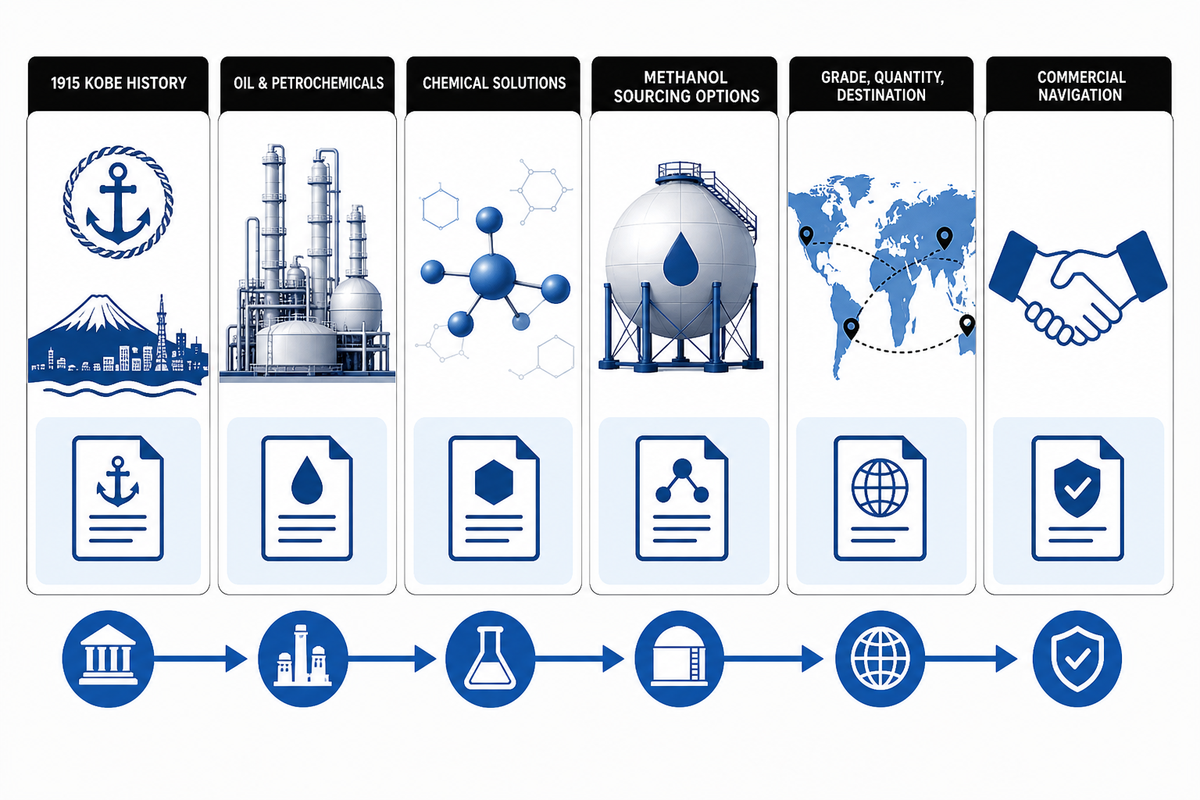
星矢は、神戸で 1915 年に遡る歴史と、石油石油化学製品や化学ソリューションを含む部門を持つ、長期にわたる産業貿易および供給パートナーとしての地位を確立しています。メタノールの購入者にとって、そのポジショニングは、ルートと仕様に関する質問が明確になった後に最も役立ちます。.
すでにグレード、数量、目的地、アプリケーション、パッケージング、およびドキュメントの要件を知っている場合は、Boshiya's メタノールと石油化学の調達オプション ページは実用的な次のステップです。お問い合わせを使用して、AA グレードのメタノール、バルク容器、IBC、またはドラム包装が必要かどうか、また用途がホルムアルデヒド、MTBE、酢酸、溶媒/中間使用、または別の化学産業ルートであるかどうかを述べます。.
関連する産業供給とサービスに関するより広い文脈のために、ボシヤは石油精製リソースも提示します。 、, 製油所の設備と資材, 技術サービス, EPC サポート, 、 および 機器レンタル. 。 それらのリンクは、第三者の証明ではなく、商用ナビゲーションとして扱われるべきである; などの情報源に結び付けられたプロセス証拠を保持する メタノール 研究所 およびなどの公式情報源に関連する安全性の証拠 CDC/NIOSH.
RFQ チェックリスト Before You Source メタノール
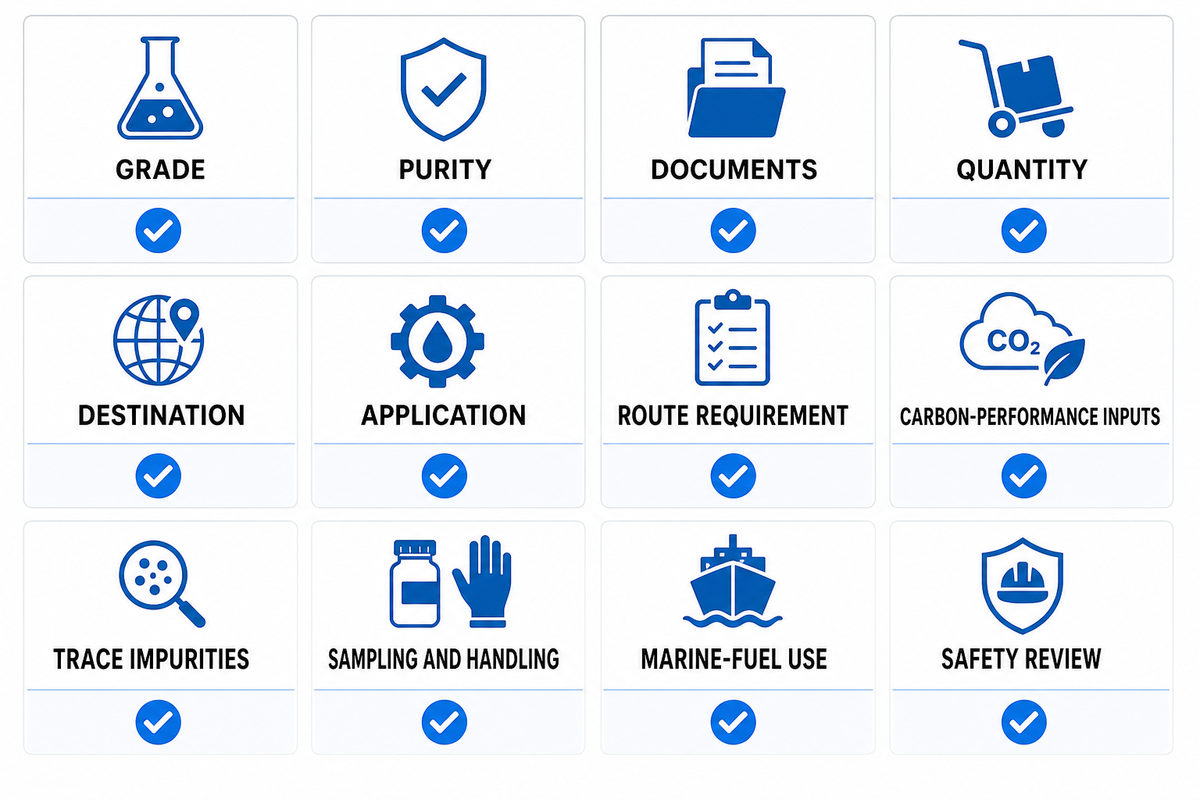
クリーンなメタノール RFQ には推測の余地がほとんどないはずです。ルートに敏感なプロジェクトは、商業交渉の前に必要な証拠を定義する必要があります。.
プレースホルダーではなく、実際のプロジェクト値を使用します。要件が 20 トン、200 トン、1,000 kg、5,000 トン、30 日間の配送計画、または 90 日間の予測ウィンドウである場合は、問い合わせにその正確な値を書いてください。倉庫にパッケージサイズ、ドラムカウント、パレット、換気、または配送ウィンドウの制限がある場合は、見積もりを依頼する前にそれらを含めてください。.
各ラインに実際の 30 日、60 日、または 90 日の配送期間も記載されていない限り、200 kg のトライアル、1,000 kg のバッチ、20 トンの注文、200 トンのプログラム、および 5,000 トンの船舶照会を混合しないでください。.
- グレード: AA グレード、工業グレード、またはその他の指定されたグレード。グレードのニックネームだけではなく、指定された契約仕様が付いています。.
- 純度: マーケティングの説明だけでなく、COA と関連する不純物の制限も求めます。.
- ドキュメント: SDS、利用可能な場合は TDS、COA、パッケージングの詳細、トレーサビリティをリクエストしてください。.
- 数量: 船舶規模、ibc、ドラム、200 kg 試用ロット、1,000 kg バッチ、20 トン、200 トン、またはその他の実際の要件。.
- 目的地: 国、港、倉庫、納期のタイミング (実際の制約の場合は 30 日、60 日、90 日など)。.
- アプリケーション: ホルムアルデヒド、MTBE、酢酸、溶媒/中間体、メタノールからオレフィン、燃料関連の試験、またはその他の用途。.
- ルート要件: 従来のメタノール、再生可能メタノール、グリーンメタノール、リサイクル炭素メタノール、低炭素メタノール、またはルート中立的な供給。炭素または燃料の請求が購入の一部である場合は、プログラム、ライフサイクル境界、保管モデル、目標基準、温室効果ガス節約閾値に名前を付け、証拠がバッチ固有であるか、または 12 か月などの定義された期間有効であるかどうかを尋ねます。 EU のリサイクル炭素燃料の請求については、原料が材料回収に適さない再生不可能な廃棄物であるか、または避けられない意図しないプロセスガスであるか、また連合データベースの取引記録または持続可能性証明識別子が適用されるかどうかを尋ねます。.
- カーボンパフォーマンス入力: 合成または電子メタノールの場合は、電気-炭素強度ベース、CO2 源、水素源、割り当て方法、モデル化された水消費量、およびプロジェクト固有の成熟度の証拠が存在するかどうかを尋ねます。.
- トレース不純物: 分析方法と不純物リストを下流での使用に適合させます。 99.85% 純度だけで、ホルムアルデヒド、MTBE、酢酸、または燃料関連のすべての使用例がカバーされると仮定しないでください。.
- サンプリングとハンドリング: サンプルはどのように採取されたのか、陸上貨物手順が適用されるのか、船舶貨物手順が適用されるのか、サンプルコンテナがメタノールと互換性があるのか、COA トレーサビリティが実際のロットや貨物履歴にどのように接続されるのか、測定の不確実性と方法が意図した許容限界に適合しているのかを尋ねます。.
- 海洋燃料の使用: メタノールが船舶用燃料として意図されている場合は、iso 6583:2024 保管 移送燃料品質仕様、ライフサイクル会計基準、バンカリングの可用性、MSC.1/Circ.1621 暫定ガイダンス、IGF コード メタノールの適用範囲、現在の IMO Net-Zero を求めてください。フレームワークのステータス、IMO MSC 111 メチル/エチルアルコール暫定トレーニング ガイドラインに基づく乗組員トレーニングの準備、および代替燃料放出に対するサイト固有の流出対応の準備。.
- 安全性レビュー: 確認 SDS 、, 輸送分類, 、貯蔵適合性、アンローディングエリア換気、低点蒸気制御、点火源制御、皮膚暴露制御、施設EHS要件、放出報告境界、未使用、仕様外、または使用済みメタノールの廃棄物状況レビュー、配送前の仕向地市場の化学準拠米国、EU、およびIMOの例を開始参照としてのみ扱う; 受け取りサイトのEHSチームは、ローカルルールをマッピングする必要があります。 UN1230 メタノールについては、国内および国際エントリを分離し、出荷に3 (6.1) 、梱包グループIIの説明とラベルが該当するルートとモードで必要かどうかを確認します。.
よくある質問
メタノール製造の主なステップは何ですか?
短い答え
主なステップは、原料の調製、合成ガスまたは CO2/H2 供給物の調製、メタノールの合成、粗メタノールの分離、精製です。天然ガスは水蒸気で合成ガスに改質され、石炭またはバイオマスはガス化および洗浄され、CO2 の直接水素化は水、選択性、水素統合の制約を加えながら従来の合成ガスのフロントエンドをスキップできます。.
メタノールの製造にはどのような原料が使用されますか?
短い答え
天然ガスは、特に従来の工業生産において最も一般的な原料であり、メタノールは、石炭、バイオマス、都市固形廃棄物、バイオガス、副産物の流れ、回収された二酸化炭素、水素からも生産できます。合成ガスの生産、排出権の主張、浄化負担、プロセスの構成、規模、記録、および再生可能、リサイクル炭素、低炭素、またはグリーンメタノールの主張が支持可能かどうかに影響を与えるため、ルートが重要です。.
グリーンメタノールは従来のメタノールと同じ方法で製造されますか?
短い答え
グリーンメタノールは下流の合成と精製ステップを共有できますが、上流のルートは異なります 従来の生産は天然ガスまたは石炭から始まることが多い; グリーンまたは再生可能メタノールは、バイオマス、適格な廃棄物資源、または回収されたCO2 プラス再生可能水素を使用することもあります ルートによっては、一酸化炭素またはCO2 が豊富な反応システムの水素化にも依存します。 再生不可能な廃棄物からのメタノールは、再生可能なラベルではなく、リサイクルされた炭素燃料または低炭素分析を必要とする場合があります; EUの輸送の文脈では、リサイクルされた炭素燃料の適格性は、第25 条の目標基準、第29a条の温室効果ガス節約閾値、固体または液体廃棄物の材料回収適合性試験、および適格なプロセスガスの避けられない/意図しない試験に依存する可能性があるため、グリーンメタノールの注文には、ルートステートメント、保管過程のサポート、再生可能電力の仮定、CO2 発生源情報、保管モデルの詳細、およびクレームの明確な理由が必要になる場合があります。.
購入者はメタノールを注文する前にどのような安全チェックを確認する必要がありますか?
短い答え
購入者は、メタノールを受け取る前に、現在の SDS、OSHA/NIOSH 暴露基準、輸送分類、包装、保管互換性、換気の必要性、緊急対応遅延、放出報告境界、未使用または使用済みメタノールの廃棄物状態境界、および現地施設の EHS 手順を確認する必要があります。メタノールは有毒で可燃性であり、CDC/NIOSH は、暴露後に全身への影響が遅れる可能性があると指摘しています; また、蒸気が低濃度または限られた領域で集まり、発火源に移動する可能性があると警告しています。サプライヤーの会話には、COA、SDS、包装、バッチトレーサビリティ、荷降ろし制御、経皮暴露制御、保管、放出応答、廃棄の決定、内部承認のための最終用途情報が含まれる必要があります。.
この記事では現在のメタノール価格について説明していますか?
短い答え
いいえ このページは、ルート、プロセス、文書、梱包、および安全性準備状況のチェックに焦点を当てています。現在の価格に関する議論は、地域、数量、契約時期、原料、物流、梱包の前提条件を含む別の市場ページに属します。.
参考文献と情報源
- メタノール研究所: 生産 ー工業プロセスと原料の概要.
- 米国 DOE AFDC: メタノール ー蒸気改質と触媒変換の概要.
- エネルギー:水蒸気改質および自動熱改質によるメタノール生成の外部環境分析 ~天然ガス合成ガスルート構成境界.
- CDC/NIOSH IDLH: メタノール ー暴露限界、CAS番号、LEL、IDLH参照.
- OSHA 注釈付き表 Z-1 ーメチルアルコールPELリファレンス.
- IRENA とメタノール研究所: イノベーション展望 再生可能メタノール ー再生可能メタノール経路のフレーミング.
- CO2 と再生可能水素メタノールに関する ScienceDirect オープンレビュー ~最近の Power-to-X ルートのコンテキスト。.
- PubMed Central: CO2 からのメタノール合成 ~直接 CO2 水素化熱力学、水生成、選択性の制約~。.
- ScienceDirect: 触媒開発から反応器設計まで ~ 低圧対高圧メタノール合成カテゴリー境界~。.
- PubMed: メタノール合成による鋼材オフガスの利用 ~ 型破りな合成ガス供給用の H2S 触媒失活境界~。.
- PubMed: Cu-Zn 触媒上の CO2/CO 混合物からのメタノール合成 iau 混合供給 CO2 優勢メタノール形成と CO 触媒表面調整の状況。.
- PubMed Central: 反応性炭素回収とメタノール TEA/LCA への変換 ~ 2024 年のシナリオ固有の炭素強度、水消費量、H2/メタノール比、およびモデル制限のコンテキスト。.
- EUR-Lex 委任規則 2023/1184 ー追加性、時間的相関、地理的相関などの再生可能燃料の電力基準。.
- 指令 (EU) 2018/2001 の統合テキスト ○リサイクル炭素燃料の定義、材料の回収、避けられない/意図しない原料条件に加え、第29条a項の温室効果ガス削減基準が満たされる場合の条件付き第25条の輸送目標適格性。.
- 委員会実施規則 (EU) 2022/996 ーマスバランスの混合と帰属する持続可能性と特性の境界.
- IMPCA 参照仕様 iau メタノールの参照仕様と契約境界コンテキスト.
- IMO GreenVoyage2050 代替海洋燃料規制マッピング ~メタノール燃料規制マッピングのコンテキスト~.
- 船舶用燃料のライフサイクル GHG 強度に関する IMO フレームワーク ーwell-to-tank、tank-to-wake、well-to-wake、co2、ch4、n2o会計境界です.
- EUR-Lex 委任規制 (EU) 2025/2359 ~低炭素燃料温室効果ガス削減の方法論とライフサイクル境界~。.
- IMOネットゼロ フレームワーク協議は2026年に再開される ー IMOフレームワークの採用と展開作業のステータス境界.
- CDC/NIOSH メタノール緊急対応カード ー臭気、皮膚吸収、暴露経路、緊急時対応境界の状況。.
- DOE NETL 合成ガスの汚染物質の除去と調整 ~ syngas cleanup and conditioning boundary context.
- DOE NETL メタノール プラントのプロセス構成 *ガス冷却、wgs、agr、psa水素回収、パージガス使用、硫黄回収、オプションのco2乾燥/圧縮を含む石炭とメタノールのbfd境界。.
- DOE NETL 合成ガスのメタノールへの変換 ~商用気相固定床合成オペレーティングエンベロープコンテキスト~。.
- 米国 DOE 熱化学変換プロセス ーター、酸性ガス、アンモニア、アルカリ金属、微粒子、硫化水素、H2/CO 調整などのバイオマス/廃棄物ルート合成ガスの浄化ターゲット。.
- フラウンホーファーのレビュー: メタノール合成 {変化する原材料景観における産業の課題 ー化学量論的数と合成ガス組成の境界.
- ISO 6583:2024 ・海洋用途、一般要件および仕様用の燃料としてのメタノール。.
- 米国 EPA MON NESHAP の概要 - 工場レベルの危険物、大気汚染物質、およびプロセスユニットのコンプライアンス境界.
- 49 CFR 172.101 危険物表, PHMSA 解釈 09-0069, 、 および PHMSA 解釈 05-0062 ー国内と海外の子会社危険性ラベルの区別を含む、メタノール輸送の説明の輸送分類境界。.
- メタノールに関するPHMSA 2025の通知 ~ UN1230 メタノール 3 (6.1) 1 つ、梱包グループ II 輸送の説明例。普遍的な国内ラベル規則ではありません。.
- 米国国防省の水素の安全な使用 - 水素の可燃性、発火性、炎の可視性、換気、漏れ検出、および材料と適合性の境界。.
- CDC/NIOSH IDLH: 一酸化炭素 ・一酸化炭素の毒性、暴露限界、可燃性、および IDLH 参照。.
- OECD eChemPortal メタノール CAS 67-56-1 検索 ~ ECHA REACH および EU 調和 CLP 分類エントリのインデックス。.
- メタノールのASTM D1152-24 標準仕様 ー一般的な99.85%メタノール仕様参照とSDS/規制境界.
- IMPCA の標準とベスト プラクティス ~ メタノールサンプリング、陸上/船舶貨物手順、および取り扱いの一貫性の状況~。.
- IMO 代替燃料および技術安全ガイドライン iau メチル/エチルアルコールの船舶の安全性と代替燃料の船員訓練の境界。.
- IEA グローバル メタン トラッカー 2026 ~上流メタン推定の不確実性と測定-更新状況~.
- IEA グローバル メタン トラッカー 2026 の主要な調査結果 iau 国レベルの上流の石油とガスのメタン強度の変動状況。.
- IEA Global Hydrogen Review 2024: 水素および誘導体の GHG 排出量 -合成メタノールの電力強度のしきい値コンテキスト。.
- IEA Putting CO2 to Use iau CO2 由来のメタノールのルートコストと電力コストシェアの境界。.
- IEA Global Hydrogen Review 2025 エグゼクティブサマリー ー現在の低排出水素プロジェクトパイプライン、fidシェア、メタノール容器、バンカリングインフラの制約。.
- IEA グローバル水素レビュー 2026: 生産 ~ 低排出水素 FID の更新、生産のコミットメント、および 27 Mt が発表したプロジェクト パイプラインの証拠~。.
- IEA Global Hydrogen Review 2026 エグゼクティブサマリー ・中東のメタノール生産、貿易、供給継続の混乱の証拠。.
- 委員会委任規則 (EU) 2023/1185 iahrbnbo/リサイクル炭素燃料ライフサイクル法、70%節約閾値、化石資源で回収されたco2の期限付き処理。.
- 船舶からの GHG 排出量を削減するための IMO の取り組み ~ Net-Zero Framework draft MARPOL Annex VI 修正状況および継続的LCA-framework開発~。.
- Journal of Environmental Management: 脱化石メタノールの製造への影響 ー炭素源の利用可能性、エネルギー、水、土地、位置実現可能性のコンテキスト。.
- ASTM WK97565 作業 項目 ~メタノール分析のための微量有機不純物および輸送汚染物質感受性のコンテキスト~。.
- IMO船員訓練最新情報、2025年9月 ー代替燃料の訓練と燃料特有のガイドラインの成熟度の境界.
- 米国 EPA RFS ライフサイクル分析ページ ー燃料政策のライフサイクル境界と、置換された石油のベースラインコンテキスト。.
- 欧州委員会の自主的なスキームのガイダンス -規制された再生可能クレームの外部監査人、生産チェーン、およびトレーサビリティのコンテキスト。.
- NIST主催 NCWM 第102 回アニュアルレポート ~ メタノール燃料サンプル-コンテナ適合性のコンテキスト.
- NIST 計量トレーサビリティ ポリシー ・トレーサビリティは測定レビューをサポートしますが、それ自体では目的への適合性を保証するものではありません。.
- ISO/IEC 17025 の概要 - 検査室の能力、テスト、サンプリング、校正、および有効な結果のコンテキスト。.
- NIST NVLAP ~ ISO/IEC 17025 実験室認定とメソッドパラメータ検索境界。.
- NIST は、メートル法から米国への通常の変換を近似します * 容量比較のためのメートルトンから米国のショートトン変換境界。.
- 再生可能およびリサイクルされた炭素燃料に関する欧州委員会連合データベース ートランザクション、変換ステップ、持続可能性の証明、GHG メタデータのトレーサビリティ境界。.
- OSHA プロセス 安全 管理 ~破滅的放出とプロセス安全適用性の境界~.
- OSHA 29 CFR 1910.119 テキスト ~ 10,000 ポンド可燃性液体/ガスのしきい値言語と注意事項。.
- 40 CFR 302.4 eCFR テーブル iau メタノール/メチルアルコールの CERCLA 報告可能な量は 5,000 ポンド。.
- EPA による有害廃棄物の定義 ~ F003 使用済み溶媒、U154 廃棄未使用メタノール、および D001 発火性境界。.
- EPA EPCRA 有害化学物質インベントリ報告 ー受信サイトの SDS/リストと年間在庫のしきい値境界。.
- NOAA 海洋燃料ファクトシートとしてのメタノール ー水流出の運命、可燃性、溶存酸素枯渇の境界。.
- 代替燃料流出への備えに関する IMO 研究開発フォーラム ー海洋流出対応の知識と能力のギャップ境界.
- IMO MSC 111 会議の概要 ~ 2026 年 5 月 メチル/エチルアルコール 船員 訓練 ガイドライン 更新.
- EPA Chemical Data 基本情報の報告 = TSCA CDR の輸入業者/メーカーとサイトボリュームの報告境界。.
- TRI 施設に関する EPA レポート ~ EPCRA セクション 313 TRI およびセクション 312 Tier II 分離。.
- EPA TRI データの考慮事項 ~ 産業/連邦施設、10 FTE、および製造/プロセス/その他の用途のしきい値基準を対象としています。.
- eCFR 29 CFR 1910.119 ~ PSM の適用性、プロセスの定義、および除外.
- ぼしや About Us ーファーストパーティー企業の背景.
- 望志屋石油化学工業製品 ーファーストパーティメタノールグレード、パッケージング、アプリケーションのハンドオフ。.
![ポリプロピレン樹脂: グレード、タイプ&選択ガイド [2026]](https://boshiya.com/wp-content/uploads/2026/05/0-150x150.webp)